
NASA Wallops Virtual Field Trips
NASA Wallops Visitor Center virtual field trips bring live educators to classrooms for programs about the Moon, Mars, the solar system, and aerospace. It is listed under Space and Science for ages 8–18. Children and families can use it through a website.
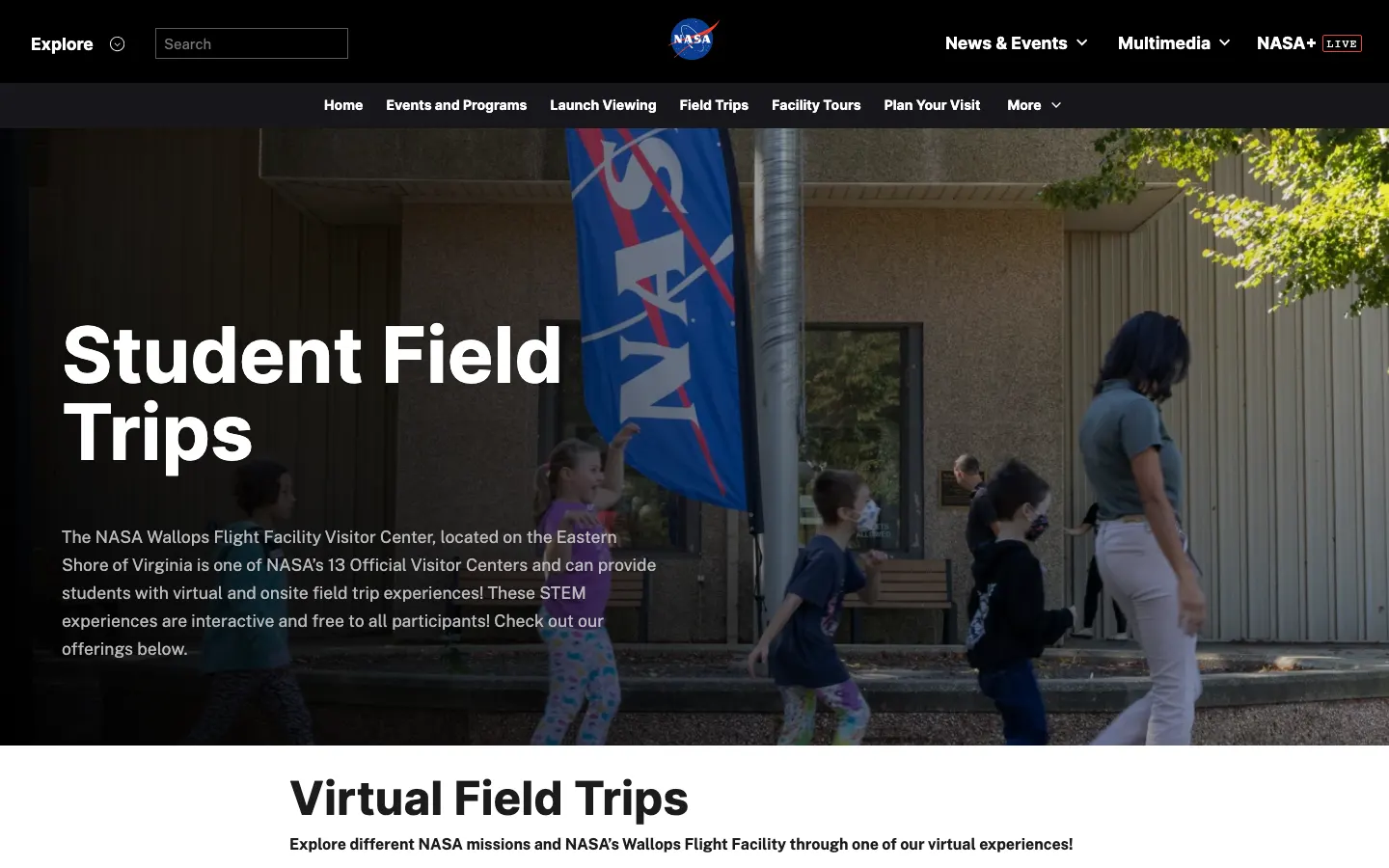 Website preview
About NASA Wallops Virtual Field Trips
NASA Wallops Visitor Center virtual field trips bring live educators to classrooms for programs about the Moon, Mars, the solar system, and aerospace. It is listed under Space and Science for ages 8–18. Children and families can use it through a website.
Age and access
This resource is listed for ages 8–18. It is available as Website and is listed as free scheduled program; english. The listed language coverage is English.
Visit and pricing
Official NASA page states participants may not be charged a fee and lists 2026–2027 virtual programs and booking requirements
Check current prices ↗What stands out
- Official provider page gives a clear child-focused purpose
- Fresh browser review confirmed a useful rendered landing page
- Audience and access claims were checked against the official source
Editorial review
NASA Wallops Visitor Center virtual field trips bring live educators to classrooms for programs about the Moon, Mars, the solar system, and aerospace. It is listed under Space and Science for ages 8–18. Children and families can use it through a website. In the directory, it is best approached as a children’s learning resource for 8–18, with space and science as the main learning context and family learning, science, teacher resources as useful starting signals.
A child, family, or class exploring space and science through website, with an adult choosing a suitable first activity.
- Review current terms, privacy, pricing, accessibility, and registration requirements before use.
- The listing covers space and science and includes family learning, science, teacher resources; choose the specific activity or section that matches the child's age and goal.
Review basis: Catalog context based on the provider URL, recorded description, age, format, language, access, tags, and available source links. · The thekidspick catalog team
Check the details at the source
This page separates our editorial context from provider evidence. Access, pricing, language, privacy, and content can change.
Evidence last checked 2026-10-30.
How the score is built
Parent notes
- Review current terms, privacy, pricing, accessibility, and registration requirements before use.
- Screenshot was captured after live loading without a visible cookie popup, ad overlay, CAPTCHA, broken rendering, or placeholder imagery.

Recognized by
TheKidsPick
This resource has been independently reviewed by our team for its learning value, age fit, access, and trust signals, so parents can discover high-quality, kid-friendly resources with confidence.
Manage this resource?
Add this recognition to your website or share your TheKidsPick profile. It helps parents find your resource and shows your commitment to quality.
Find NASA Wallops Virtual Field Trips in related listings
A few useful subject and format shortlists for this resource.
Questions parents ask
See something wrong?
Report an outdated link, image, language, platform, tag, or other detail.
Other space resources to consider
Use these nearby options to compare age fit, format, access, and the kind of adult support each resource asks for. The scores are editorial signals, not a substitute for checking the provider page.
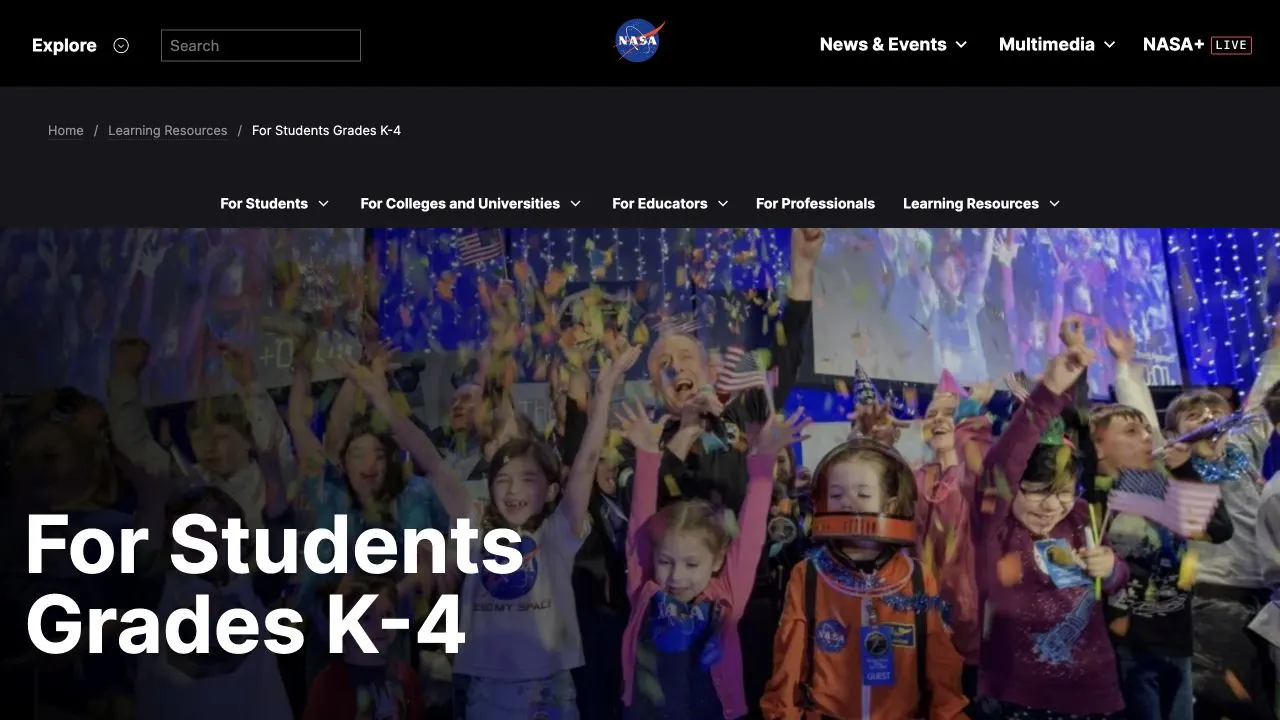
NASA For Students Grades K–4
NASA’s K–4 student hub offers age-appropriate space, Earth and engineering learning resources for younger students. It is listed under Space and Science for ages Grades K–4. Children and families can use it through a website.
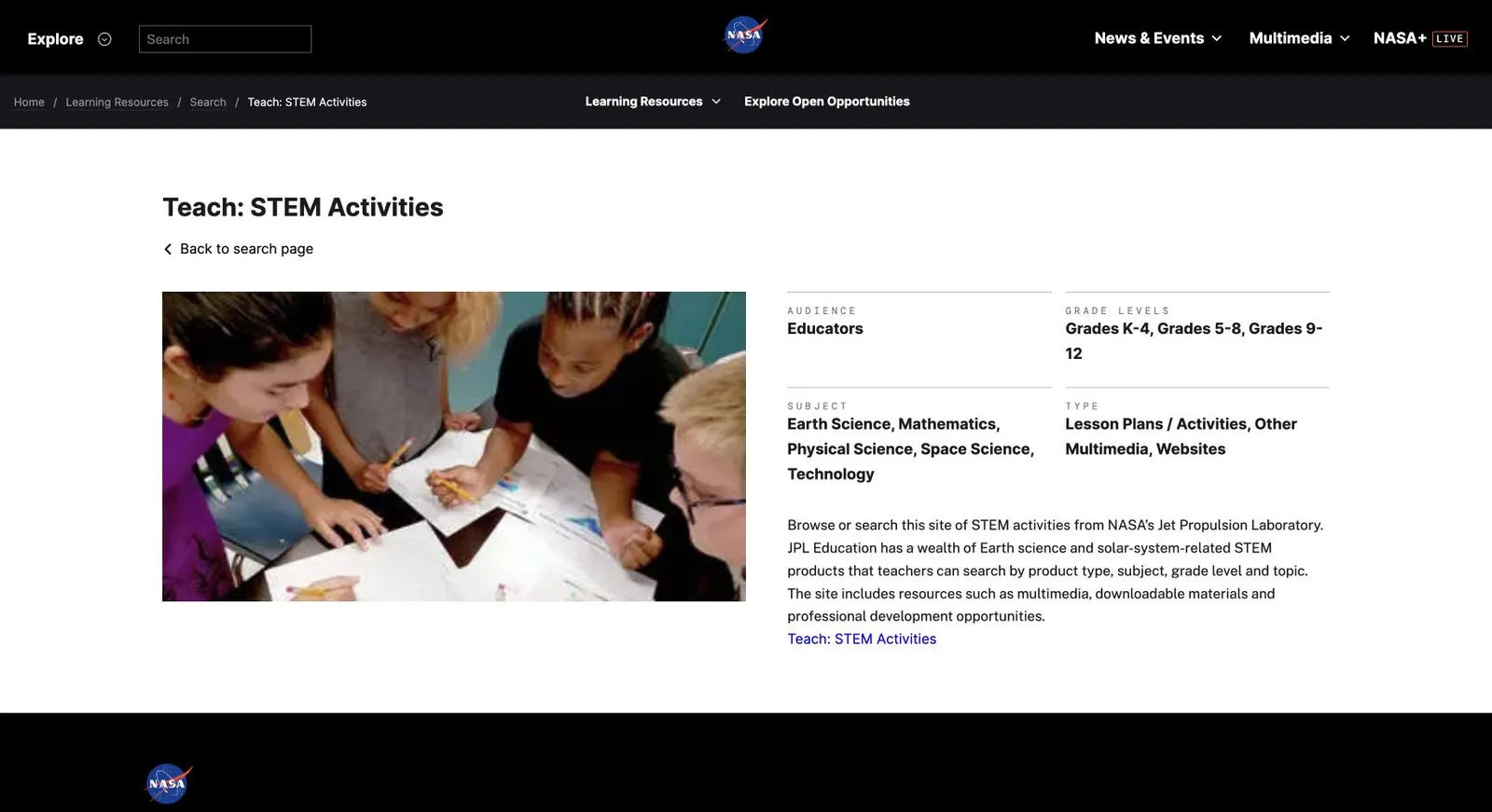
NASA Teach: STEM Activities
NASA’s educator-facing STEM activity catalog from JPL, searchable by product type, subject, grade level, and topic across Earth, space, physical science, math, and technology. It is listed under Space, Science, and Math for ages 5–18.
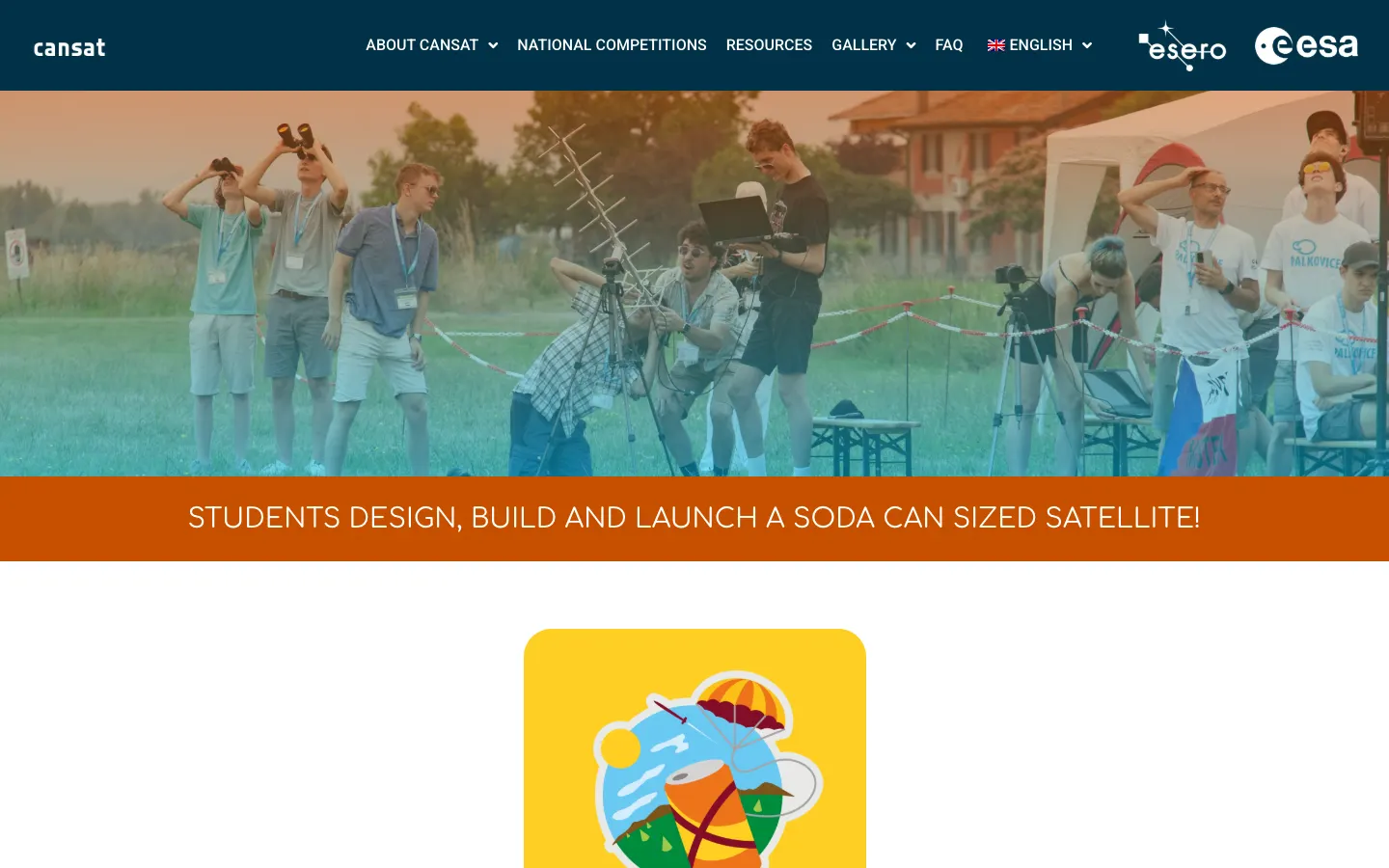
ESA CanSat
The European Space Agency CanSat program challenges teams to design, build and launch a soda-can-sized satellite, then collect and analyse mission data. It is listed under Space and Coding for ages 14–19. Children and families can use it through a website.
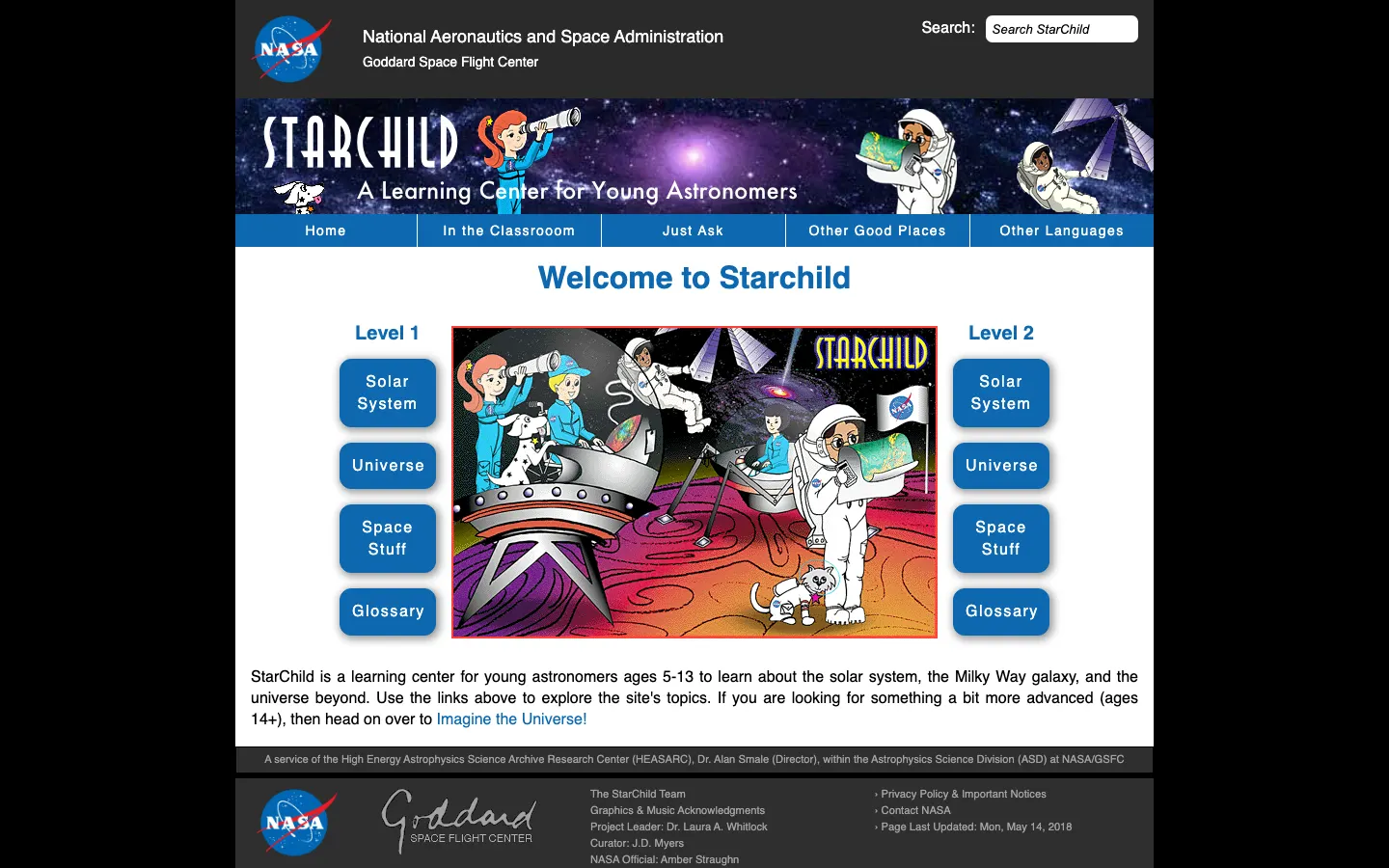
NASA StarChild
NASA StarChild is a learning center for young astronomers with levelled pages about the solar system, the universe, space science, and an astronomy glossary. It is listed under Space and Science for ages 5–13.