NASA
Explore resources from NASA, or visit the organization’s official website.
 ✓ Verified identity50 resourcesScienceCodingGeographyParent & educatorNature & environmentGames
About NASA
NASA is the United States government agency responsible for civil space exploration, aeronautics research, and space and Earth science. These resources bring NASA learning, missions, and discoveries to children, families, and educators.
- Identity status
- Verified from official sources
- Official website
- nasa.gov ↗
- Directory resources
- 50 published resources
- Main subjects
- Science · Coding · Geography · Parent & educator · Nature & environment · Games
Explore NASA
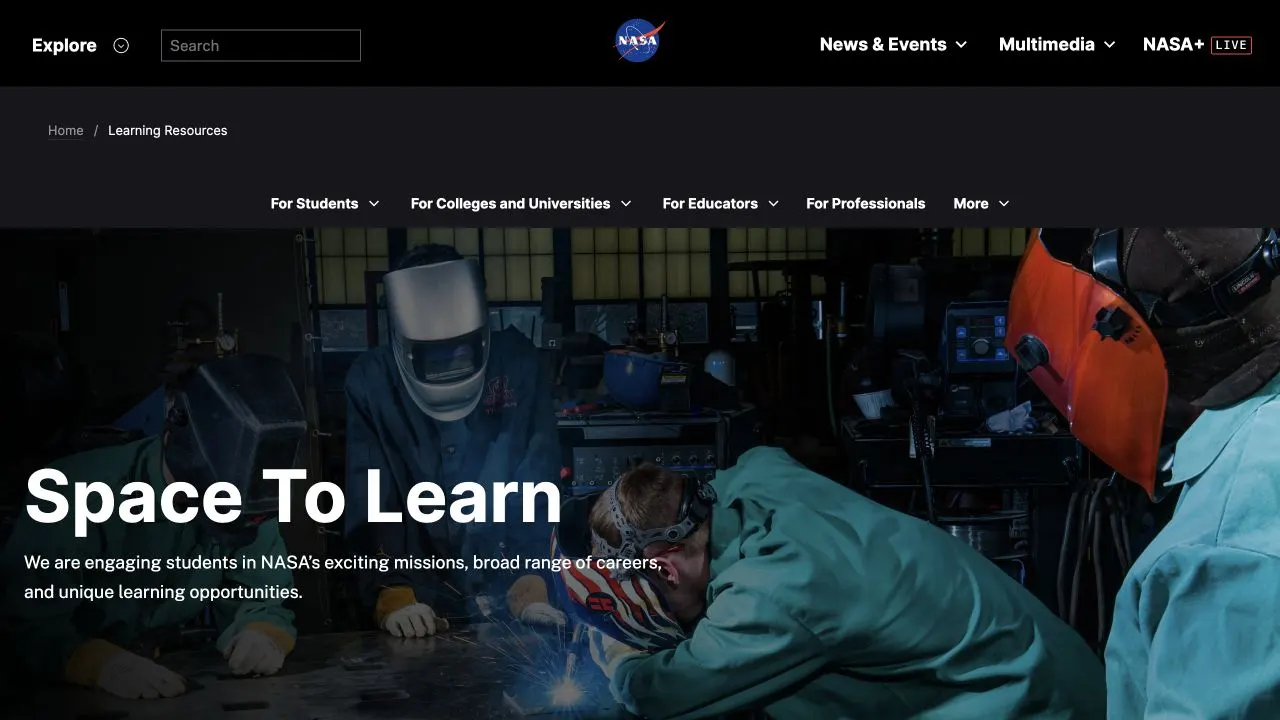
NASA Learning Resources
NASA student and educator resources with STEM activities, missions, videos, challenges, careers, and family learning ideas. It is listed under Science, Coding, and Geography for ages 5-18. Children and families can use it through a website, downloadable resources, and a YouTube channel.
NASA Space Place
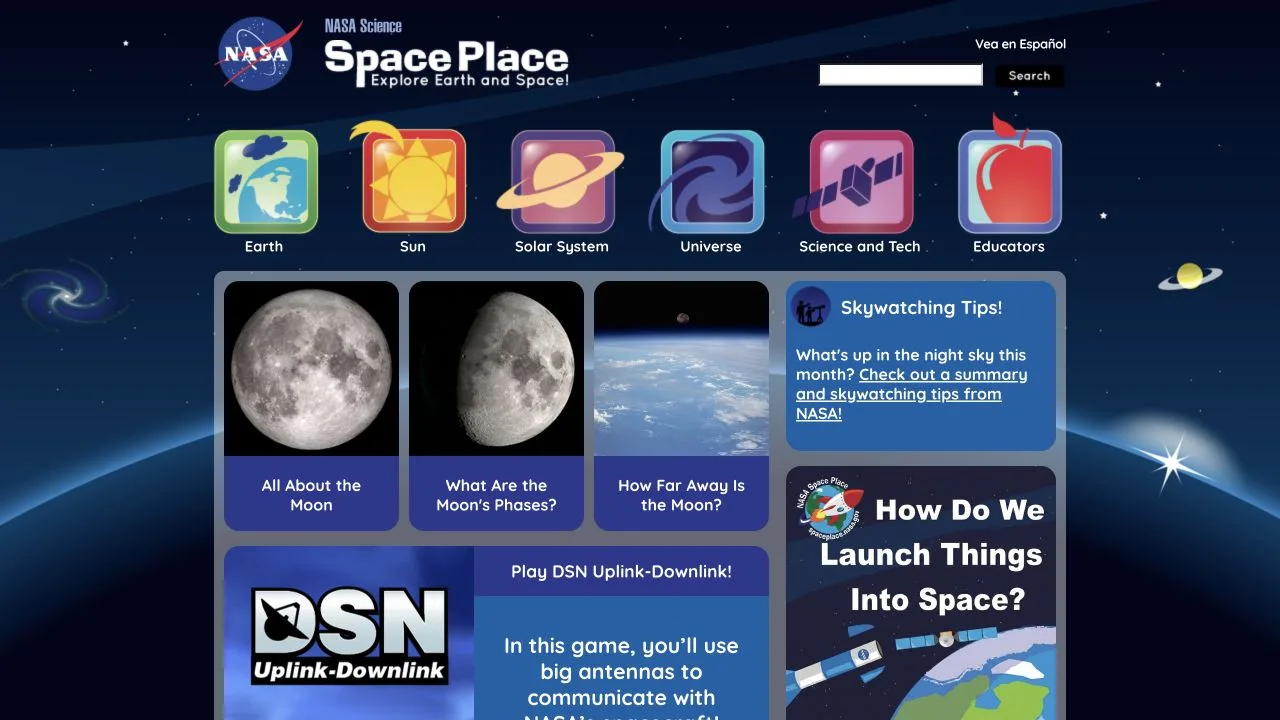
Games, crafts, stories, animations, and activities that make space and Earth science approachable for kids. It is listed under Science, Nature & environment, and Games for ages 5–14. Children and families can use it through a website and downloadable resources.
NASA Kids Science
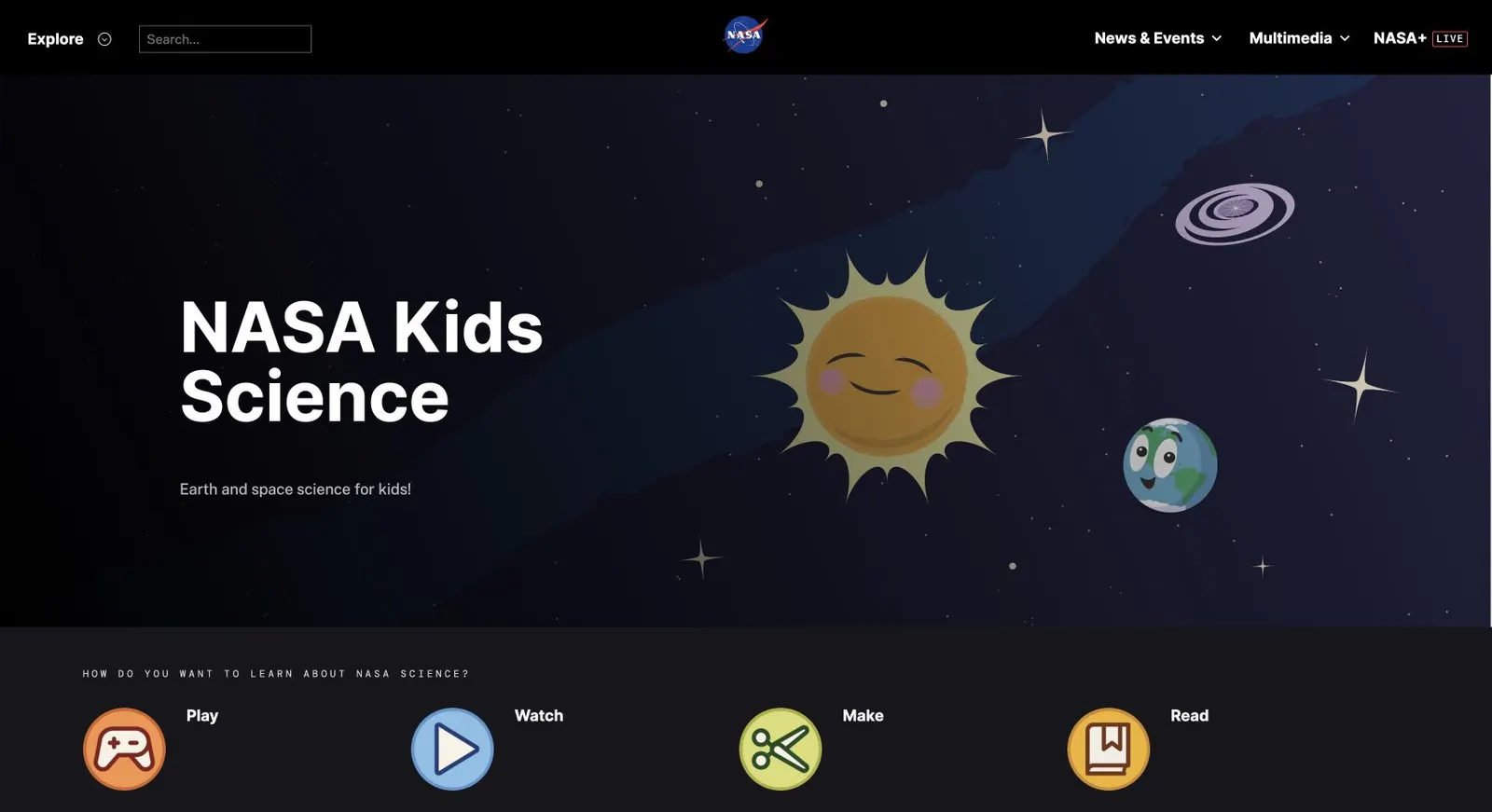
NASA’s child-friendly Earth and space science hub with games, videos, activities, articles, and multilingual links. It is listed under Science, Nature & environment, and Geography for ages 7–14. Children and families can use it through a website.
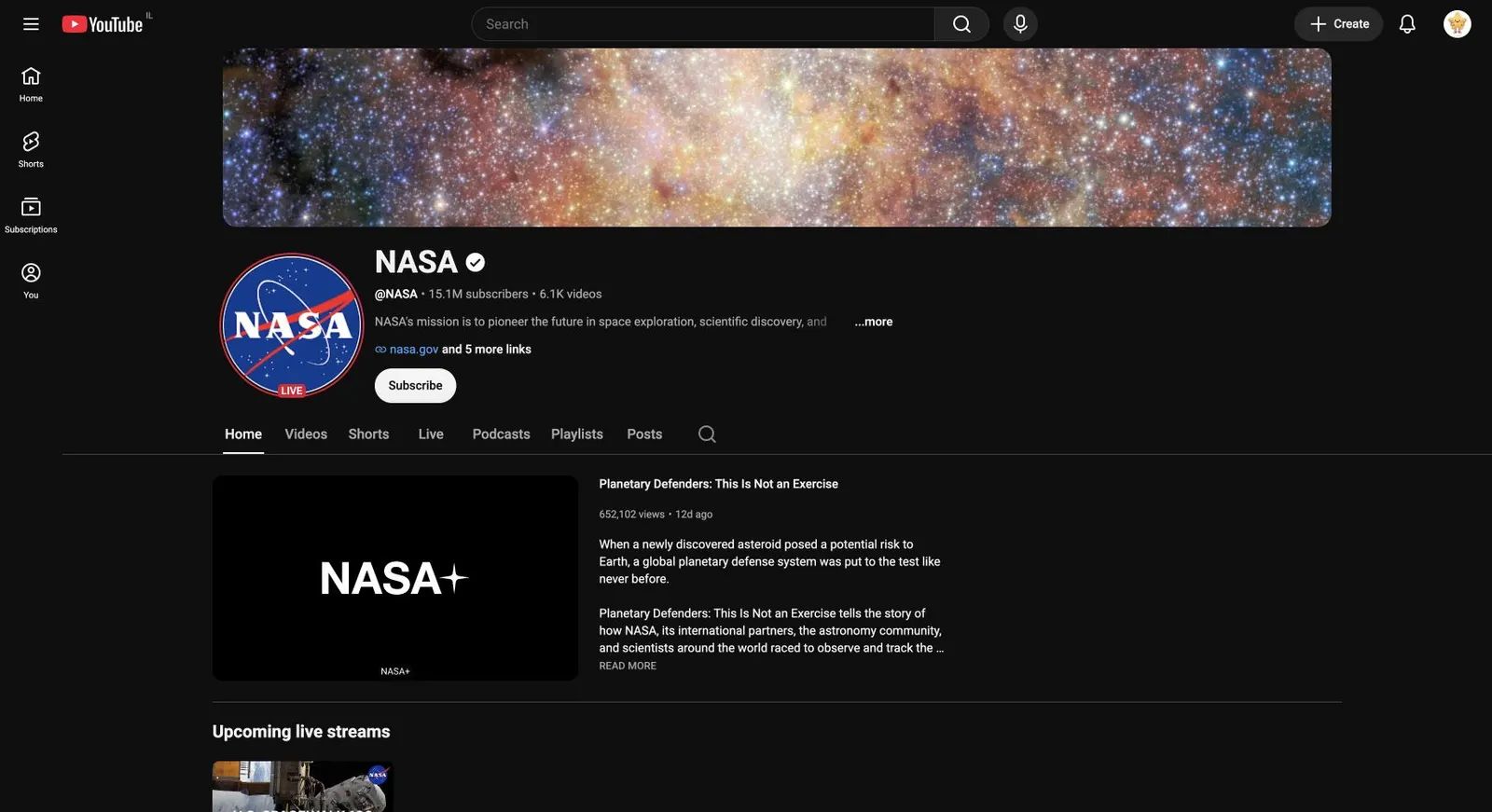
NASA
Official NASA videos about space exploration, science, missions, Earth, astronomy, astronauts, and the future of discovery. It is listed under Science, Technology, and Nature & environment for ages 8–18. Children and families can use it through a YouTube channel and a website.
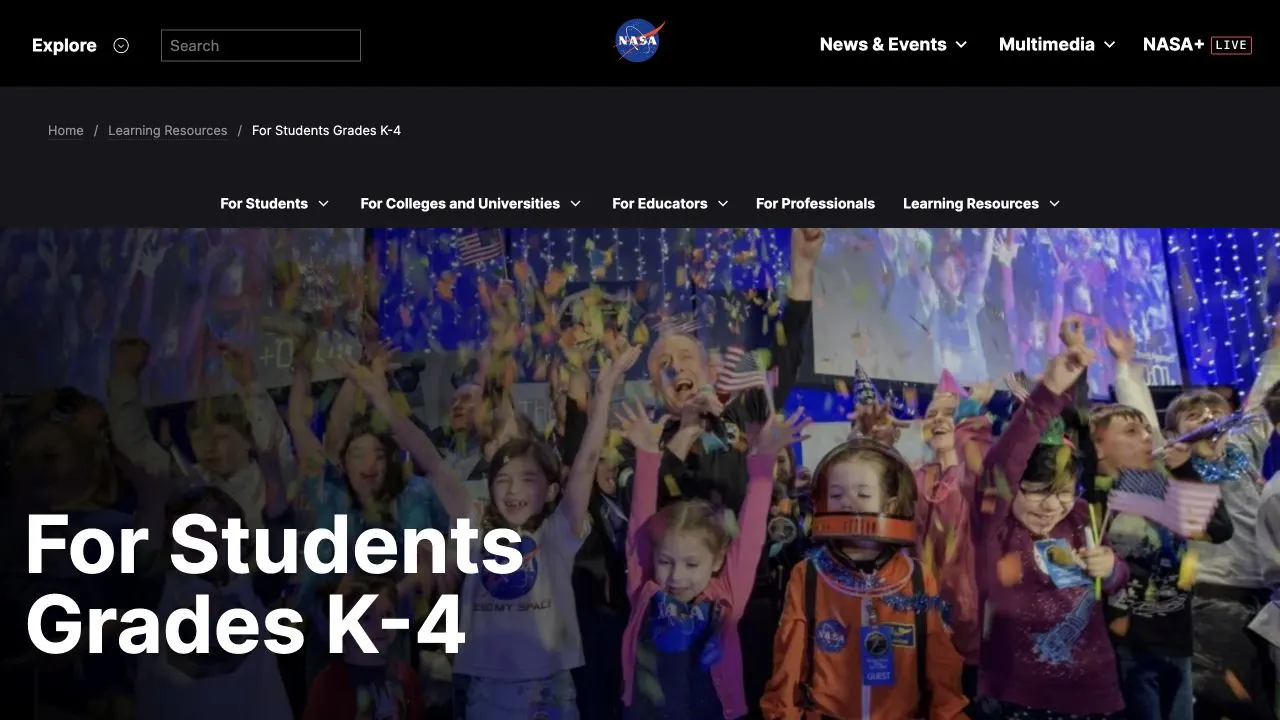
NASA For Students Grades K–4
NASA’s K–4 student hub offers age-appropriate space, Earth and engineering learning resources for younger students. It is listed under Space and Science for ages Grades K–4. Children and families can use it through a website.
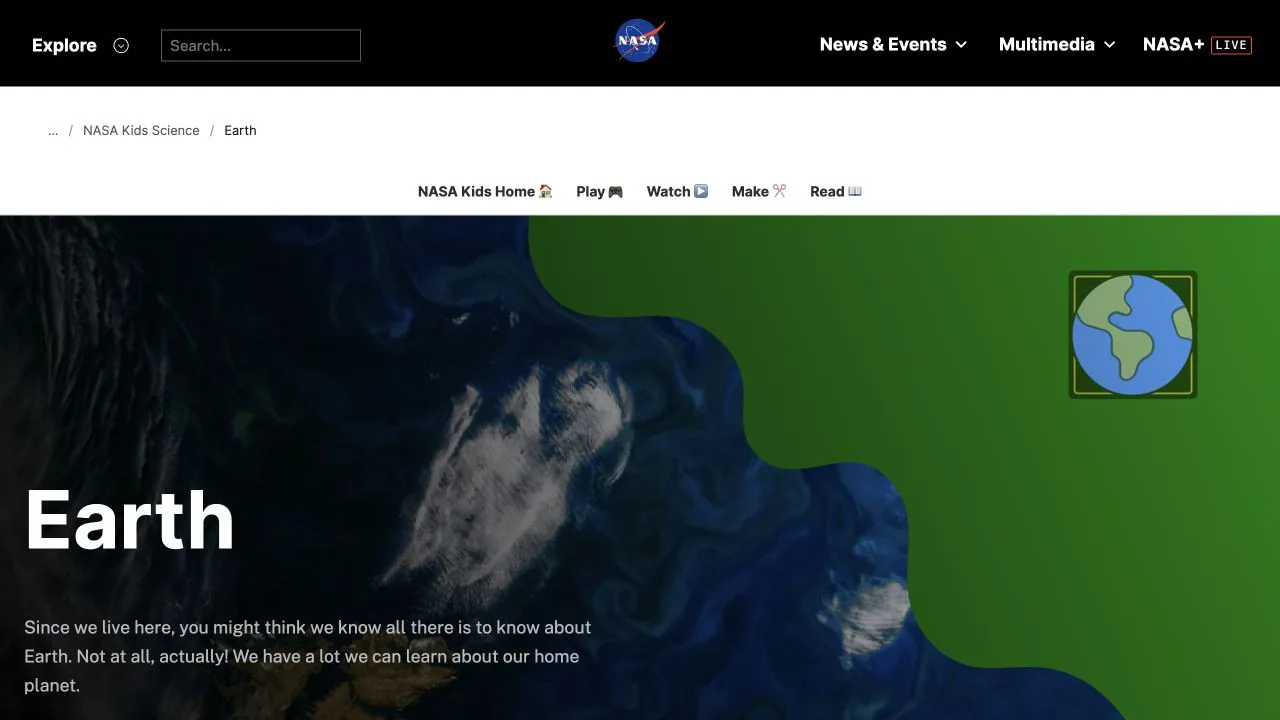
NASA Kids Science: Earth (formerly NASA Climate Kids)
NASA’s kid-focused Earth science hub with explainers, activities, games, and multimedia about our home planet. It is listed under Science for ages 7–13. Children and families can use it through a website and downloadable resources.
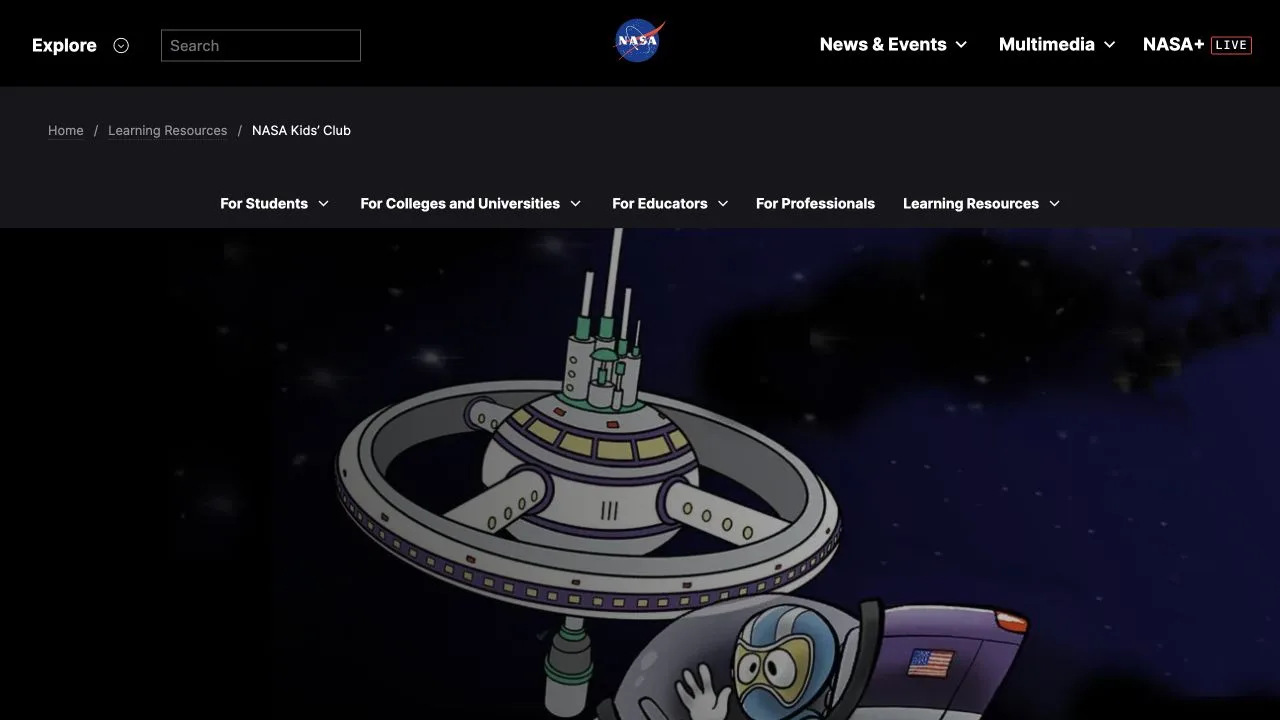
NASA Kids' Club
NASA games, astronaut stories, mission pictures, and STEM activities for younger learners. It is listed under Science, Games, and Technology for ages 3–10. Children and families can use it through a website. The directory records access as free and language coverage as English.
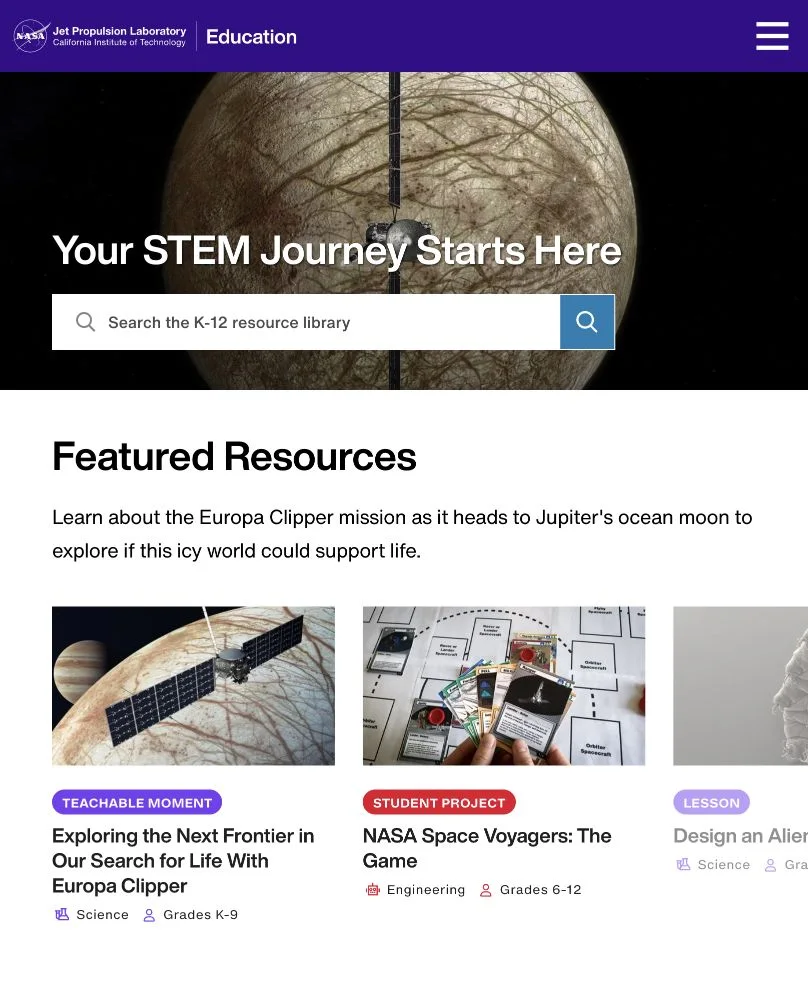
JPL Education
NASA Jet Propulsion Laboratory STEM resources, lessons, projects, videos, and activities for K-12 learners and educators. It is listed under Science, Engineering, and Technology for ages 5–18. Children and families can use it through a website and downloadable resources.
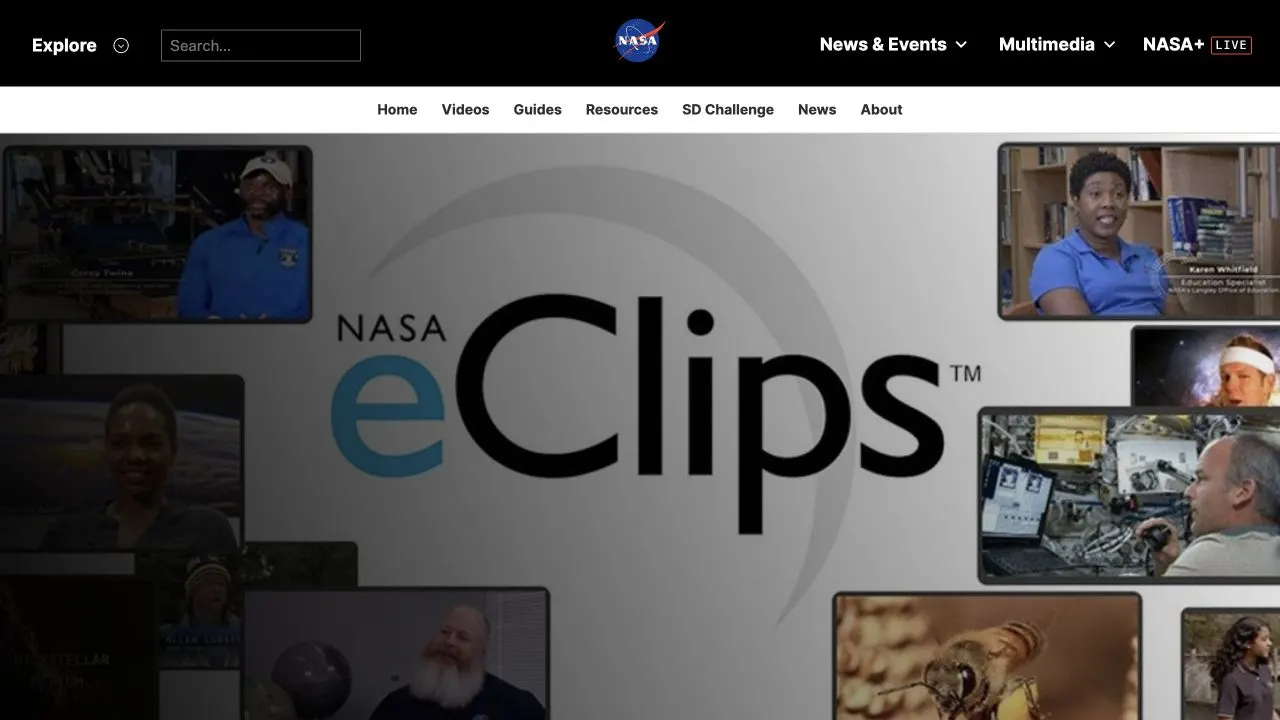
NASA eClips
NASA videos and learning resources that connect space science with classroom and family STEM learning. It is listed under Science and Parent & educator for ages 8-18. Children and families can use it through a website.
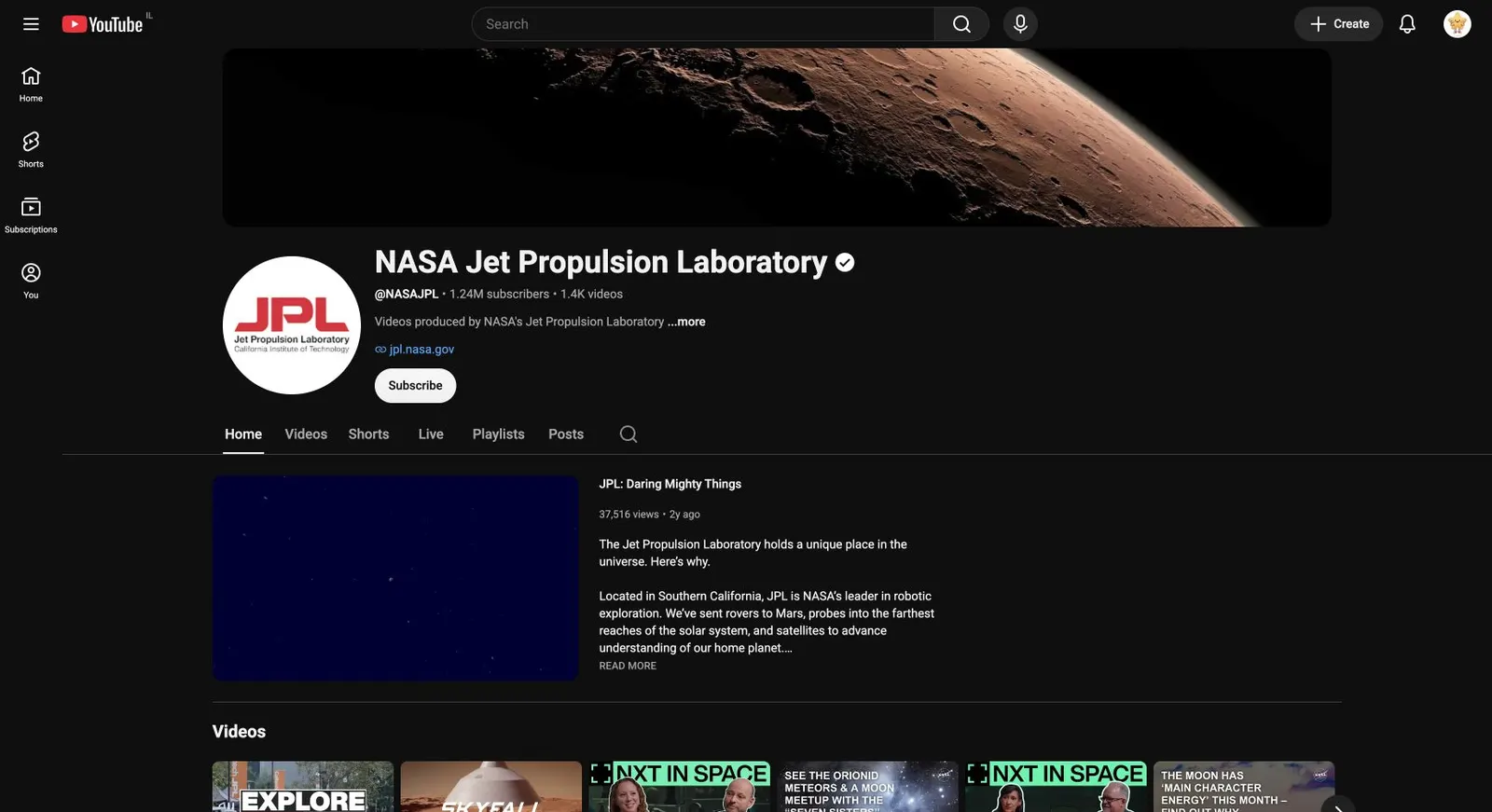
NASA Jet Propulsion Laboratory
Official NASA JPL videos about robotic exploration, Mars rovers, planetary missions, space technology, and skywatching. It is listed under Science, Technology, and Engineering for ages 8–18. Children and families can use it through a YouTube channel and a website.
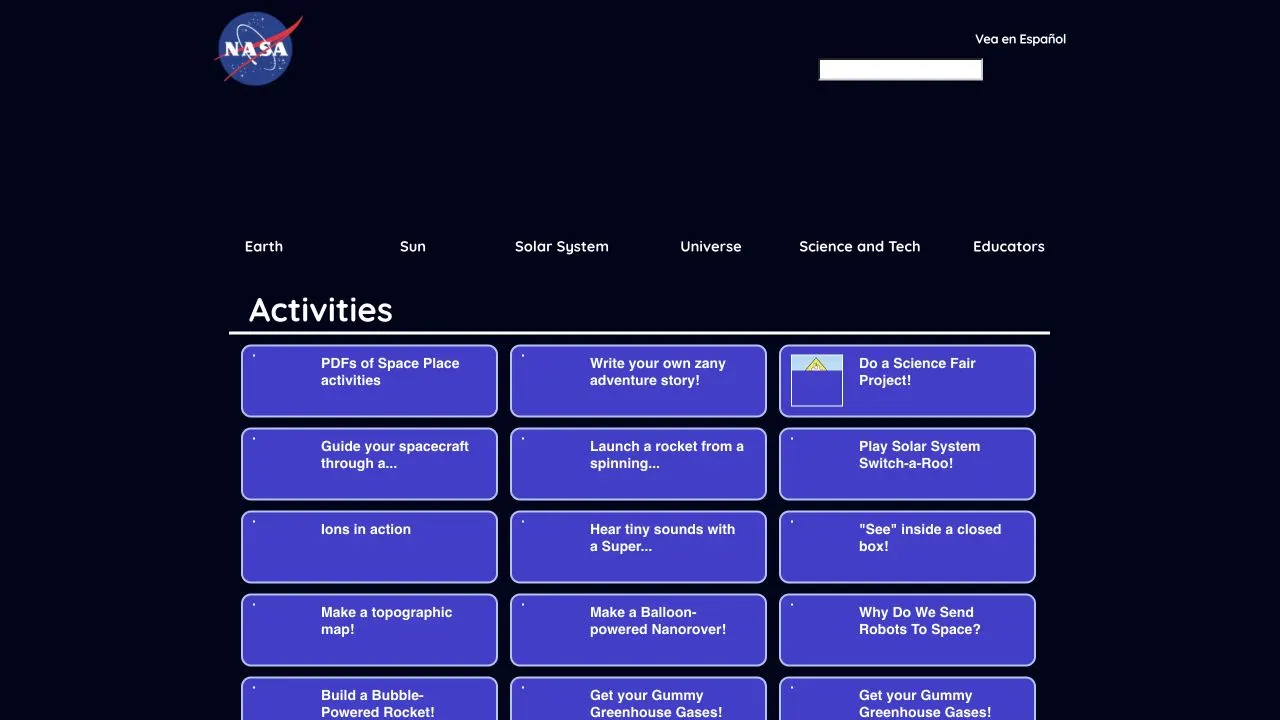
NASA Space Place Activities
NASA Space Place Activities offers printable and interactive space-science activities for children, including science-fair projects, mazes, planet games, rockets, sound, maps, and Earth science. It is listed under Science and Space for ages 6–12.
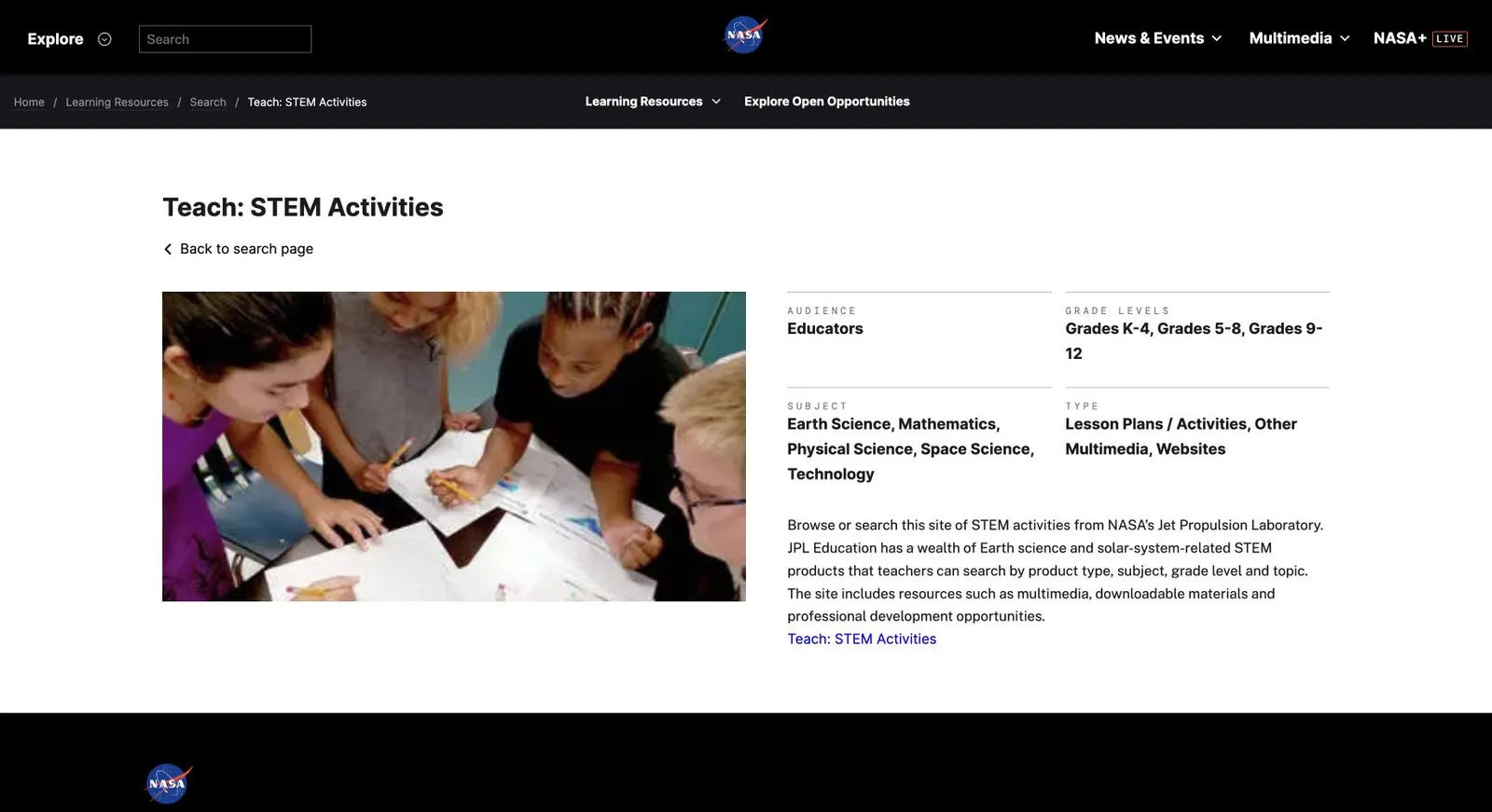
NASA Teach: STEM Activities
NASA’s educator-facing STEM activity catalog from JPL, searchable by product type, subject, grade level, and topic across Earth, space, physical science, math, and technology. It is listed under Space, Science, and Math for ages 5–18.
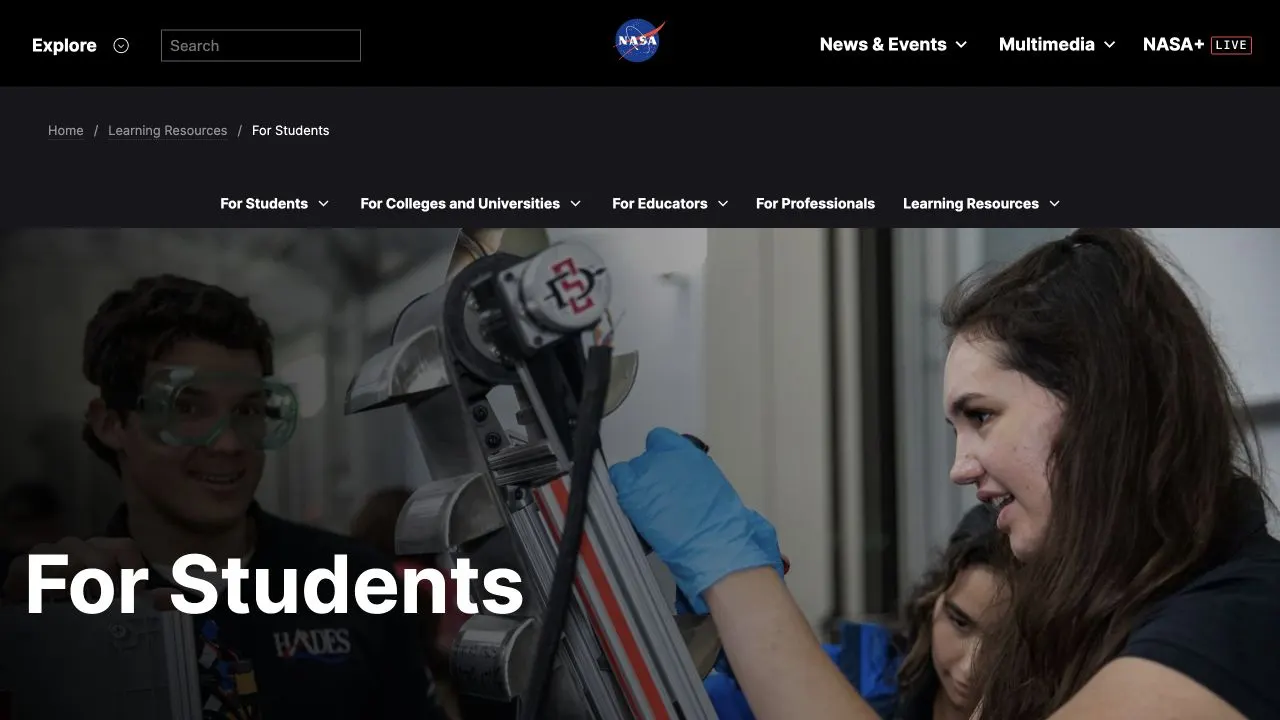
NASA For Students
NASA’s official student learning hub organizes space, science, engineering, and career resources by grade bands, with links for K–4, grades 5–8, grades 9–12, and college students. It is listed under Space and Science for ages K–12 and older students; page links grade bands.
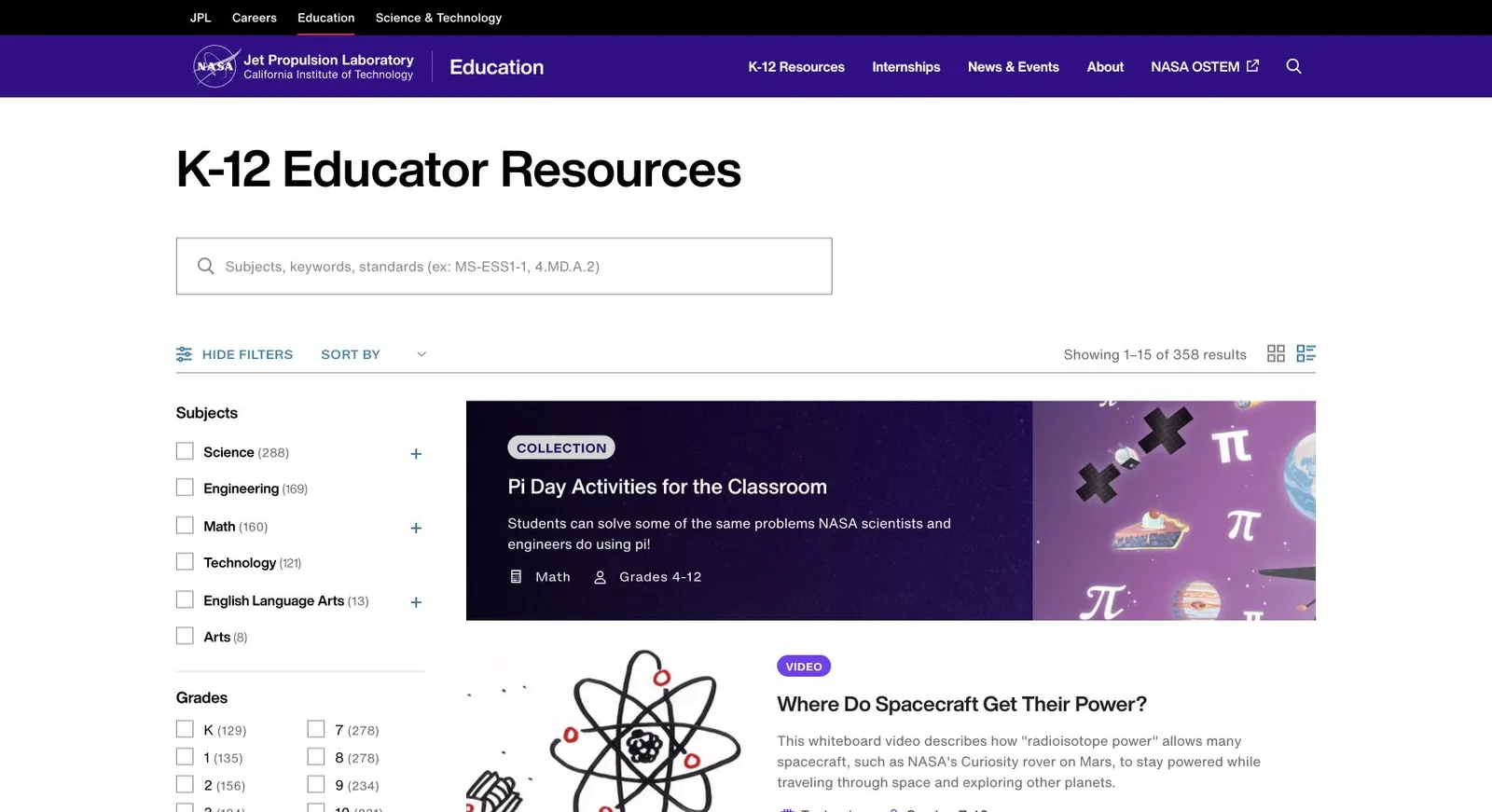
NASA JPL K-12 Educator Resources
A searchable NASA Jet Propulsion Laboratory library of K-12 lessons, projects, videos, collections, and teachable moments. It is listed under Science, Technology, and Engineering for ages 5–18. Children and families can use it through a website and downloadable resources.
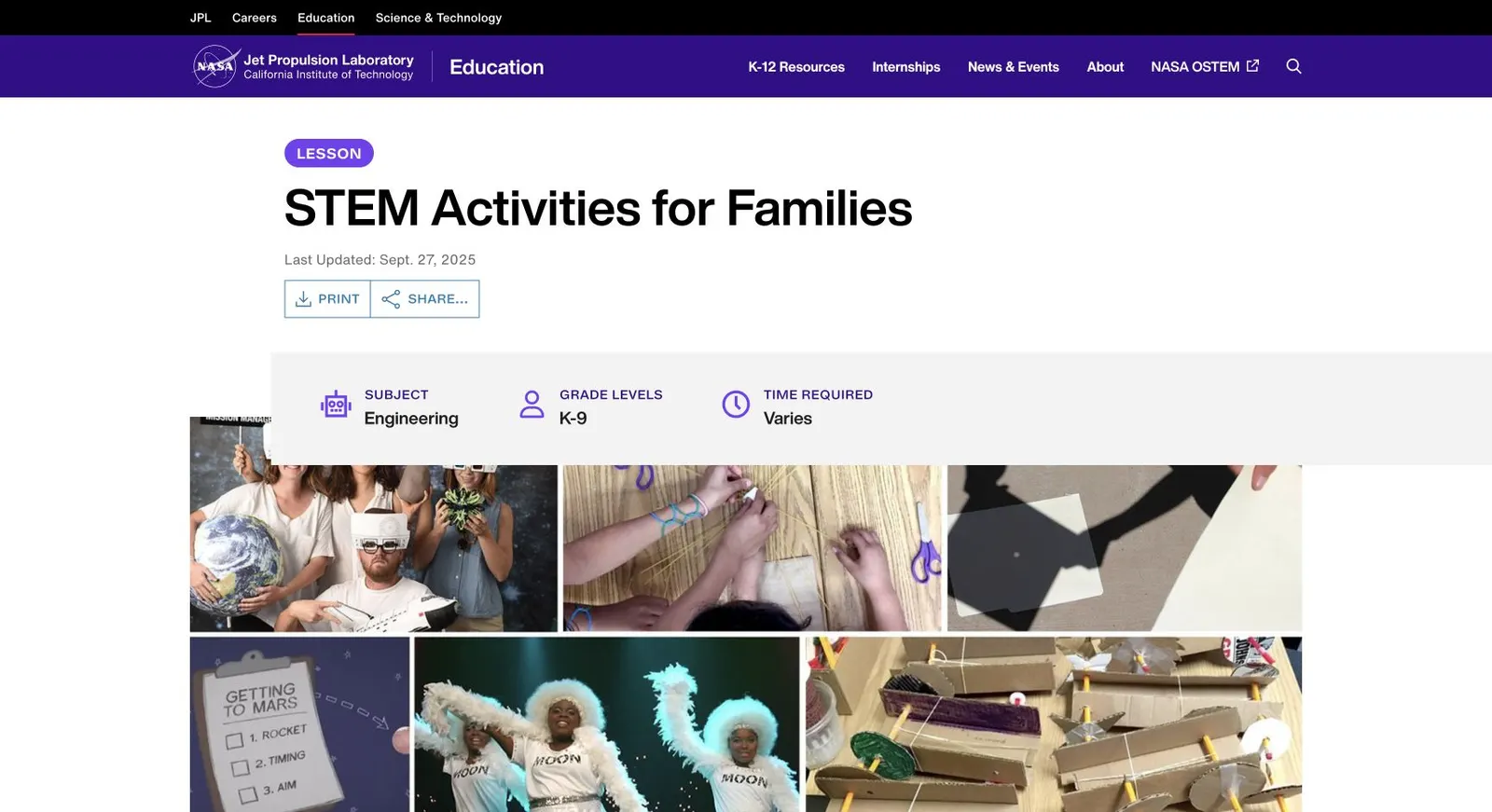
NASA JPL STEM Activities for Families
A NASA JPL collection of family STEM activities spanning engineering, science, technology, computer science, mathematics, rockets, space missions, and design challenges. It is listed under Engineering, Science, and Coding for ages 5–18. Children and families can use it through a website.
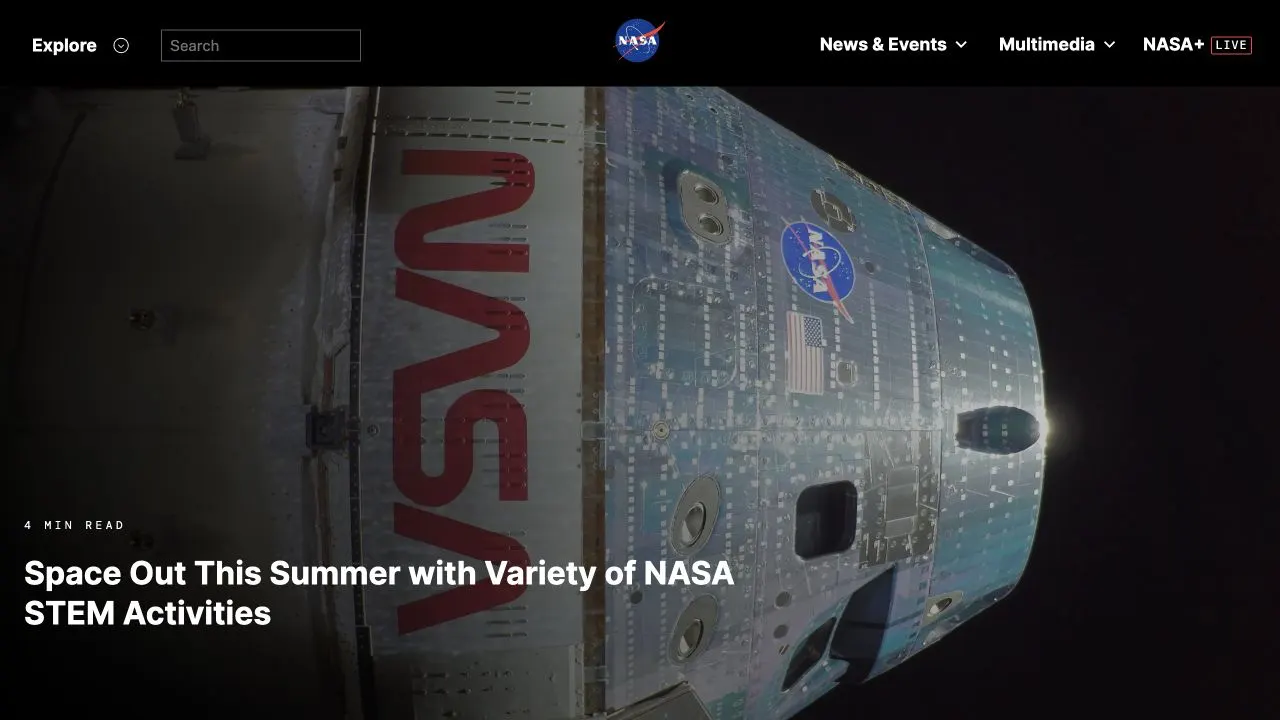
NASA Space Out This Summer STEM Activities
NASA’s official summer roundup introduces space-themed STEM activities and learning opportunities for children and families through NASA’s learning resources. It is listed under Space and Science for ages Children and families; activity-specific. Children and families can use it through a website and downloadable resources.
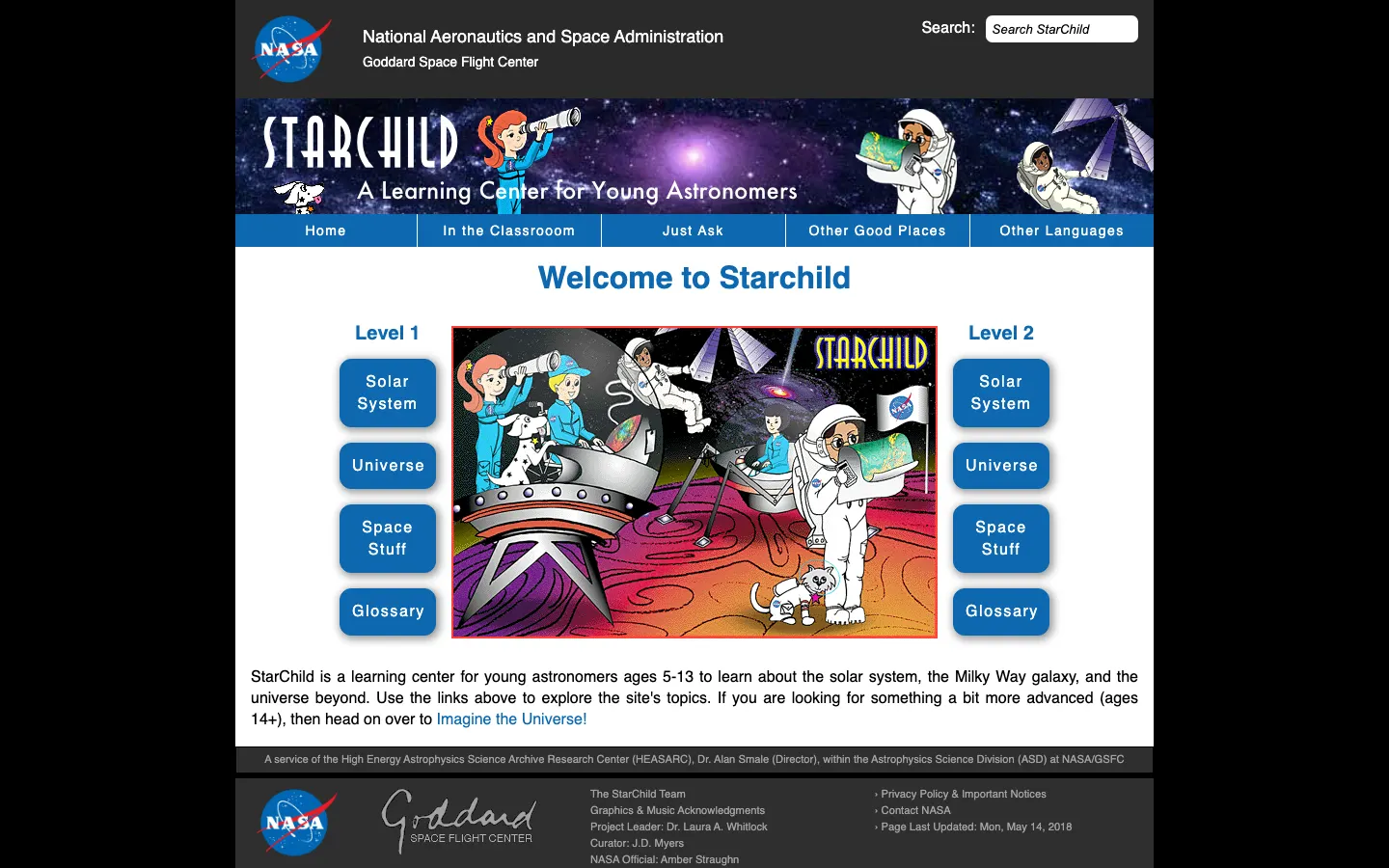
NASA StarChild
NASA StarChild is a learning center for young astronomers with levelled pages about the solar system, the universe, space science, and an astronomy glossary. It is listed under Space and Science for ages 5–13.
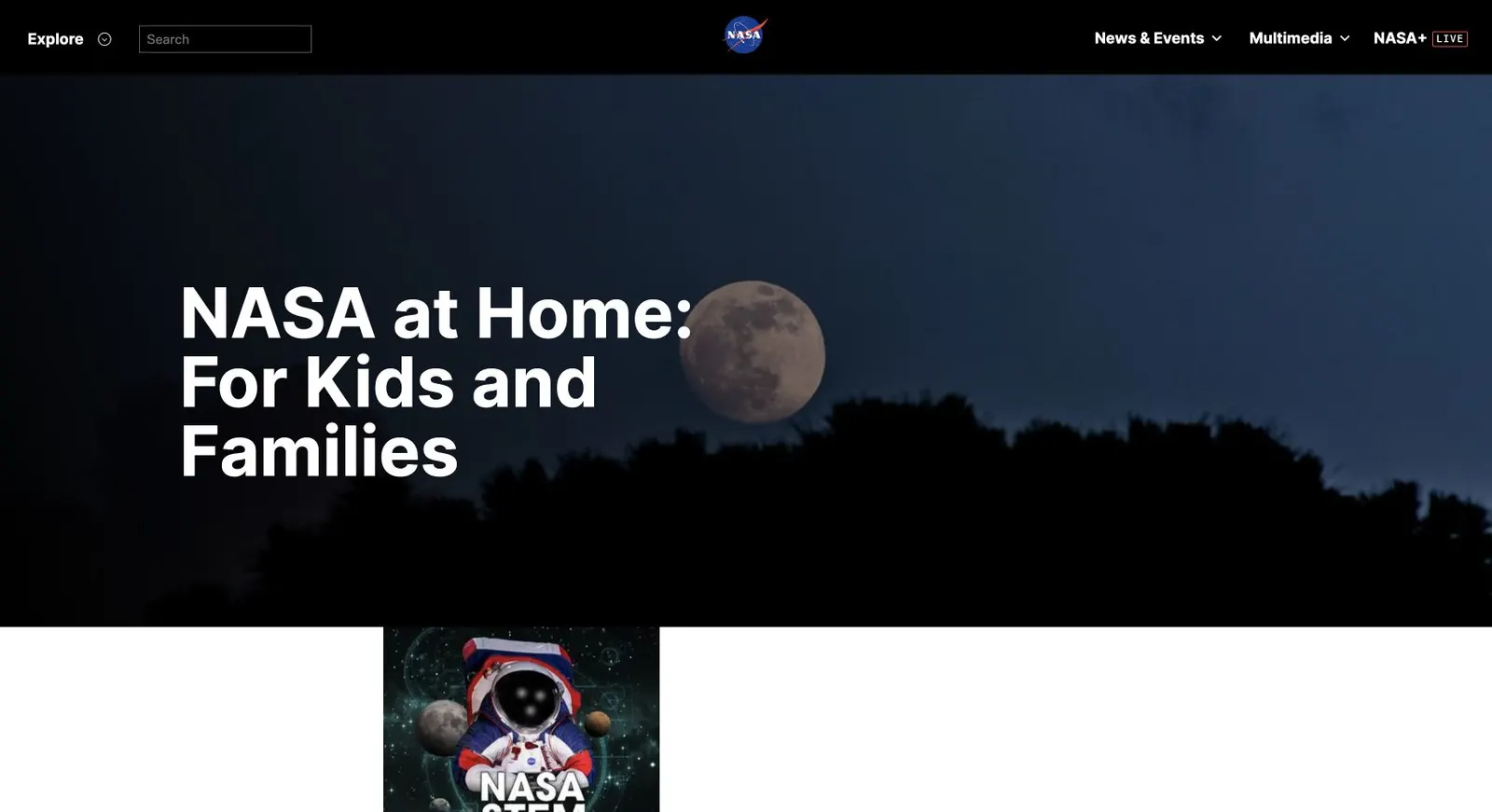
NASA at Home: For Kids and Families
NASA’s family collection of space and Earth-science activities, videos, crafts, coloring resources, and age-banded student materials for learning together at home. It is listed under Science, Space, and Nature & environment for ages 5–14.
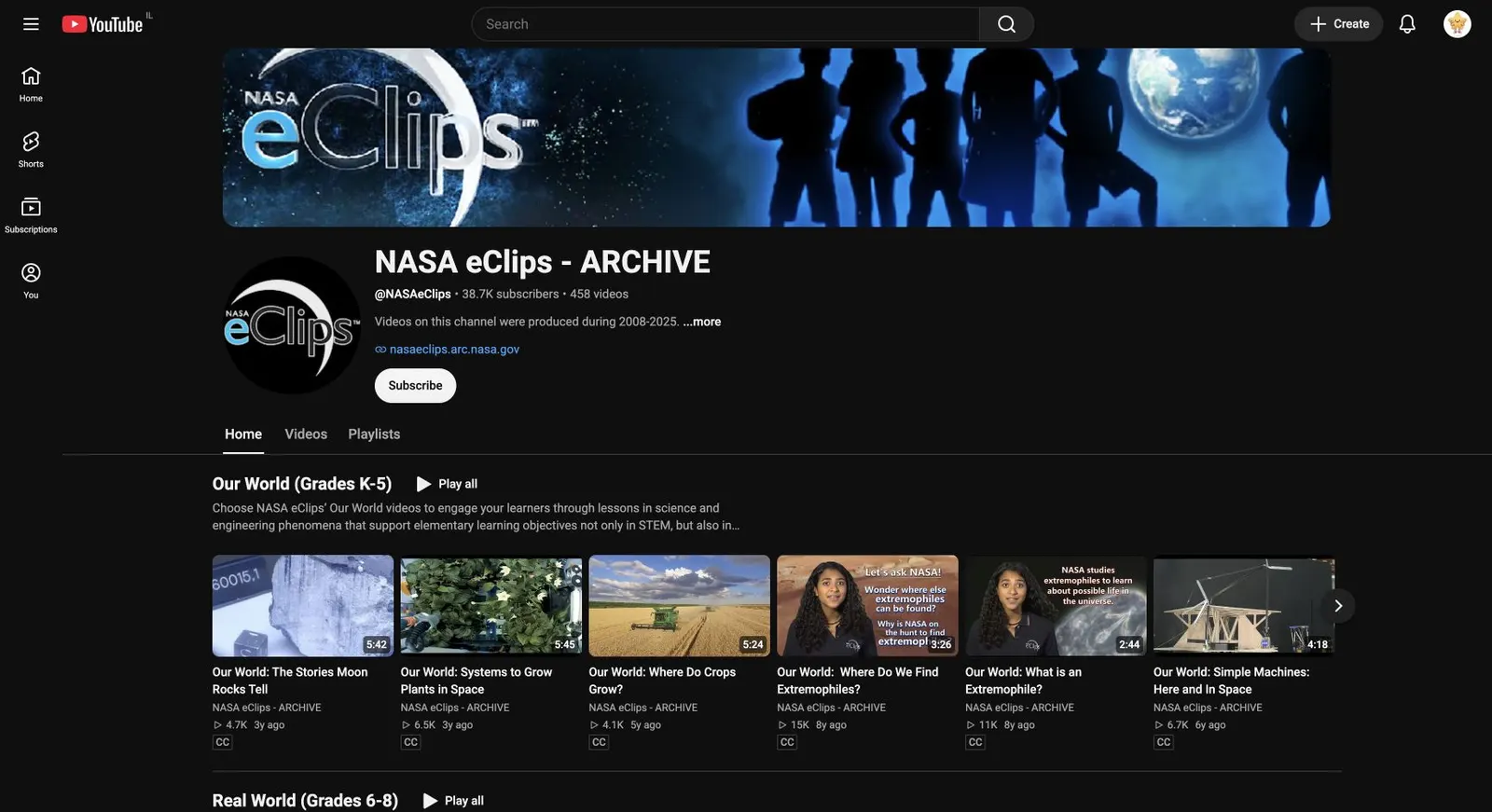
NASA eClips YouTube
NASA eClips videos connect students and educators with NASA missions, scientists, engineers, and classroom-ready STEM ideas. It is listed under Science, Technology, and Engineering for ages 8–18. Children and families can use it through a YouTube channel.
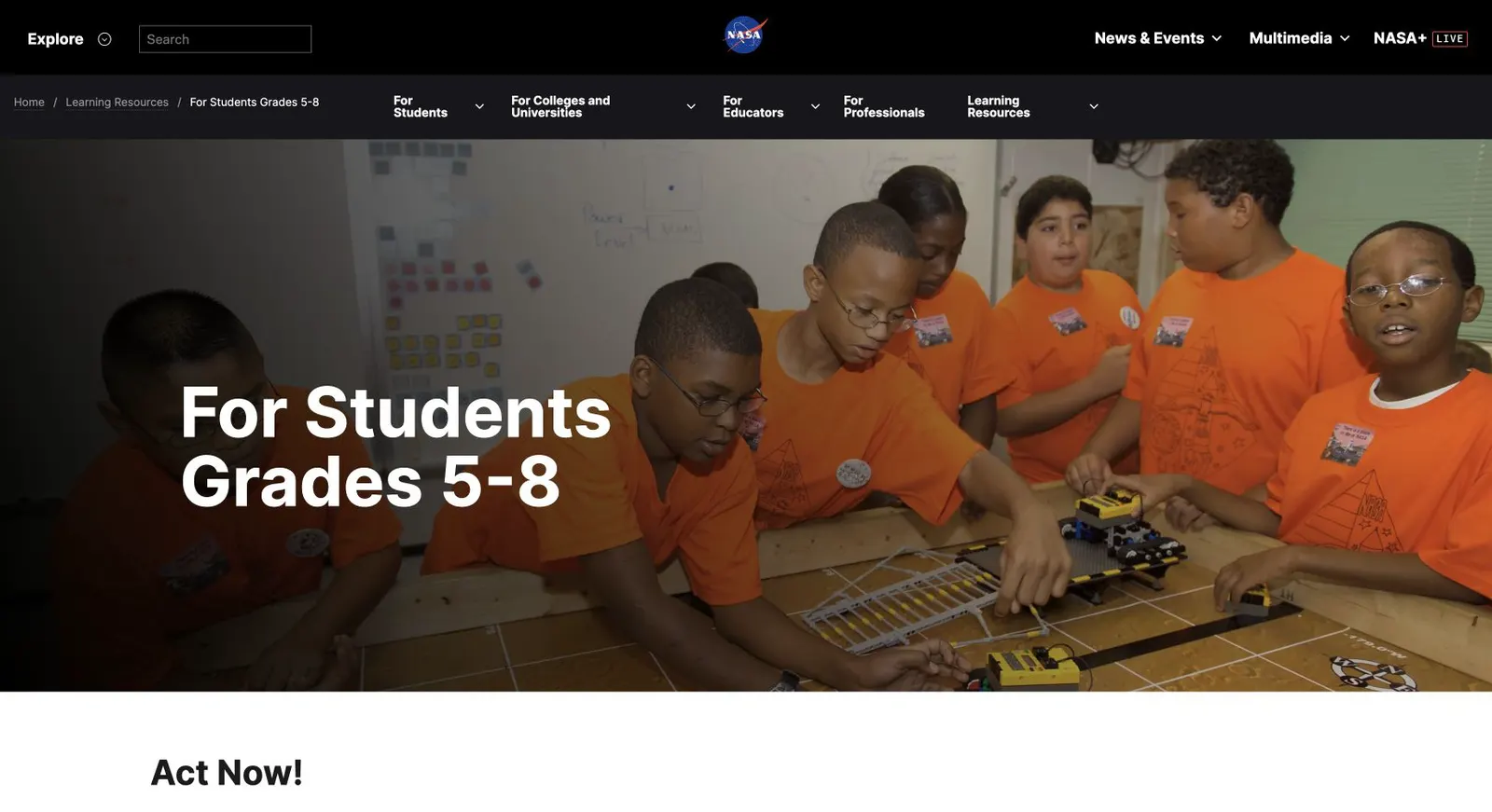
NASA For Students Grades 5–8
NASA’s middle-grade collection organizes current challenges, space and Earth science stories, games, builds, videos, interactive experiences, and stargazing activities for grades 5–8. It is listed under Science and Space for ages 10–14. Children and families can use it through a website and a YouTube channel.
NASA Science at Home
NASA’s Science at Home collection brings together online, hands-on, outdoor, citizen-science, and age-banded activities, with multilingual learning routes for students and families. It is listed under Science and Space for ages 5–18. Children and families can use it through a website.
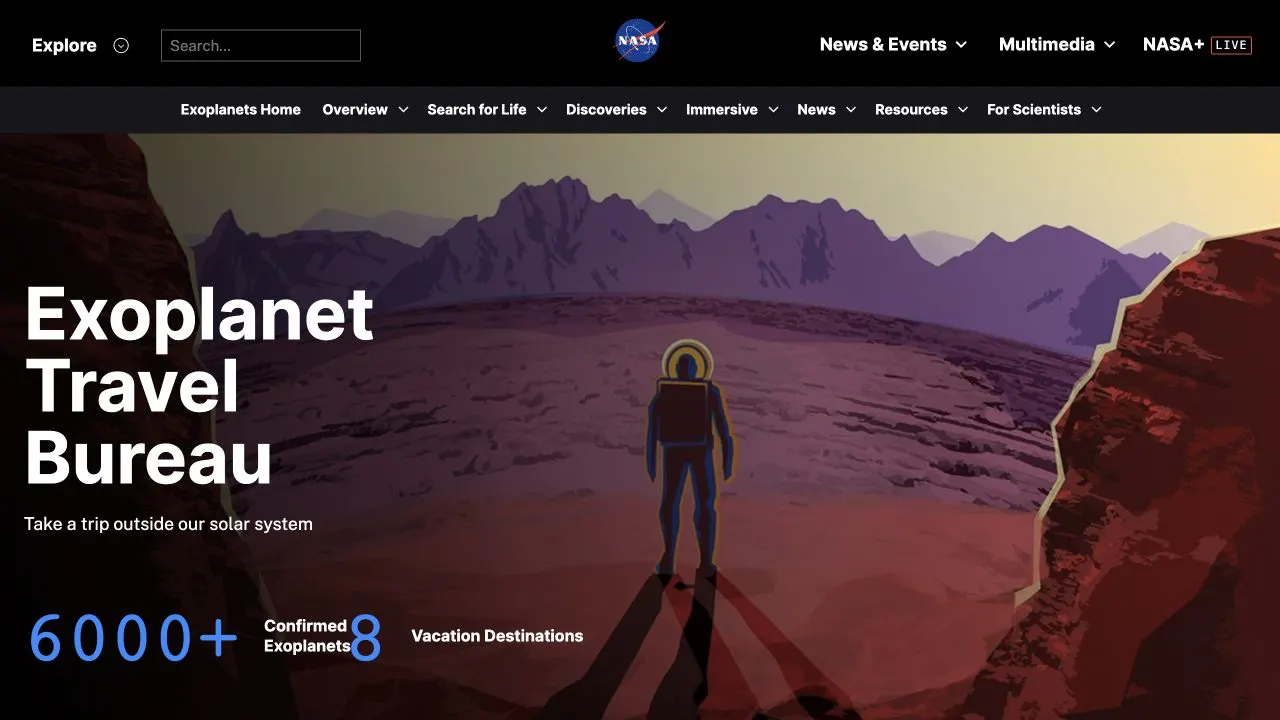
Exoplanet Travel Bureau
NASA’s immersive space experience turns confirmed exoplanets into guided, bilingual travel destinations with visualizations, posters, coloring pages, and science context. It is listed under Space and Science for ages 9–18. Children and families can use it through a website and downloadable resources.
NASA Earth Observatory for Kids
A NASA digital magazine collection for young learners aged 9–14, combining Earth-observation stories with downloadable hands-on activities about satellites, climate, land, water, and weather. It is listed under Science and Nature & environment for ages 9–14.
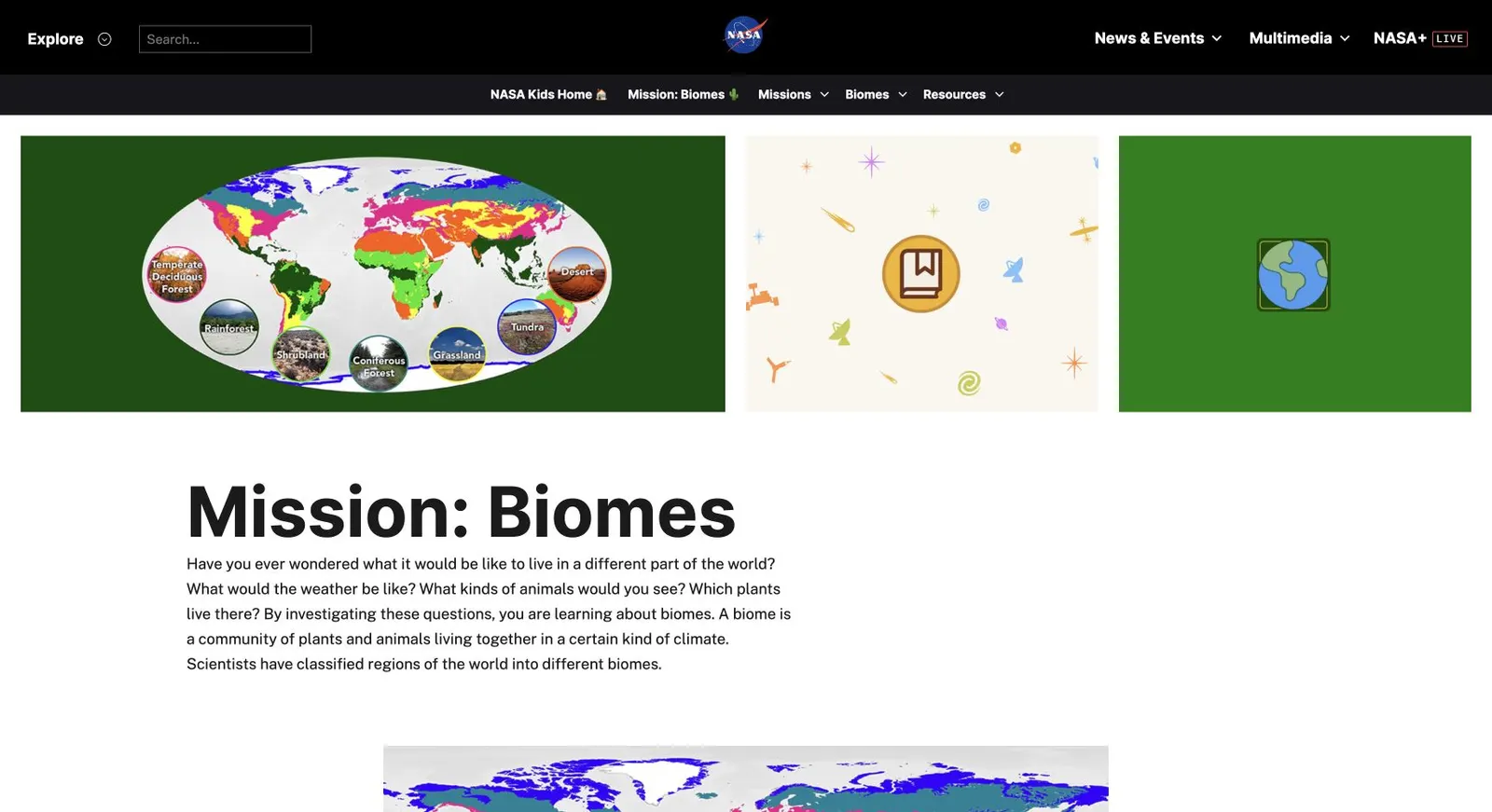
NASA Mission: Biomes
An interactive NASA Earth-science mission where children investigate climate, plants, animals, and world biomes, then complete graph-matching and plant-placement challenges. It is listed under Nature & environment and Science for ages 8–13. Children and families can use it through a website.
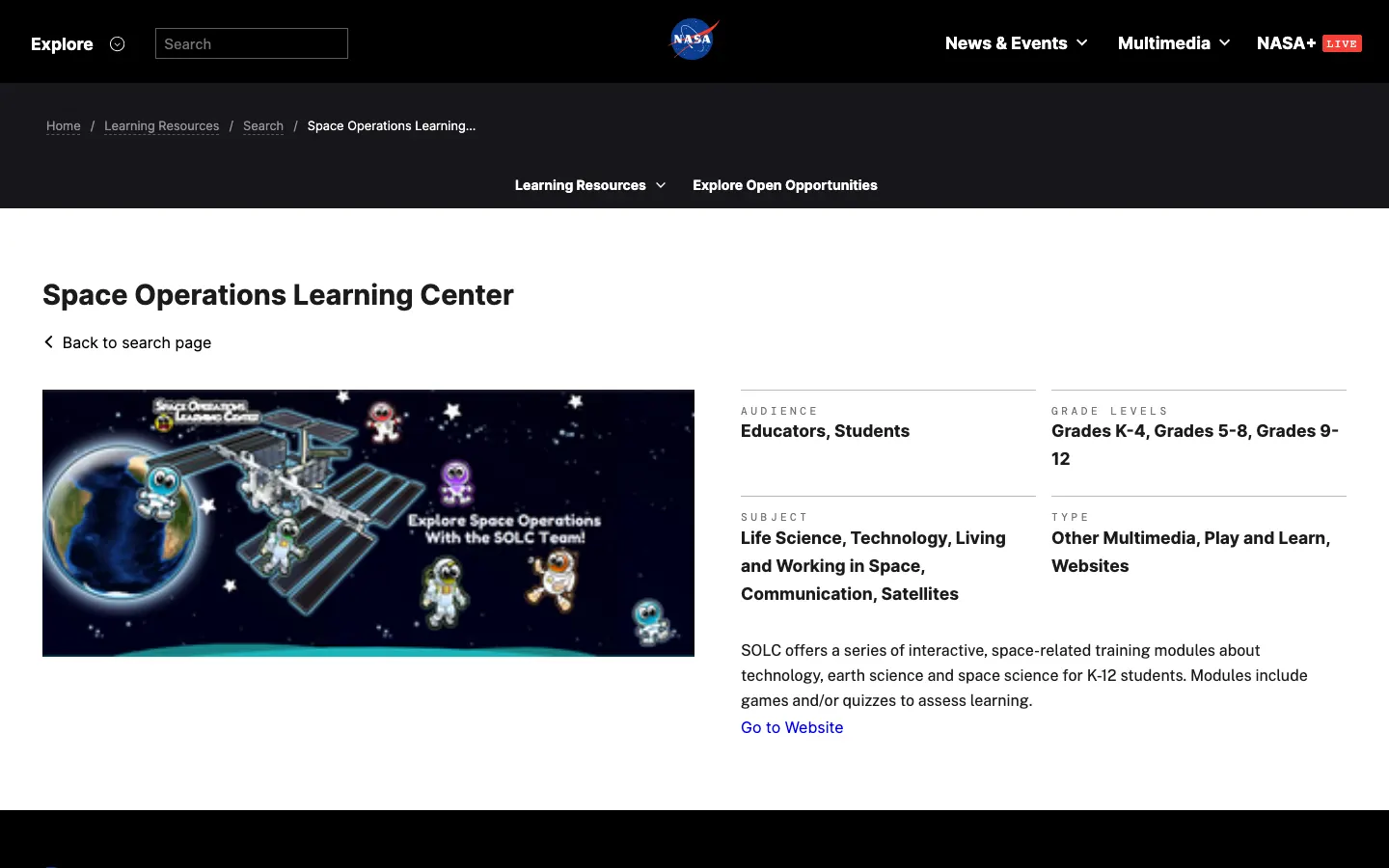
NASA Space Operations Learning Center
NASA’s Space Operations Learning Center provides interactive modules, games, and quizzes about space technology, Earth science, satellites, communication, and living and working in space. It is listed under Science and Space for ages K–12.
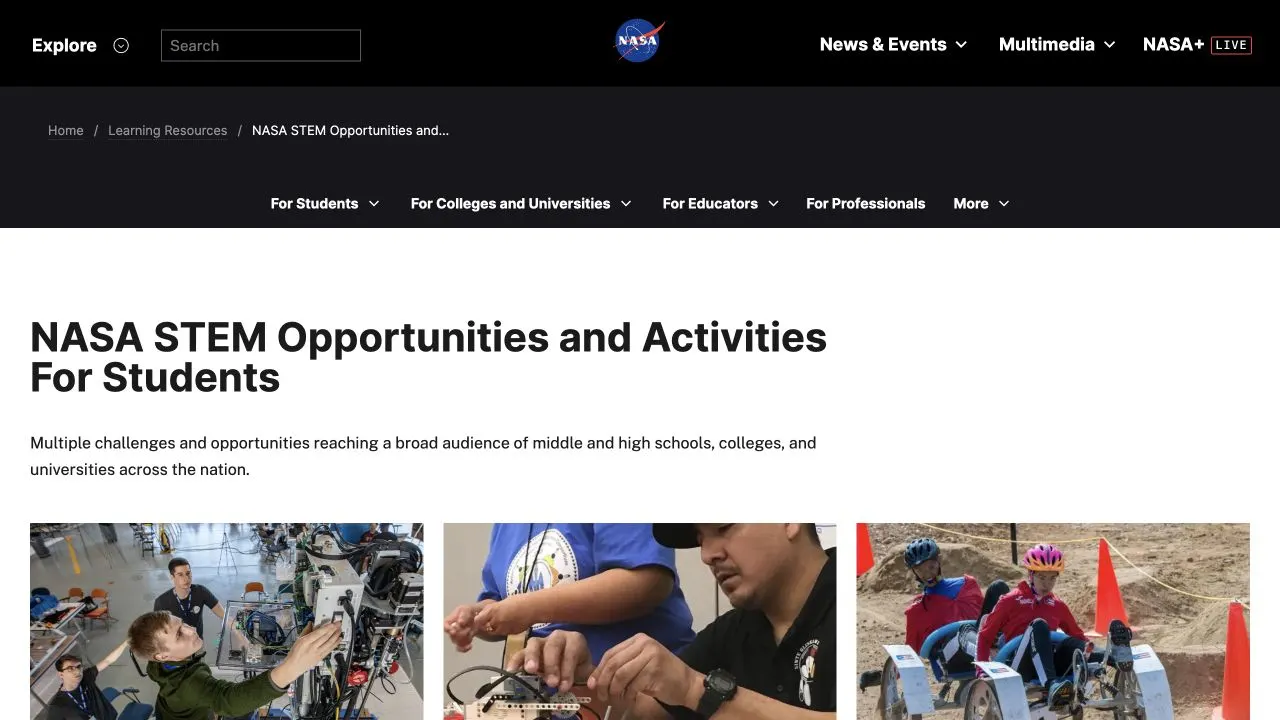
NASA STEM Opportunities and Activities for Students
NASA’s official opportunities hub collects student challenges, robotics and coding activities, design projects, internships, and other STEM pathways for middle-school, high-school, college, and university learners. It is listed under Education and Science for ages Middle school through university; activity-specific.
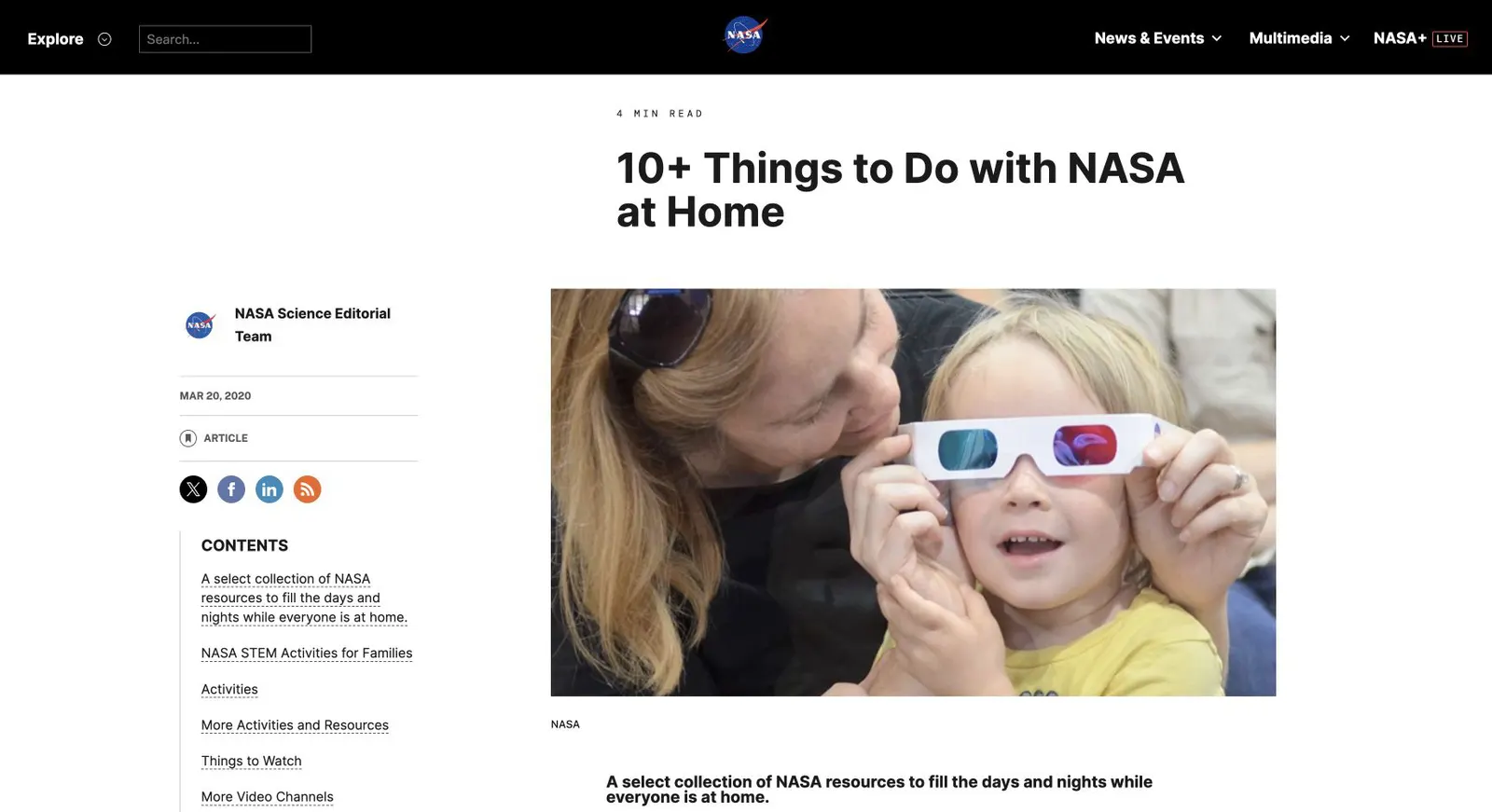
10+ Things to Do with NASA at Home
NASA Science’s family article curates at-home rockets, moon-phase activities, videos, space exploration, citizen science, podcasts, ebooks, and hands-on STEM projects. It is listed under Science and Space for ages 6–18. Children and families can use it through a website and a YouTube channel.
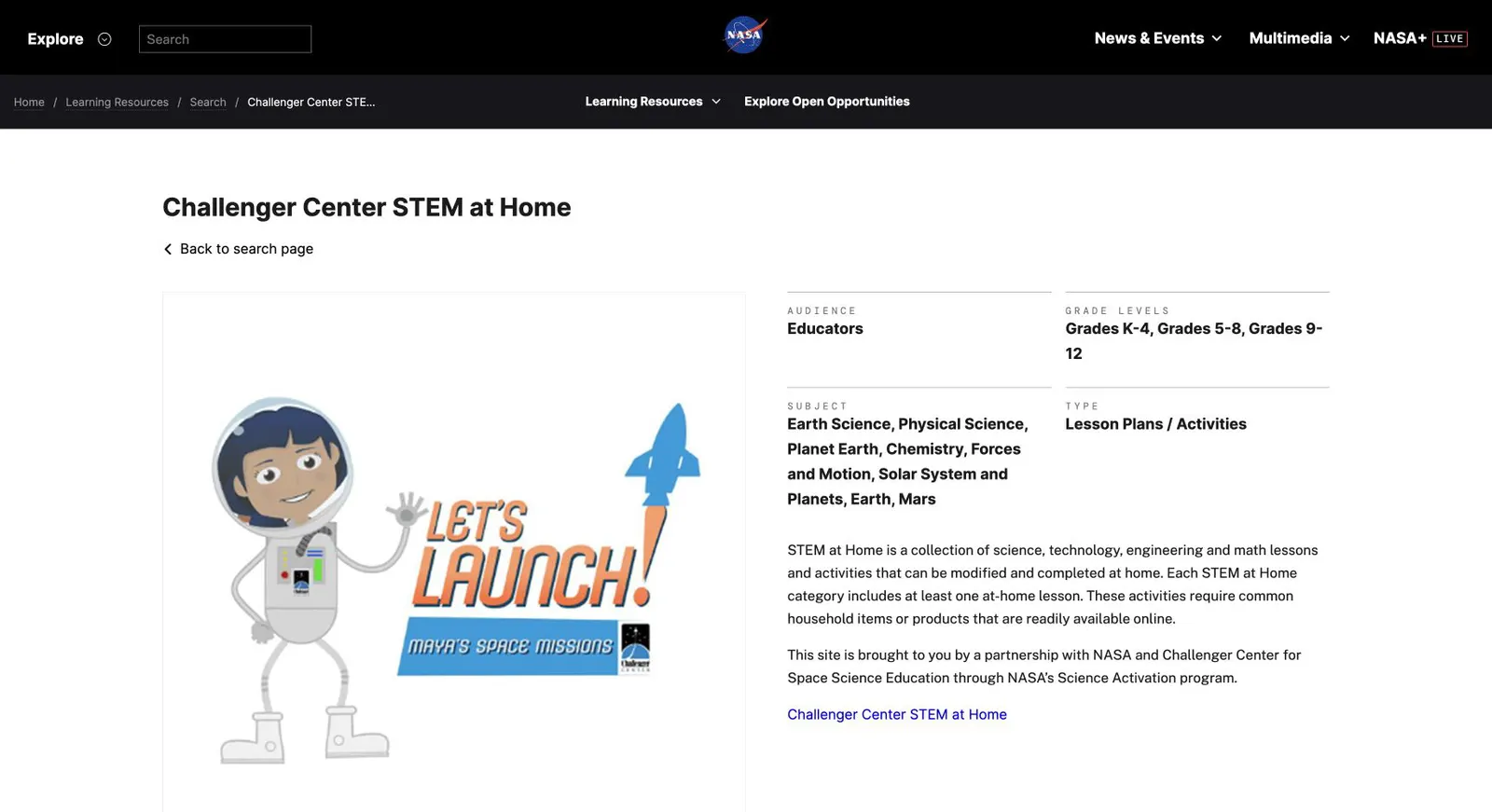
Challenger Center STEM at Home
A NASA and Challenger Center collection of adaptable science, technology, engineering, and math lessons for home learning, spanning Earth science, chemistry, forces, Mars, and the solar system. It is listed under Science and Space for ages 5–18.
Hubble's Cosmic Adventure
A NASA Hubble game lets children choose a journey through the universe, answer questions, and follow their choices to destinations from nearby planets to distant galaxies. It is listed under Space and Science for ages 8–14.
NASA ASTRO CAMP Community Partners Program
NASA’s community-partner program connects youth with hands-on NASA science activities in astrophysics, Earth science, planetary science, robotics, and related STEM topics. It is listed under Space and Science for ages Youth; partner-specific. Children and families can use it through a website.
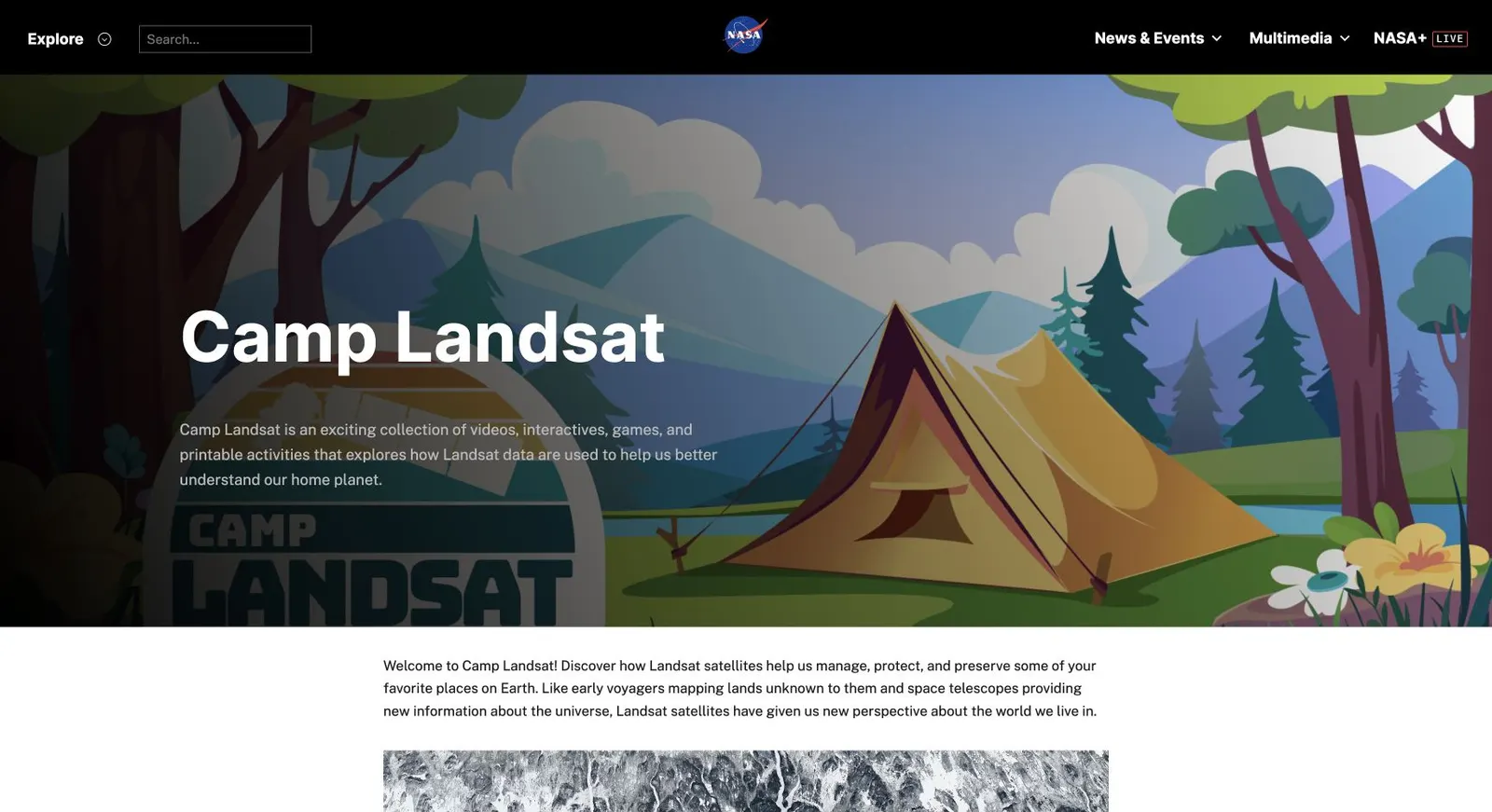
NASA Camp Landsat
A NASA collection of videos, interactives, games, and printable activities showing how Landsat satellite data help people understand and protect Earth. It is listed under Science and Nature & environment for ages 8–14. Children and families can use it through a website.
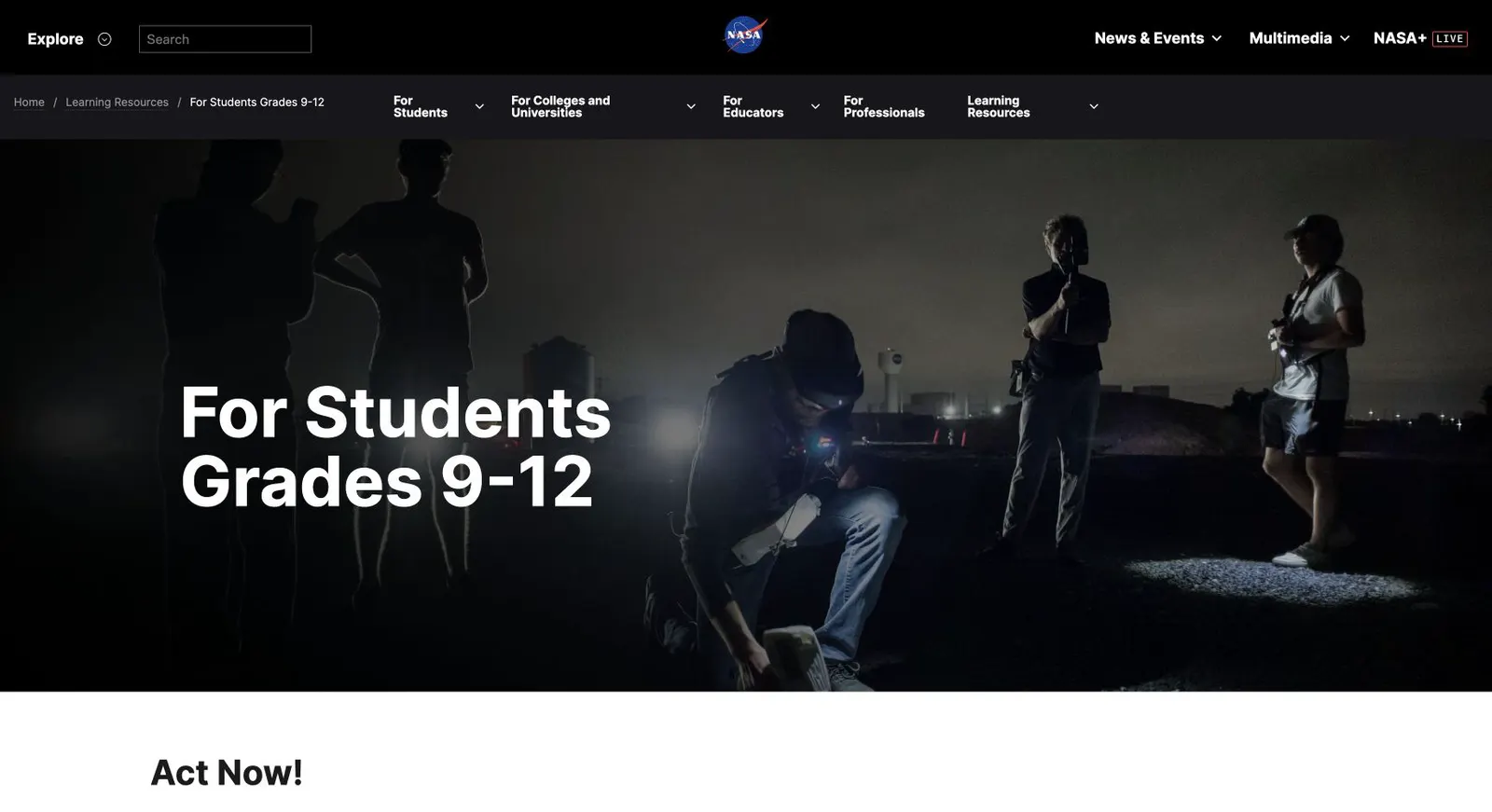
NASA For Students Grades 9–12
NASA’s high-school collection connects students with STEM challenges, career spotlights, interactives, NASA+, Artemis activities, podcasts, and space-science projects. It is listed under Science and Space for ages 14–18. Children and families can use it through a website and a YouTube channel.
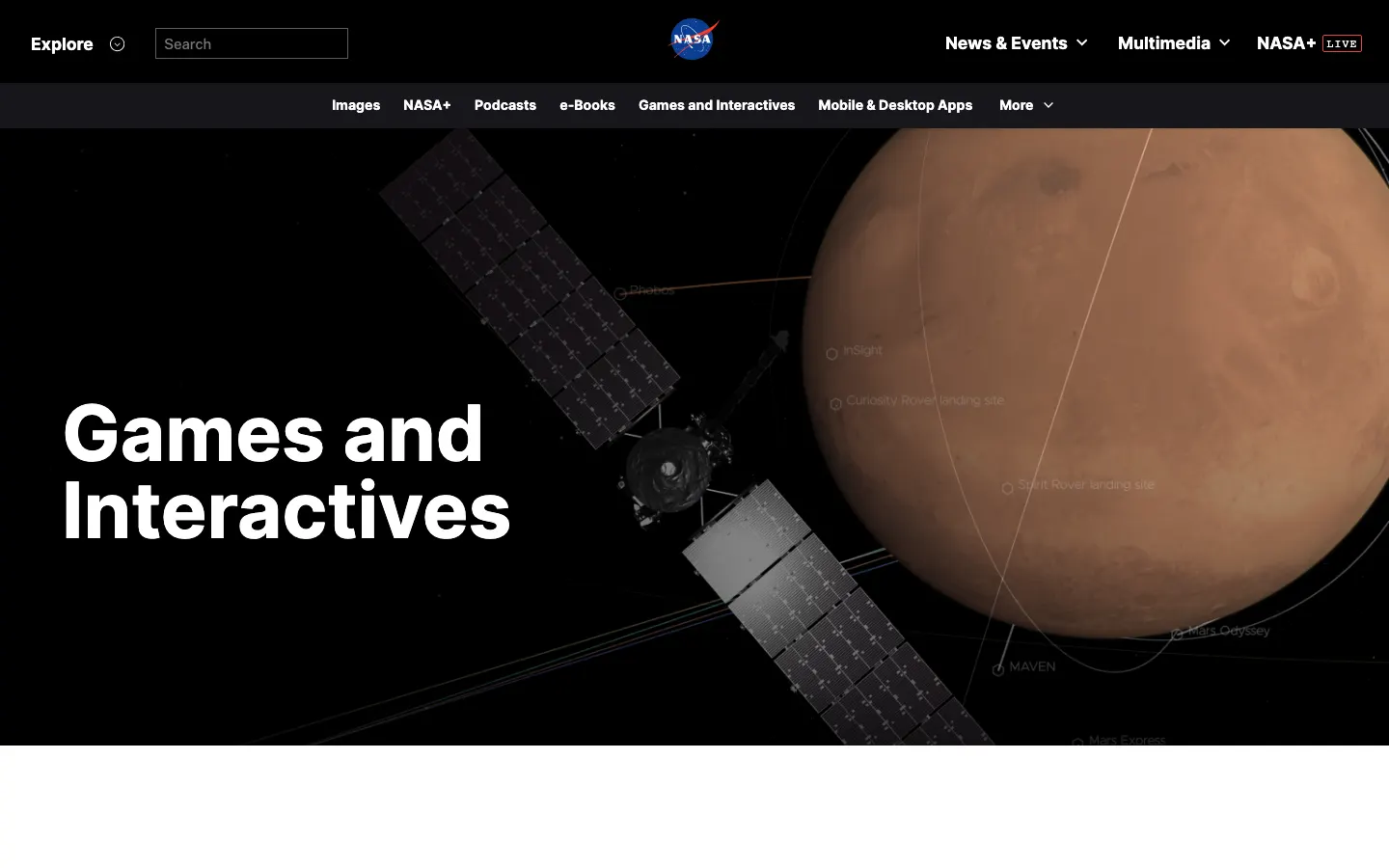
NASA Games and Interactives
NASA’s official games and interactives page gathers explorations, visualizations, stories, quizzes, simulations, and space and Earth-science activities for curious learners. It is listed under Science and Space for ages 7–16. Children and families can use it through a website.
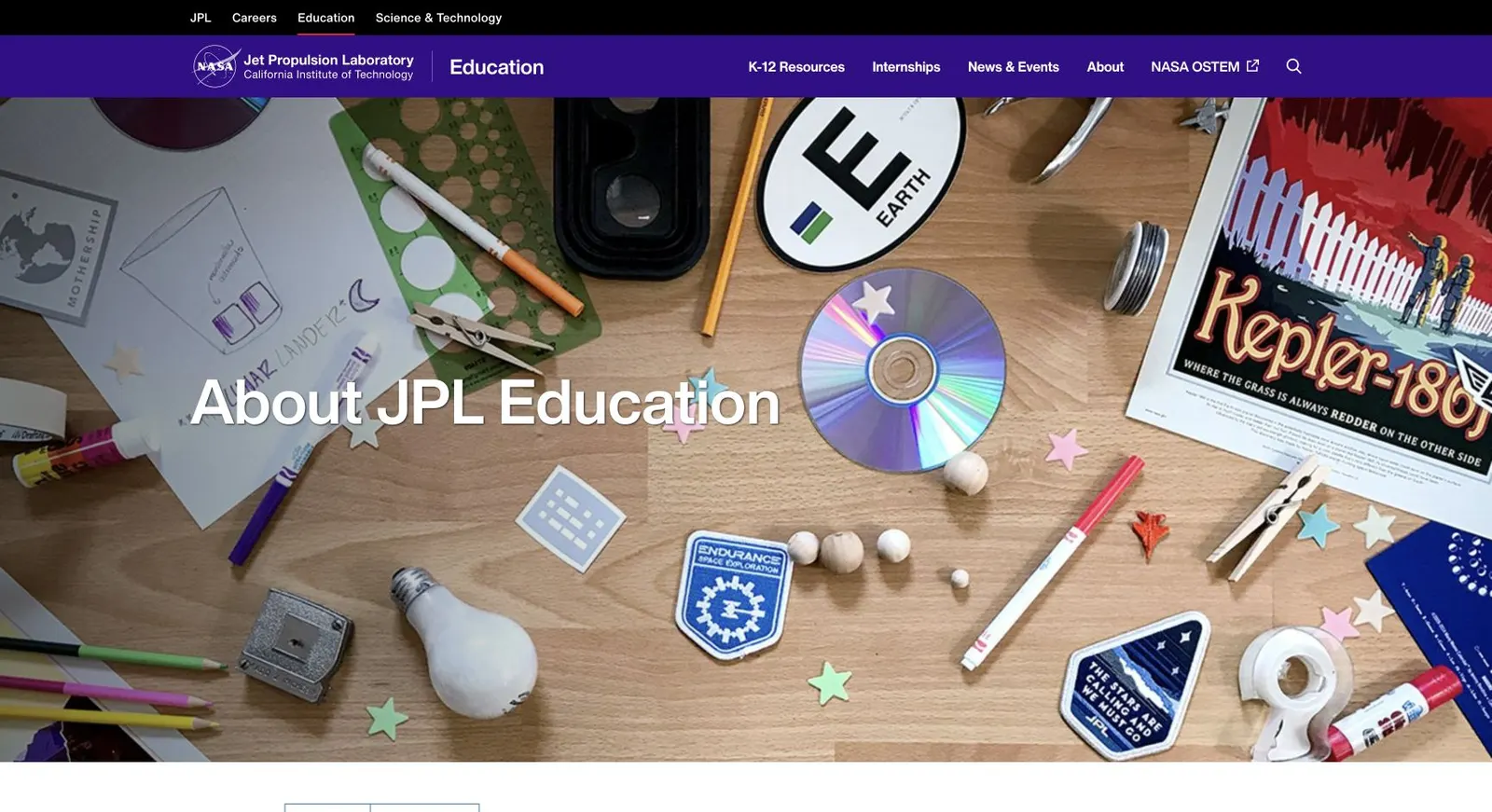
NASA JPL Education Overview
An official overview of NASA JPL’s education mission, audiences, K-12 content, STEM resources, and family-facing space learning. It is listed under Science, Technology, and Engineering for ages 8–18. Children and families can use it through a website.
NASA Knows Stories for Students in Grades K-4 and 5-8
NASA’s official student story collection explains space and science topics including black holes, the International Space Station, aerodynamics, Artemis, and more by elementary and middle-school grade bands. It is listed under Space and Science for ages Grades K-4 and 5-8.
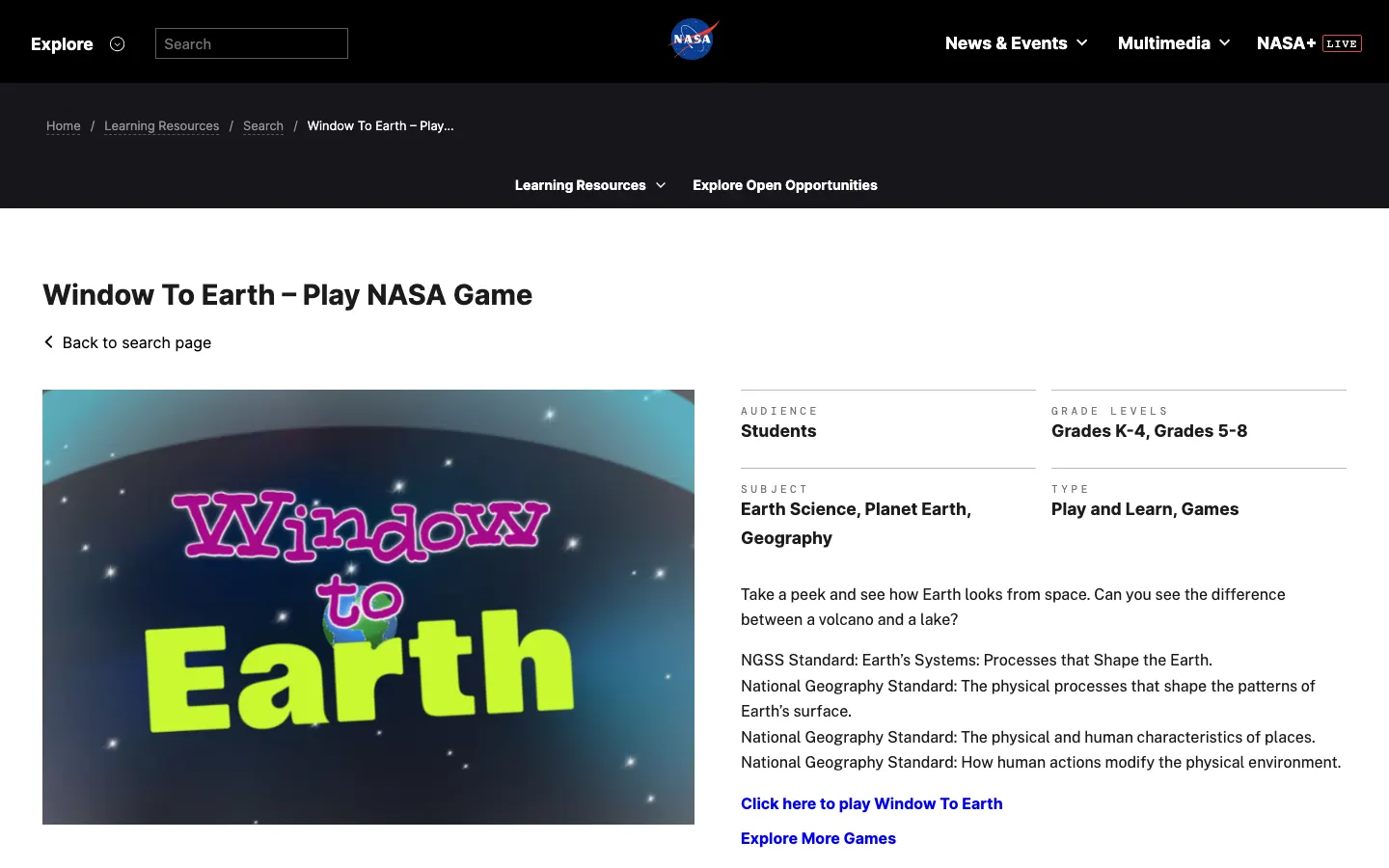
NASA Window To Earth
NASA Window To Earth is a play-and-learn game that helps students compare Earth features from space while exploring Earth science and geography. It is listed under Science and Space for ages Grades K–8. Children and families can use it through a website.
Learn Science with NASA
NASA’s learning resources hub helps children, families, and educators explore space and Earth science through activities, stories, missions, and classroom-ready materials. It is listed under Science and Space for ages 5–18. Children and families can use it through a website.
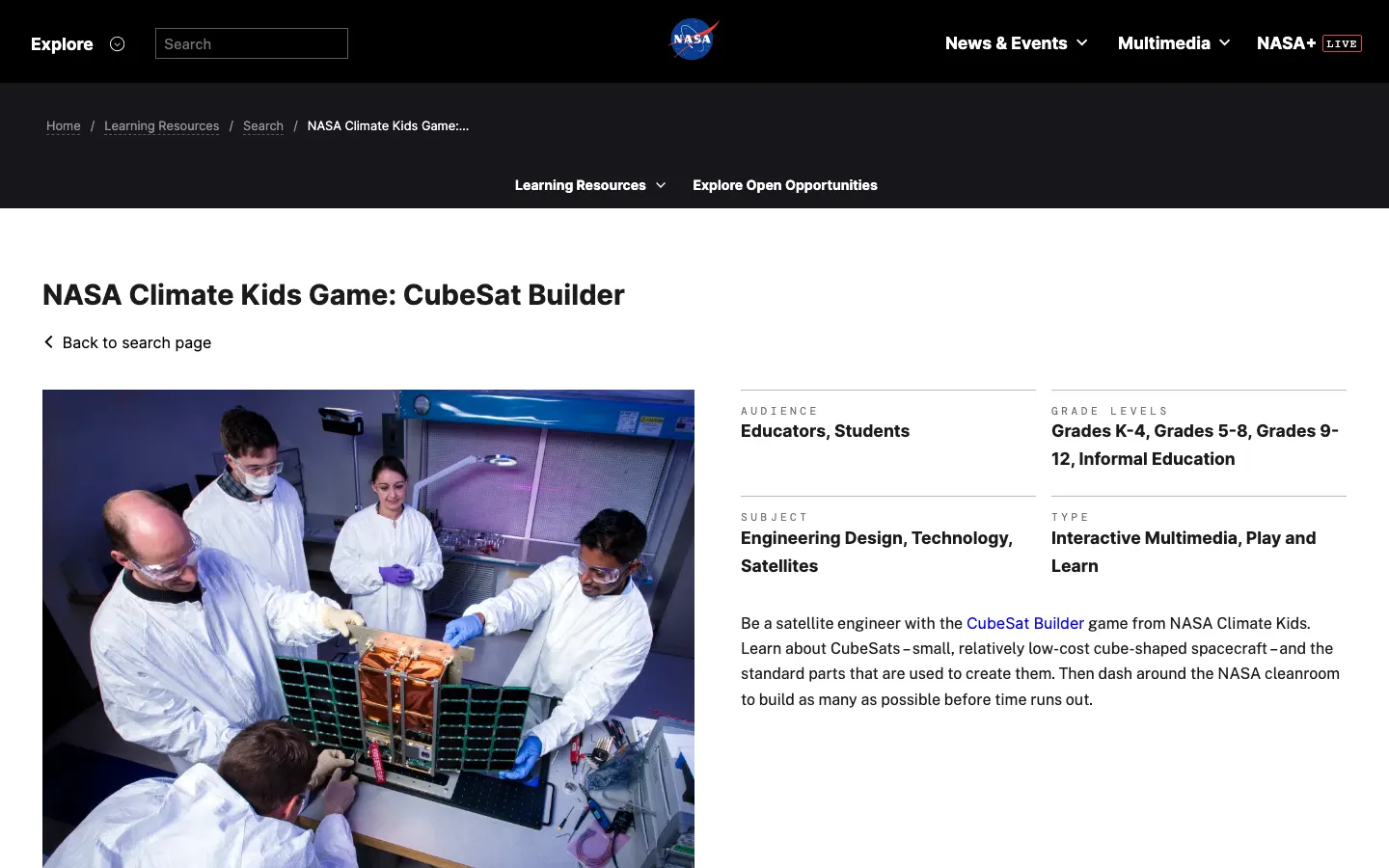
NASA Climate Kids CubeSat Builder
NASA Climate Kids CubeSat Builder is an interactive engineering game where learners design and build satellite parts while learning about CubeSats. It is listed under Coding and Science for ages K–12; informal education. Children and families can use it through a website.
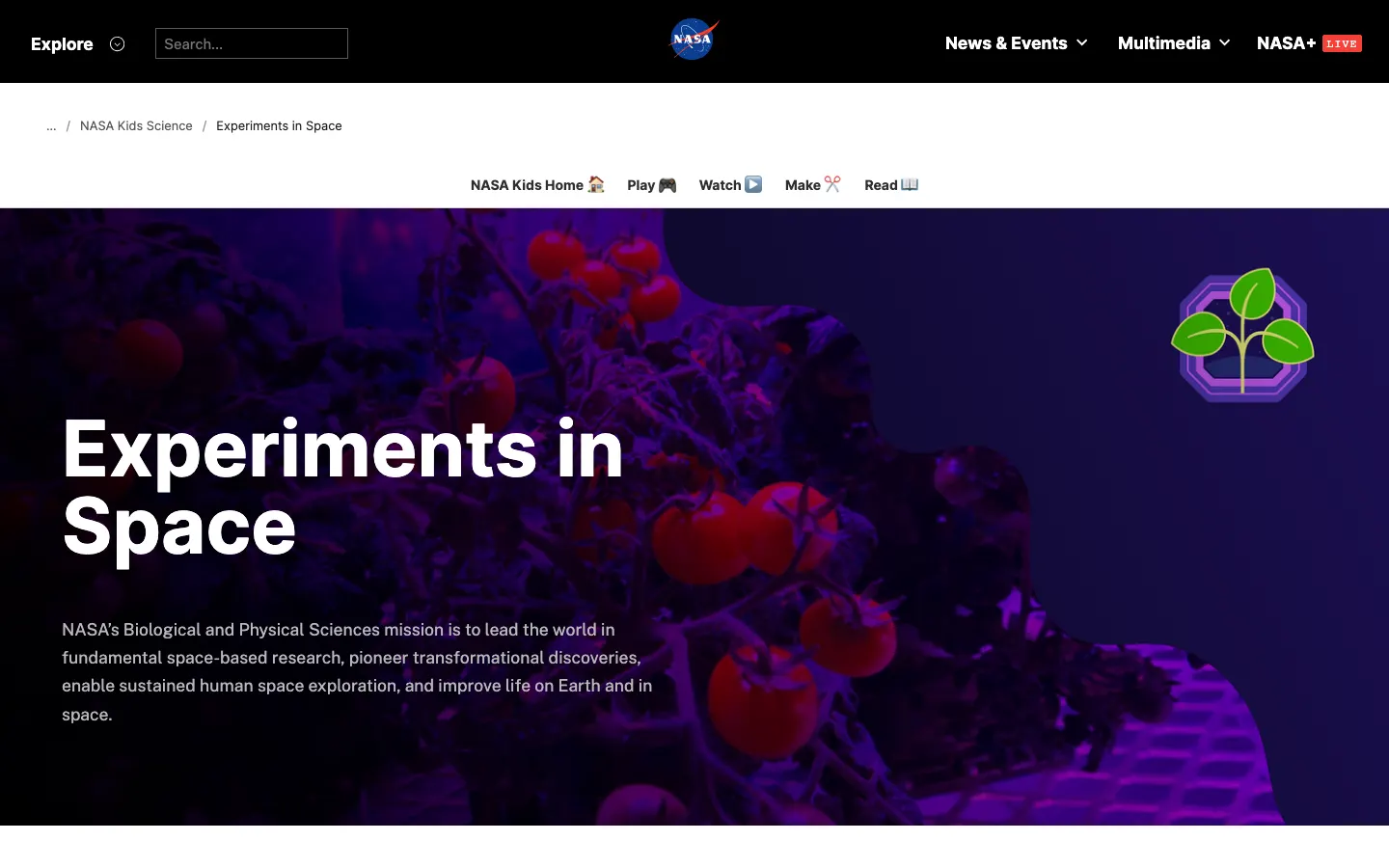
NASA Experiments in Space
NASA Experiments in Space is a NASA Science kids hub that introduces space experiments and points families toward Space Place, StarChild, Camp Landsat, EO Kids, and Mission: Biomes. It is listed under Science and Space for ages Children; exact range not stated.
NASA Join the Artemis Mission to the Moon
NASA’s official Artemis learning page offers ways for students and families to make, launch, compete, and learn about the missions returning humans to the Moon. It is listed under Space and Science for ages Children and students; activity-specific.
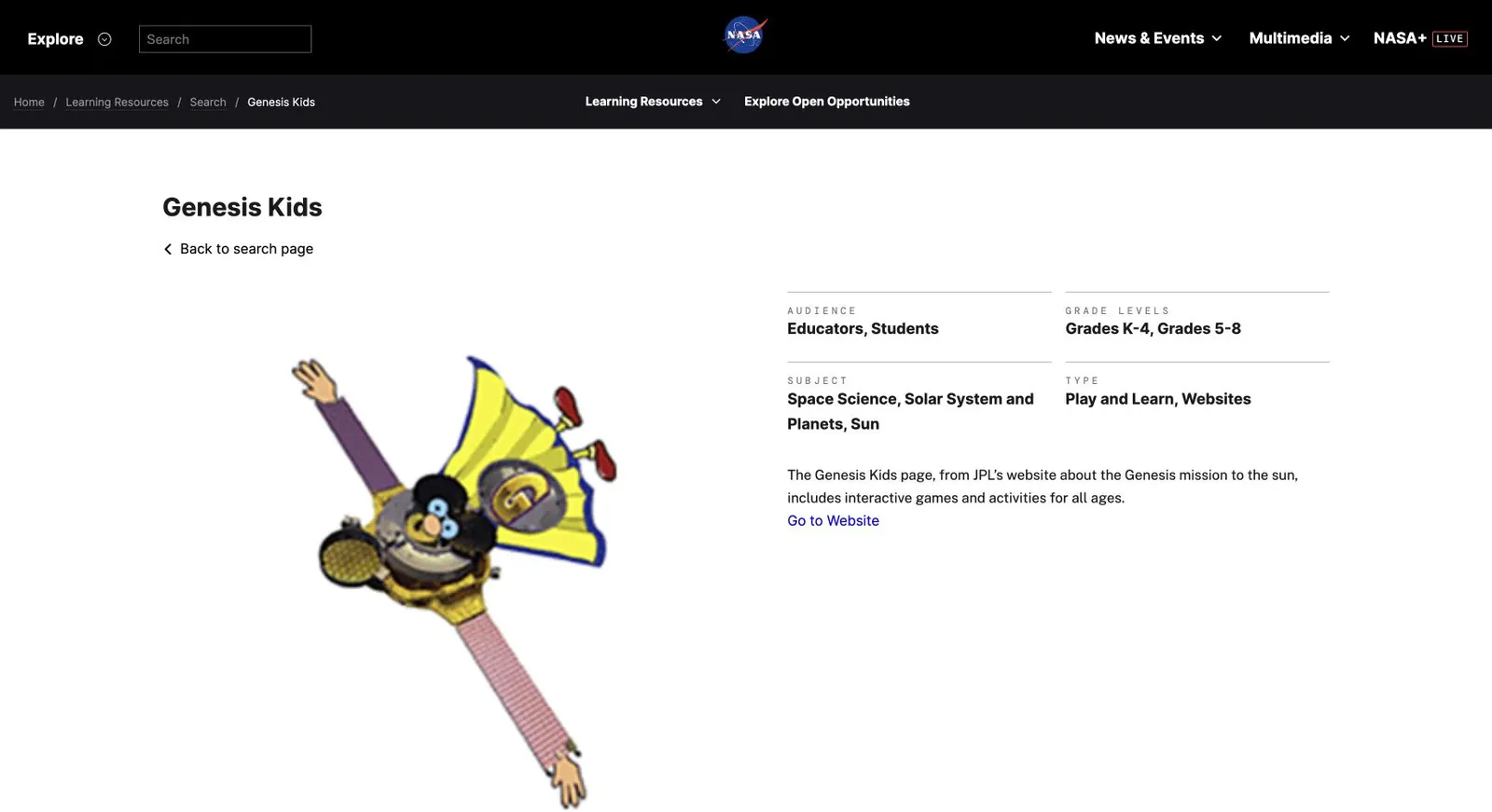
Genesis Kids
NASA’s Genesis mission learning page introduces children to the Sun and solar system through interactive games and activities, including instrument matching, Mars mazes, and word searches. It is listed under Science and Space for ages 5–14.
NASA Infiniscope Virtual Field Trips
NASA and Arizona State University’s Infiniscope virtual field trips use interactive multimedia to explore Mars, dinosaur extinction, origins of life, and Earth and space science. It is listed under Science and Space for ages 10–18.
NASA Kids Solar System
A NASA Kids Science solar-system learning page about planets, moons, asteroids, and comets, with an age-appropriate overview and links to related NASA kids exploration. It is listed under Space and Science for ages 6–14.
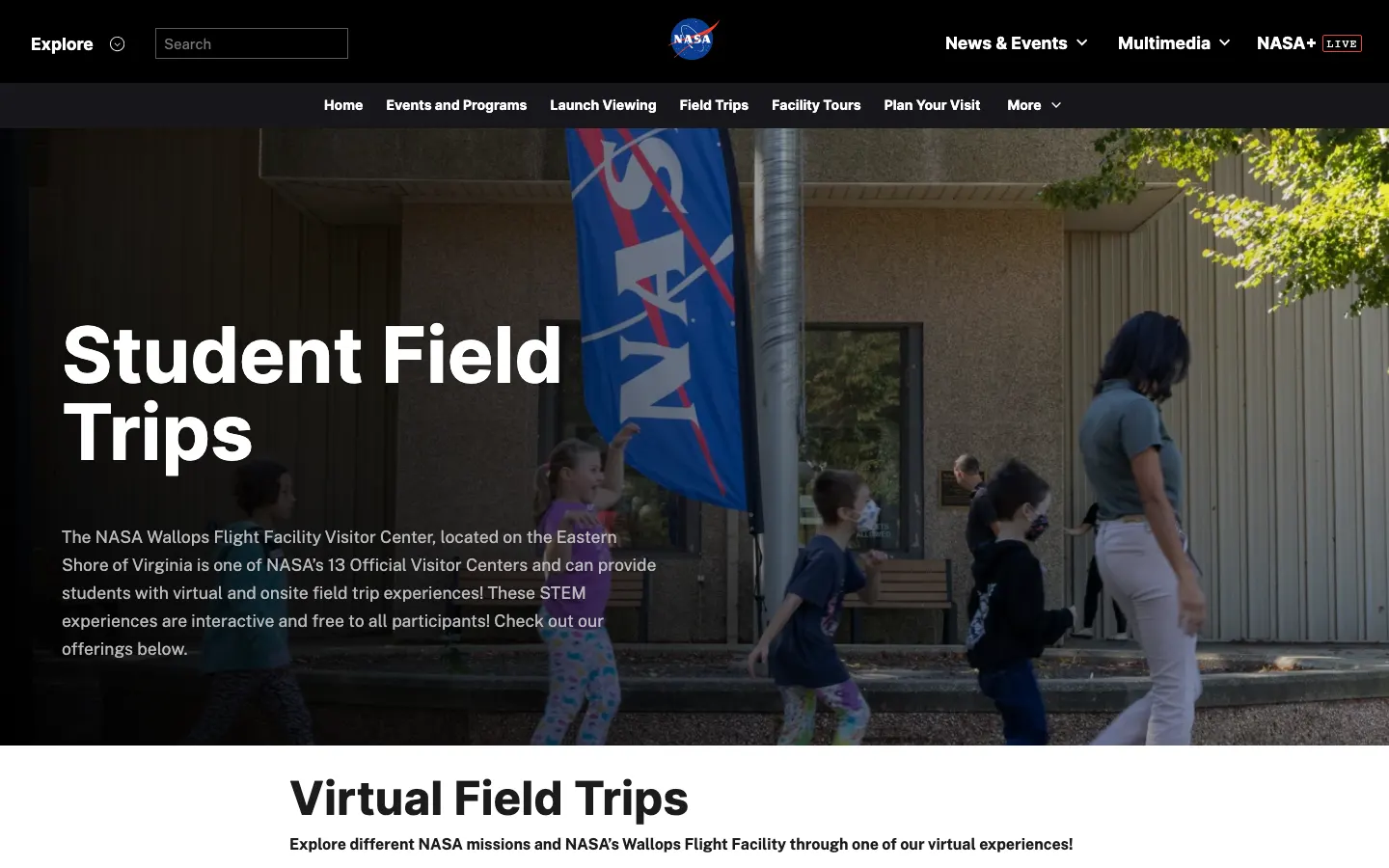
NASA Wallops Virtual Field Trips
NASA Wallops Visitor Center virtual field trips bring live educators to classrooms for programs about the Moon, Mars, the solar system, and aerospace. It is listed under Space and Science for ages 8–18. Children and families can use it through a website.
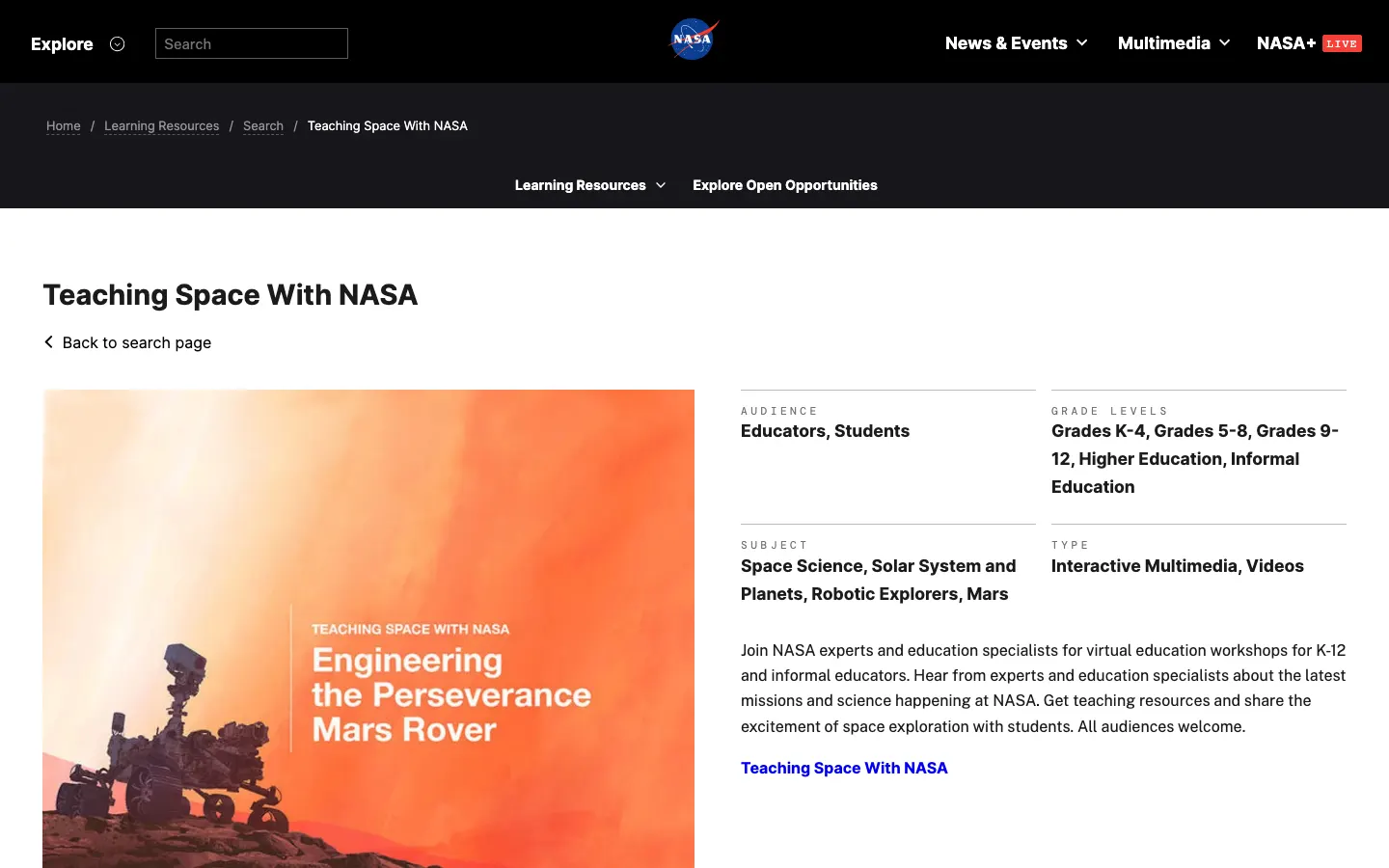
Teaching Space With NASA
Teaching Space With NASA is a NASA program of virtual education workshops where experts and education specialists connect K–12 and informal educators with current space missions and resources. It is listed under Science and Space for ages K–12 and informal education.
What Is the Nancy Grace Roman Space Telescope? (Grades 5-8)
NASA’s middle-school explainer introduces the Nancy Grace Roman Space Telescope and how it will help astronomers study dark energy, dark matter, exoplanets, and more. It is listed under Space and Science for ages Grades 5-8.
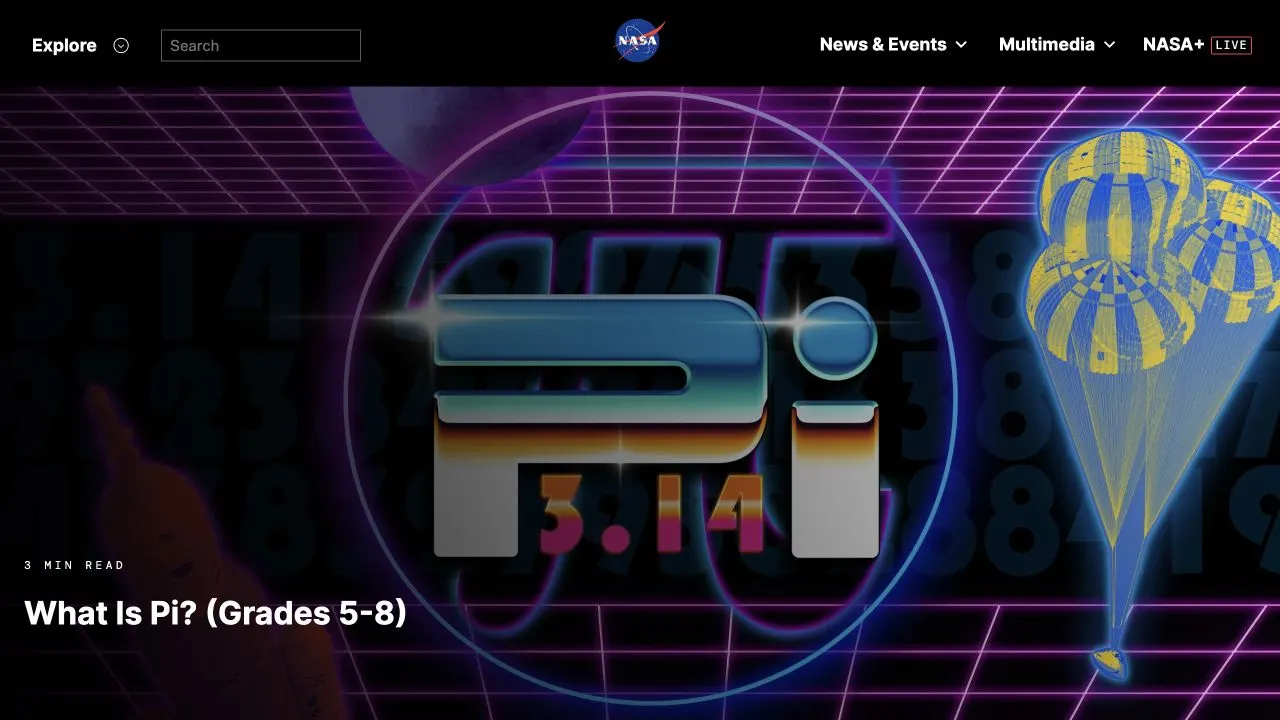
What Is Pi? (Grades 5-8)
NASA’s grade 5-8 math explainer uses spacecraft, planets, parachutes, and fuel tanks to show how pi supports geometry, physics, engineering, and space exploration. It is listed under Mathematics and Space for ages Grades 5-8.
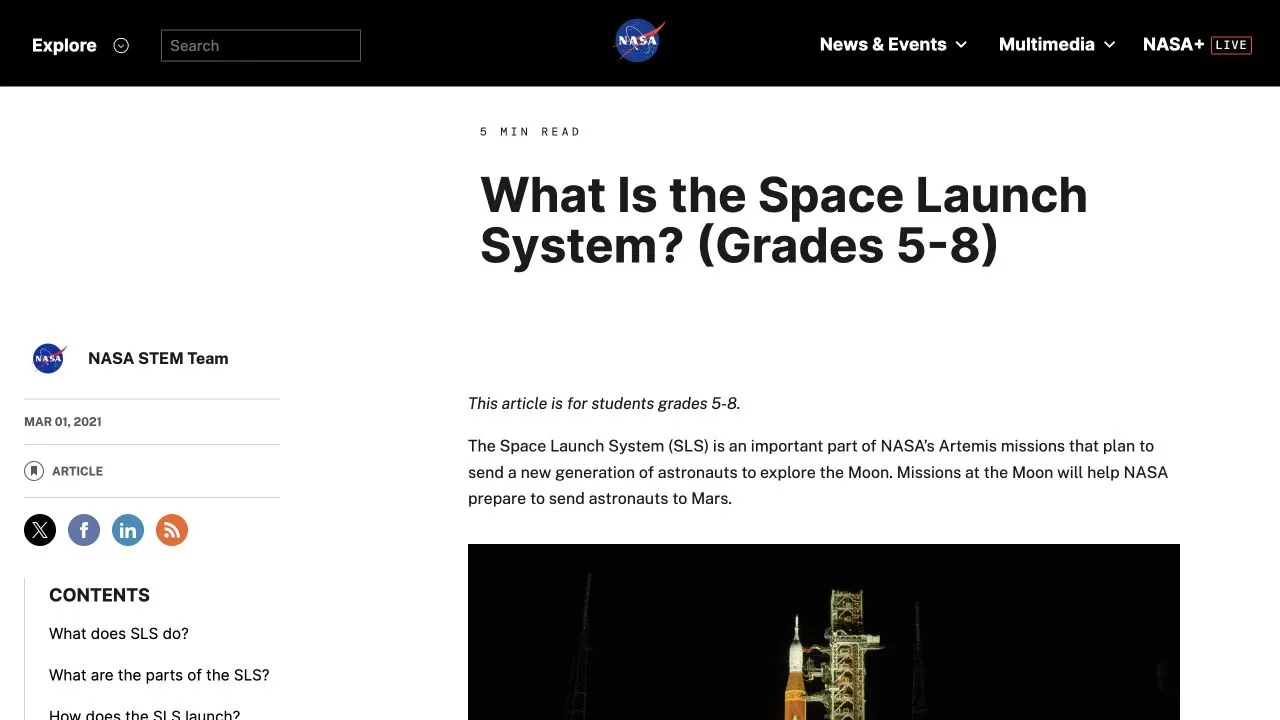
What Is the Space Launch System? (Grades 5-8)
NASA’s grade 5-8 explainer shows how the Space Launch System works, how its rocket stages support Artemis missions, and which careers help build and operate it. It is listed under Engineering and Space for ages Grades 5-8.
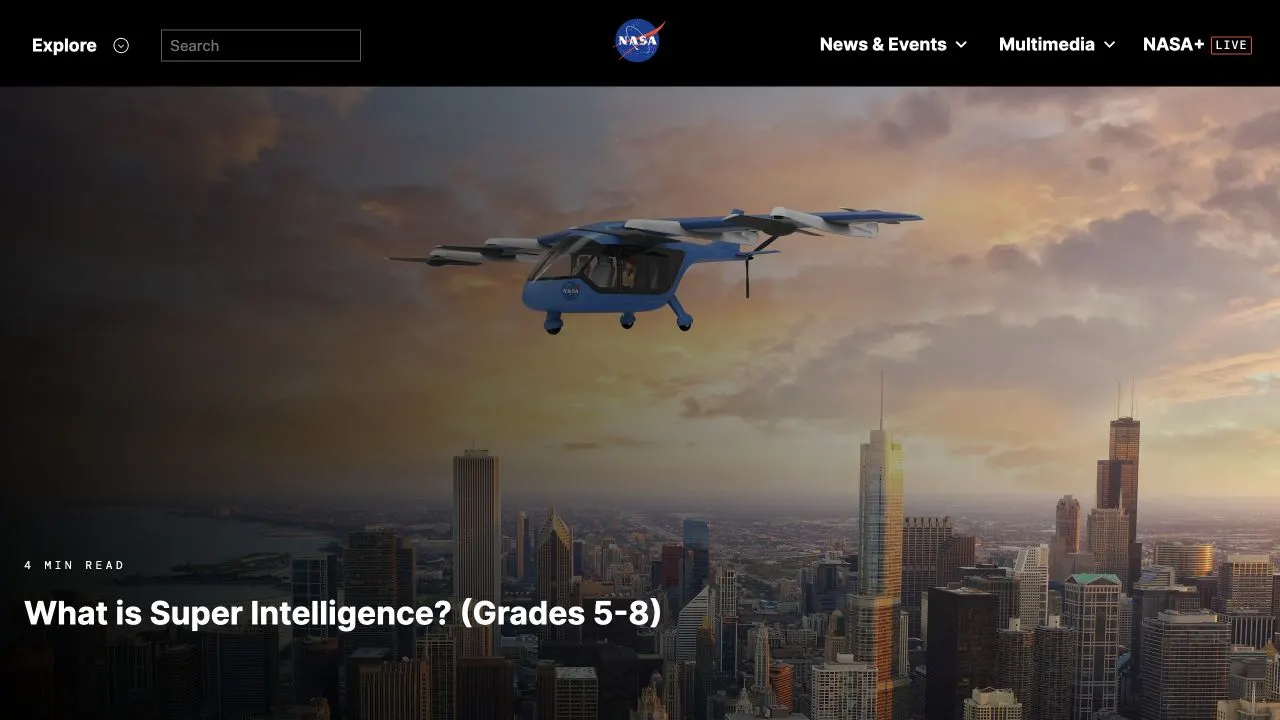
What Is Super Intelligence? (Grades 5-8)
NASA’s grade 5-8 technology explainer introduces machine learning and related ideas through examples from rovers, space science, Earth observation, and careers. It is listed under Coding and Science for ages Grades 5-8. Children and families can use it through a website.
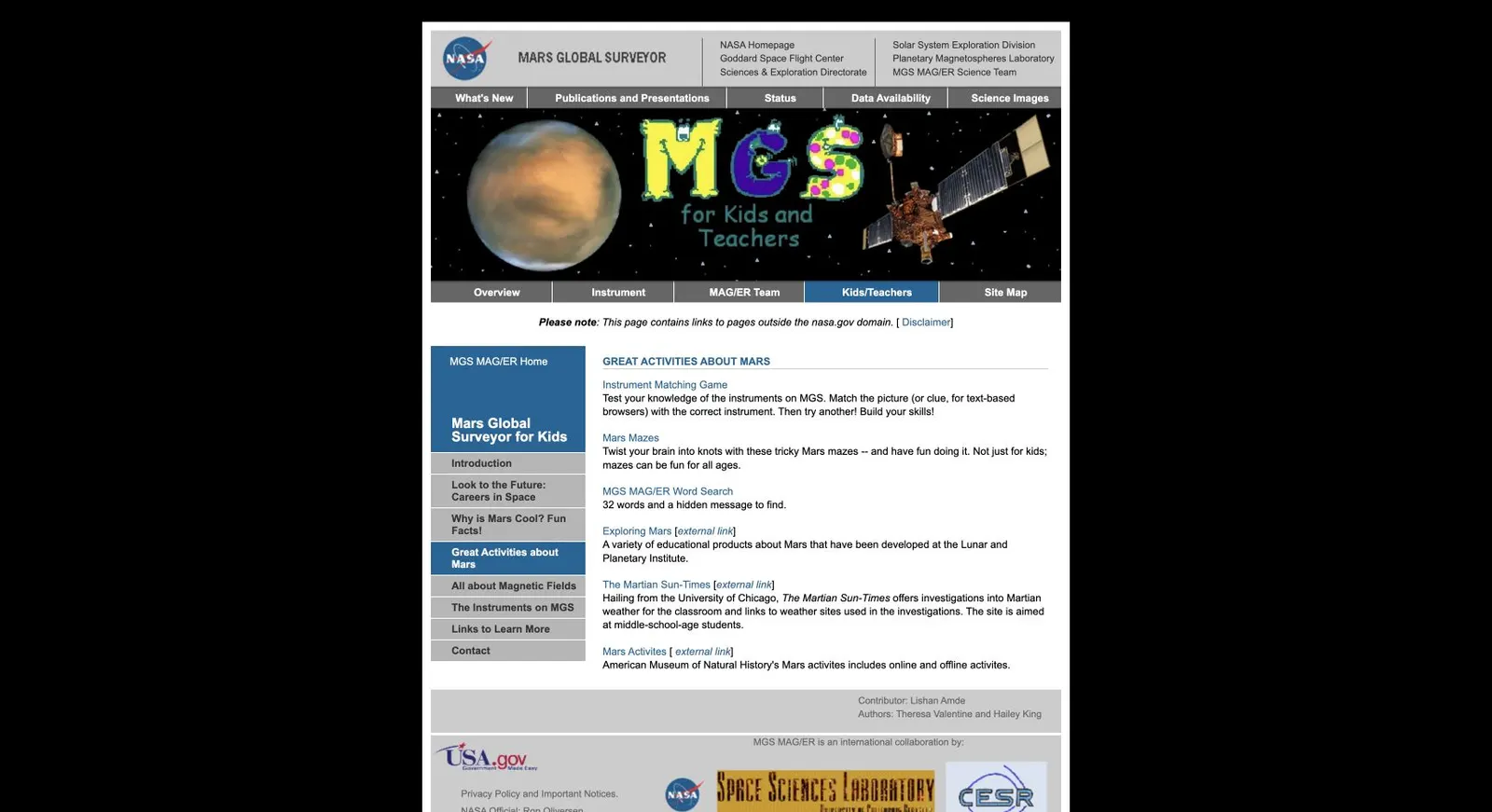
Mars Global Surveyor for Kids: Mars Activities
NASA’s Mars Global Surveyor for Kids page offers instrument-matching games, Mars mazes, and a Mars-themed word search, plus links to additional Mars learning activities. It is listed under Science and Space for ages 8–14.
See something wrong?
Report an outdated organization detail, logo, link, or resource.