Space NASA
for kids
Explore 20 trusted space nasa resources selected for curious kids, with clear ages, access details, and parent context.
Two useful ways to narrow the directory
This page brings together space resources that also match nasa. Each listing keeps its own age range, platform details, languages, links, and parent notes, so you can compare options without losing context.
Explore all space resources →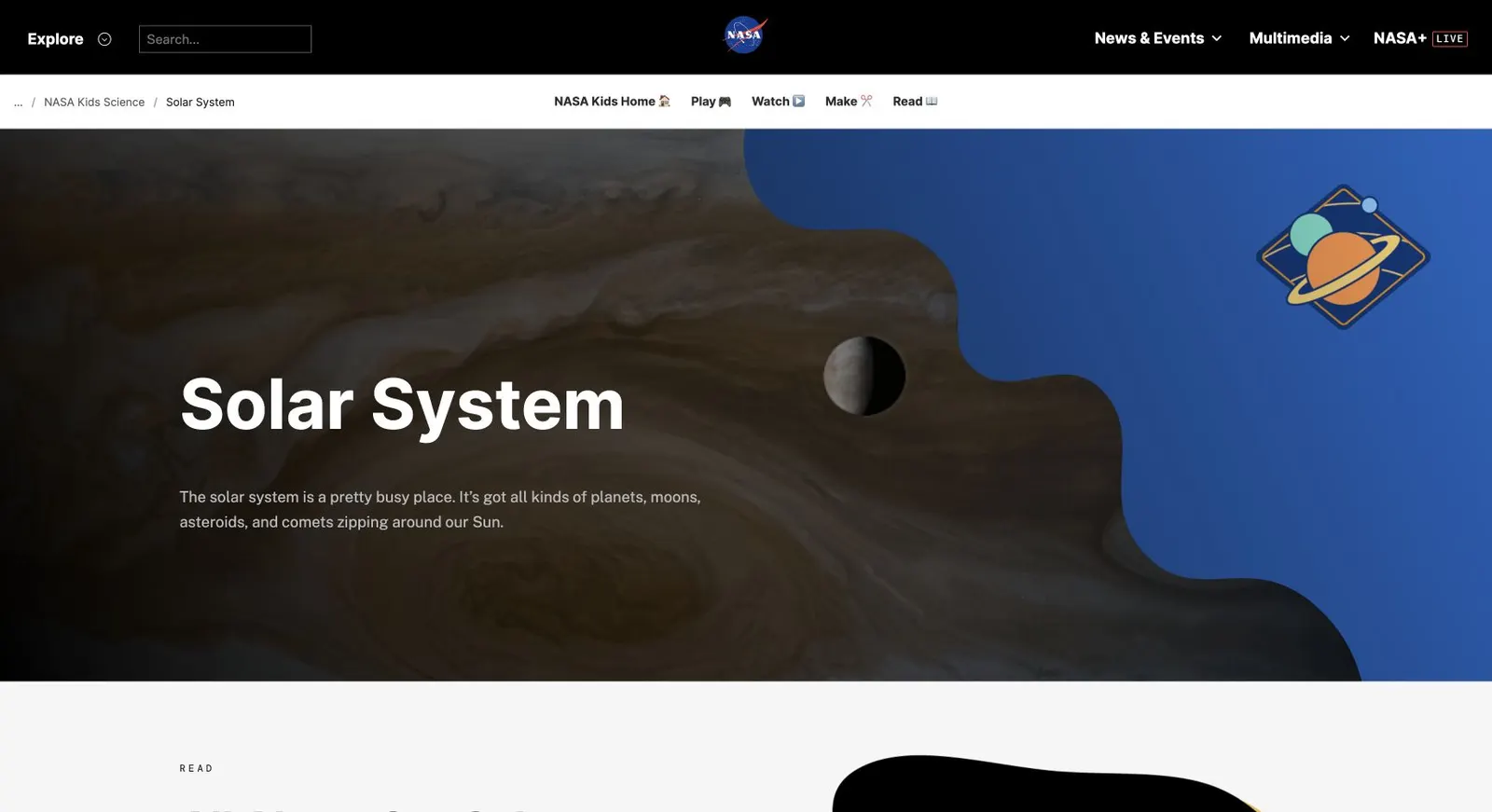
NASA Kids Solar System
A NASA Kids Science solar-system learning page about planets, moons, asteroids, and comets, with an age-appropriate overview and links to related NASA kids exploration. It is listed under Space and Science for ages 6–14.
Read the full resource review →More space picks
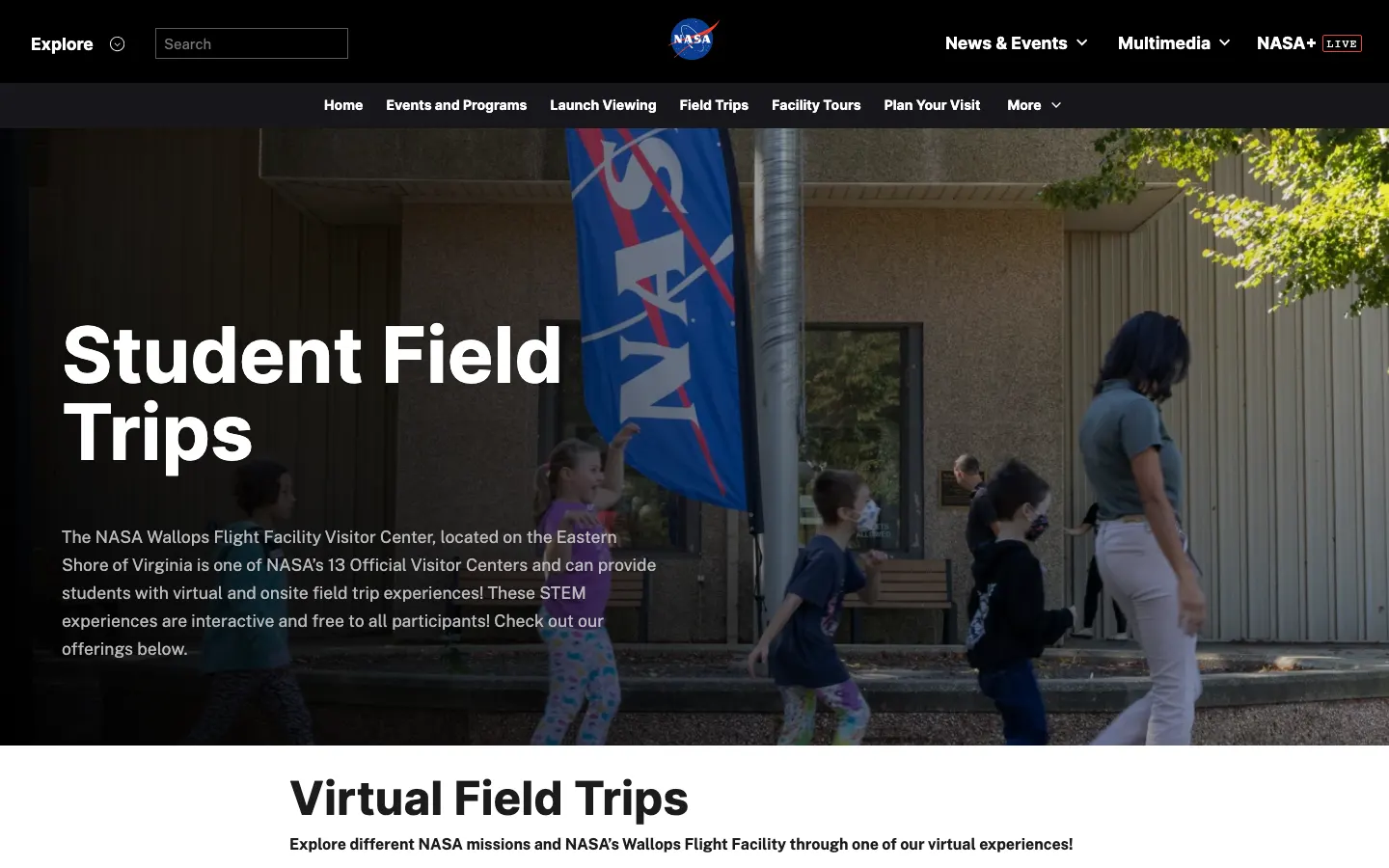
NASA Wallops Virtual Field Trips
NASA Wallops Visitor Center virtual field trips bring live educators to classrooms for programs about the Moon, Mars, the solar system, and aerospace. It is listed under Space and Science for ages 8–18. Children and families can use it through a website.
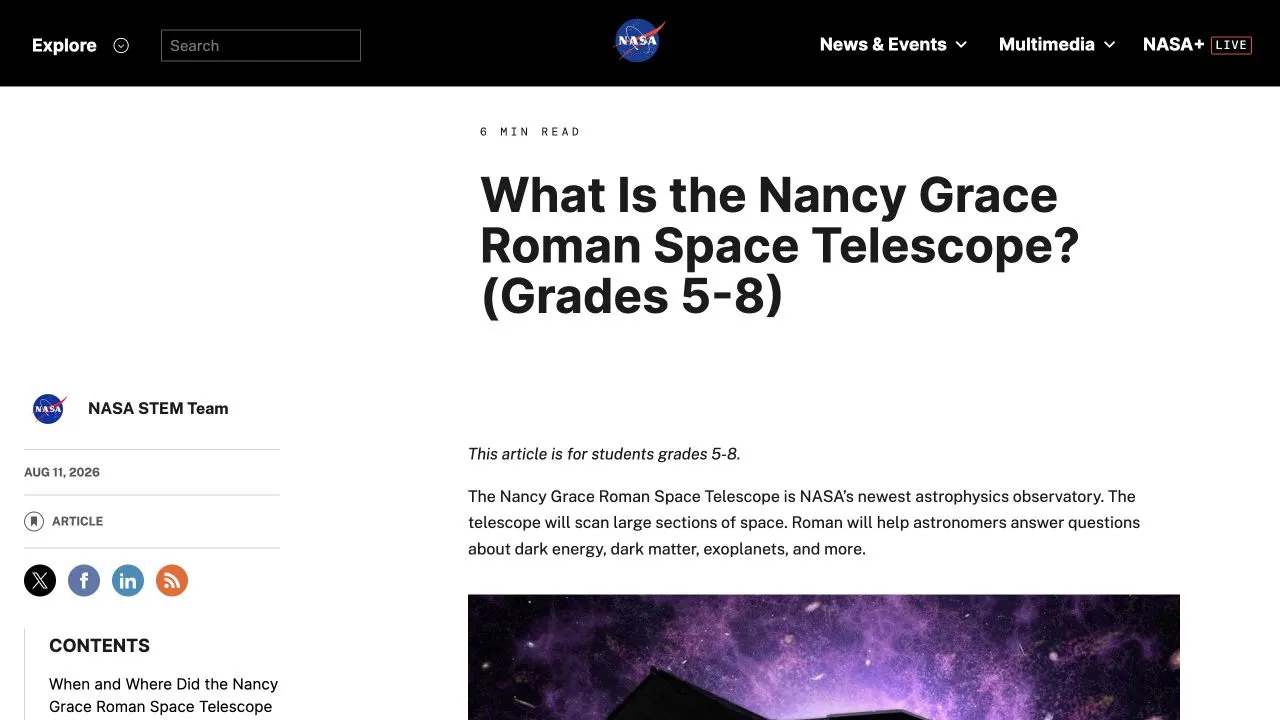
What Is the Nancy Grace Roman Space Telescope? (Grades 5-8)
NASA’s middle-school explainer introduces the Nancy Grace Roman Space Telescope and how it will help astronomers study dark energy, dark matter, exoplanets, and more. It is listed under Space and Science for ages Grades 5-8.
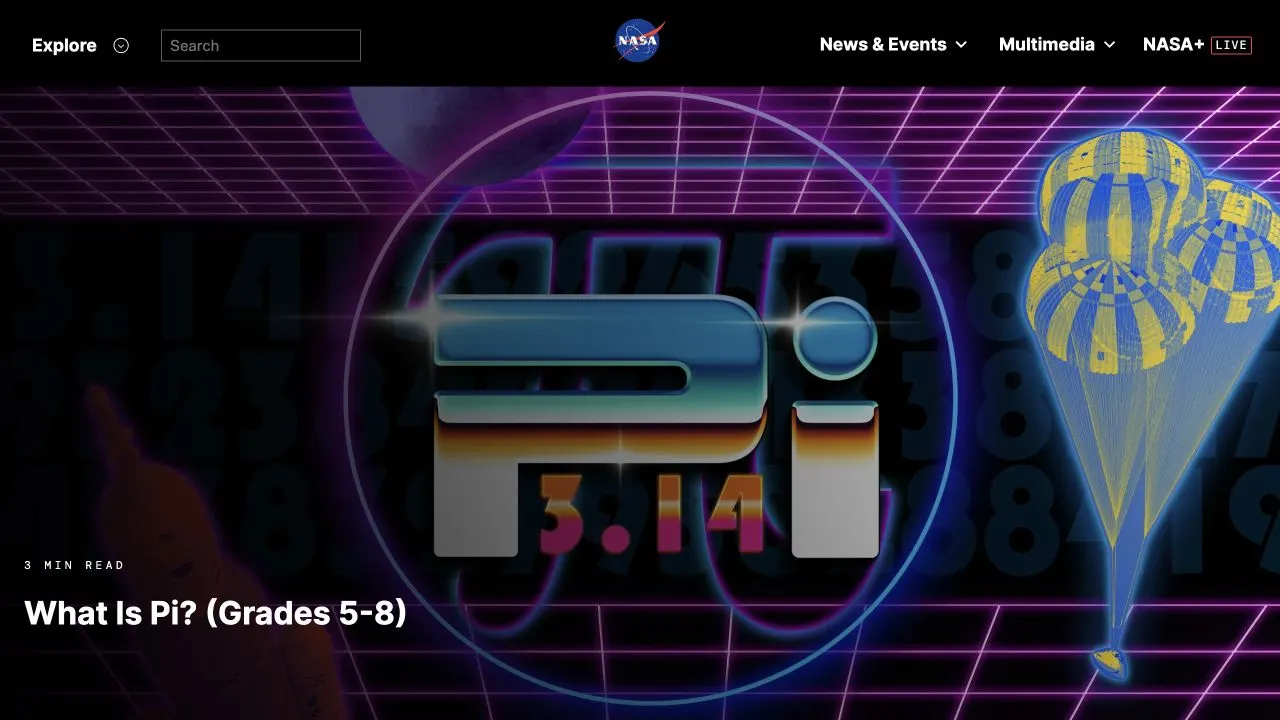
What Is Pi? (Grades 5-8)
NASA’s grade 5-8 math explainer uses spacecraft, planets, parachutes, and fuel tanks to show how pi supports geometry, physics, engineering, and space exploration. It is listed under Mathematics and Space for ages Grades 5-8.
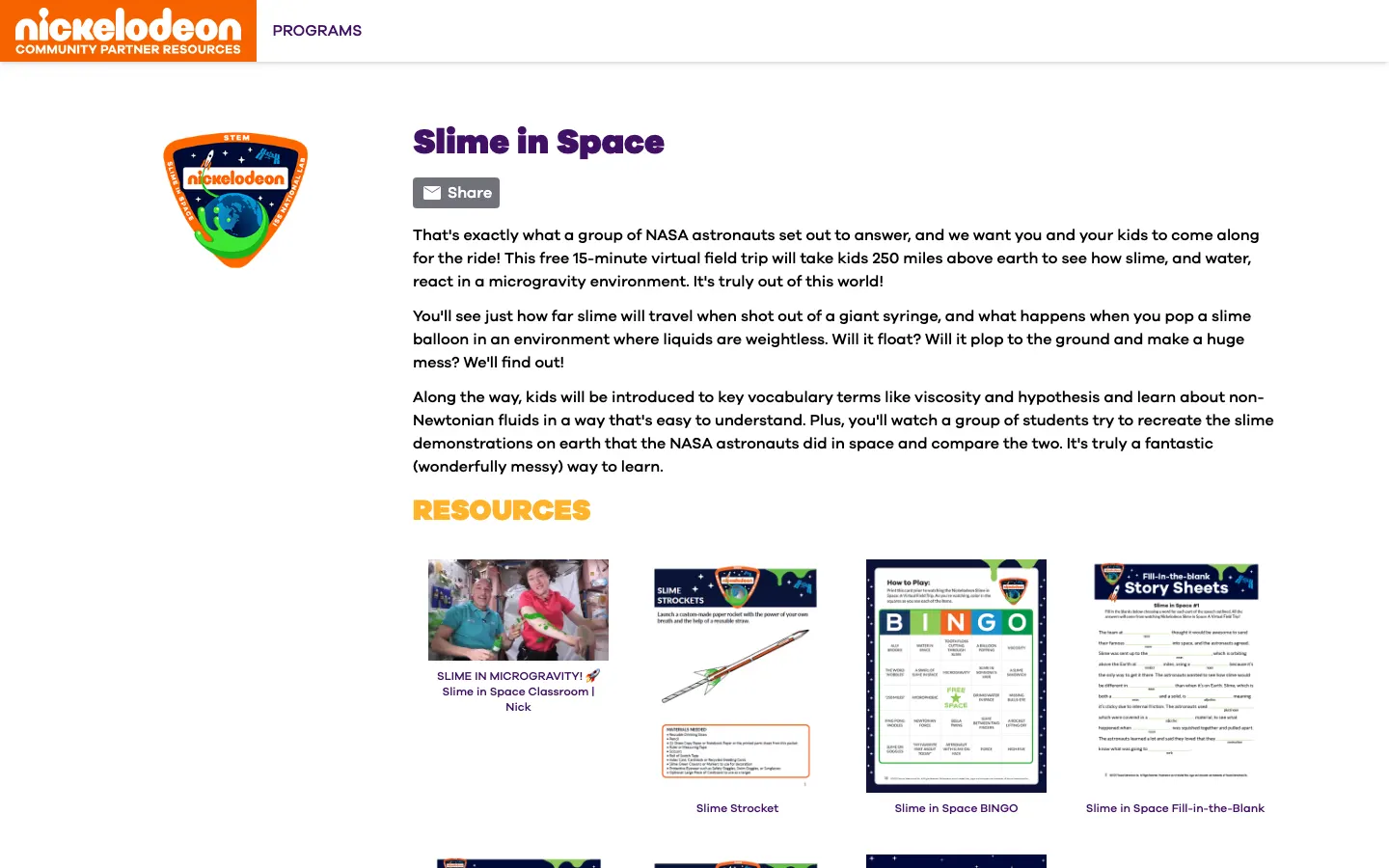
Slime in Space
Slime in Space is an official Nickelodeon and NASA virtual field trip about slime, water, and microgravity, with classroom-facing science content. It is listed under Science and Space for ages 8–12. Children and families can use it through a website.
NASA Knows Stories for Students in Grades K-4 and 5-8
NASA’s official student story collection explains space and science topics including black holes, the International Space Station, aerodynamics, Artemis, and more by elementary and middle-school grade bands. It is listed under Space and Science for ages Grades K-4 and 5-8.
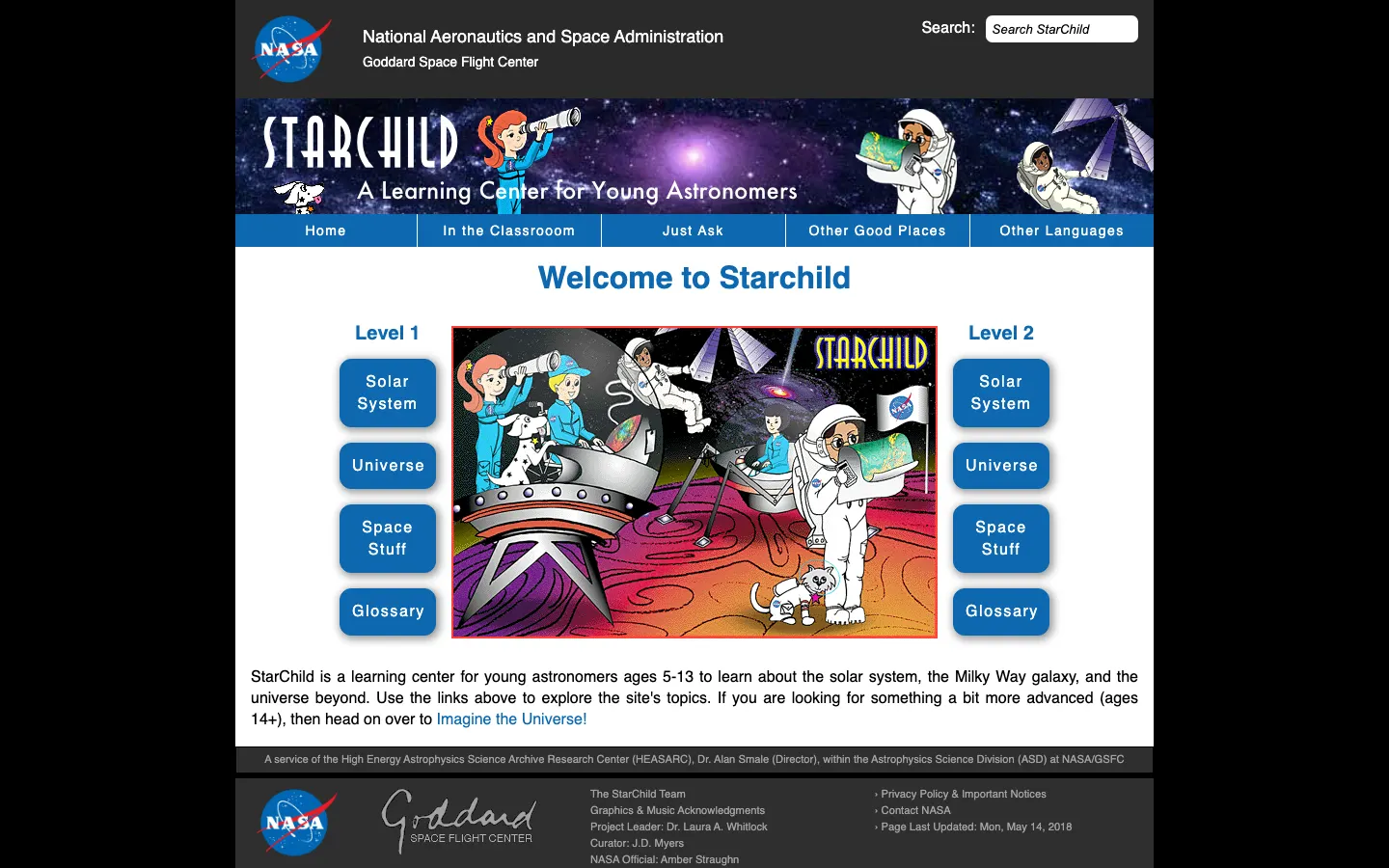
NASA StarChild
NASA StarChild is a learning center for young astronomers with levelled pages about the solar system, the universe, space science, and an astronomy glossary. It is listed under Space and Science for ages 5–13.
NASA Earth Observatory for Kids
A NASA digital magazine collection for young learners aged 9–14, combining Earth-observation stories with downloadable hands-on activities about satellites, climate, land, water, and weather. It is listed under Science and Nature & environment for ages 9–14.
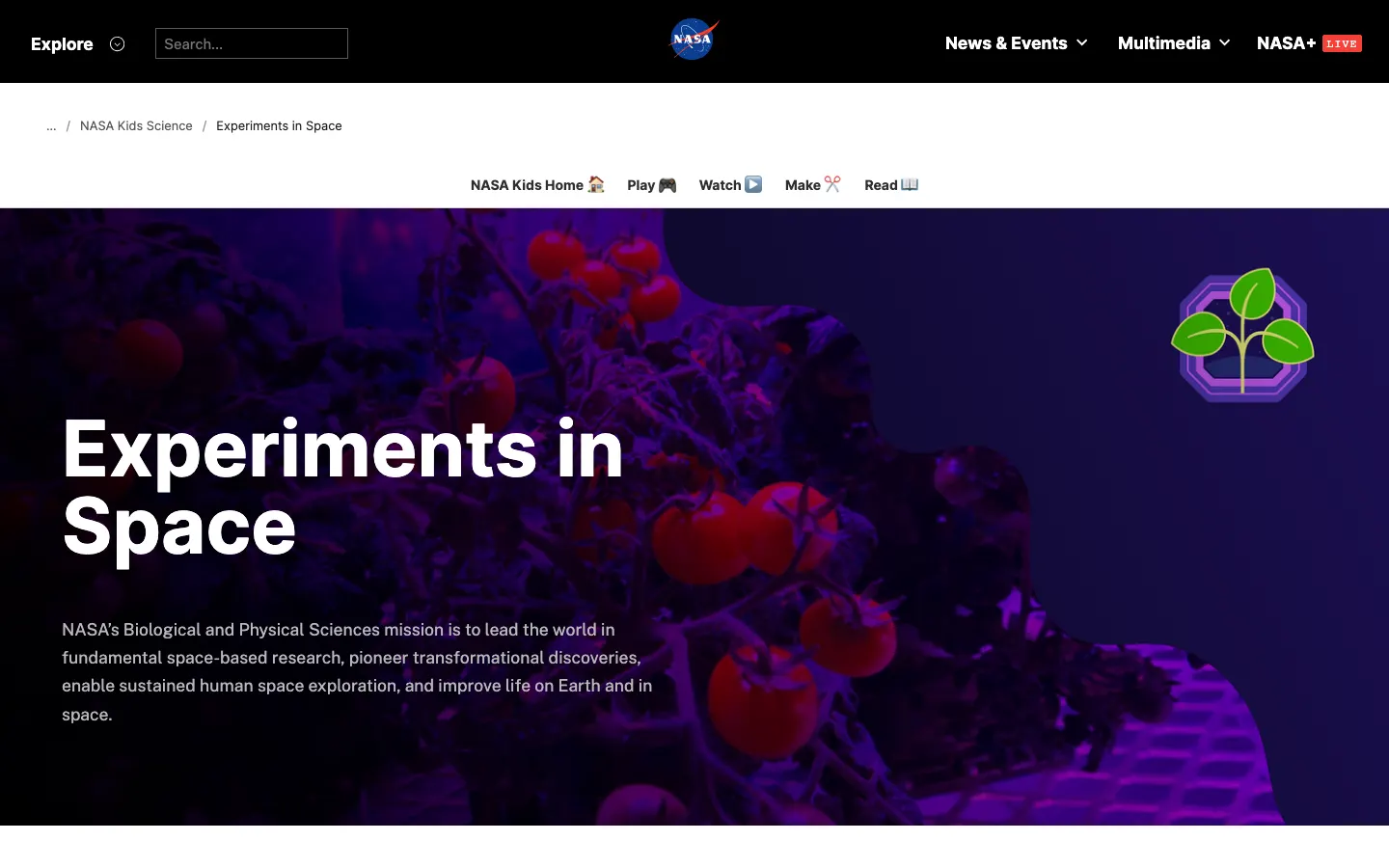
NASA Experiments in Space
NASA Experiments in Space is a NASA Science kids hub that introduces space experiments and points families toward Space Place, StarChild, Camp Landsat, EO Kids, and Mission: Biomes. It is listed under Science and Space for ages Children; exact range not stated.
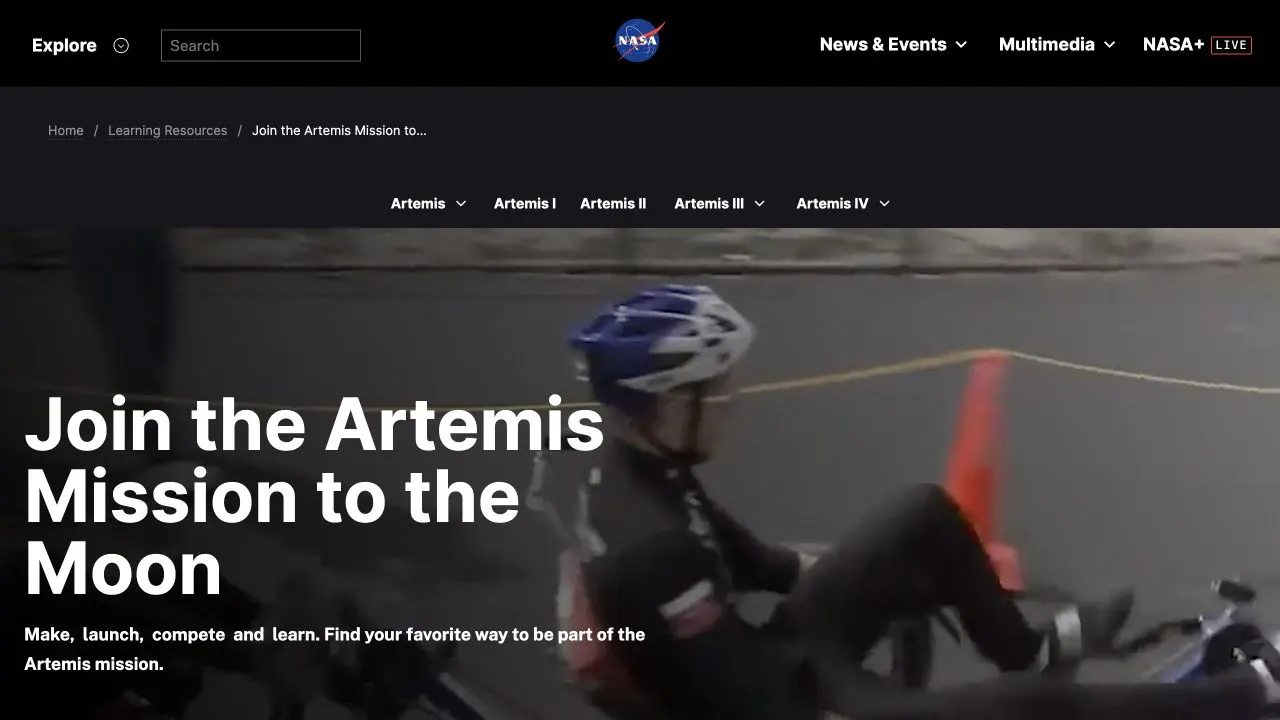
NASA Join the Artemis Mission to the Moon
NASA’s official Artemis learning page offers ways for students and families to make, launch, compete, and learn about the missions returning humans to the Moon. It is listed under Space and Science for ages Children and students; activity-specific.
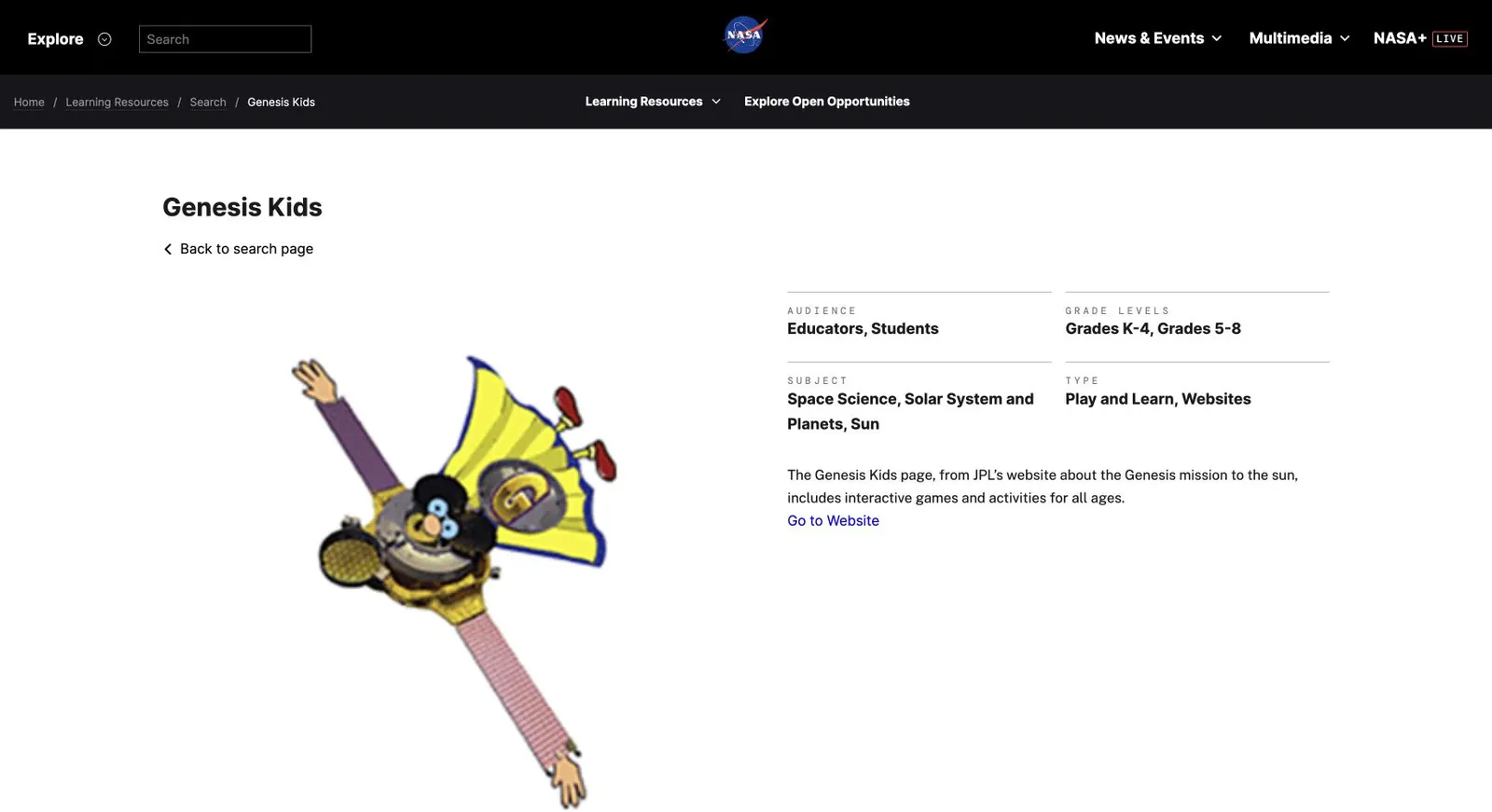
Genesis Kids
NASA’s Genesis mission learning page introduces children to the Sun and solar system through interactive games and activities, including instrument matching, Mars mazes, and word searches. It is listed under Science and Space for ages 5–14.
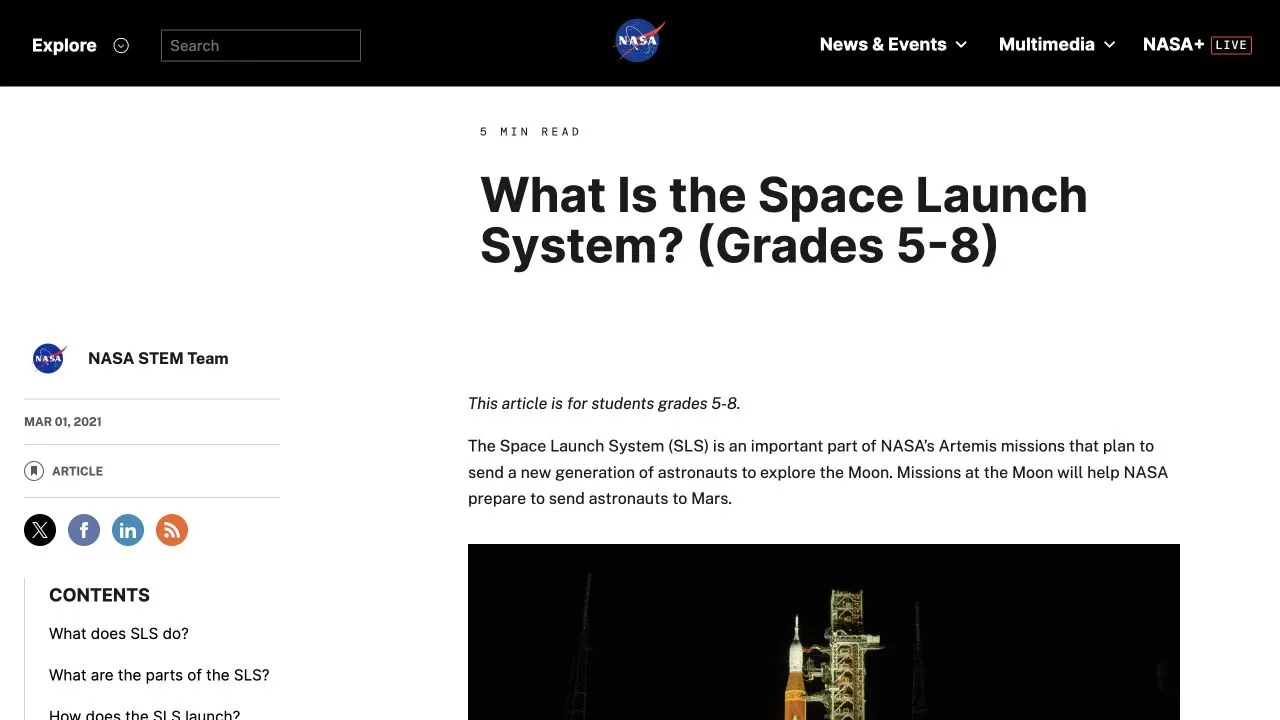
What Is the Space Launch System? (Grades 5-8)
NASA’s grade 5-8 explainer shows how the Space Launch System works, how its rocket stages support Artemis missions, and which careers help build and operate it. It is listed under Engineering and Space for ages Grades 5-8.
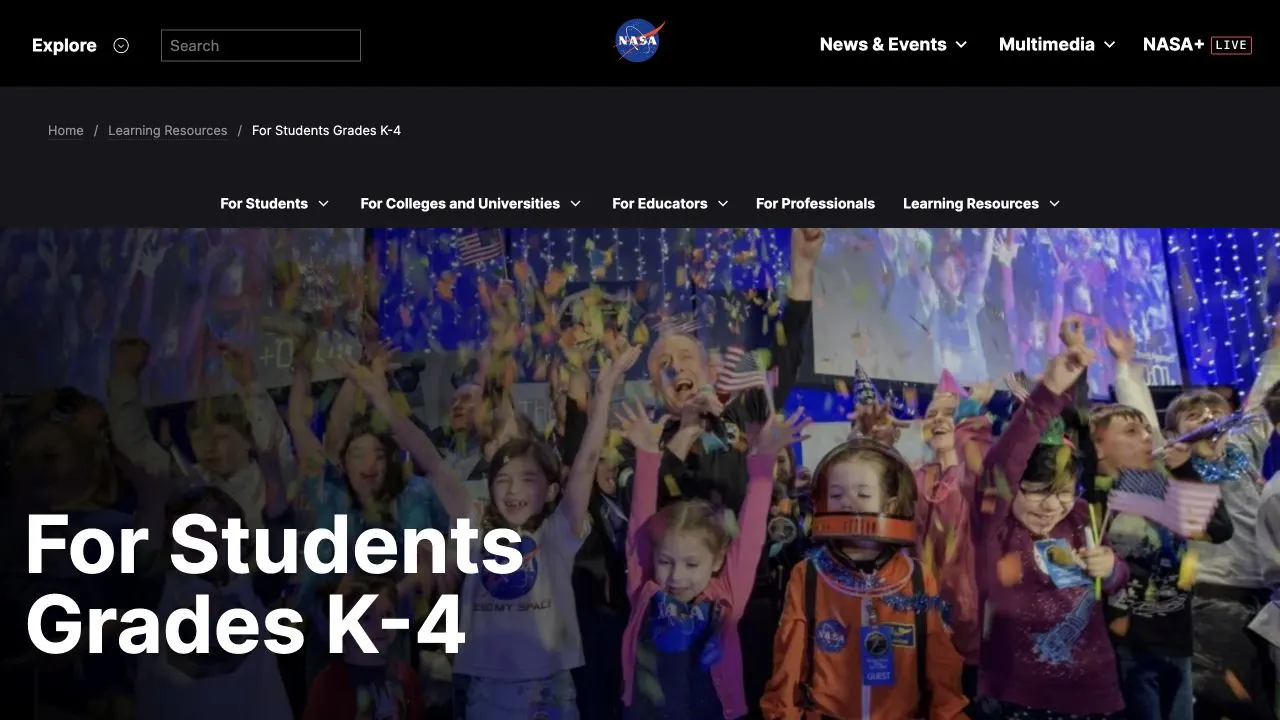
NASA For Students Grades K–4
NASA’s K–4 student hub offers age-appropriate space, Earth and engineering learning resources for younger students. It is listed under Space and Science for ages Grades K–4. Children and families can use it through a website.
Compare with context
Use this collection to find a direction, then open each resource page before sharing it with a child. The individual review shows languages, access formats, tags, age guidance, source links, and notes for grown-ups.
Search the full directory →