Space Nature
for kids
Explore 15 trusted space nature resources selected for curious kids, with clear ages, access details, and parent context.
Two useful ways to narrow the directory
This page brings together space resources that also match nature. Each listing keeps its own age range, platform details, languages, links, and parent notes, so you can compare options without losing context.
Explore all space resources →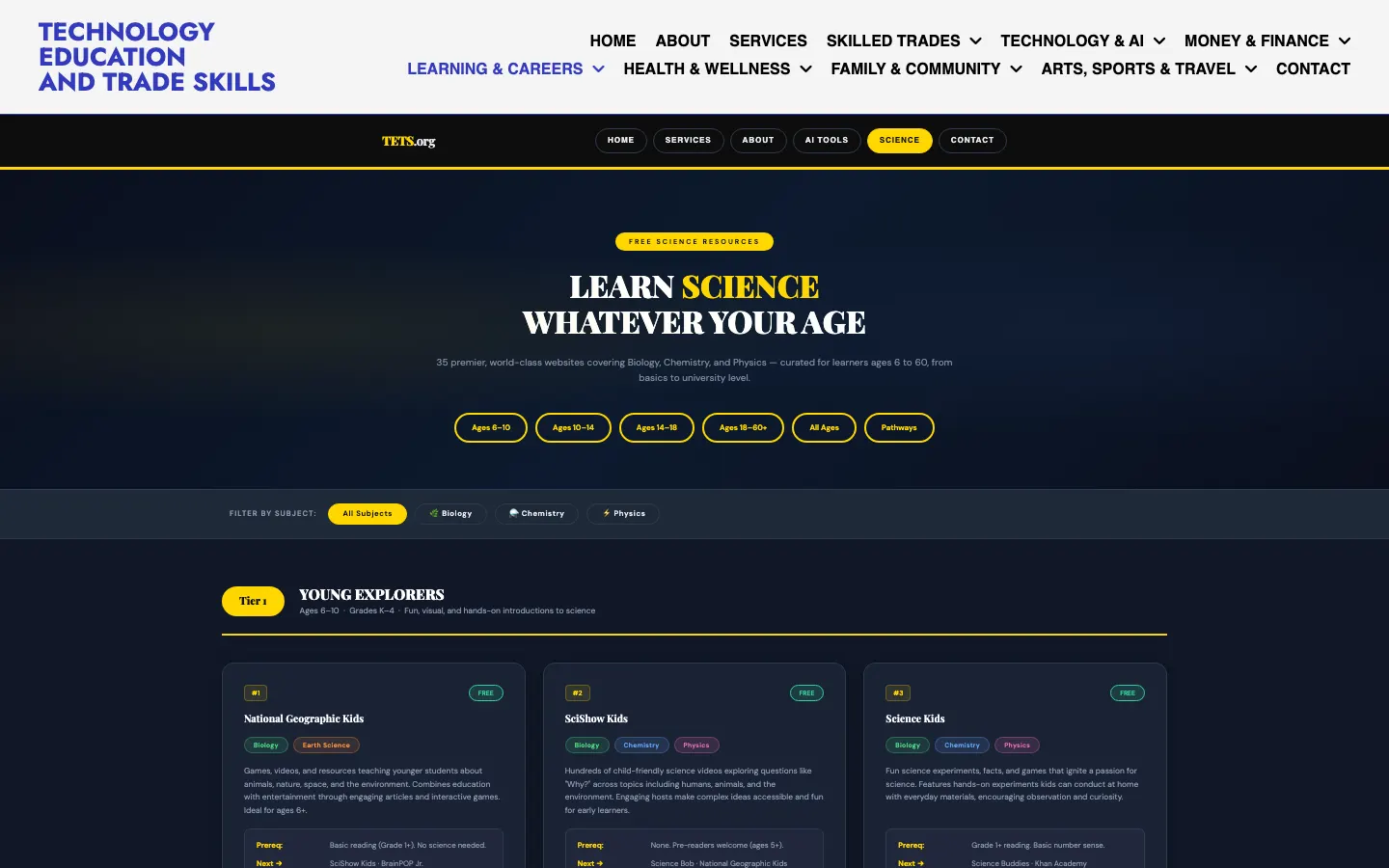
TETS Free Science Resources
TETS Free Science Resources is a curated child-facing collection of science games, videos, and activities covering animals, nature, space, and the environment. It is listed under Science and Nature for ages 5–12; family use.
Read the full resource review →More space picks

Bell Museum Activities for Kids
Science activities, videos, field journals, astronomy challenges, ecology projects, and nature observation for children. It is listed under Science and Nature & environment for ages 5-14. Children and families can use it through a website and downloadable resources.
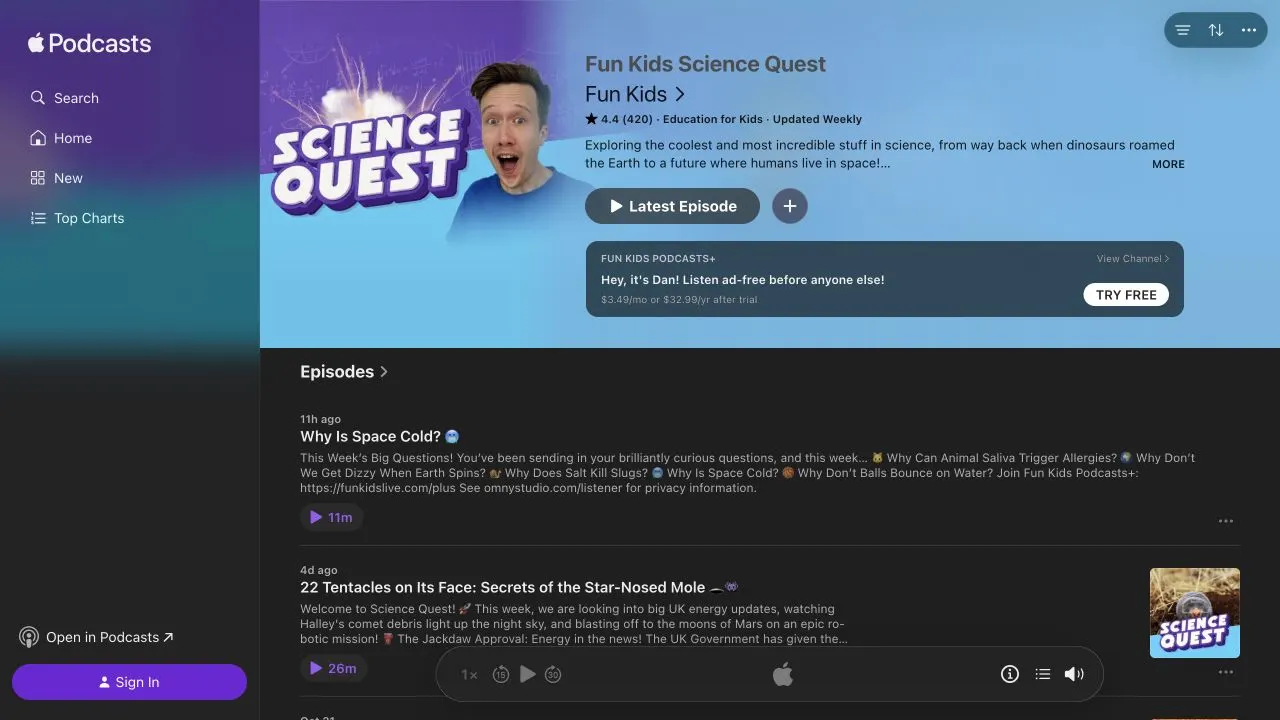
Fun Kids Science Quest
Fun Kids Science Quest is a children’s science podcast covering dinosaurs, space, nature, Earth science, medicine, and questions from young listeners. It is listed under Science and Space for ages Children and families. Children and families can use it through Apple Podcasts and a podcast.
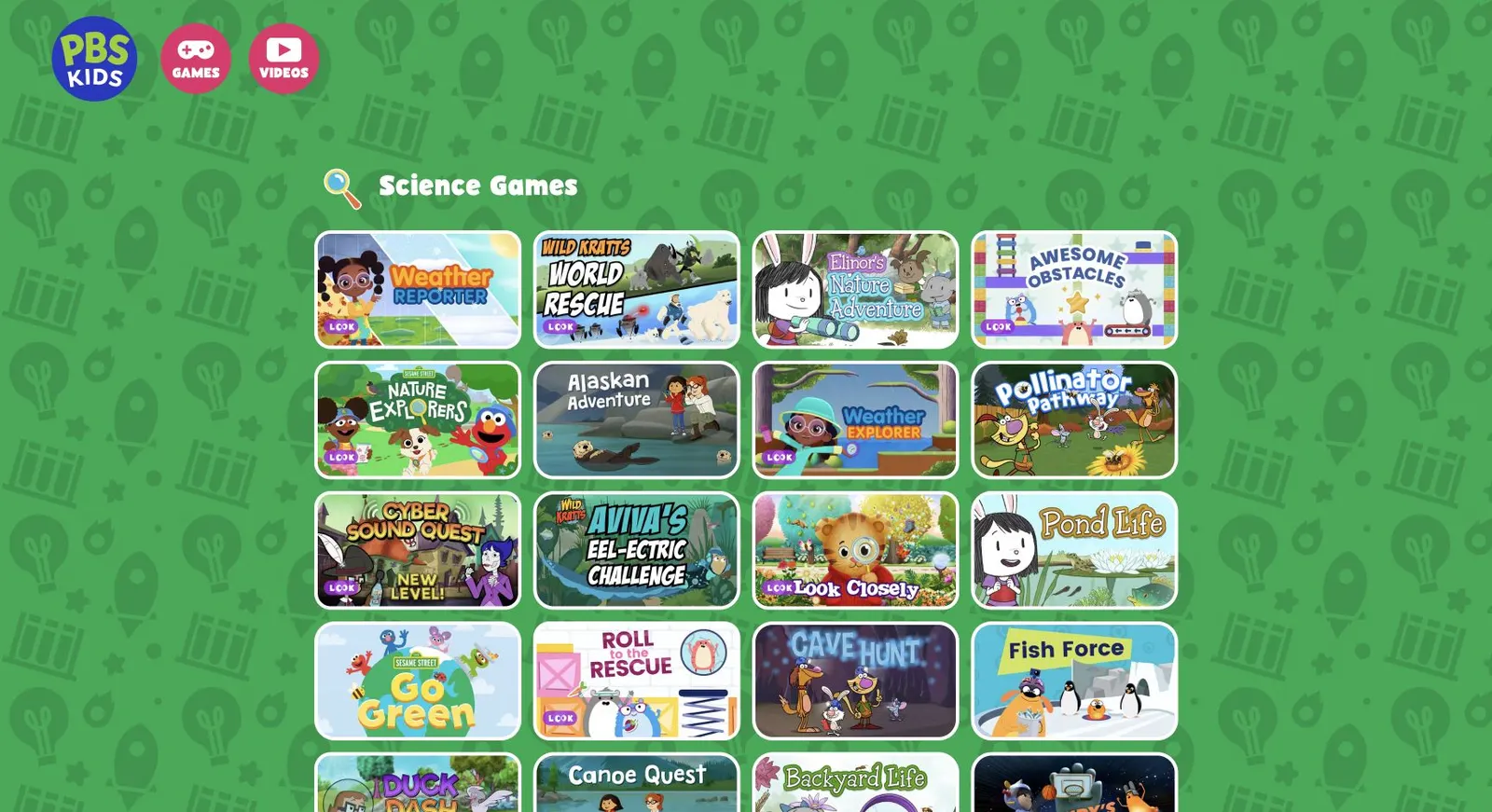
PBS KIDS Science Games
A focused PBS KIDS collection of science games about weather, nature, habitats, engineering, sound, space, and environmental problem-solving. It is listed under Science, Nature & environment, and Games for ages 3–9. Children and families can use it through a website.
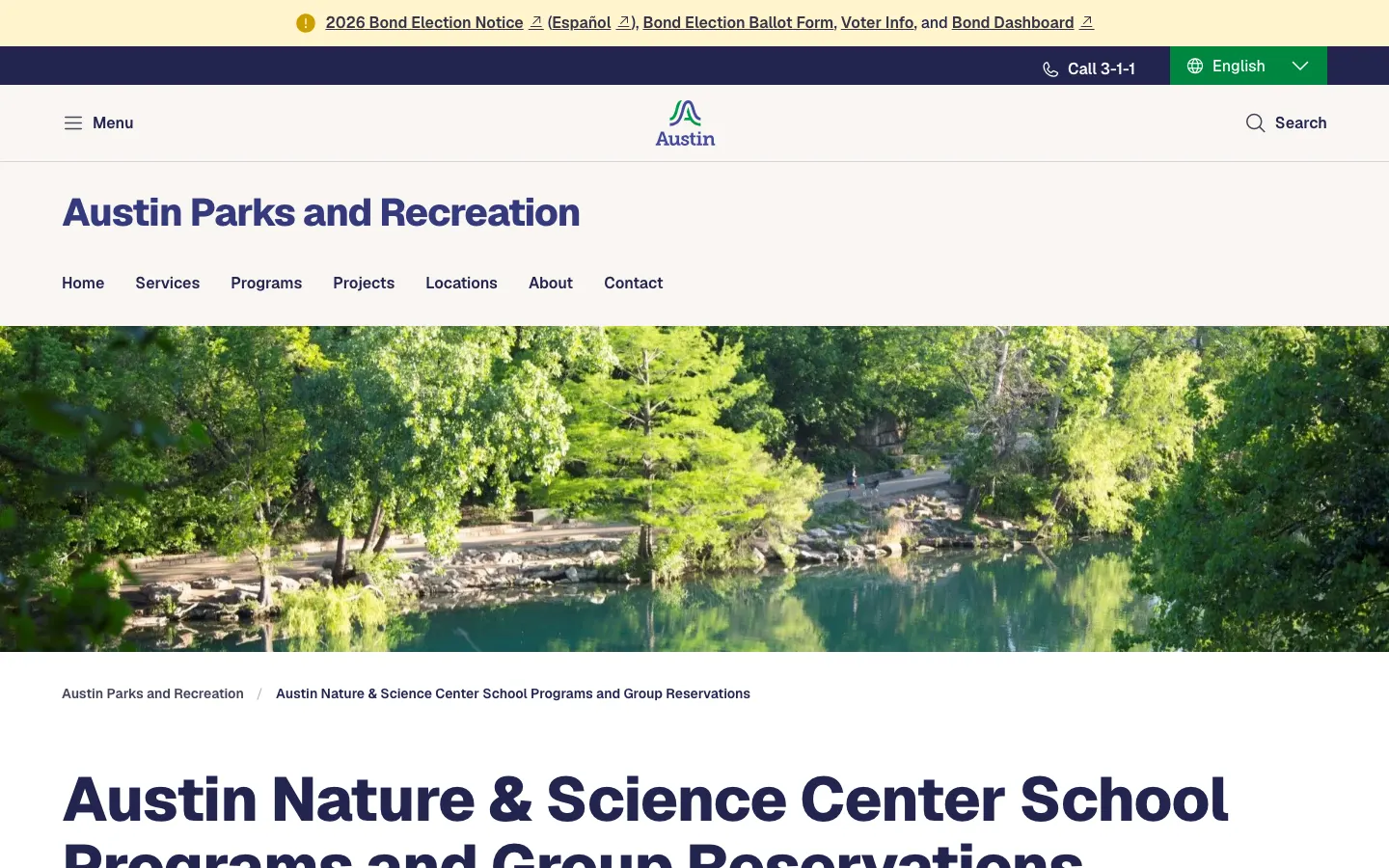
Austin Nature & Science Center School Programs
Austin Nature & Science Center school programs use live animals, outdoor exploration, classroom activities, and an inflatable planetarium to teach nature and science. It is listed under Science and Nature & environment for ages Pre-K–16; program-specific.
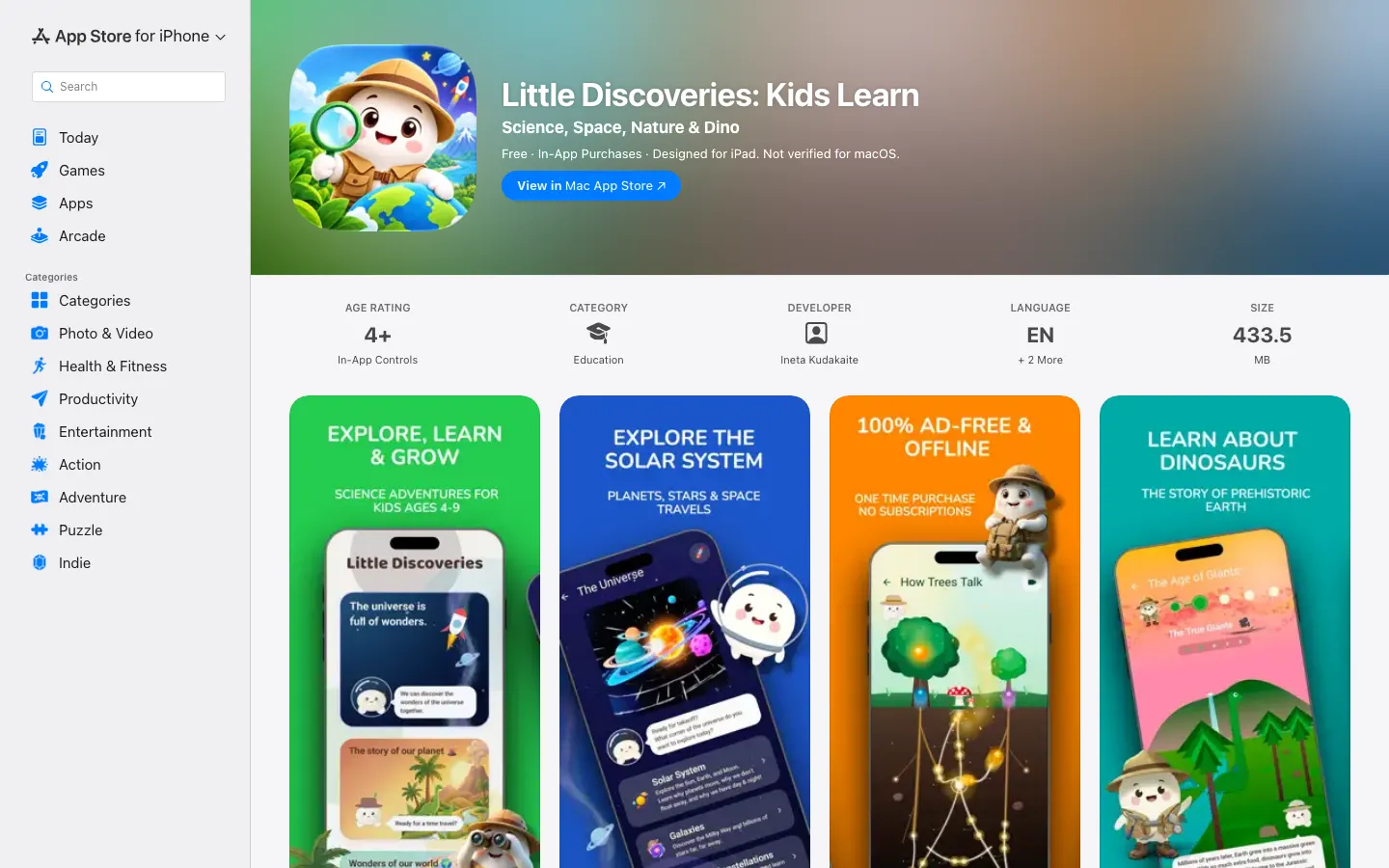
Little Discoveries
Little Discoveries is a calm science and nature app for ages 4–9 with space, dinosaurs, continents, habitats, wildlife, and offline hands-on missions. It is listed under Science and Space for ages 4–9. Children and families can use it through an iOS app.
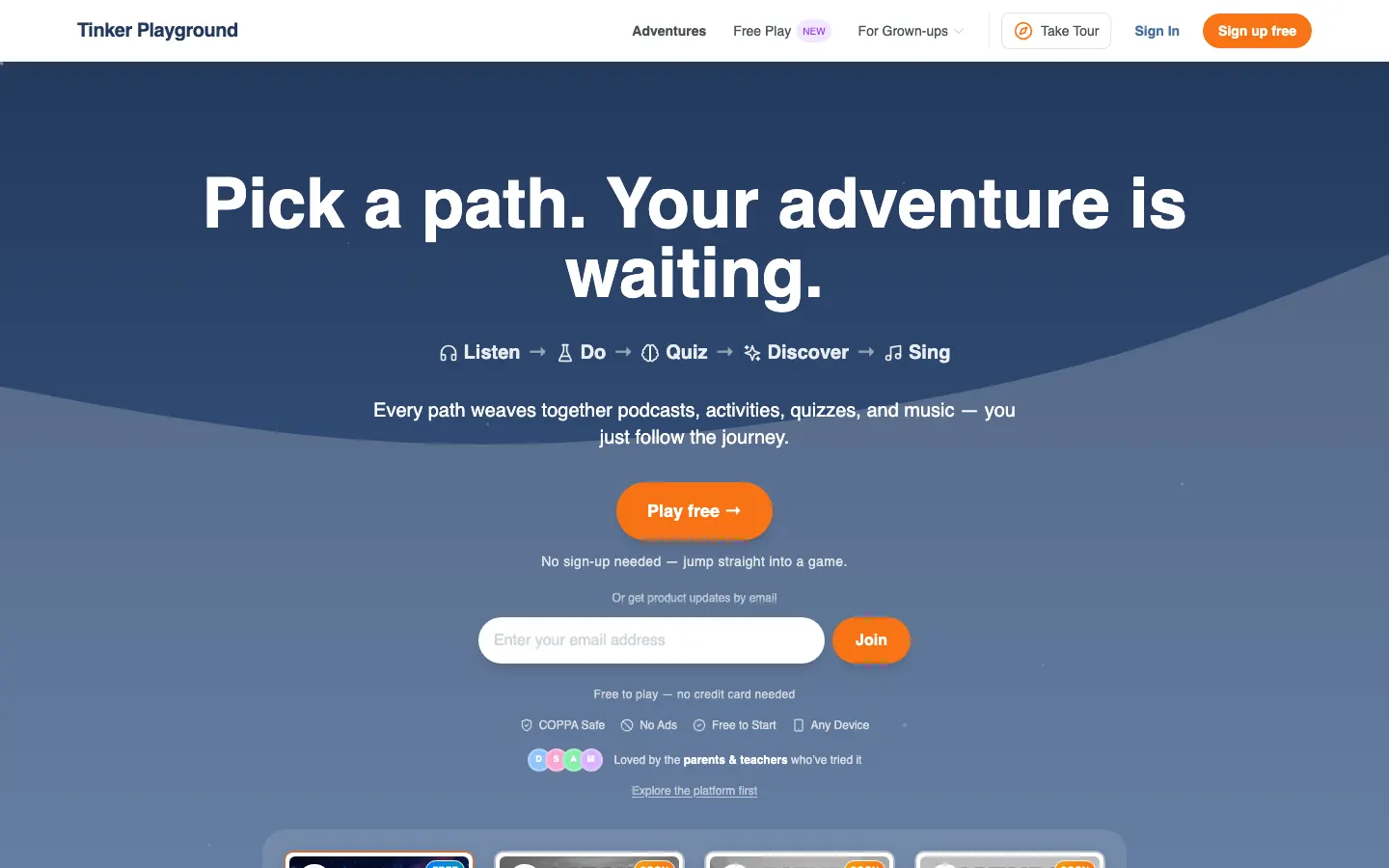
Tinker Playground
Tinker Playground combines podcasts, activities, quizzes, music, and game-like STEM journeys about space, nature, and dinosaurs for children. It is listed under Science and Space for ages 7–12. Children and families can use it through a website.
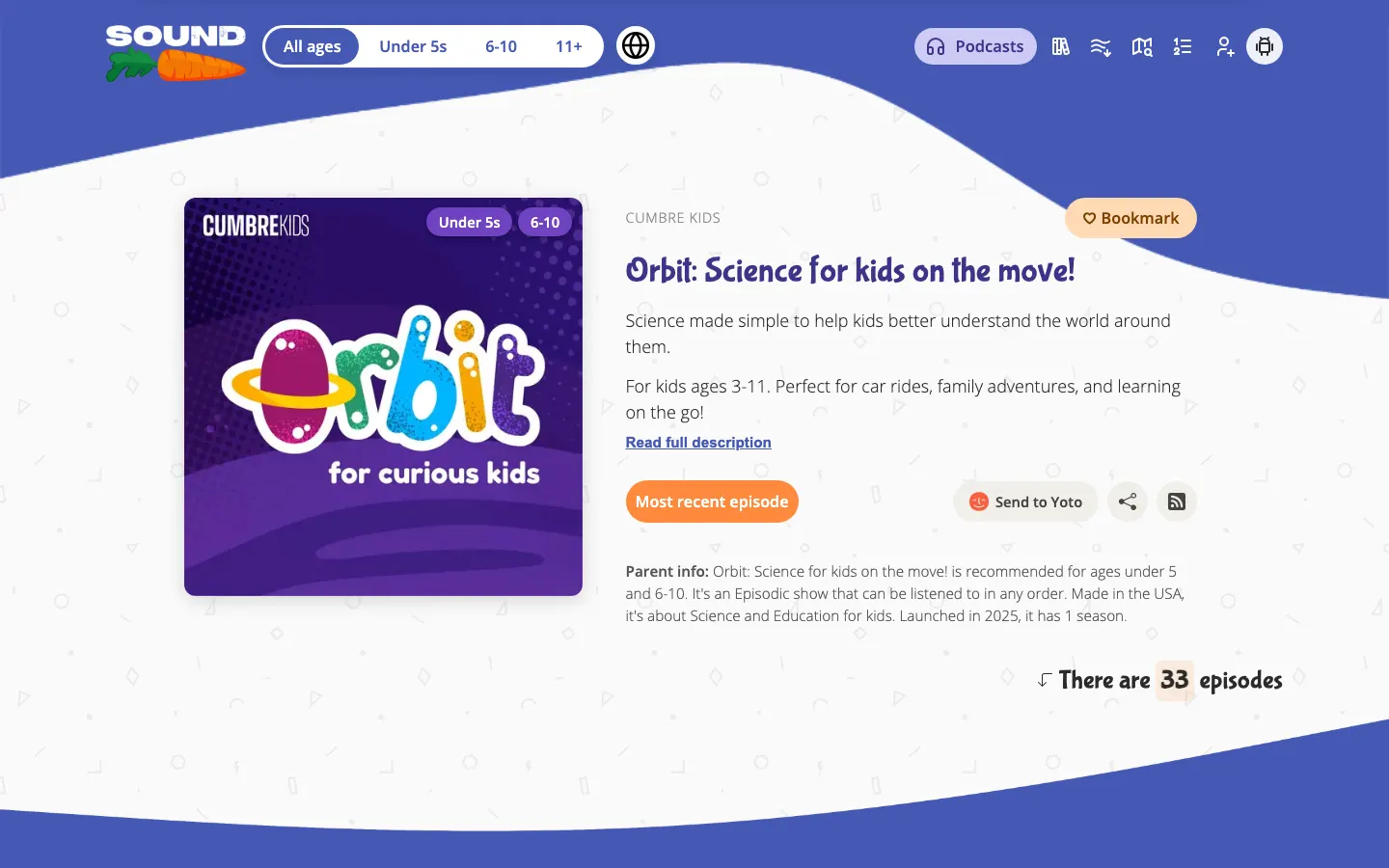
Orbit: Science for Kids on the Move
A science podcast for children ages 3–11 that makes science approachable for car rides, family adventures, and curious learning on the go. It is listed under Science and Space for ages 3–11. Children and families can use it through a website and a podcast.
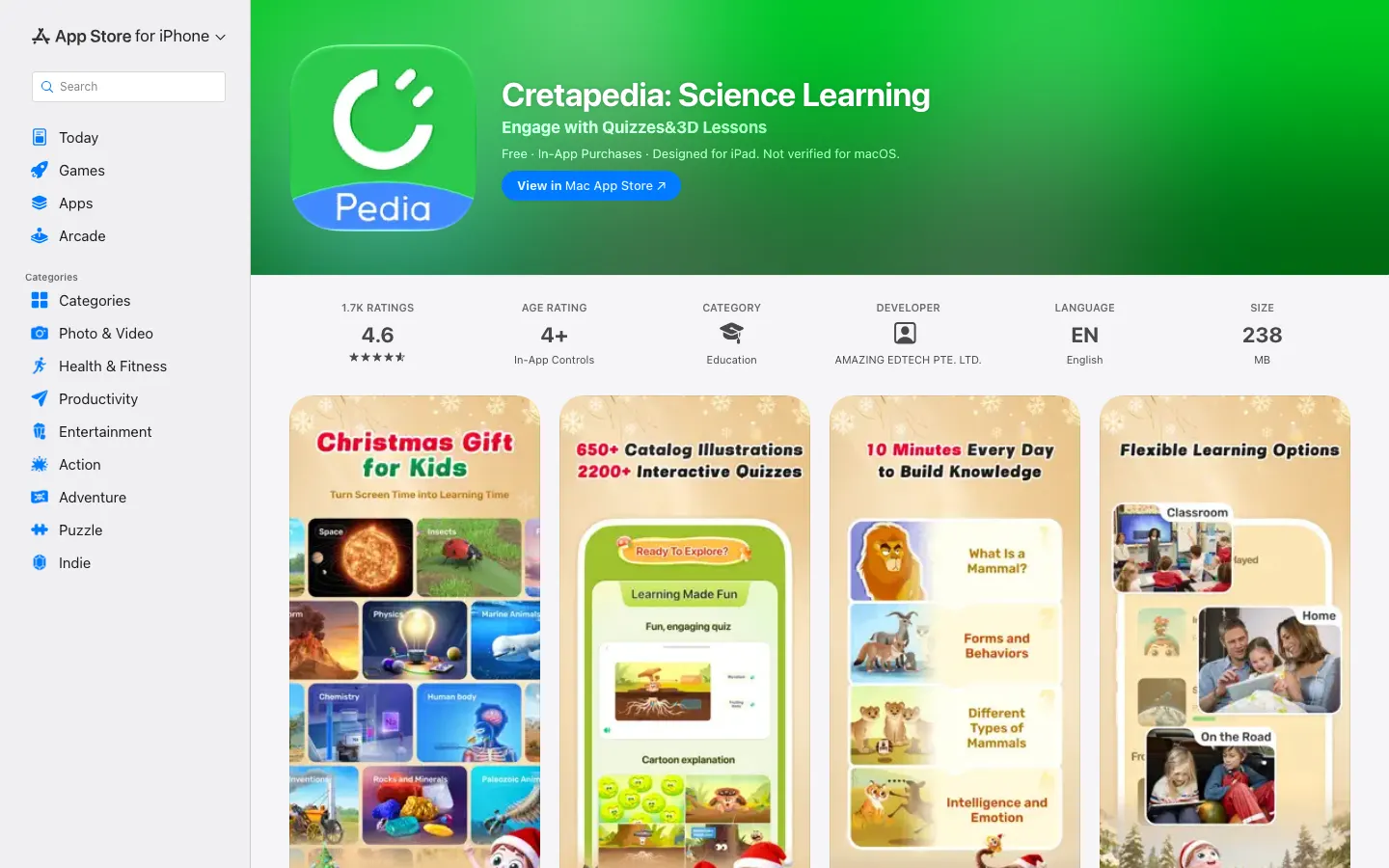
Cretapedia
Cretapedia is an ad-free science learning app for ages 5–12 with bite-sized lessons, quizzes, and interactive 3D models covering animals, nature, space, and other science topics. It is listed under Science and Nature & environment for ages 5–12.
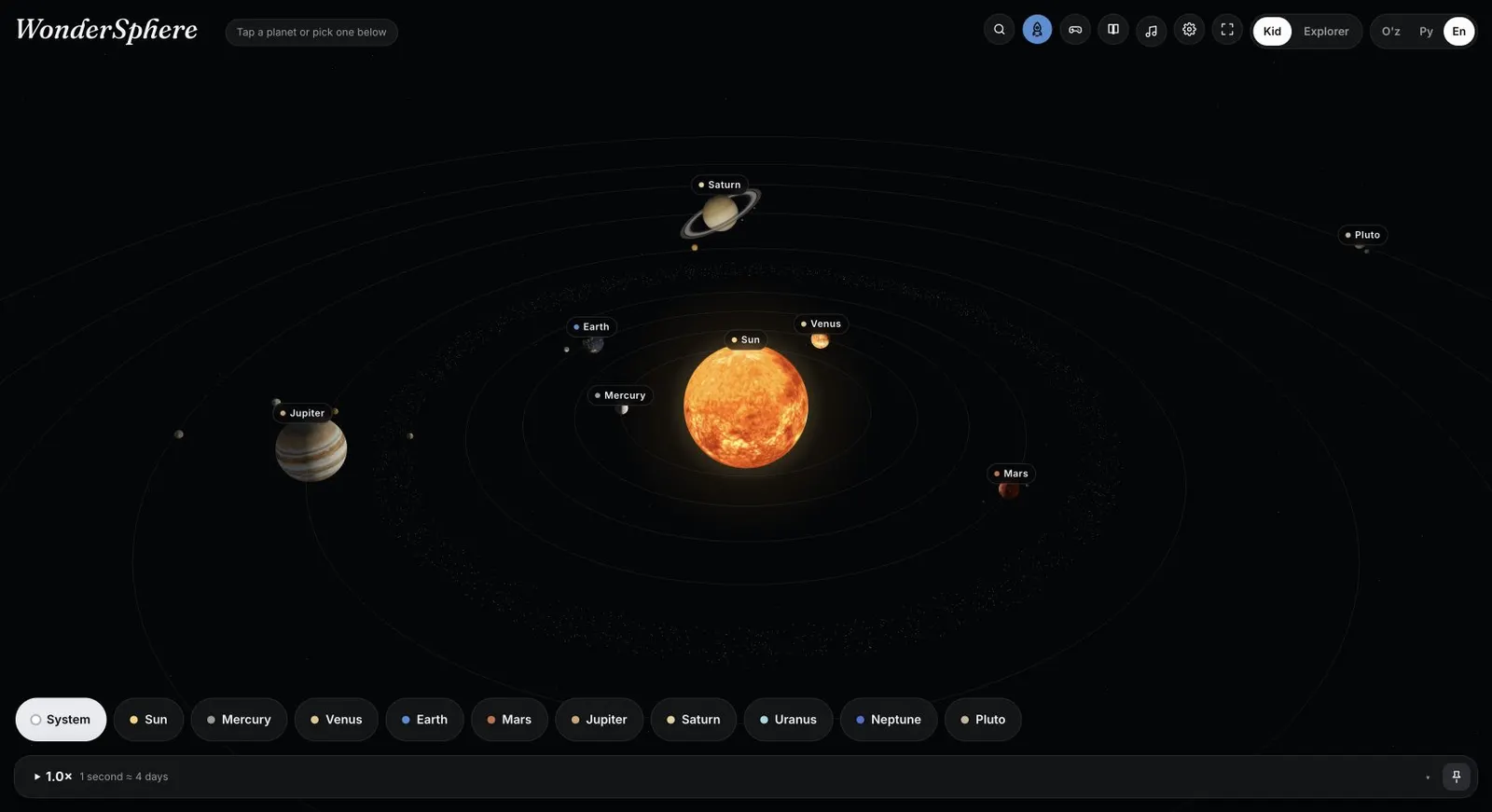
WonderSphere
A free multilingual interactive 3D map for children covering the solar system, Earth, Moon, animals, plants, natural phenomena, mini-games, and a knowledge corner. It is listed under Space and Science for ages 6–14. Children and families can use it through a website.
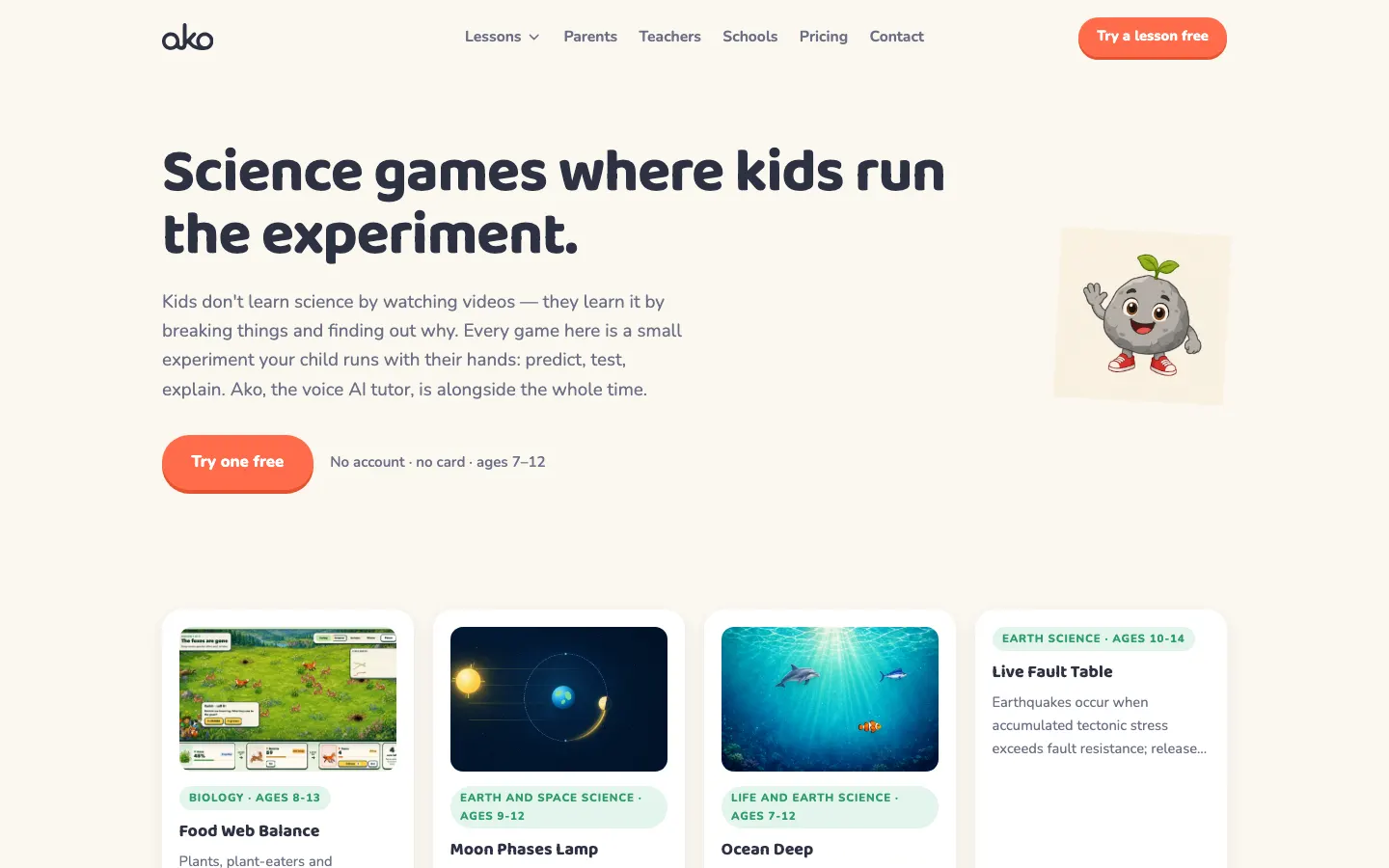
Ako Science Games
Ako offers interactive science games where children run experiments, make predictions, and explore topics such as chemistry, birds, biomes, volcanoes, orbits, food webs, and the human body. It is listed under Science and Games for ages 7–12.
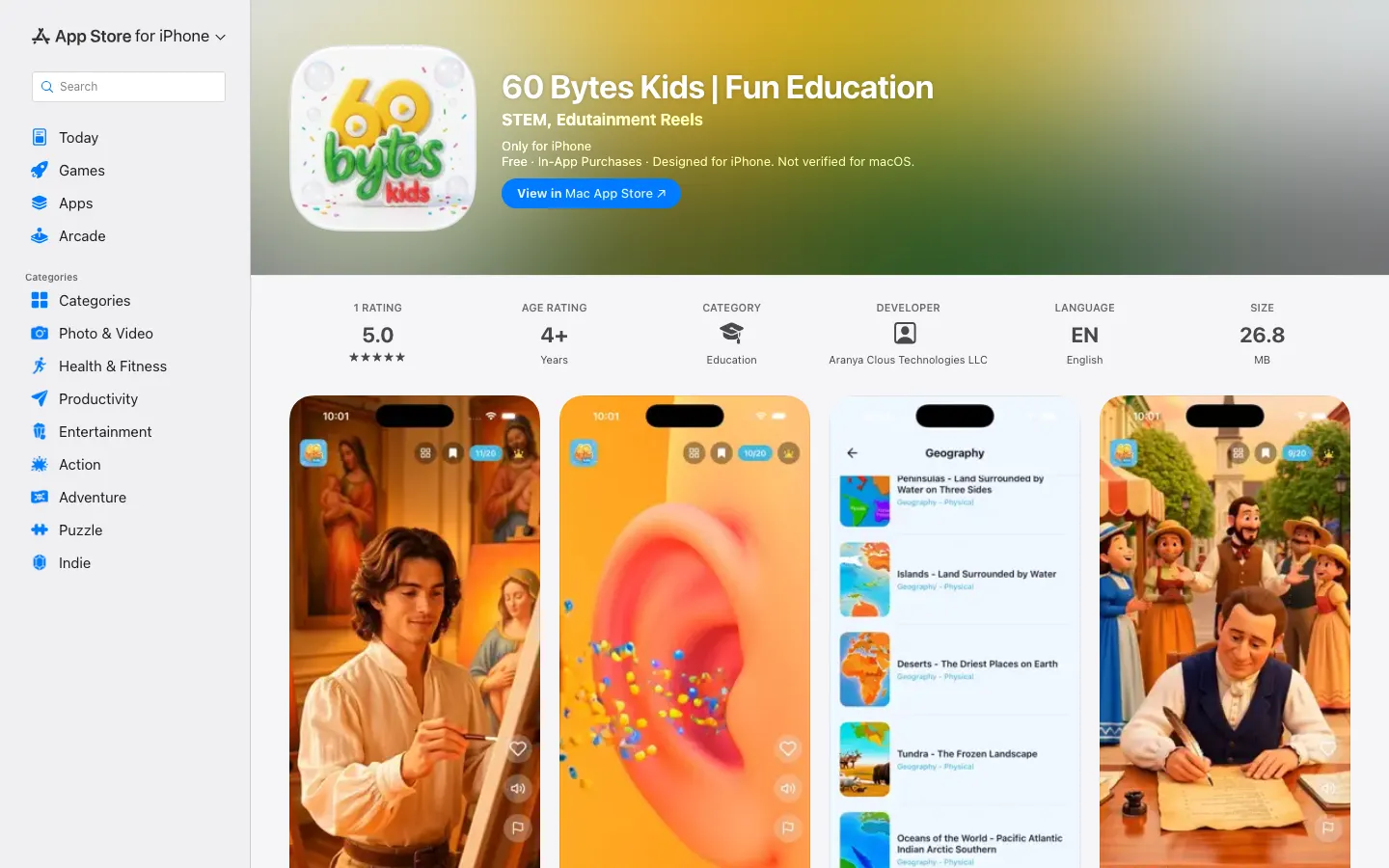
60 Bytes Kids
60 Bytes Kids is a short-form science video app for young learners covering space, dinosaurs, the human body, DNA, butterflies, and other topics in brief sessions. It is listed under Science and Space for ages 4–12.

Bell Museum Family Activities
The Bell Museum’s family activity collection brings together at-home experiments, story times, stargazing tips, astronomy challenges, rover activities, DNA experiments, and science videos for curious children. It is listed under Science and Nature & environment for ages 4–14.
Compare with context
Use this collection to find a direction, then open each resource page before sharing it with a child. The individual review shows languages, access formats, tags, age guidance, source links, and notes for grown-ups.
Search the full directory →