Science STEM
for kids
Explore 20 trusted science stem resources selected for curious kids, with clear ages, access details, and parent context.
Two useful ways to narrow the directory
This page brings together science resources that also match stem. Each listing keeps its own age range, platform details, languages, links, and parent notes, so you can compare options without losing context.
Explore all science resources →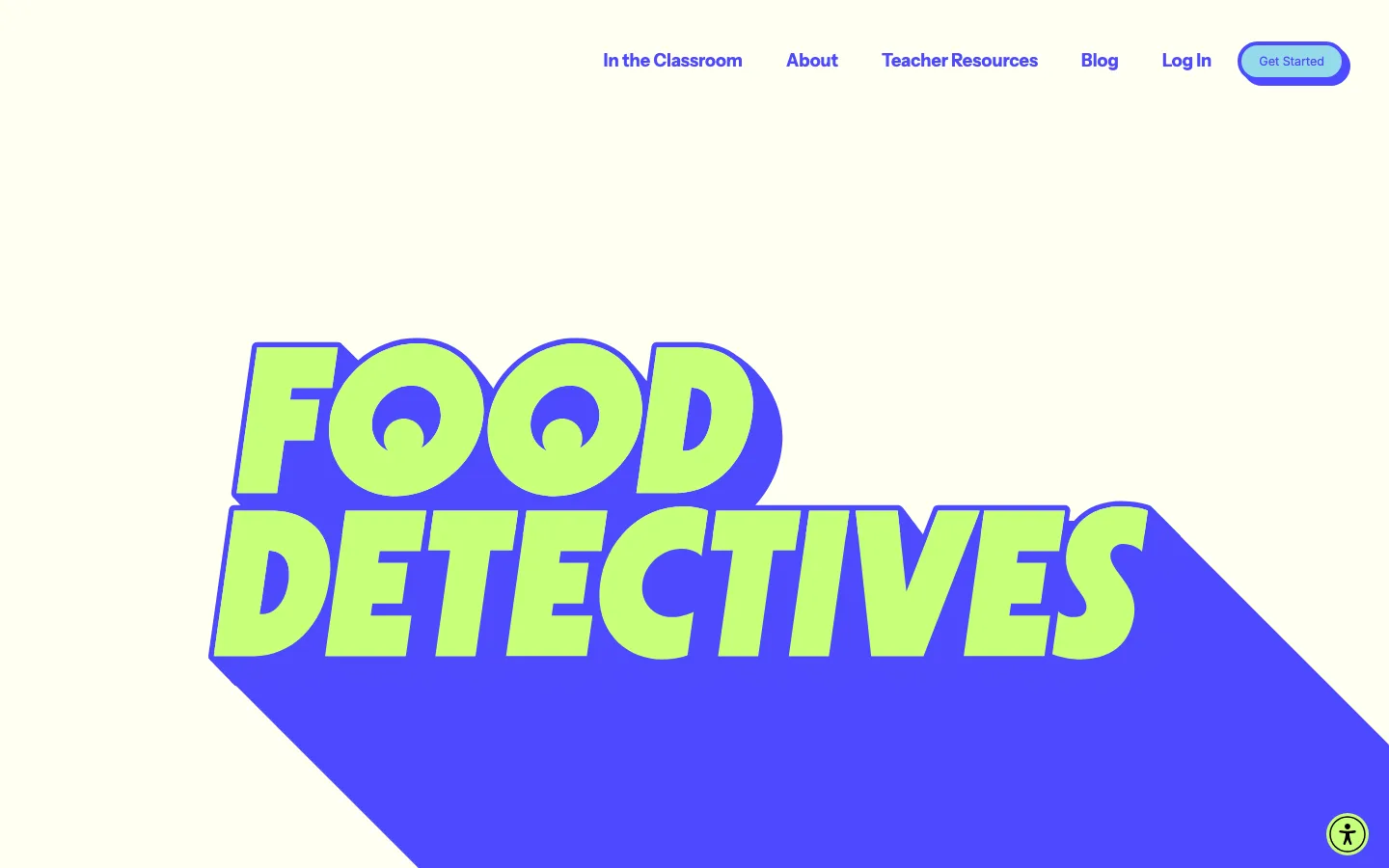
Food Detectives
A free nutrition-learning program using investigations, puzzles, animations, and STEM activities to help children think critically about food and advertising. It is listed under Health & wellbeing and Science for ages Elementary school; workshop focus is grade 4.
Read the full resource review →More science picks
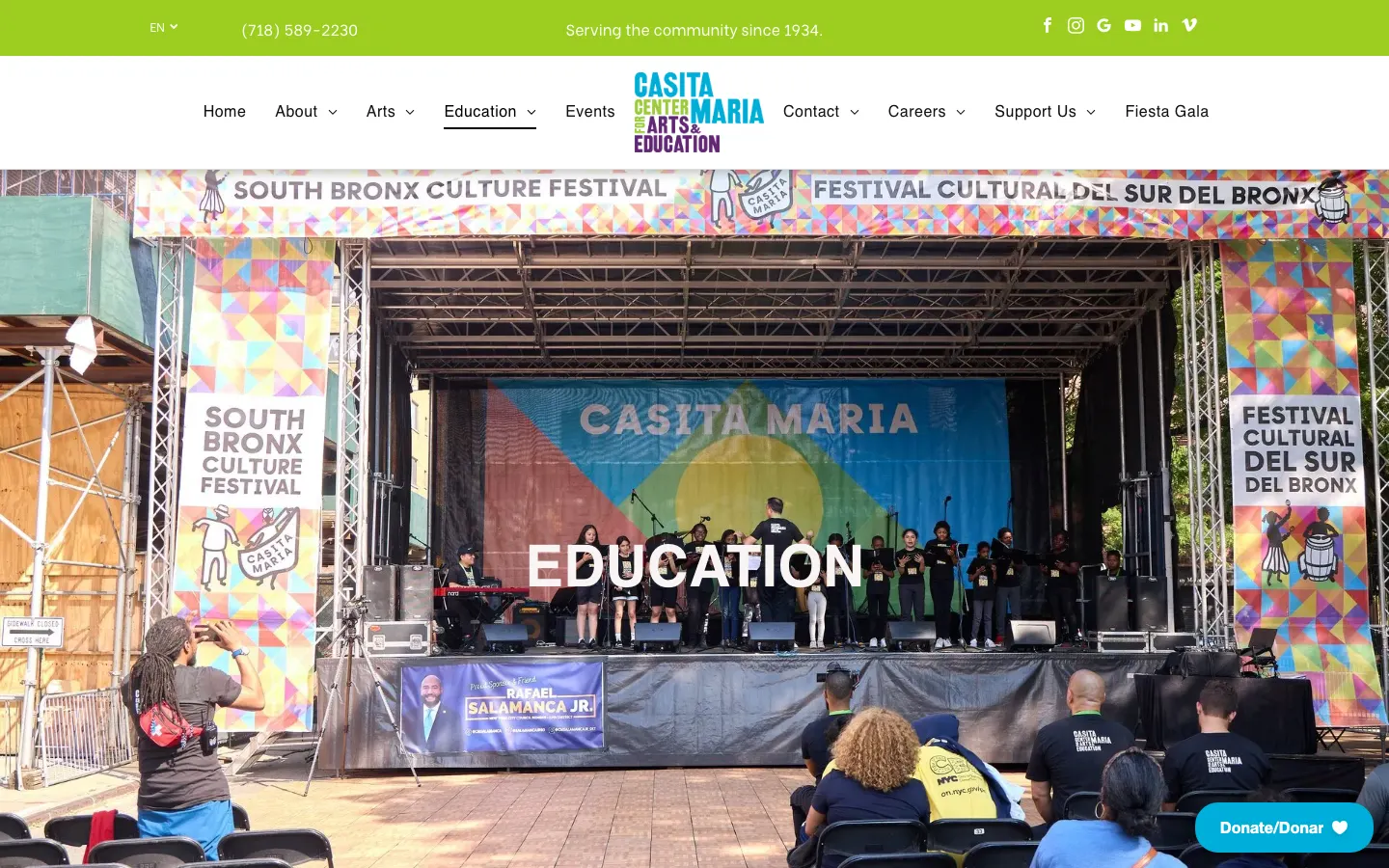
Casita Maria Education
Free after-school and summer arts, literacy, STEM, and youth-development programs for kindergarten through middle school in the Bronx. It is listed under Art & creativity and Reading for ages 5–14. Children and families can use it through a website.
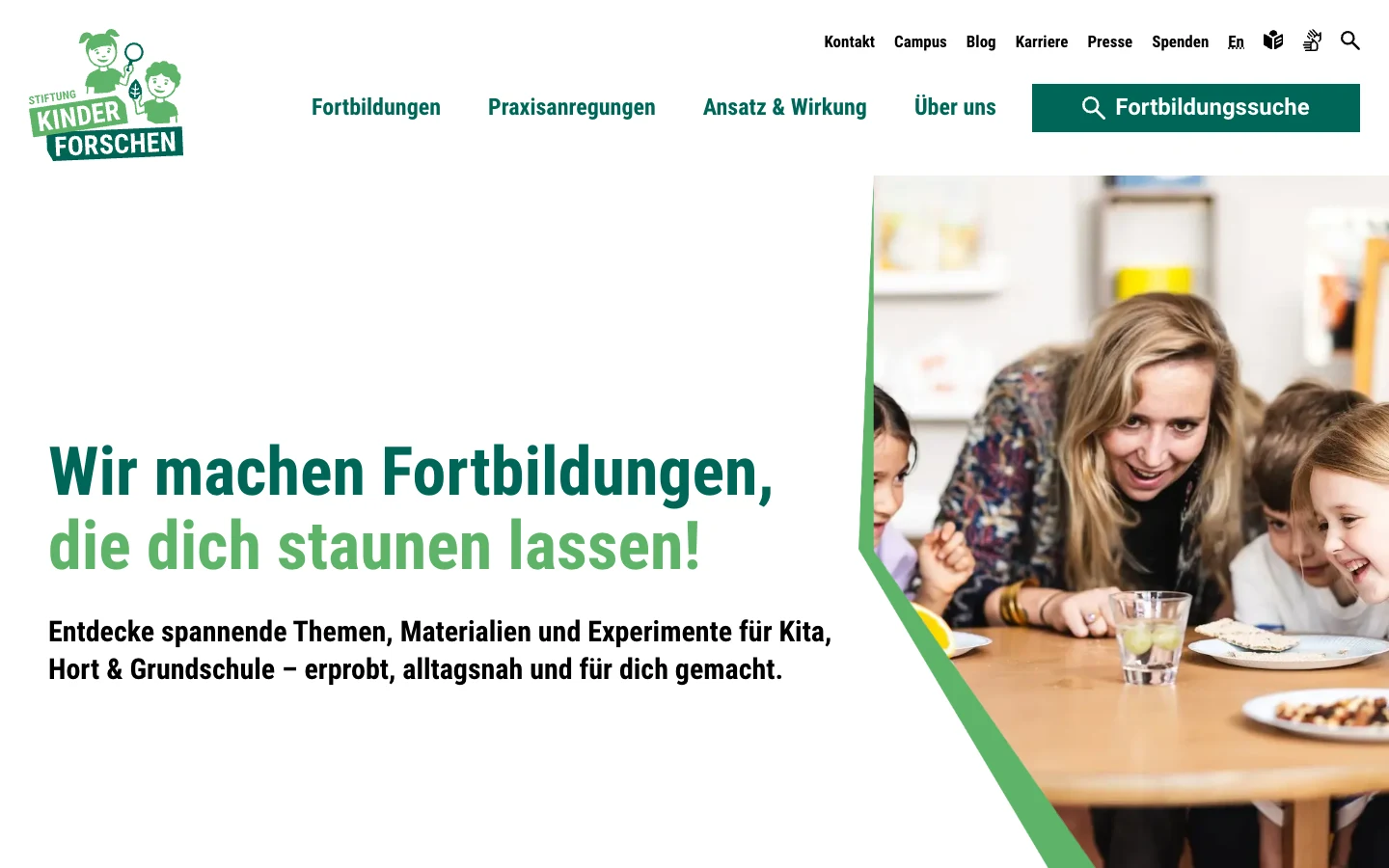
Stiftung Kinder forschen
A German early-childhood STEM foundation offering research-informed activities, educator support, and digital learning experiences for young children. It is listed under Science and Early childhood for ages Early childhood; activity-specific. Children and families can use it through a website.
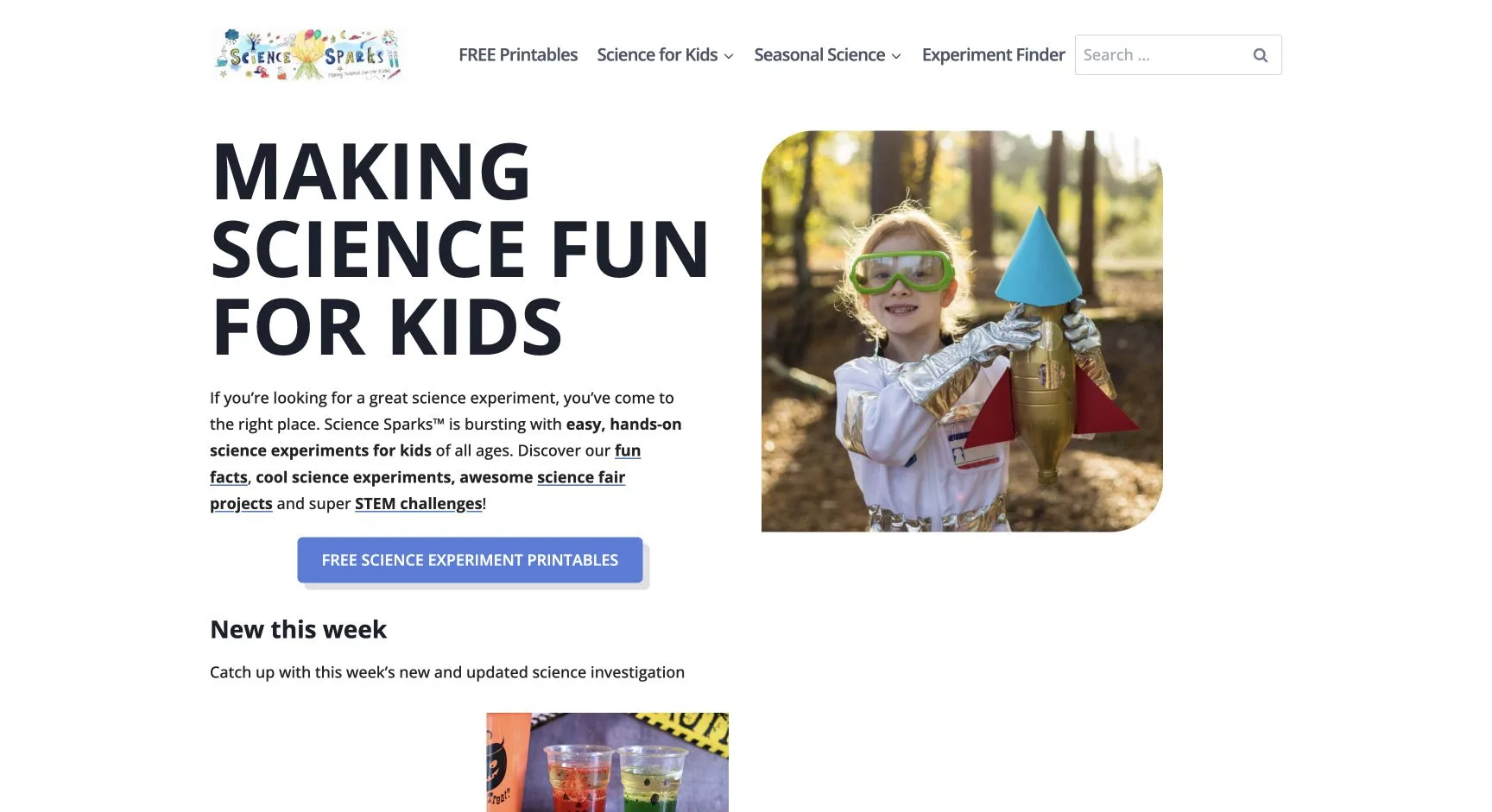
Science Sparks
Hands-on science experiments, STEM challenges, printable activities, and science explanations for children and families. It is listed under Science and Maker & DIY for ages 4–12. Children and families can use it through a website and downloadable resources.
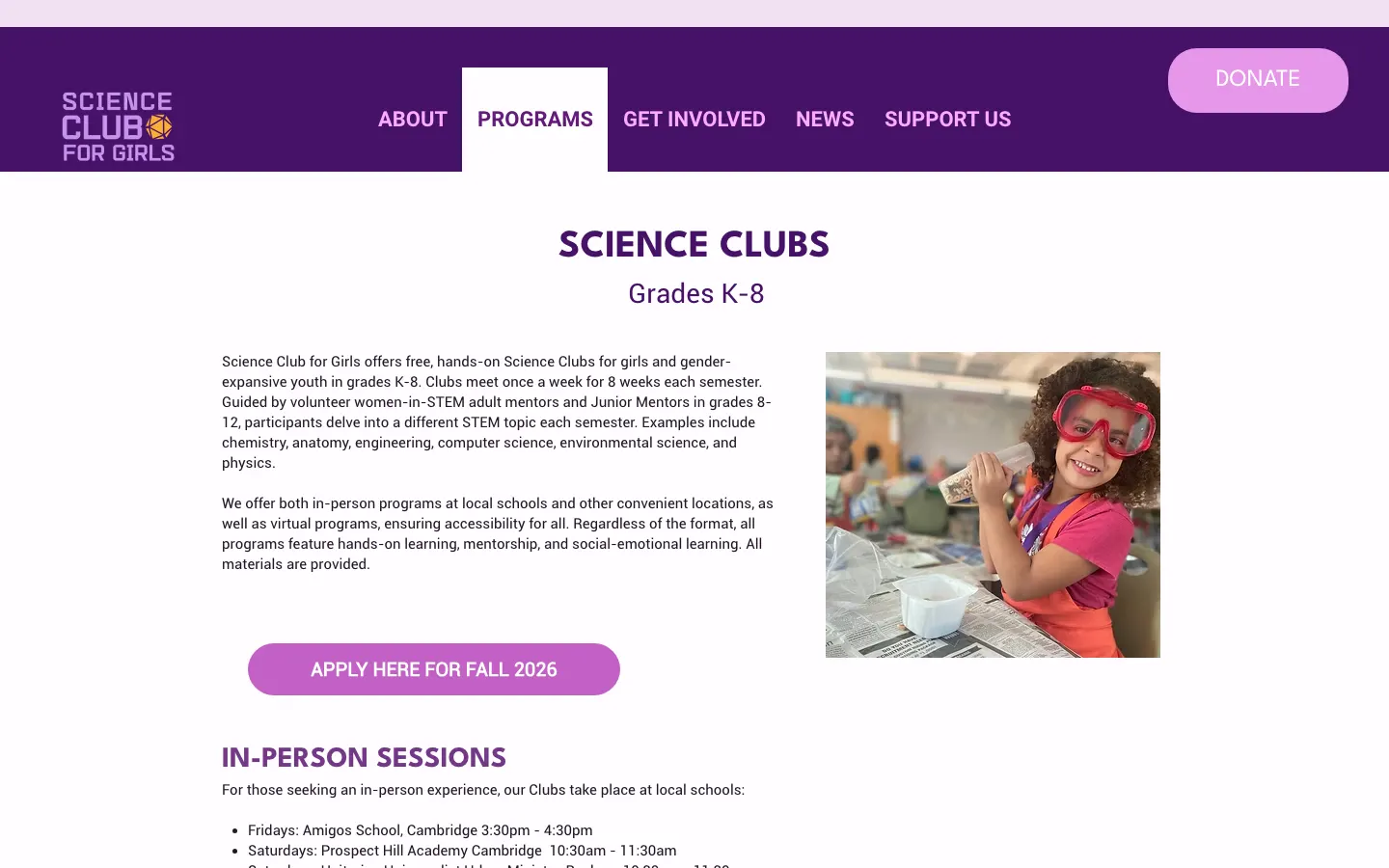
Science Club for Girls — Science Clubs
Free hands-on STEM clubs for girls and gender-expansive youth in grades K–8, with volunteer women-in-STEM mentors, weekly sessions, social-emotional learning, and in-person or virtual options. It is listed under Science and Coding for ages Grades K–8; gender-expansive youth.
We All Code
A nonprofit providing free coding resources and hands-on classes for children and teens ages 7–17. It is listed under Coding and Science for ages 7–17. Children and families can use it through a website.
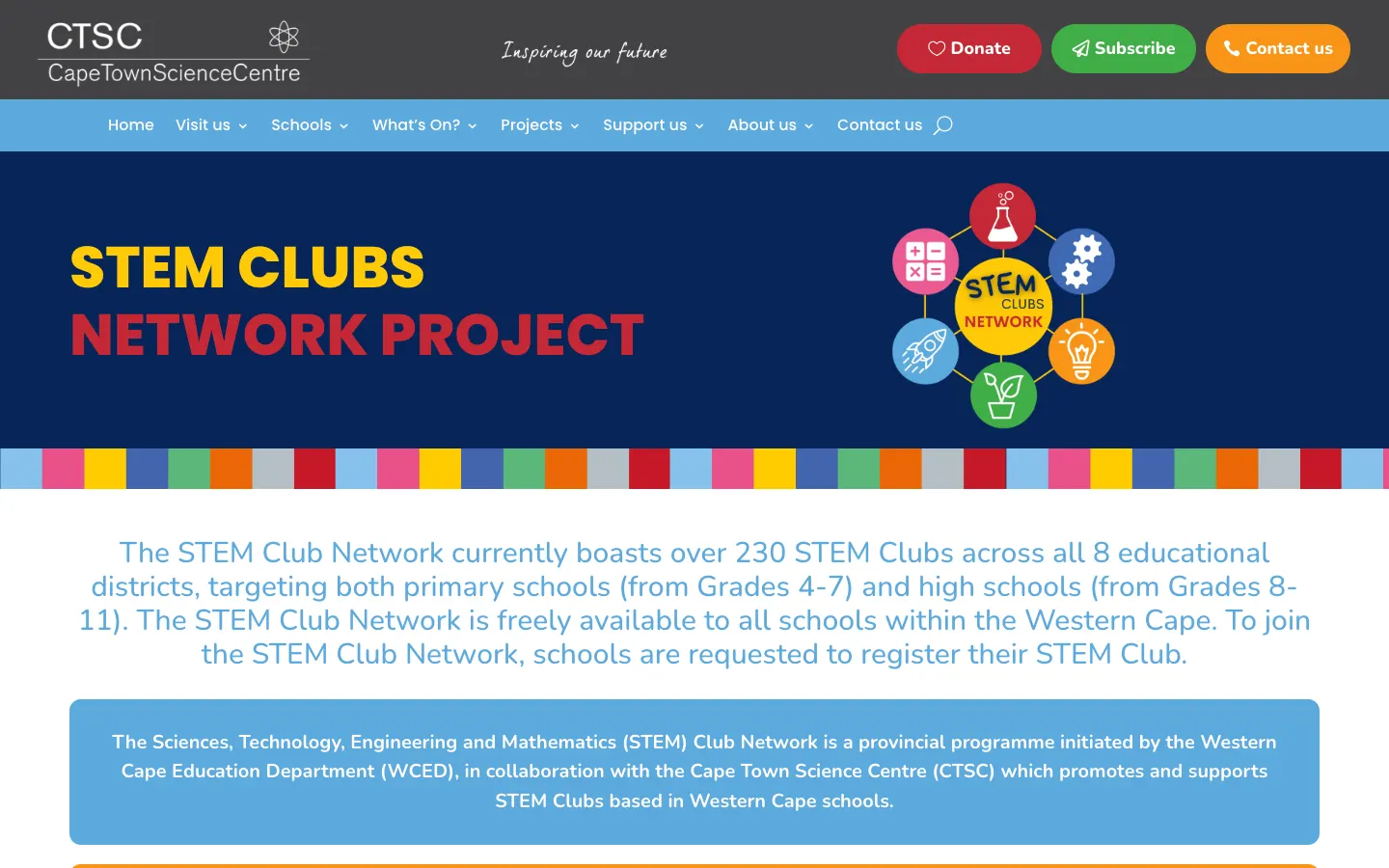
Cape Town Science Centre STEM Clubs Network
The Cape Town Science Centre STEM Clubs Network is a Western Cape programme supporting school STEM clubs across primary and high-school grades through a provincial partnership. It is listed under Science and Engineering & coding for ages Grades 4–11.
Growing Up With Robotics
A student-led nonprofit making robotics and STEM accessible to K–12 learners through mentorship, hands-on programs, and community partnerships. It is listed under Coding & technology and Science for ages K–12; program-specific. Children and families can use it through a website.
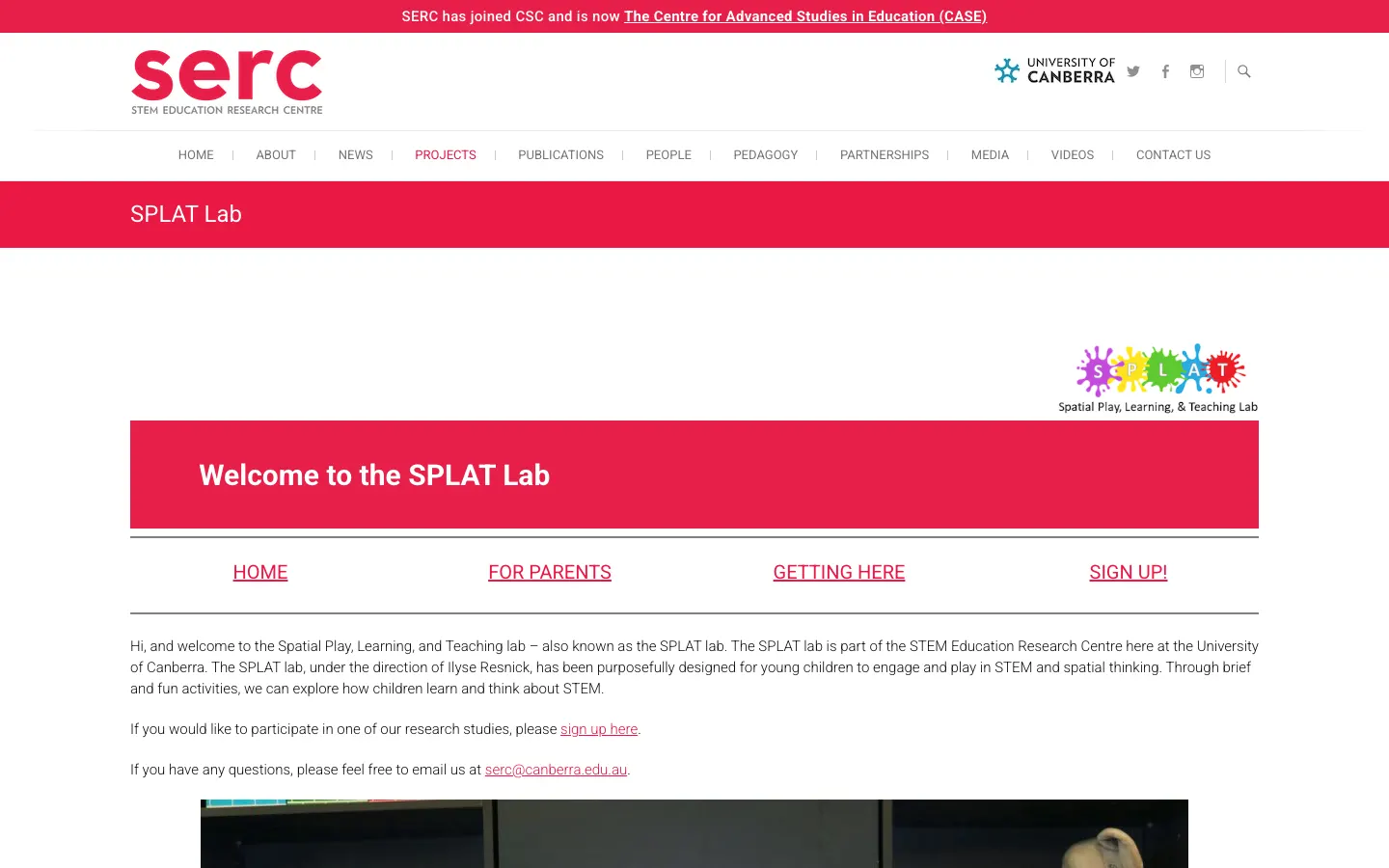
SPLAT Lab
SPLAT Lab at the University of Canberra explores how young children learn STEM and spatial thinking through short playful activities and research studies. It is listed under Science and Mathematics for ages Young children.
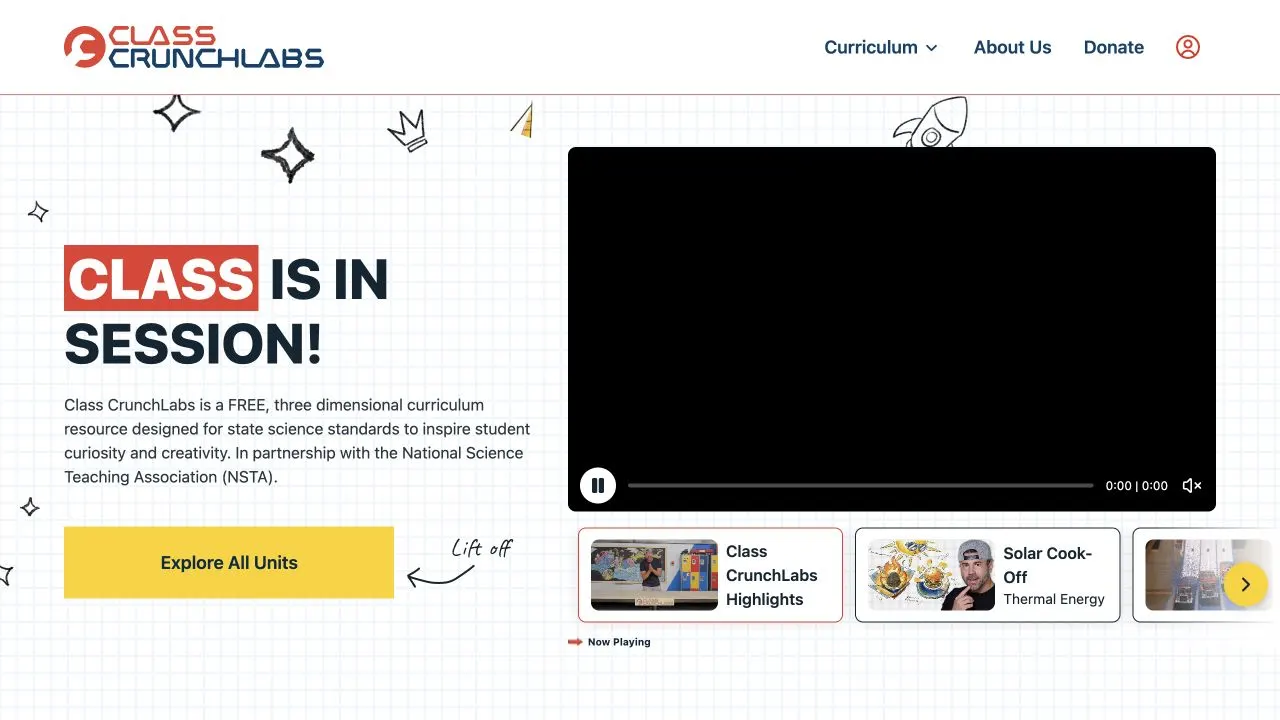
Class CrunchLabs
Class CrunchLabs is a free, standards-aligned STEM curriculum from Mark Rober with hands-on units, engineering challenges, and classroom-ready materials for grades 3–8. It is listed under Science and Engineering & coding for ages Grades 3–8.
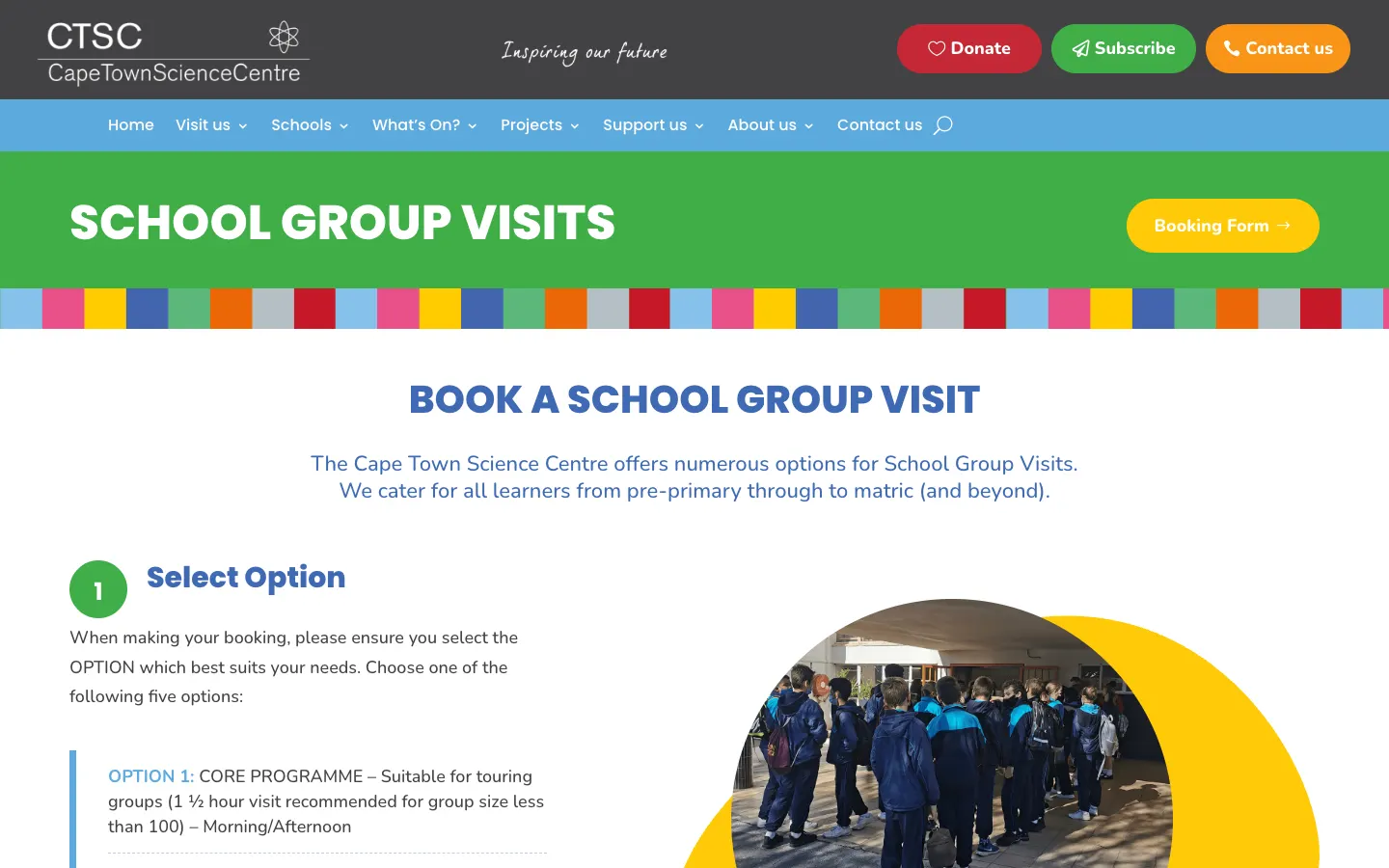
Cape Town Science Centre School Group Visits
Cape Town Science Centre school-group visits offer curriculum-aligned options from pre-primary through matric, with hands-on science-centre programmes and teacher pre-visits. It is listed under Science and Courses & classes for ages Pre-primary through matric.
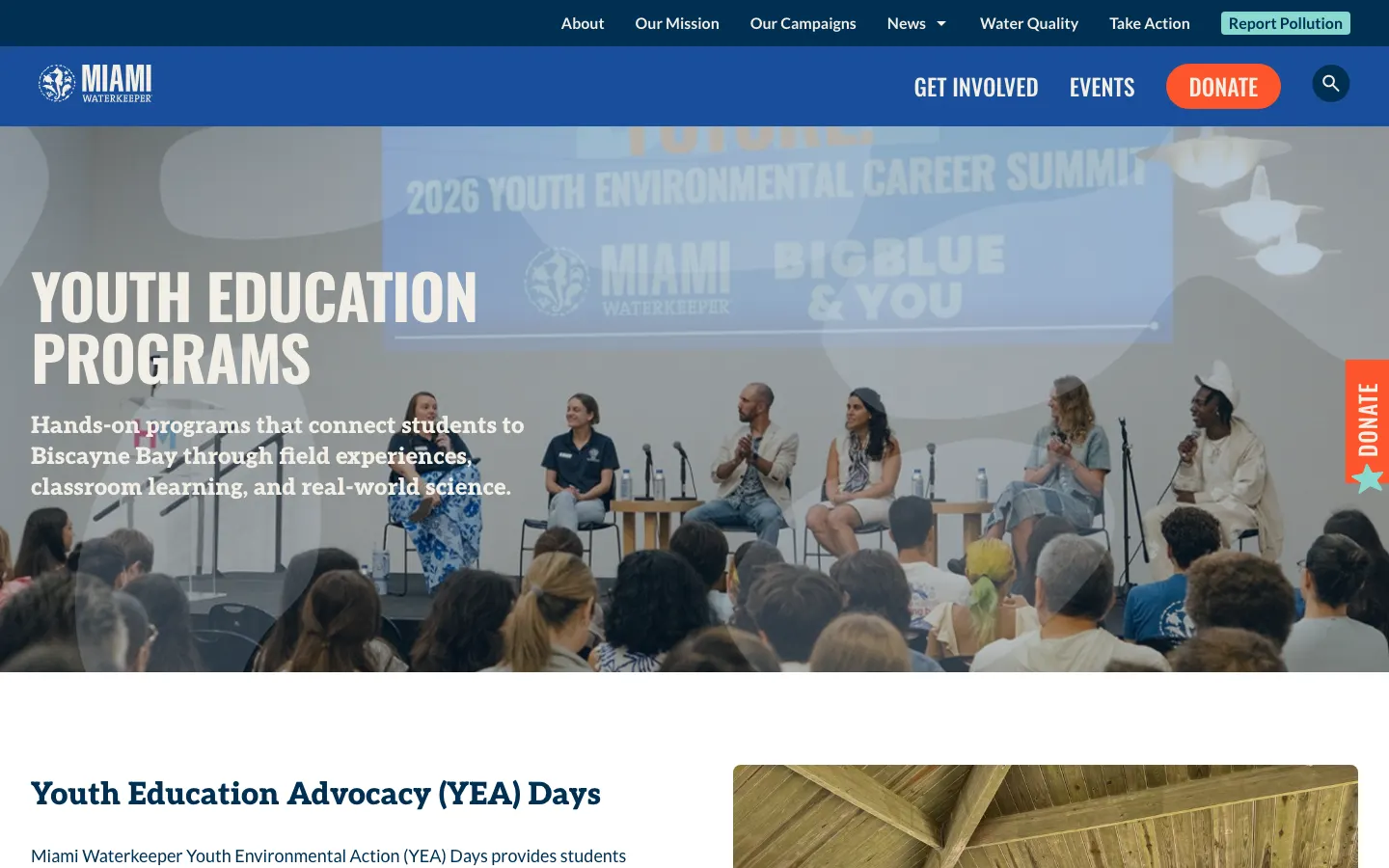
Miami Waterkeeper Youth Education
Hands-on marine and environmental science programs connecting students with Biscayne Bay through field experiences, water testing, and community science. It is listed under Climate and Science for ages 10–18. Children and families can use it through a website.
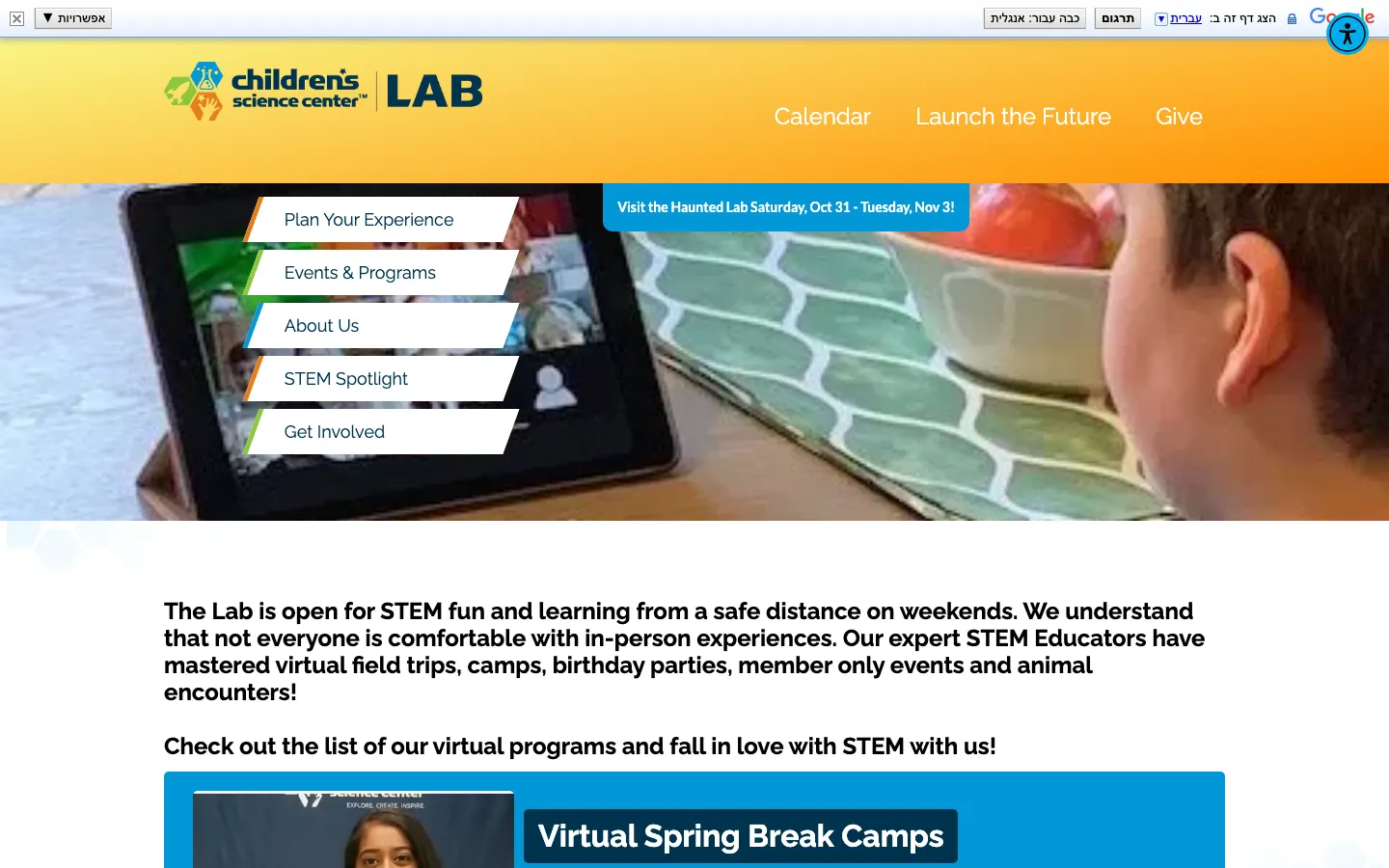
Children’s Science Center Virtual Events
The Children’s Science Center Lab offers virtual camps, makerspace sessions, animal encounters, and science challenges for young learners and families. It is listed under Science and Nature & environment for ages Pre-K–6. Children and families can use it through a website.
Compare with context
Use this collection to find a direction, then open each resource page before sharing it with a child. The individual review shows languages, access formats, tags, age guidance, source links, and notes for grown-ups.
Search the full directory →