Science Experiments
for kids
Explore 20 trusted science experiments resources selected for curious kids, with clear ages, access details, and parent context.
Two useful ways to narrow the directory
This page brings together science resources that also match experiments. Each listing keeps its own age range, platform details, languages, links, and parent notes, so you can compare options without losing context.
Explore all science resources →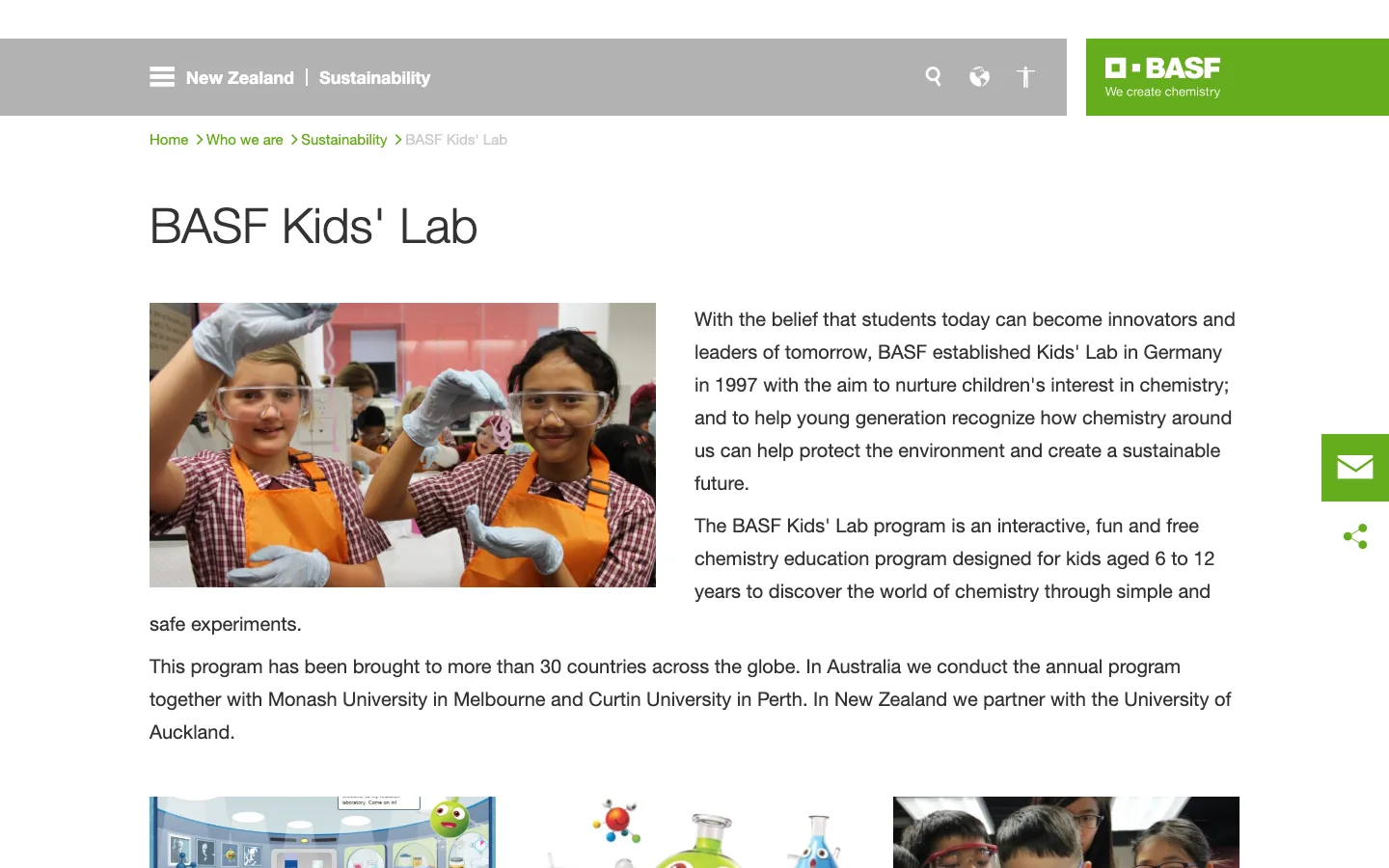
BASF Kids' Lab
A chemistry education program with interactive experiments and virtual activities designed to help children explore materials, reactions, and sustainability. It is listed under Science and Experiments for ages 6–12. Children and families can use it through a website.
Read the full resource review →More science picks
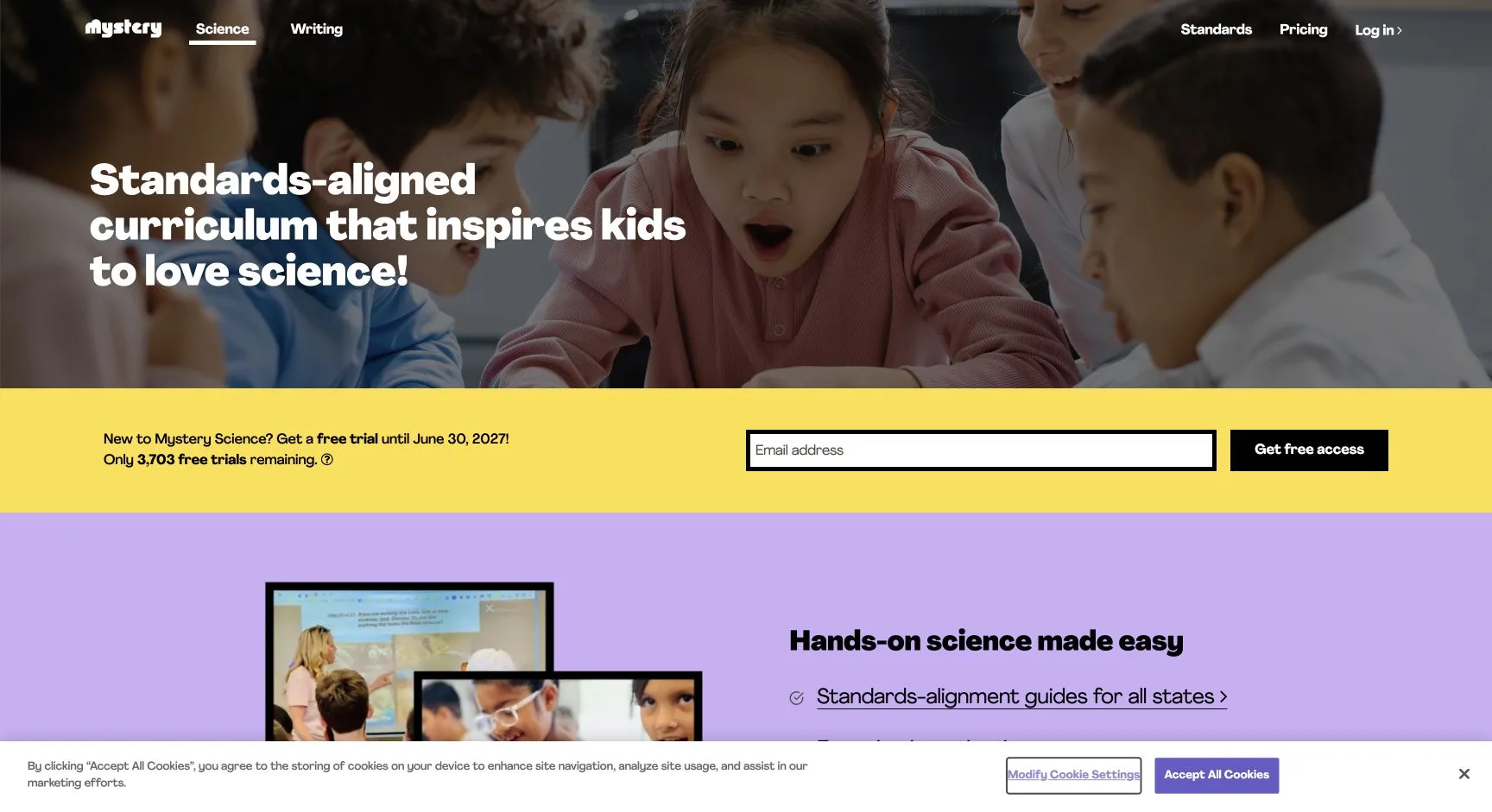
Mystery Science
Mystery Science organizes elementary science learning around intriguing questions, short videos, and hands-on investigations for ages 5–11. It is a useful choice when an adult wants a ready-made question followed by an activity rather than an unstructured browsing session. The directory records free access with paid options; adults should check lesson materials and current access requirements.
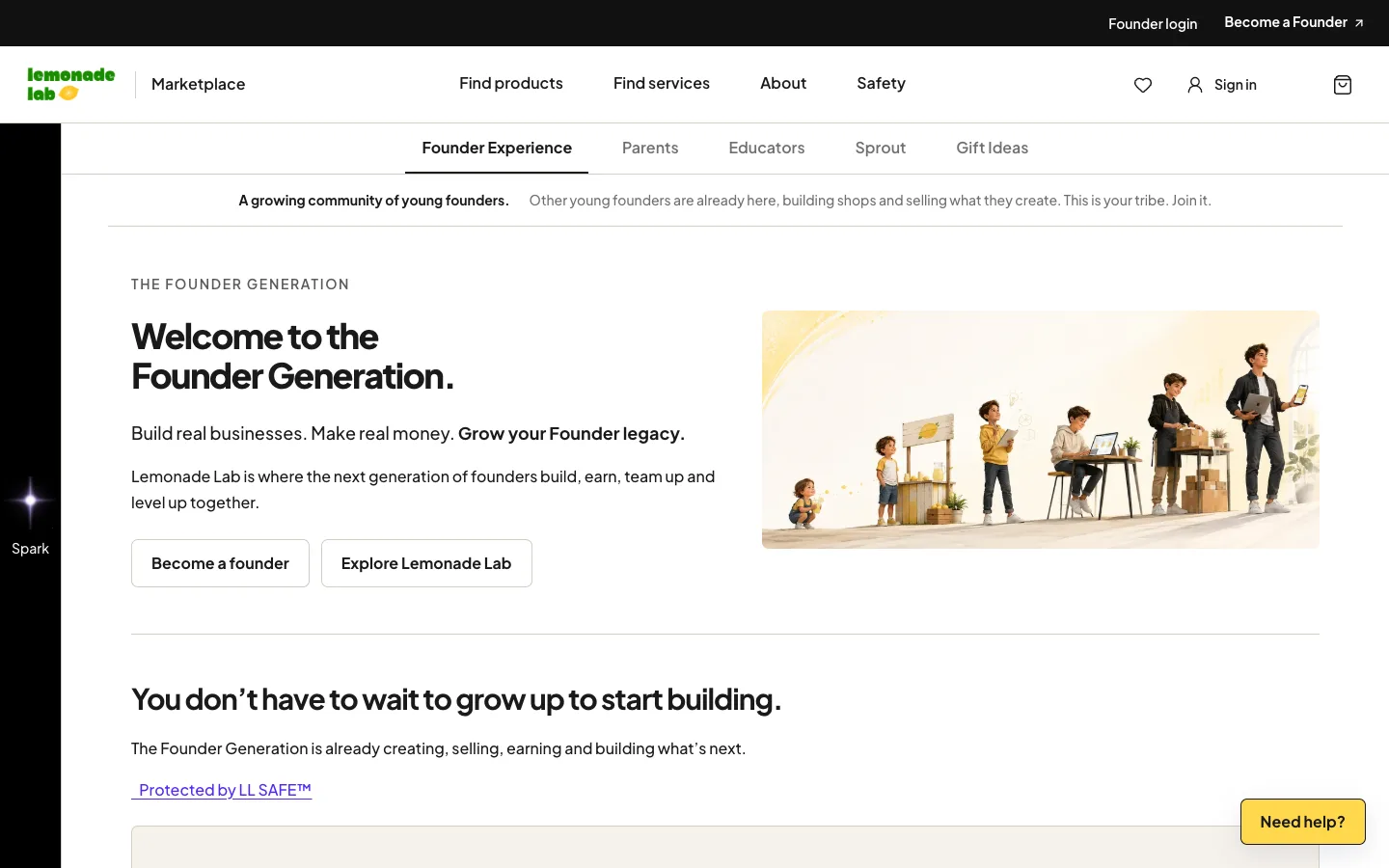
Lemonade Lab
A creative learning experience with activities and experiments designed to help children explore ideas through making and discovery. It is listed under Science and Art & creativity for ages 6-14. Children and families can use it through a website.
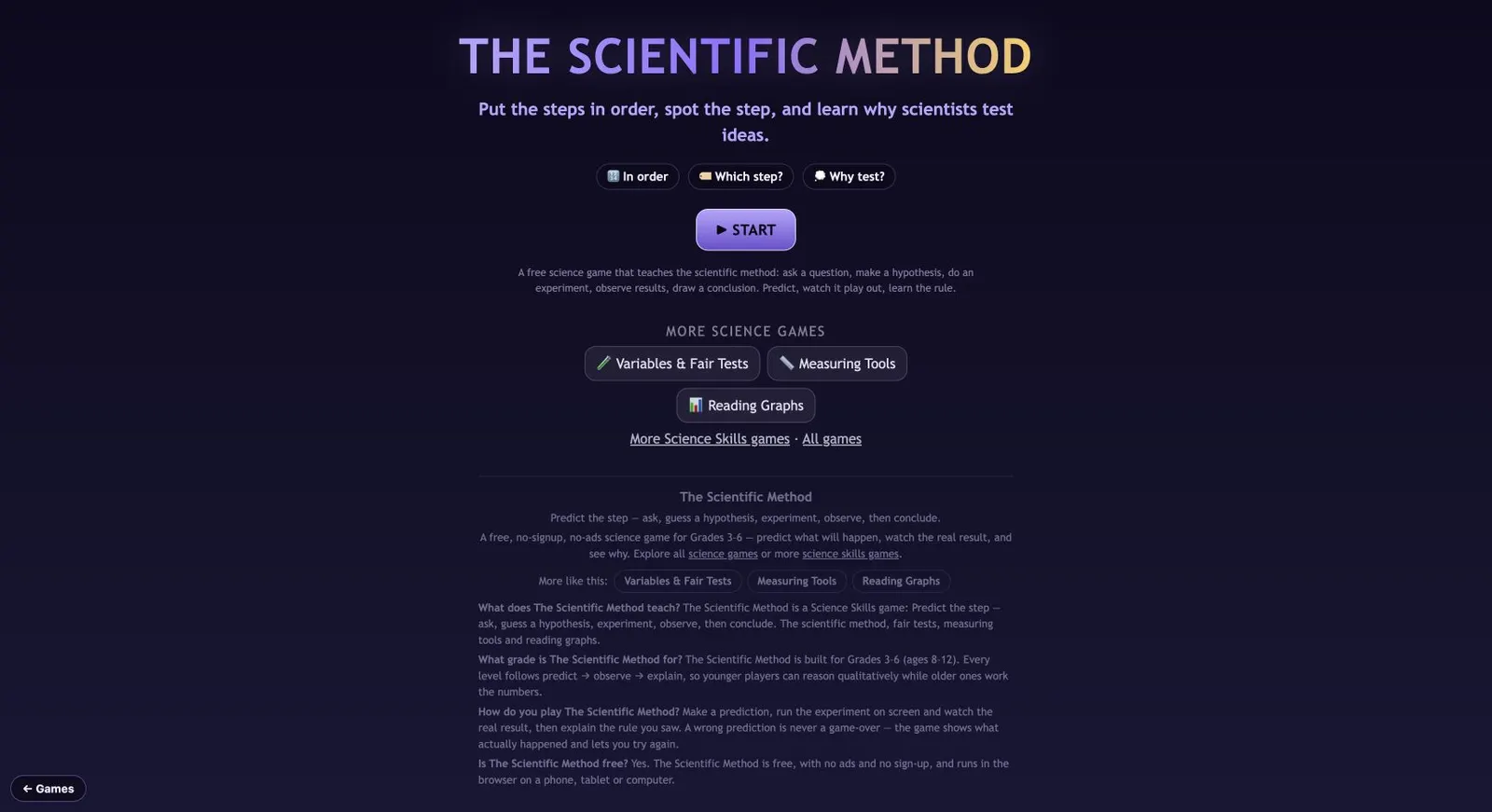
KidsDoMath: The Scientific Method
KidsDoMath’s Scientific Method is a focused browser game for grades 3–6 that asks children to order science steps, predict outcomes, observe experiments, and explain conclusions. It is listed under Science and Games for ages 8–12.
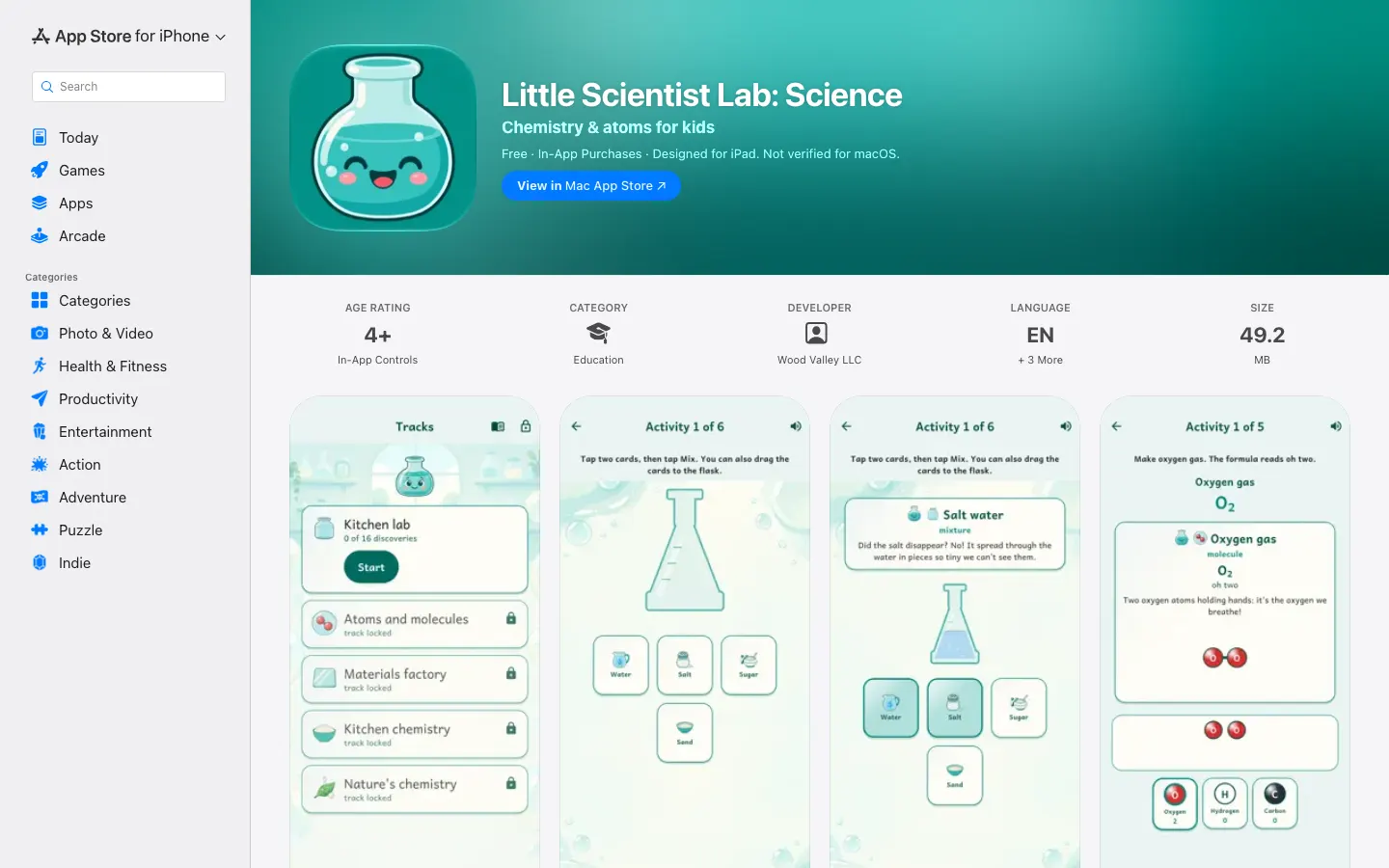
Little Scientist Lab
Little Scientist Lab is a virtual science lab for ages 6–10 where children mix materials, explore atoms and molecules, learn how materials are made, and keep explanations in a Scientist’s Notebook.
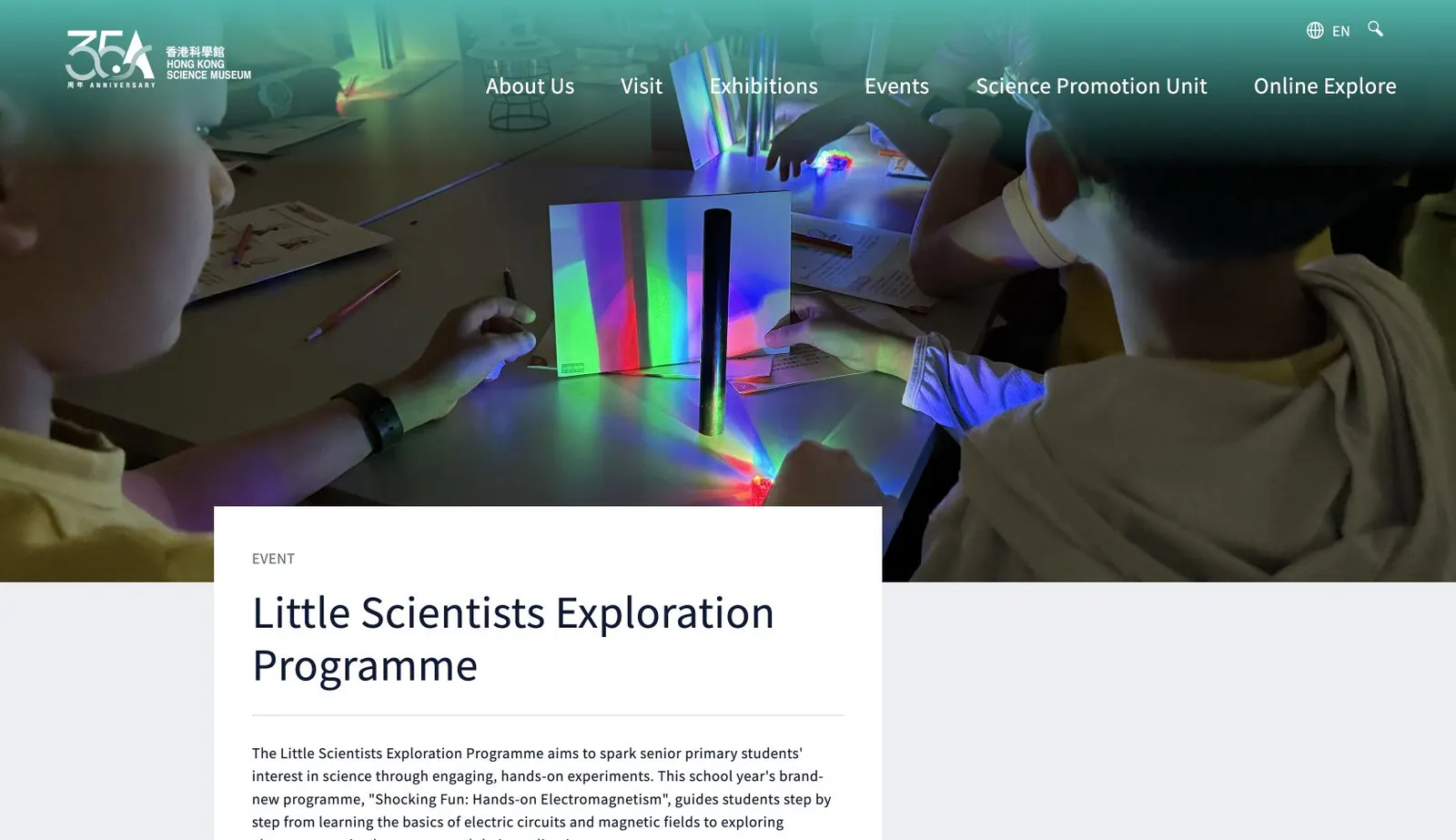
Hong Kong Science Museum Little Scientists Exploration Programme
The Hong Kong Science Museum’s Little Scientists Exploration Programme uses hands-on experiments to introduce senior primary students to science topics such as electromagnetism. It is listed under Science and Museums for ages P4–P6. Children and families can use it through a website.
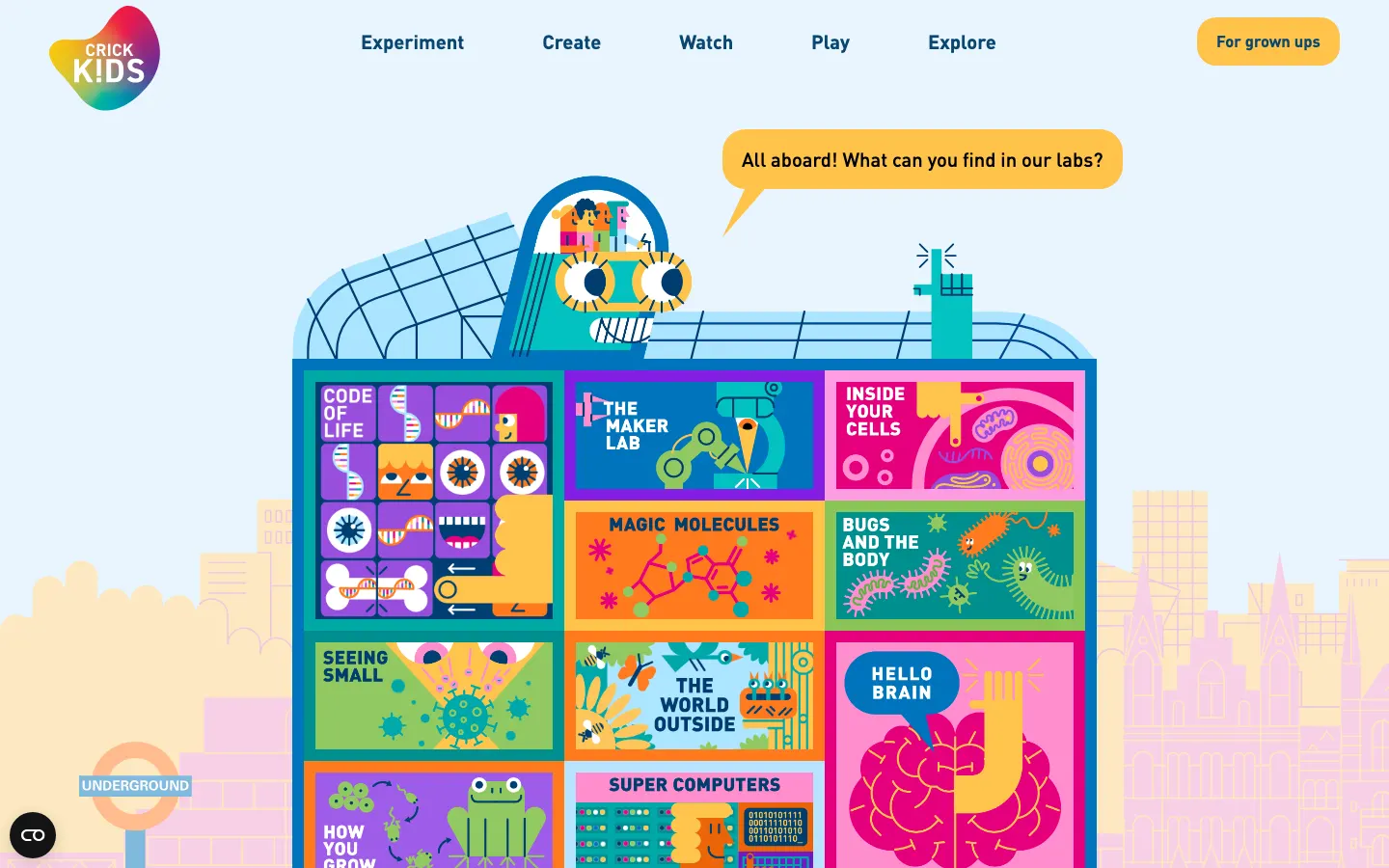
Crick Kids
The Francis Crick Institute’s children’s science site with experiments, quizzes, crafts, and family activities. It is listed under Science and Experiments & projects for ages Children and families; activity-specific. Children and families can use it through a website.
Science! KIDS
A PBS science series for children with fun experiments and science explanations from experts at the Orlando Science Center. It is listed under Science, Video, and Parent & educator for ages 6–12. Children and families can use it through a website.
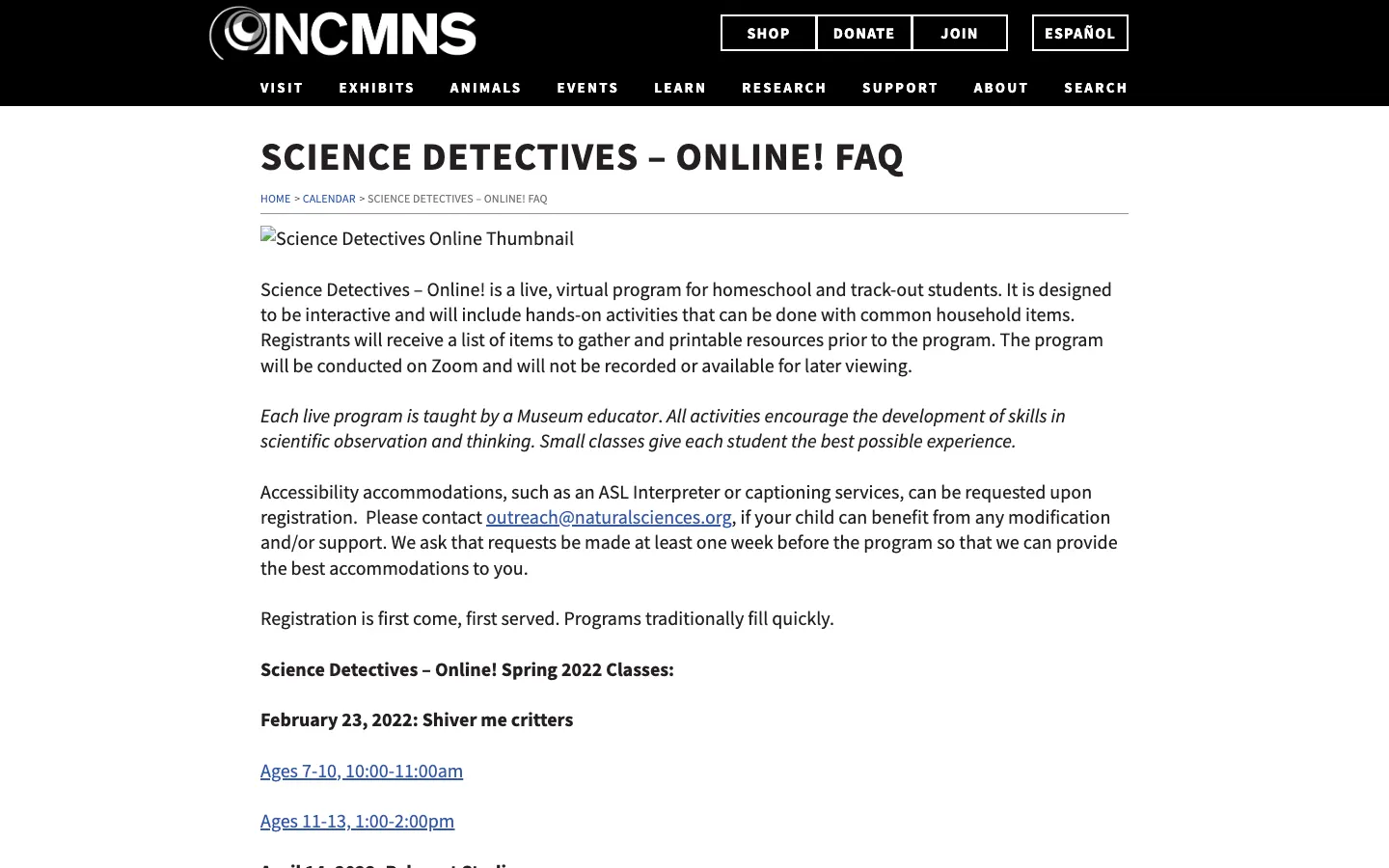
Science Detectives – Online!
Science Detectives – Online! is a live virtual program from the North Carolina Museum of Natural Sciences with hands-on activities, common household materials, and museum educators. It is listed under Science and Nature & environment for ages 6–12.
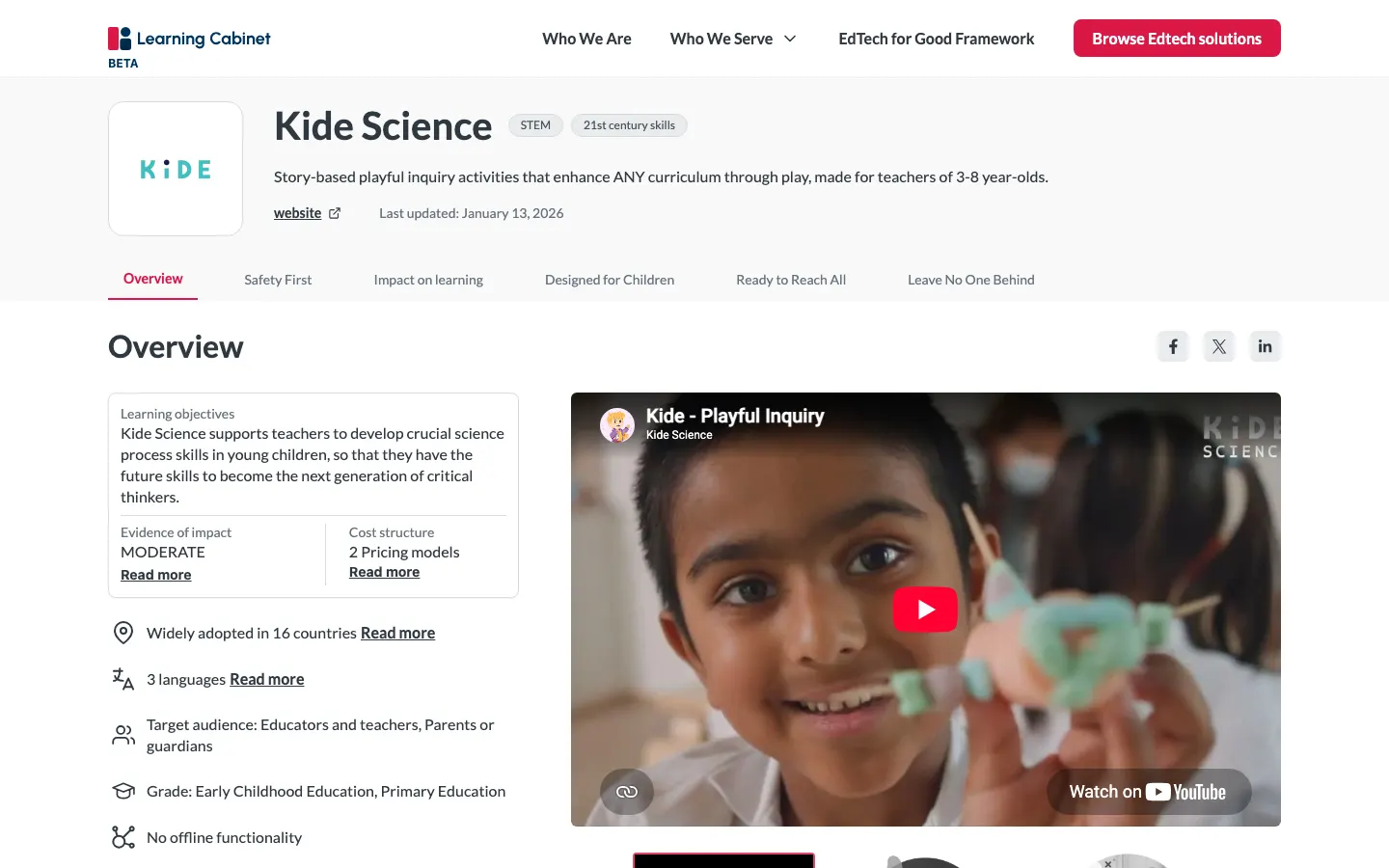
Kide Science
Kide Science is an inquiry-based early-years science program with playful experiments, lesson resources, and educator support for young children. It is listed under Science and Parent & educator for ages 3–8. Children and families can use it through a website.
Science4Us
An elementary science curriculum and activity platform with lessons, investigations, resources, and teacher support for young learners. It is listed under Science, Parent & educator, and Nature & environment for ages 4–9. Children and families can use it through a website.
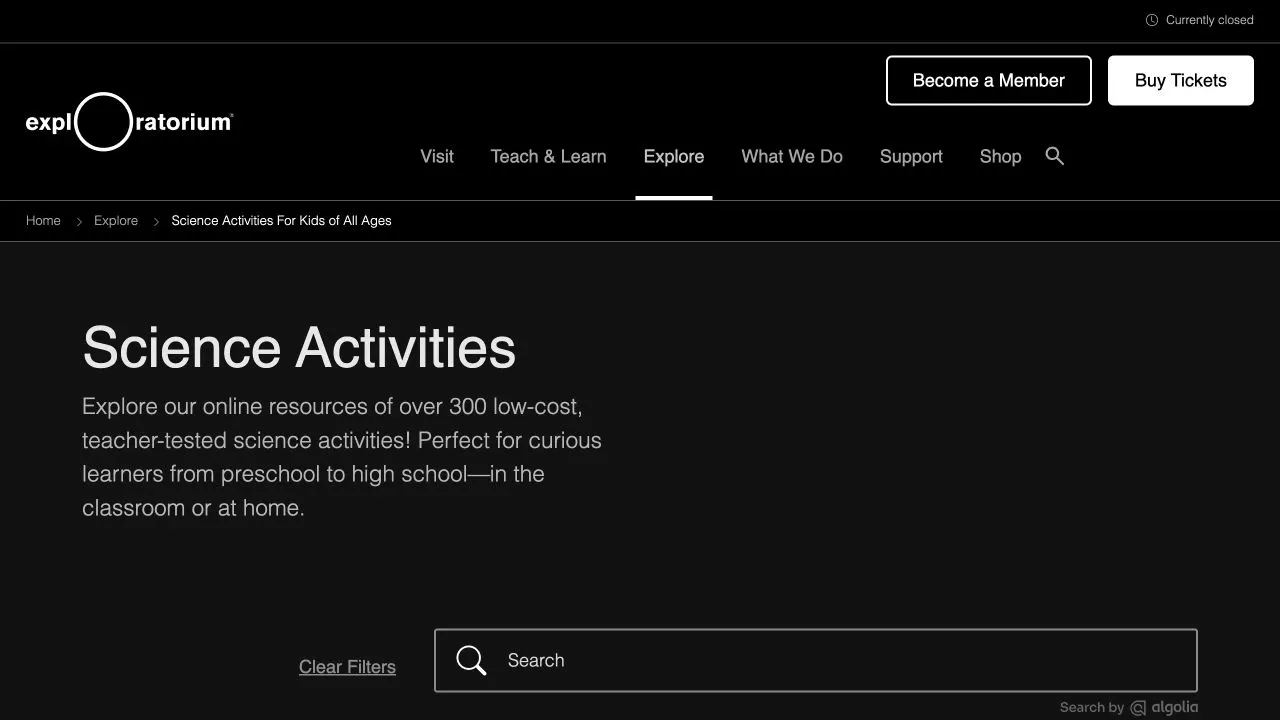
Exploratorium Science Activities
The Exploratorium offers more than 300 teacher-tested science activities for children from preschool through high school, with practical ways to investigate science at home or in educational settings. It is listed under Science and STEM for ages Ages 4–18; activity-specific.
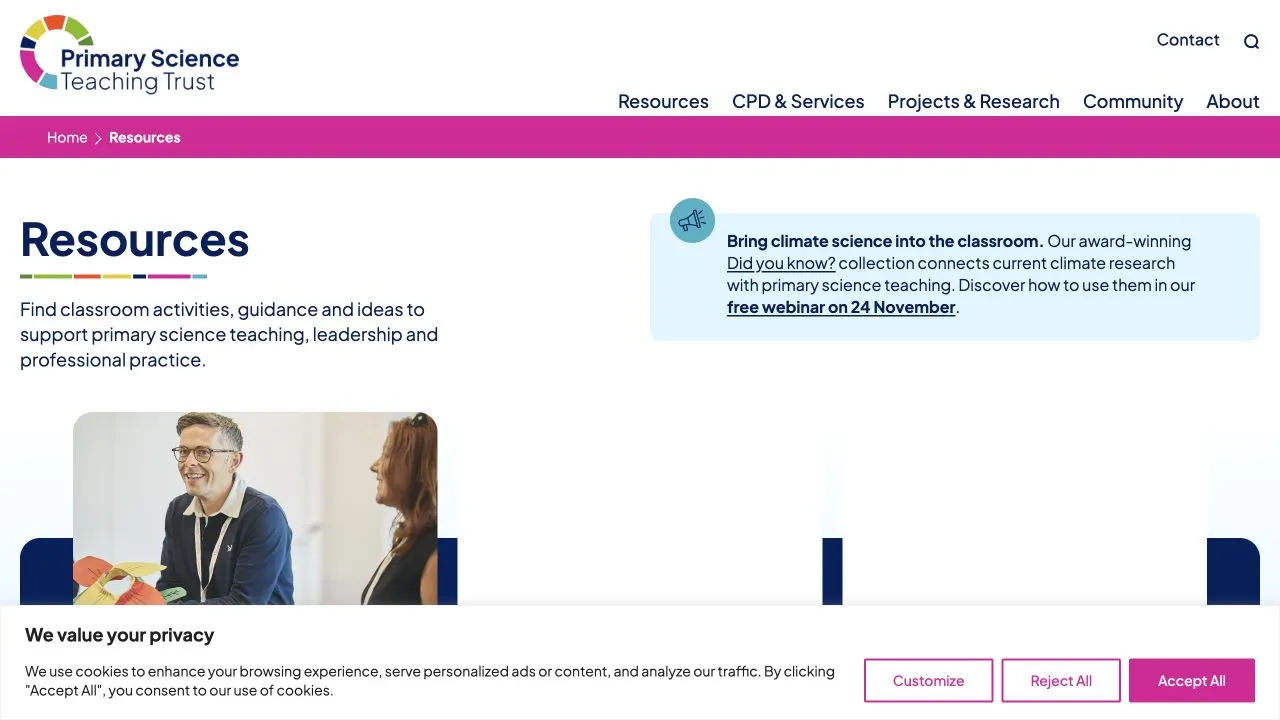
Primary Science Teaching Trust Resources
The Primary Science Teaching Trust catalogue provides classroom activities, teacher toolkits, assessment support, and topic-filtered science resources for primary education. It is listed under Science and Education for ages Ages 3–12; item-specific. Children and families can use it through a website and downloadable resources.
Compare with context
Use this collection to find a direction, then open each resource page before sharing it with a child. The individual review shows languages, access formats, tags, age guidance, source links, and notes for grown-ups.
Search the full directory →