Geography Space
for kids
Explore 13 trusted geography space resources selected for curious kids, with clear ages, access details, and parent context.
Two useful ways to narrow the directory
This page brings together geography resources that also match space. Each listing keeps its own age range, platform details, languages, links, and parent notes, so you can compare options without losing context.
Explore all geography resources →
NASA Jet Propulsion Laboratory
Official NASA JPL videos about robotic exploration, Mars rovers, planetary missions, space technology, and skywatching. It is listed under Science, Technology, and Engineering for ages 8–18. Children and families can use it through a YouTube channel and a website.
Read the full resource review →More geography picks
ESA Kids
Space science stories, missions, games, and activities from the European Space Agency. It is listed under Science and Geography for ages 6–14. Children and families can use it through a website. The directory records access as free and language coverage as English.
SciShow Space
SciShow’s dedicated space channel explains planets, stars, missions, astronomy discoveries, and the science of the universe. It is listed under Science, Technology, and Geography for ages 9–18. Children and families can use it through a YouTube channel.
Royal Observatory Family Fun
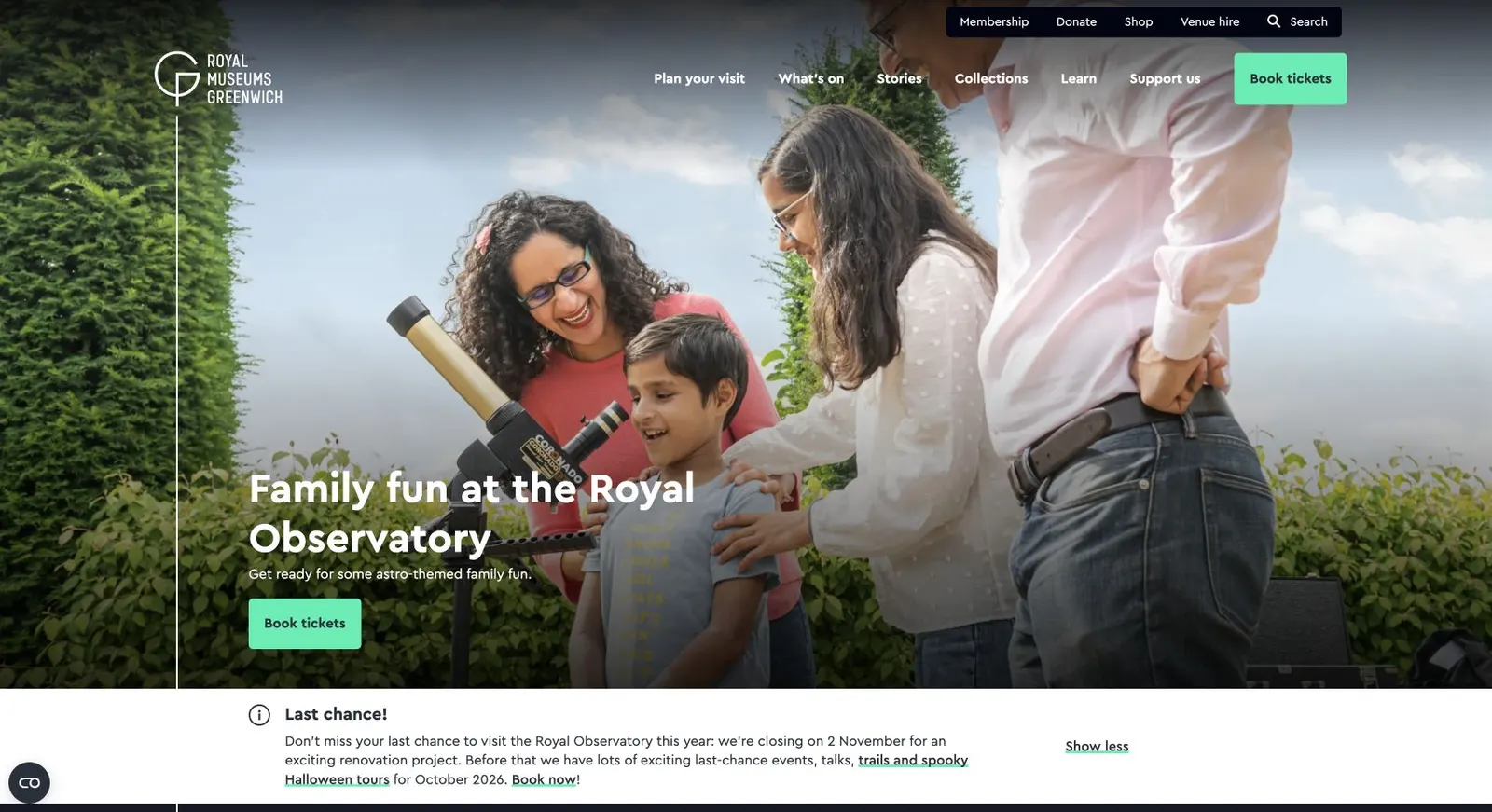
Astro-themed family planning and visit guidance for the Royal Observatory, with space activities, accessibility information, tickets, and opening details. It is listed under Science, Geography, and Parent & educator for ages 4–16. Children and families can use it through a website and a physical place.
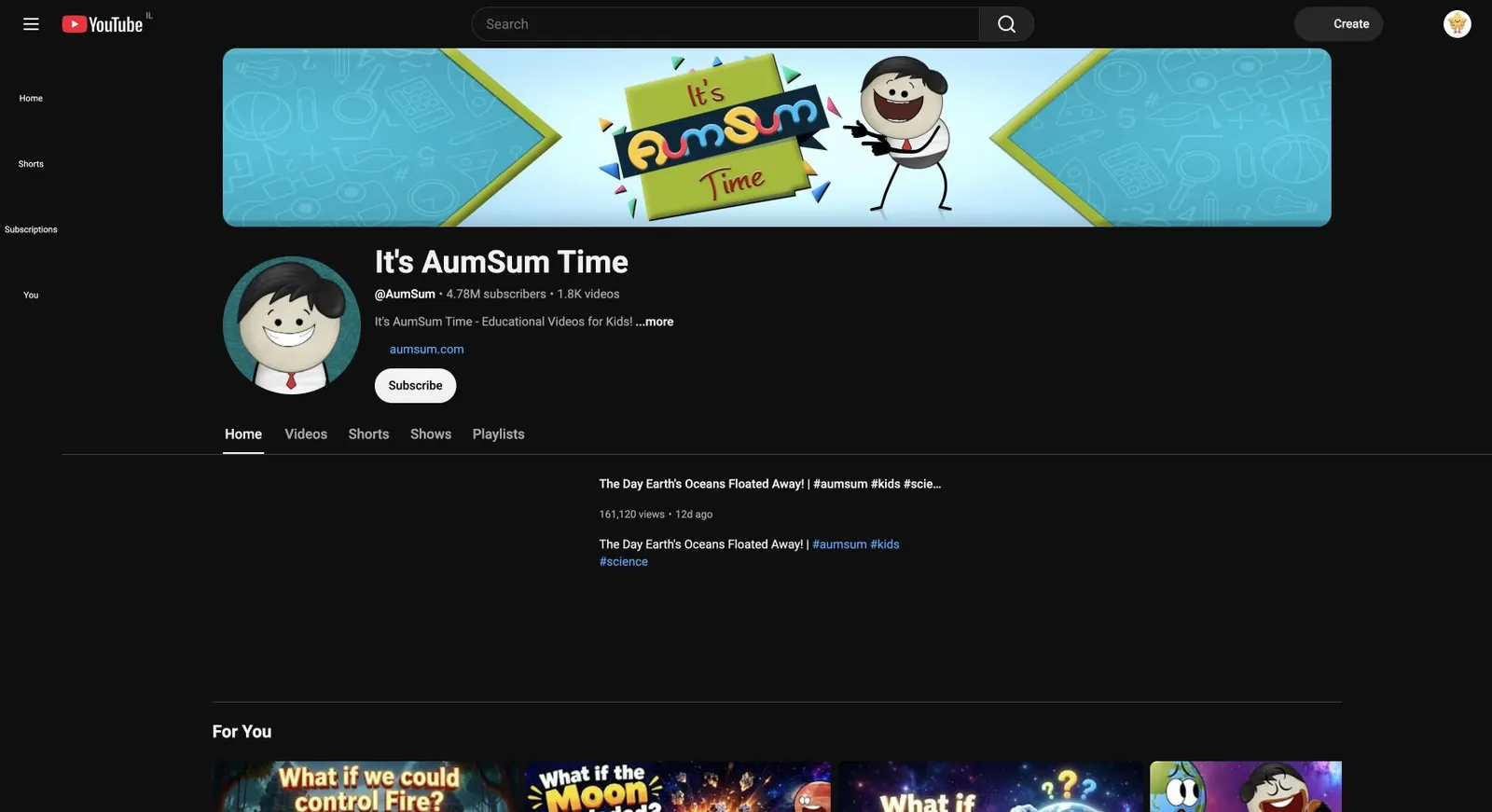
AumSum
Animated science and general-knowledge videos for children about the natural world, bodies, space, and everyday questions. It is listed under Science, Nature & environment, and Geography for ages 6–12. Children and families can use it through a YouTube channel.
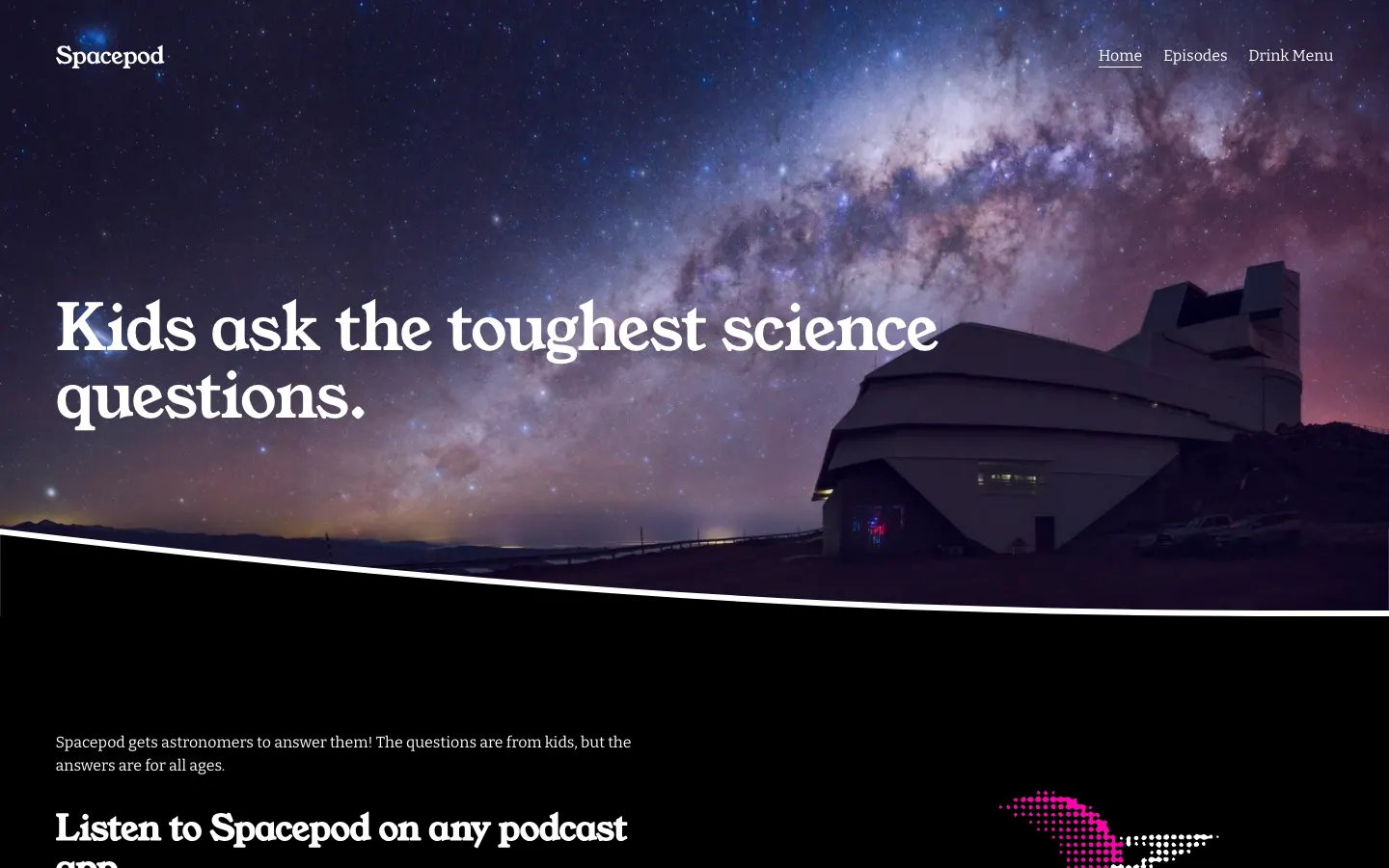
Spacepod
Spacepod is a children’s astronomy podcast where kids’ big questions are answered by astronomers and science guests across a large episode library. It is listed under Science and Geography for ages 5–12. Children and families can use it through a website and a podcast.
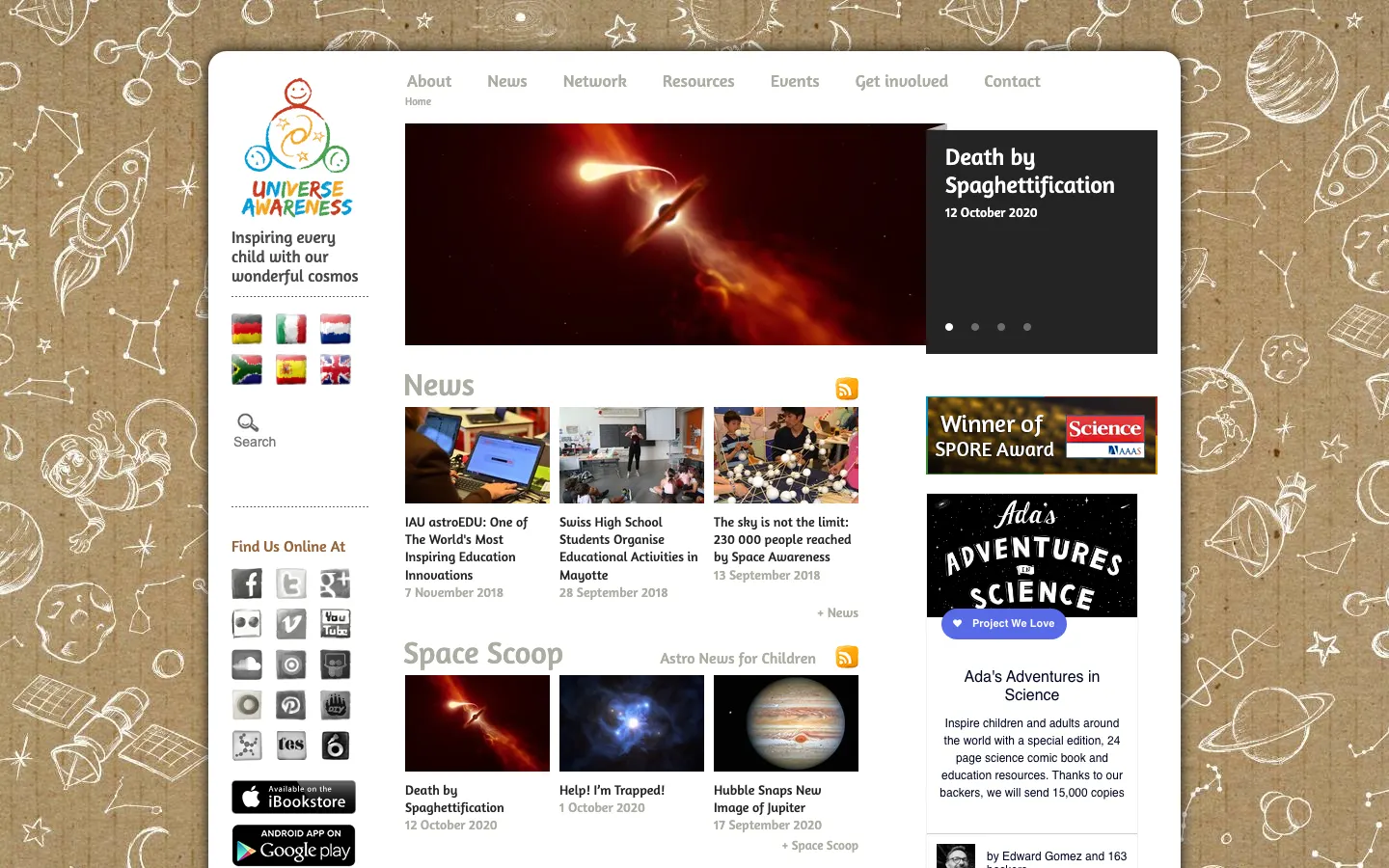
Universe Awareness
An international astronomy education network creating accessible space-science activities and resources for children around the world. It is listed under Science and Geography for ages 4–10; resource-specific. Children and families can use it through a website.
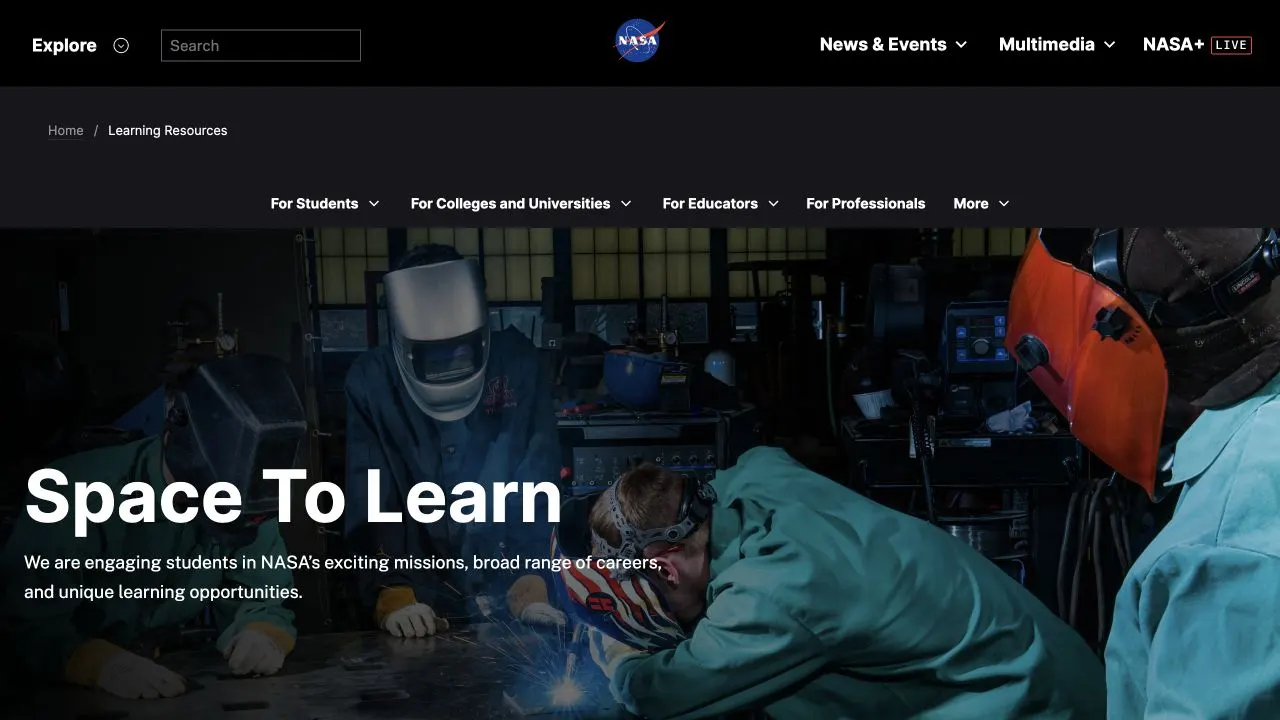
NASA Learning Resources
NASA student and educator resources with STEM activities, missions, videos, challenges, careers, and family learning ideas. It is listed under Science, Coding, and Geography for ages 5-18. Children and families can use it through a website, downloadable resources, and a YouTube channel.
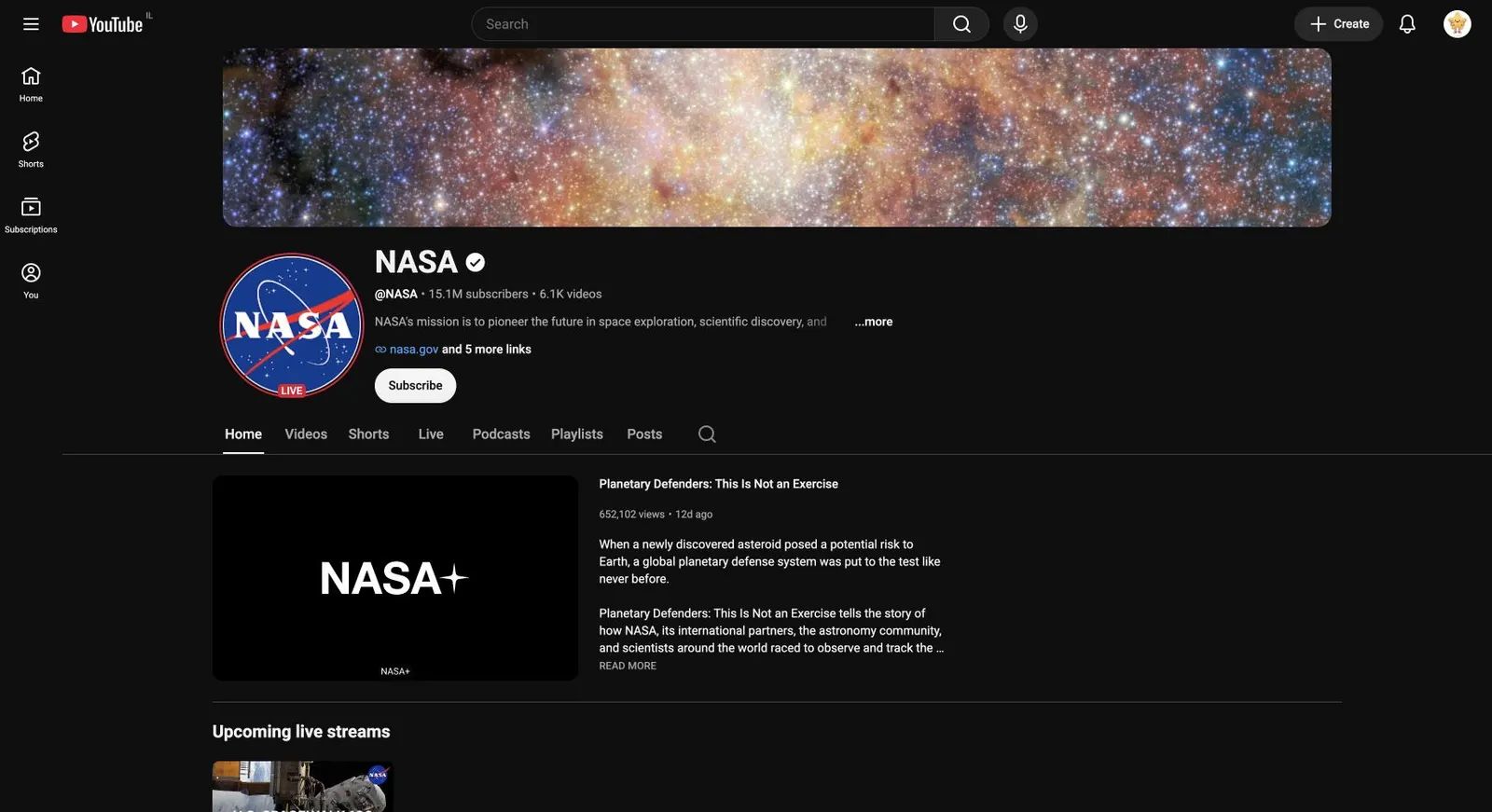
NASA
Official NASA videos about space exploration, science, missions, Earth, astronomy, astronauts, and the future of discovery. It is listed under Science, Technology, and Nature & environment for ages 8–18. Children and families can use it through a YouTube channel and a website.
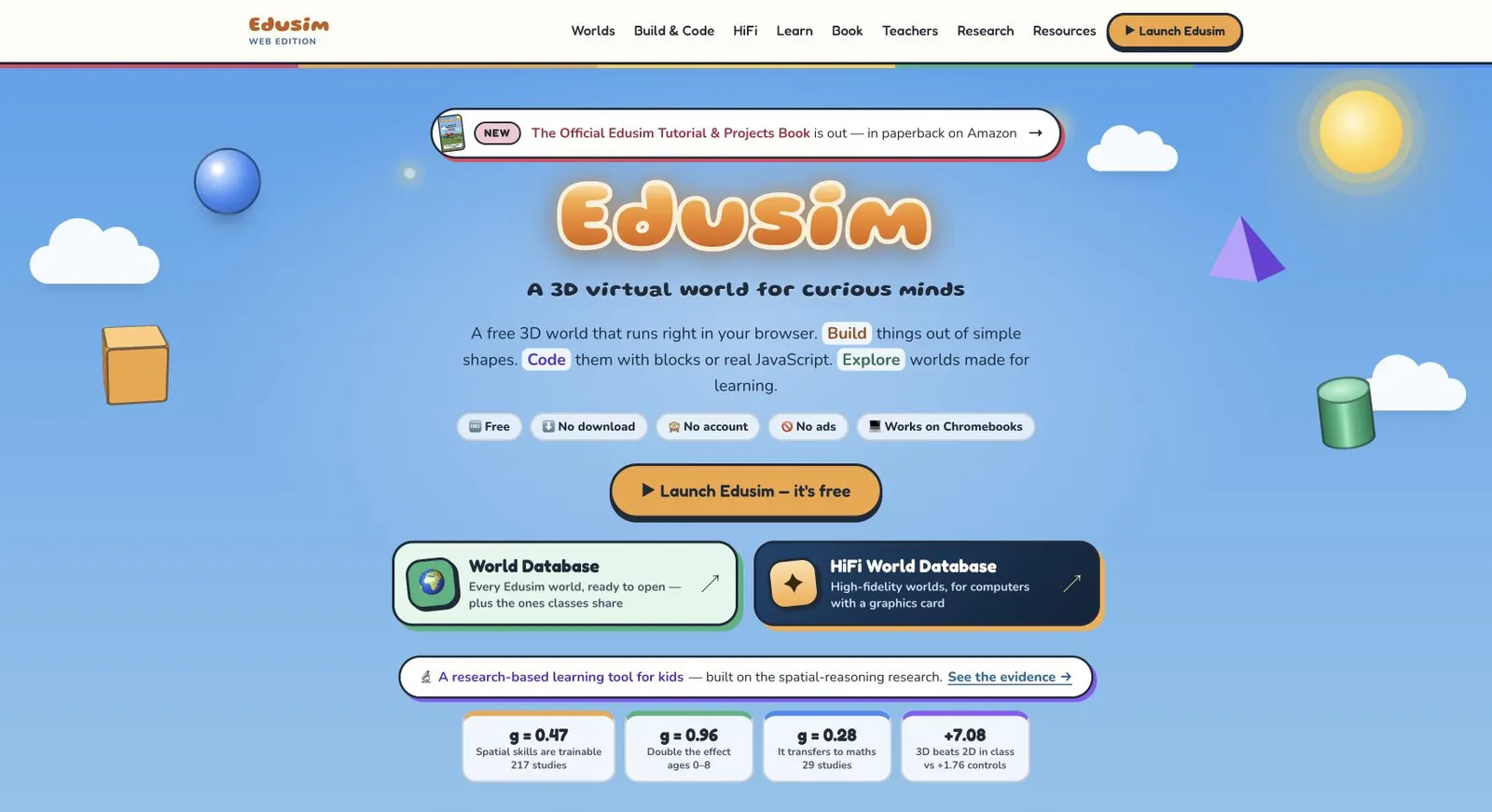
Edusim 3D
A free 3D learning world where children build, explore science topics, and code with blocks or JavaScript. It is listed under Science, Coding, and Games for ages 6–14. Children and families can use it through a website.
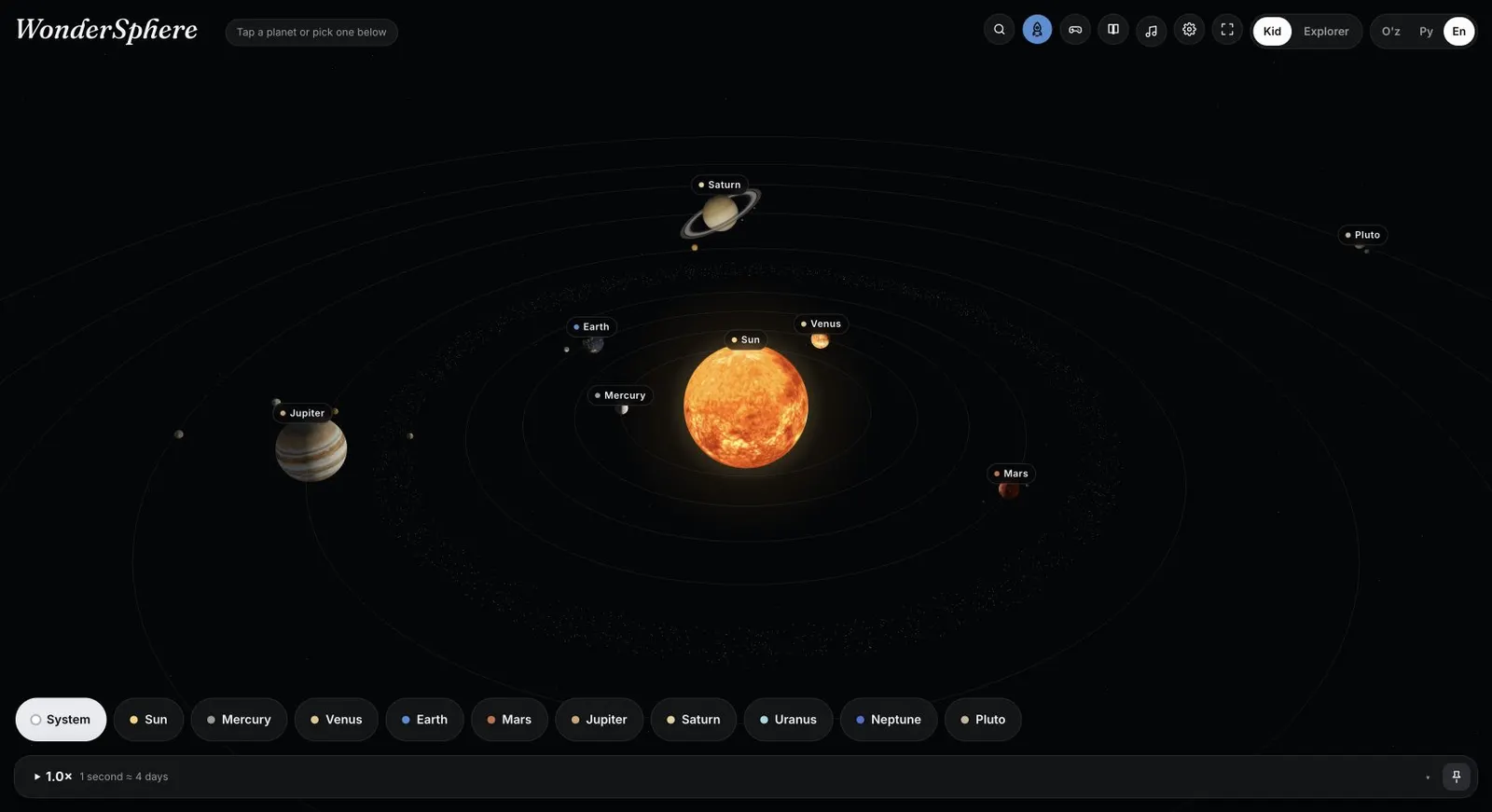
WonderSphere
A free multilingual interactive 3D map for children covering the solar system, Earth, Moon, animals, plants, natural phenomena, mini-games, and a knowledge corner. It is listed under Space and Science for ages 6–14. Children and families can use it through a website.
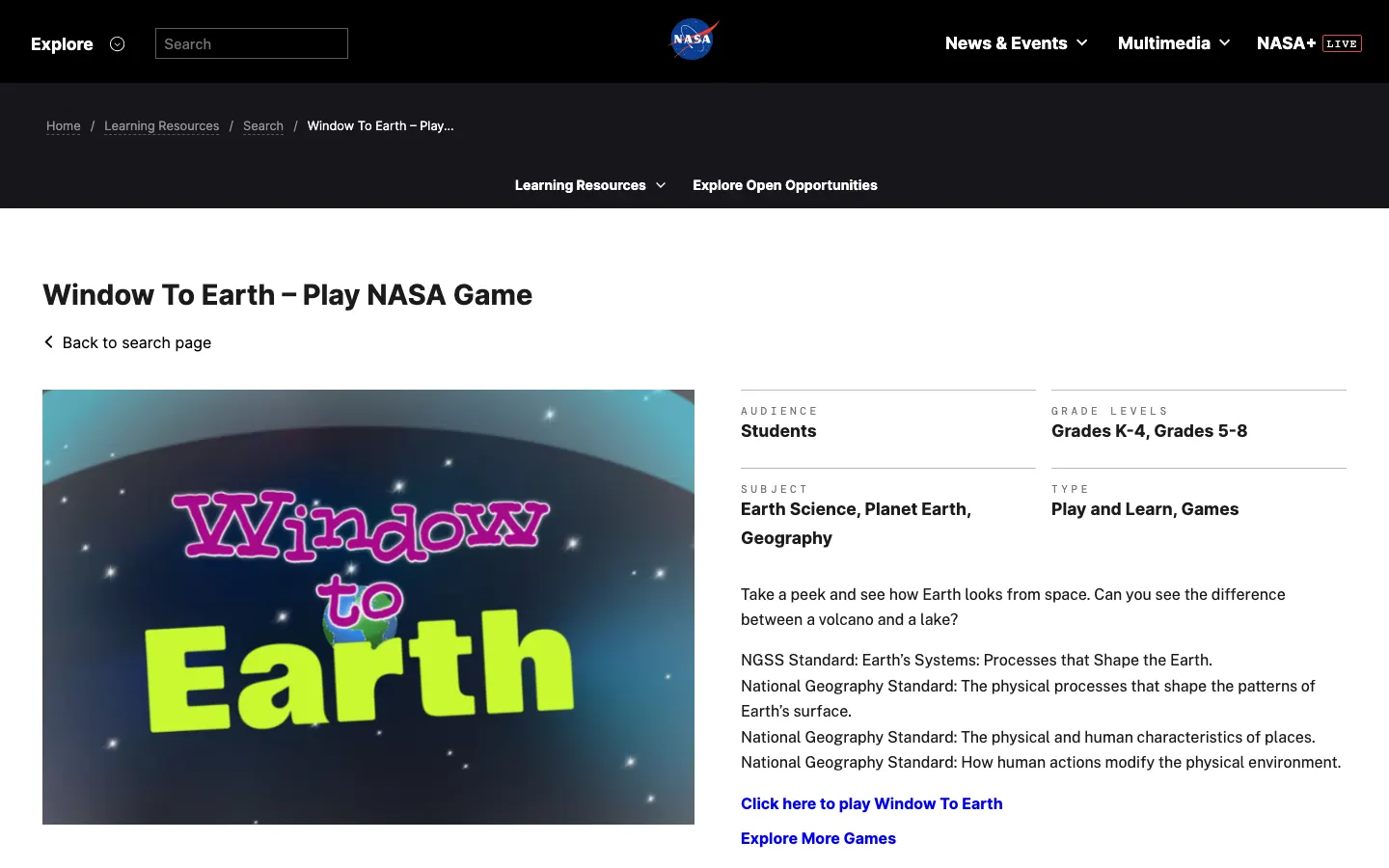
NASA Window To Earth
NASA Window To Earth is a play-and-learn game that helps students compare Earth features from space while exploring Earth science and geography. It is listed under Science and Space for ages Grades K–8. Children and families can use it through a website.
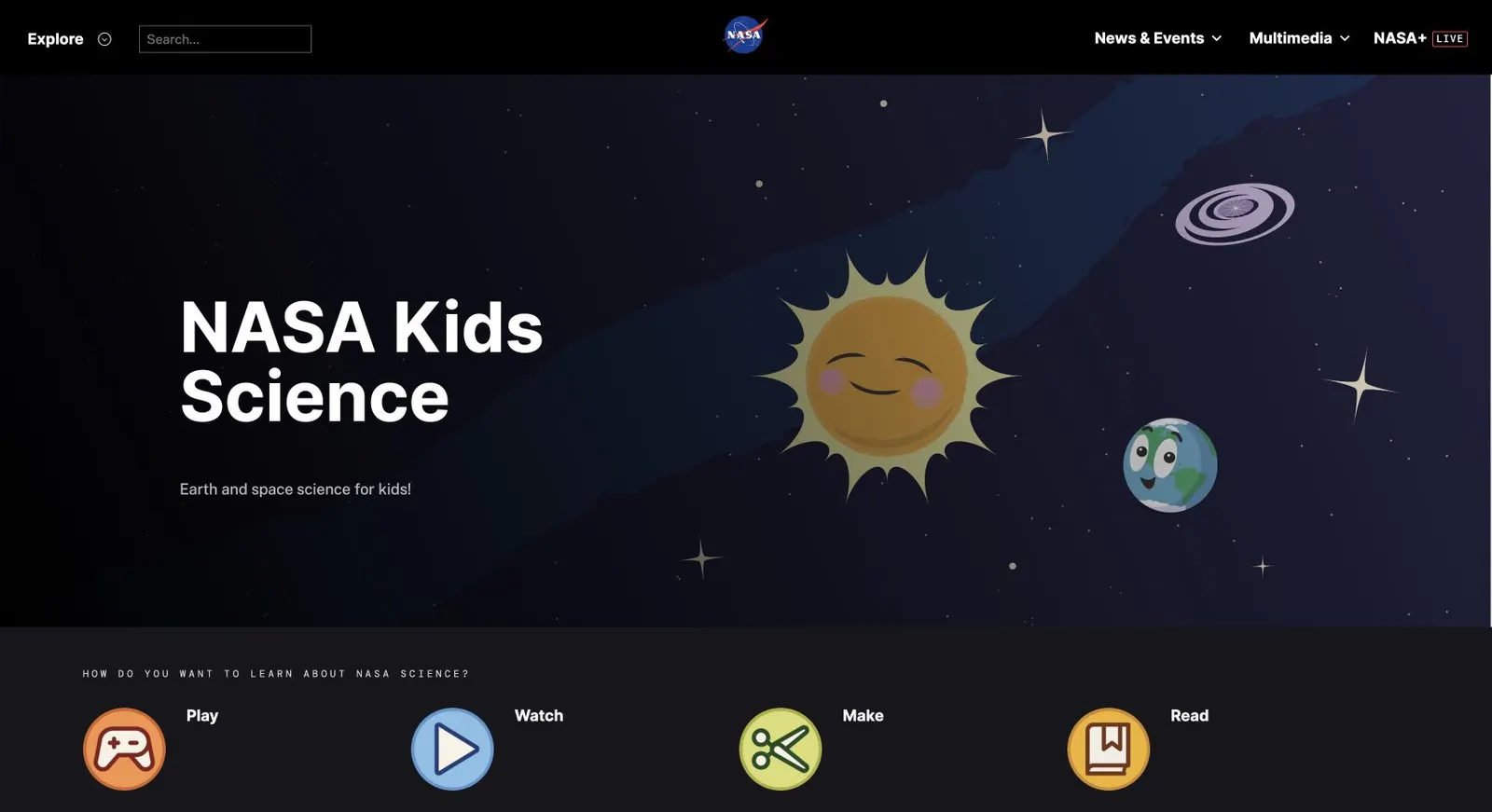
NASA Kids Science
NASA’s child-friendly Earth and space science hub with games, videos, activities, articles, and multilingual links. It is listed under Science, Nature & environment, and Geography for ages 7–14. Children and families can use it through a website.
Compare with context
Use this collection to find a direction, then open each resource page before sharing it with a child. The individual review shows languages, access formats, tags, age guidance, source links, and notes for grown-ups.
Search the full directory →