Games & interactives Science
for kids
Explore 18 trusted games & interactives science resources selected for curious kids, with clear ages, access details, and parent context.
Two useful ways to narrow the directory
This page brings together games & interactives resources that also match science. Each listing keeps its own age range, platform details, languages, links, and parent notes, so you can compare options without losing context.
Explore all games & interactives resources →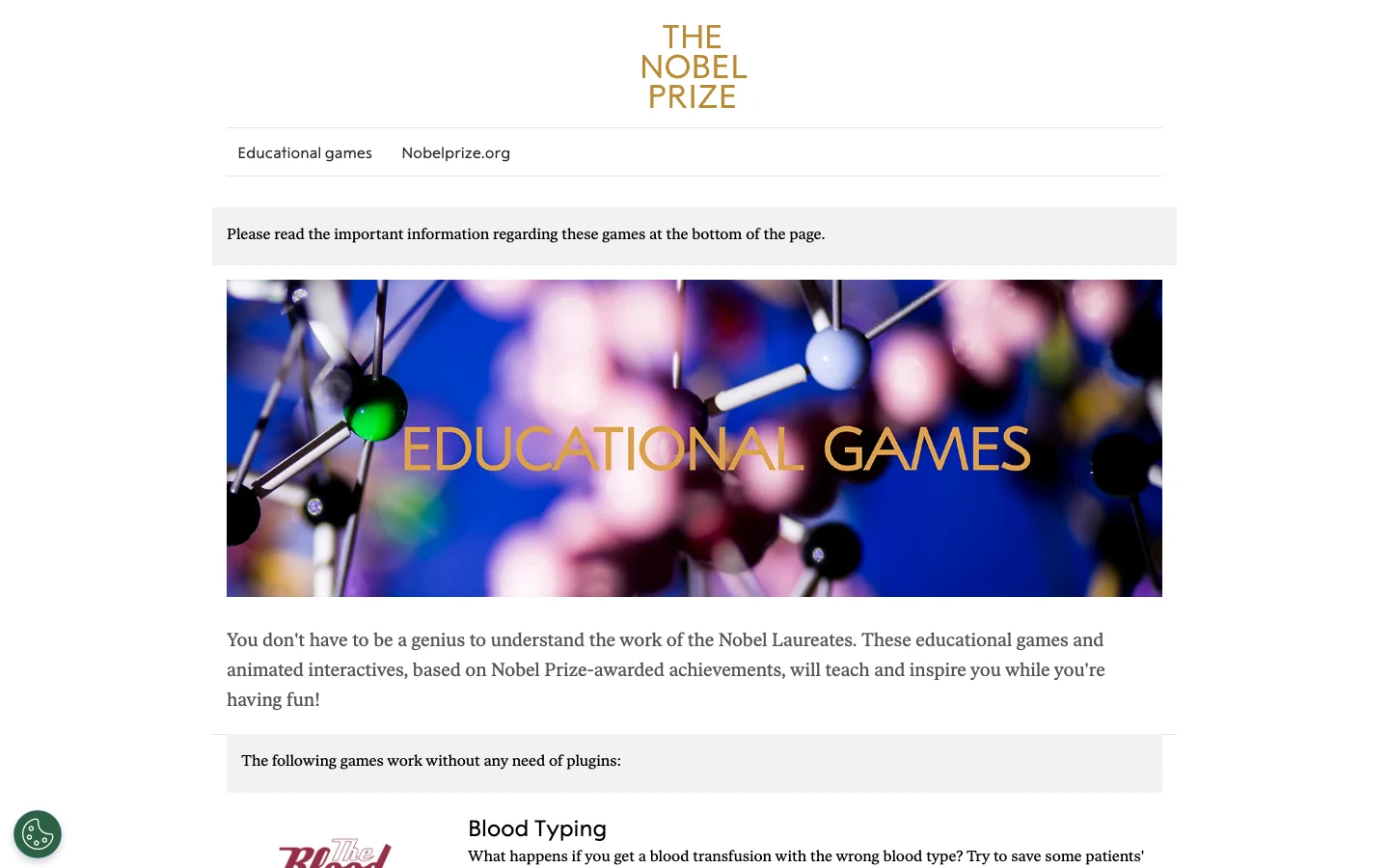
Nobel Prize Educational Games
Free educational games from Nobel Prize Outreach that introduce children to ideas and stories connected with Nobel Prize subjects. It is listed under Science and History & culture for ages Children; game-specific. Children and families can use it through a website.
Read the full resource review →More games & interactives picks
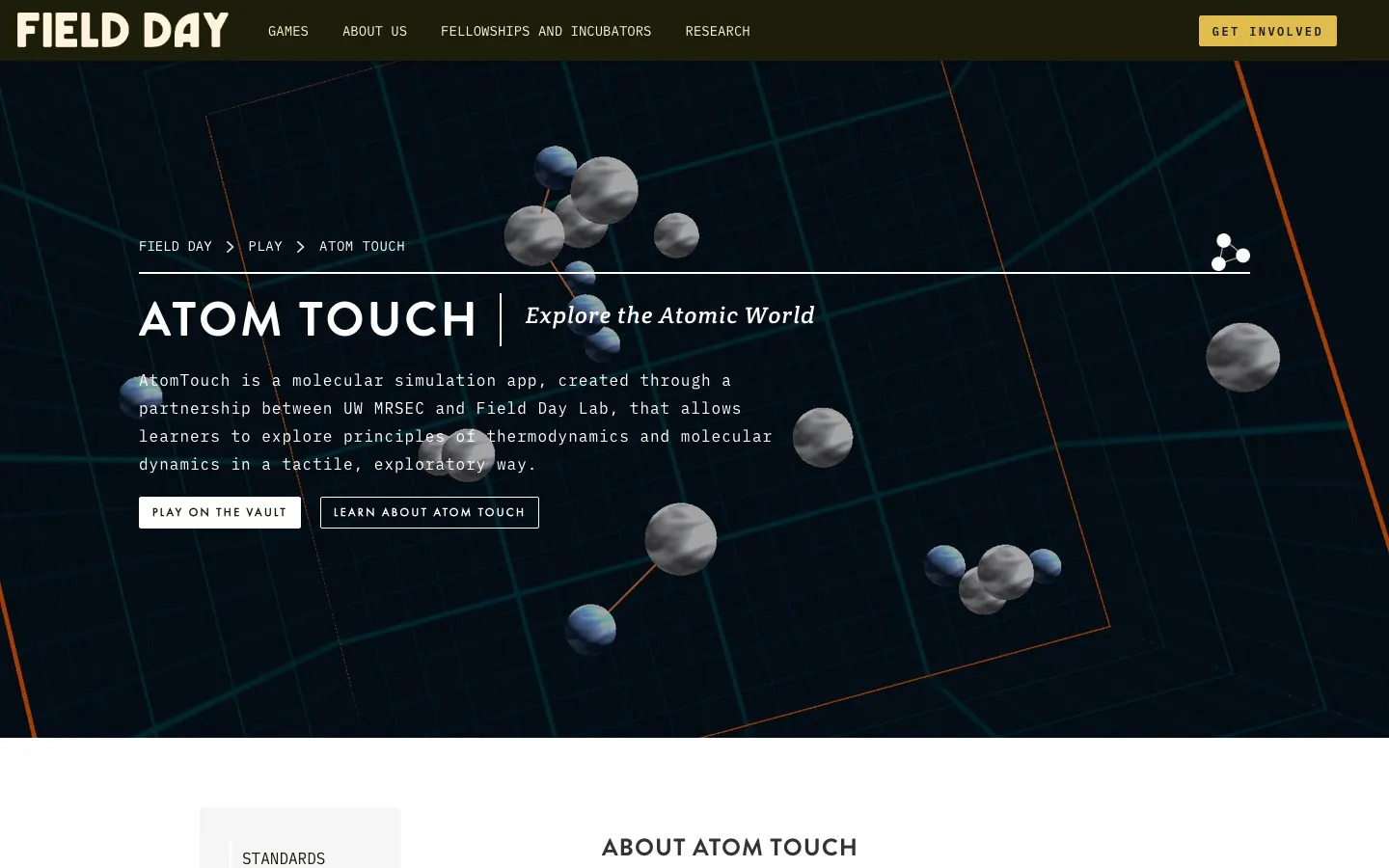
Atom Touch
An interactive Field Day Lab molecular simulation that lets learners explore thermodynamics, particles, molecular structures, and changing states of matter through tactile experimentation. It is listed under Science and Chemistry for ages Grades 5–8; activity-specific.
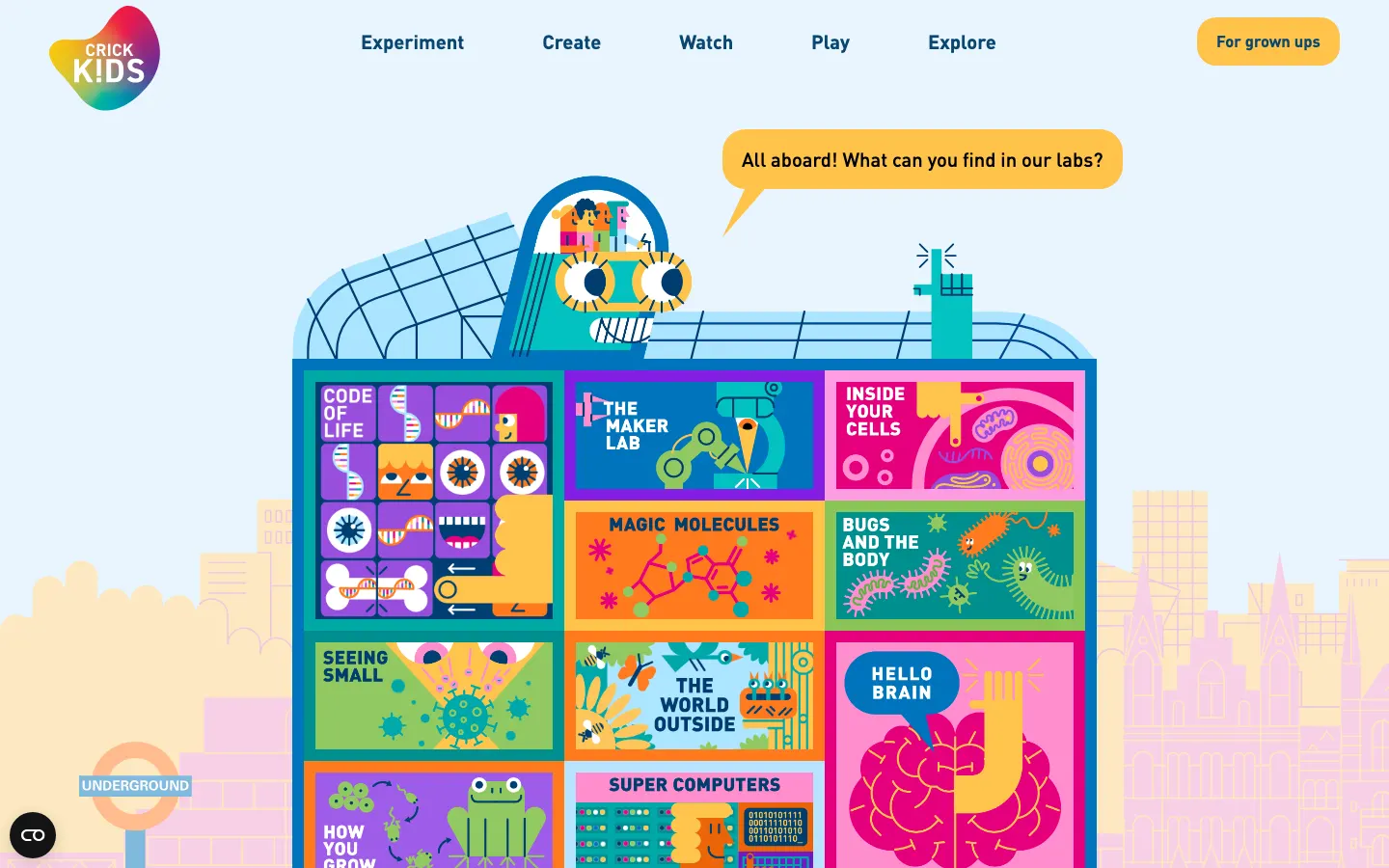
Crick Kids
The Francis Crick Institute’s children’s science site with experiments, quizzes, crafts, and family activities. It is listed under Science and Experiments & projects for ages Children and families; activity-specific. Children and families can use it through a website.
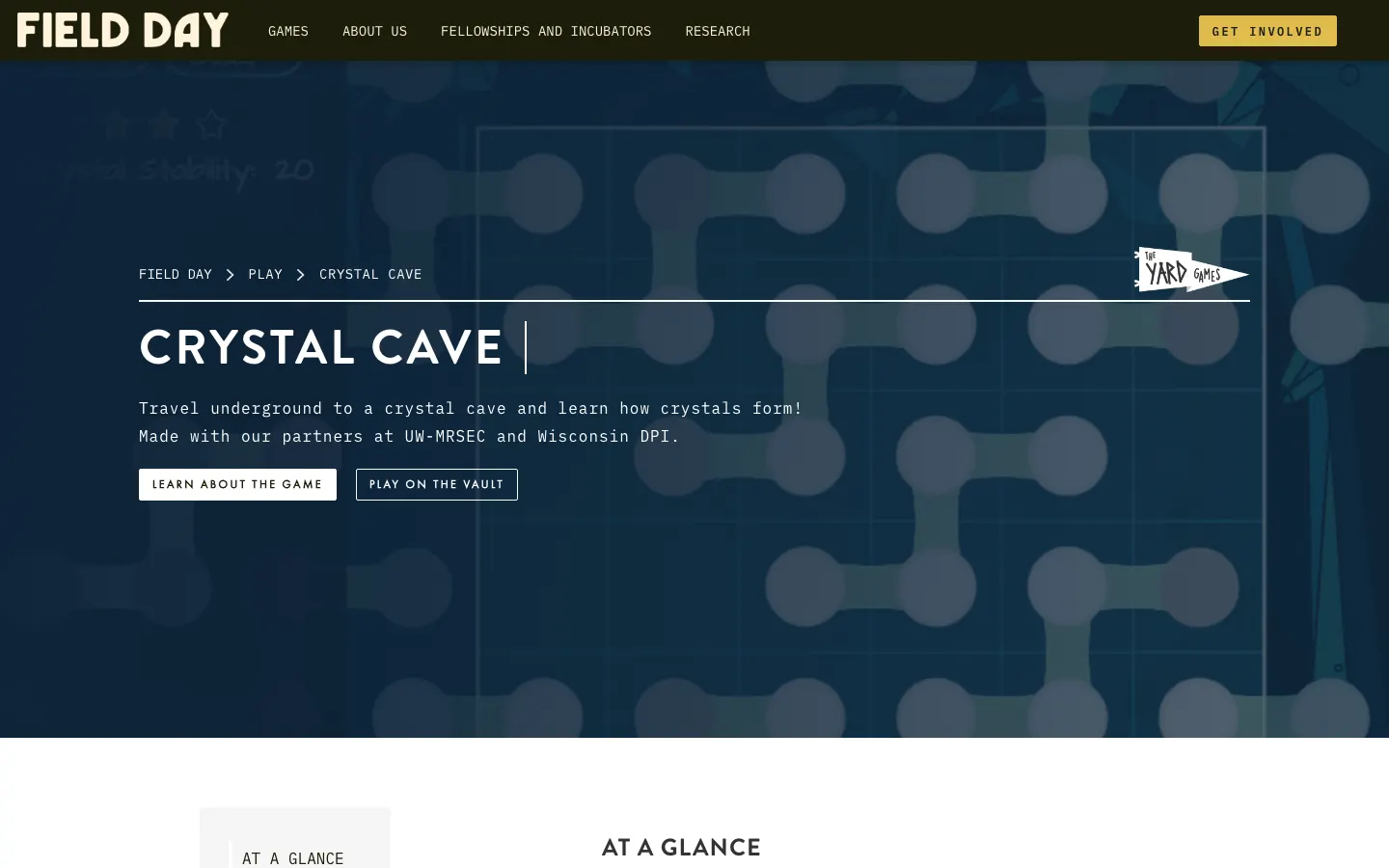
Crystal Cave
A Field Day Lab puzzle game in which learners arrange molecules into stable configurations while exploring how crystals form, repeat, and hold molecular charges. It is listed under Science and Chemistry for ages Grades 5–8.
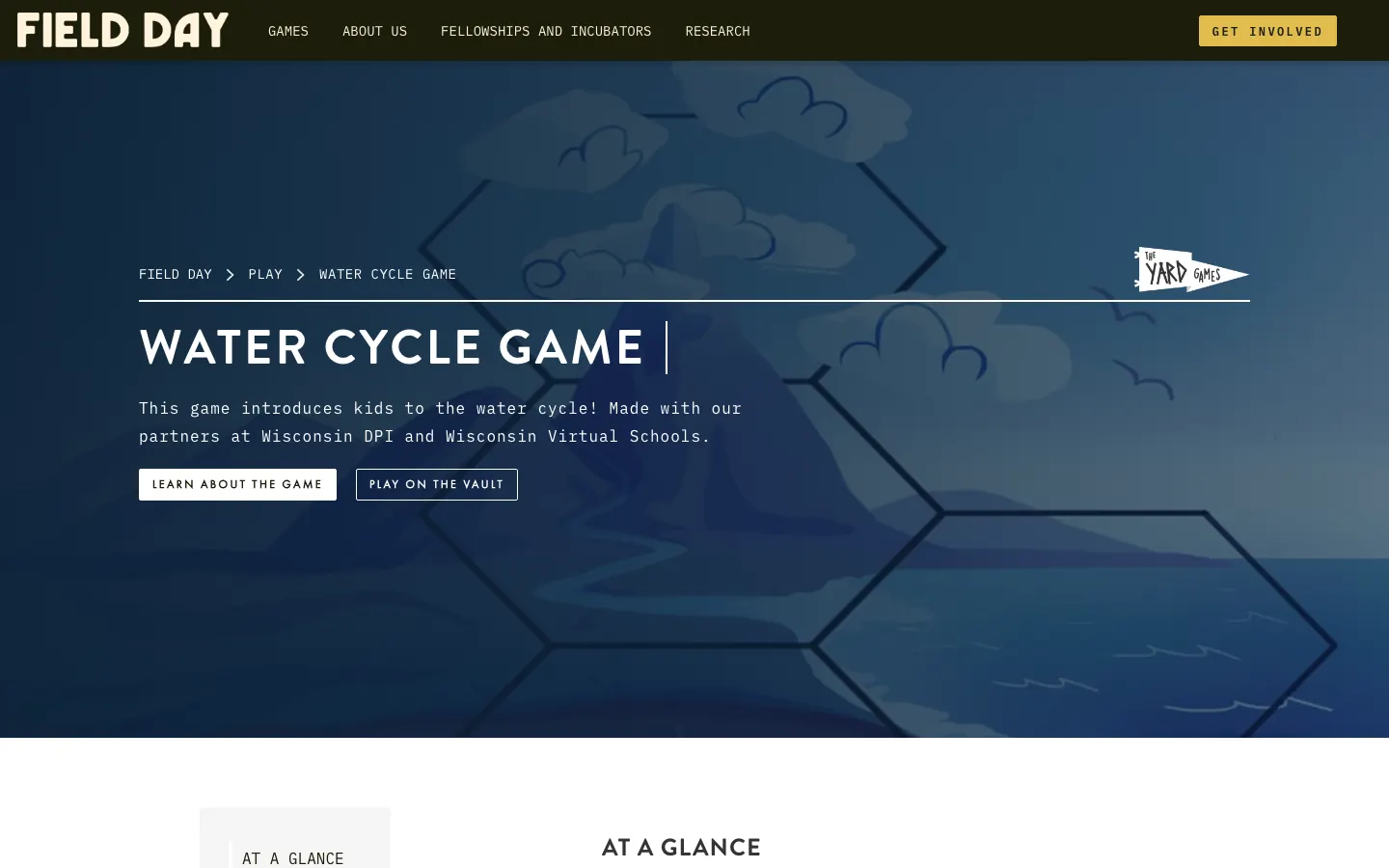
Water Cycle Game
A Field Day Lab board-game-style activity that helps learners trace water through evaporation, condensation, precipitation, runoff, groundwater, and soil absorption. It is listed under Science and Nature for ages Grades 5–8. Children and families can use it through a website.
EducaWeb
EducaWeb is a free interactive learning world with lessons, stories, books, games, and activities spanning reading, math, science, nature, coding, sport, and AI for children and teens. It is listed under Science and Reading for ages 4–18.
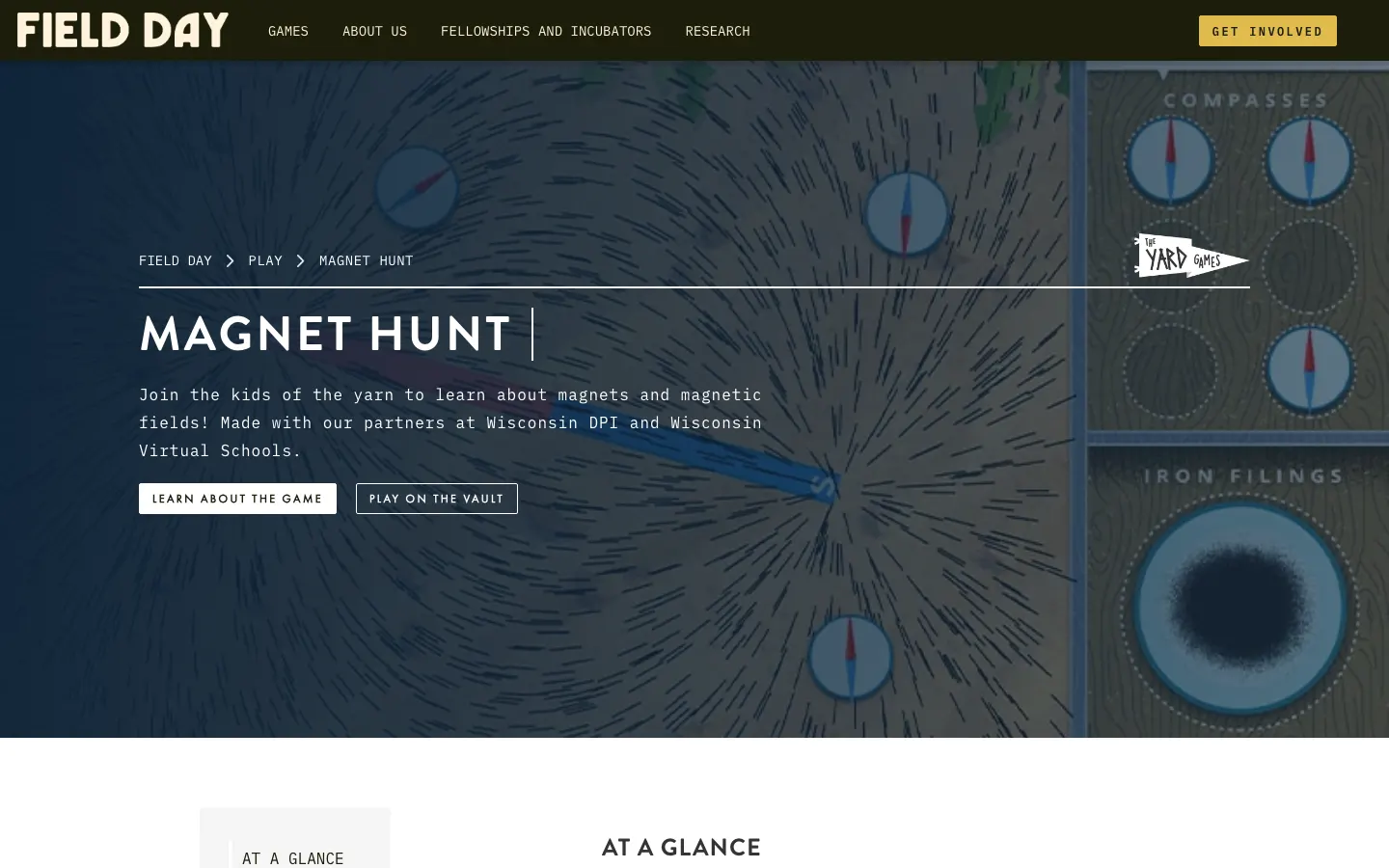
Magnet Hunt
A Field Day Lab physics game where learners use magnetic fields and iron filings to find hidden magnets while exploring poles, forces, and interactions. It is listed under Science and Physics for ages Grades 5–8.
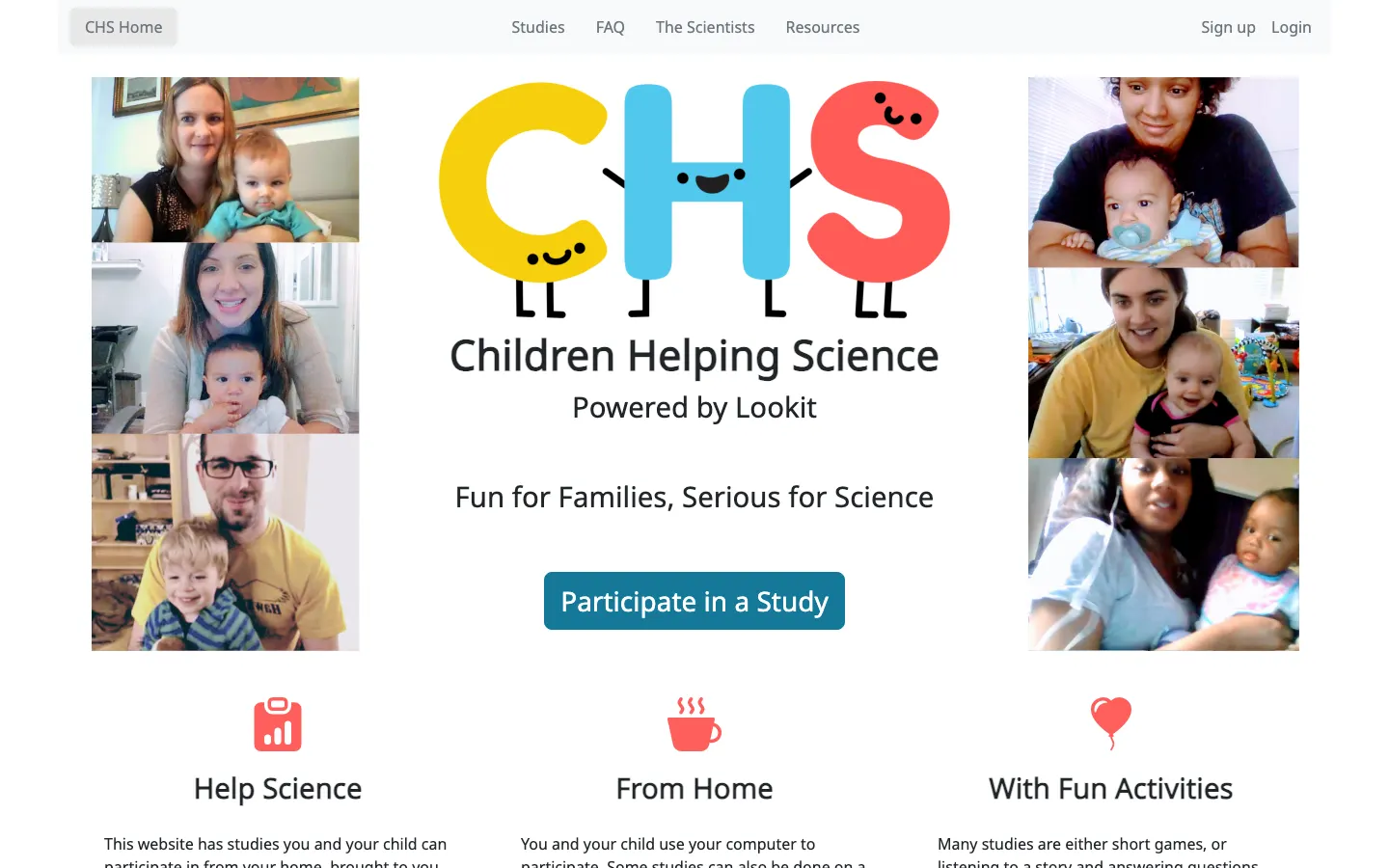
Children Helping Science
Children Helping Science connects families with university research studies for children, including short games, story-listening tasks, and age-filtered opportunities for preschoolers through teens. It is listed under Science and Games & interactives for ages Under 1 through 5–17 by study.
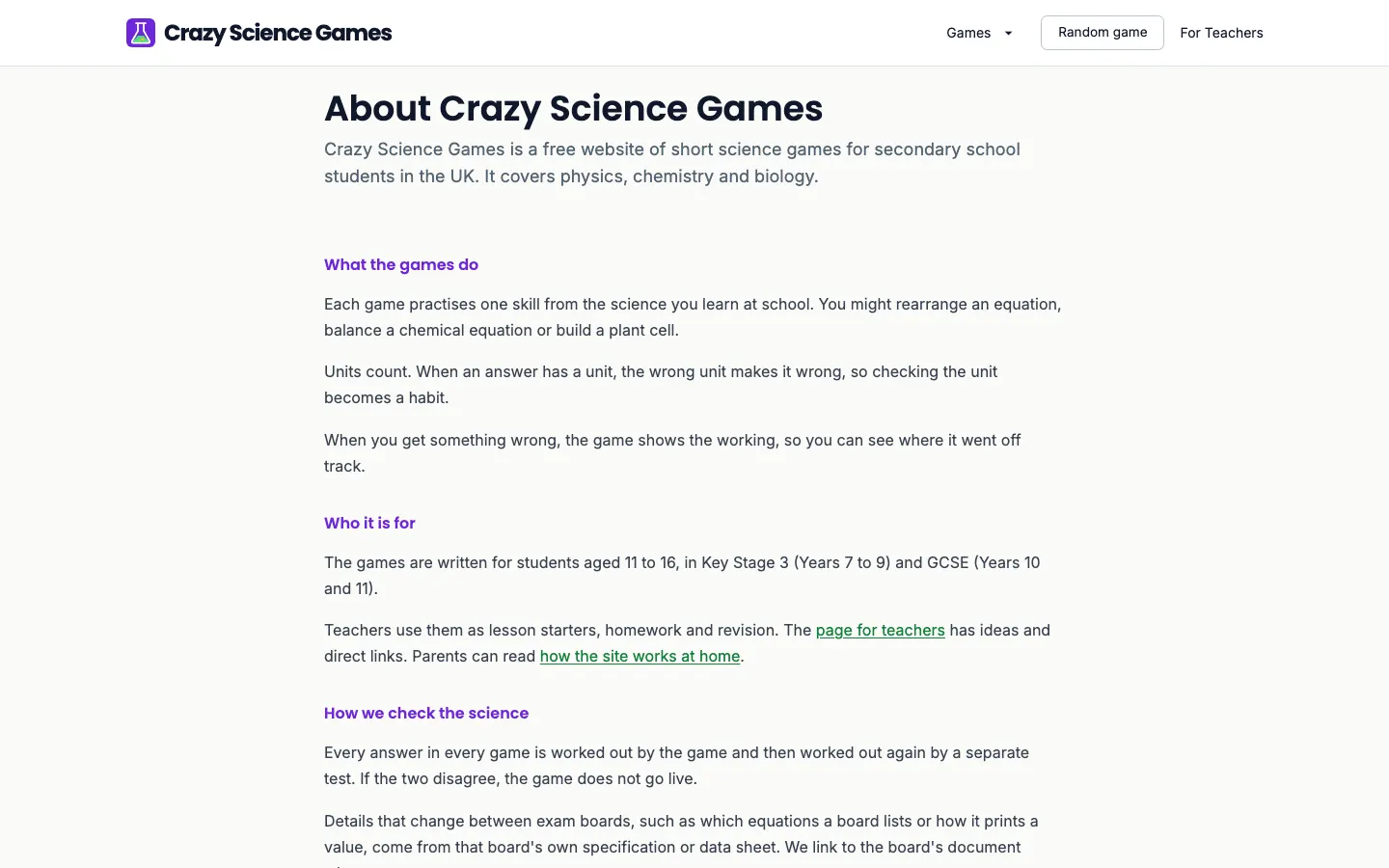
Crazy Science Games
A free collection of short science games for secondary-school students in the UK, covering physics, chemistry, and biology with immediate feedback. It is listed under Science and Games & interactives for ages 11–16; Key Stage 3 and GCSE.
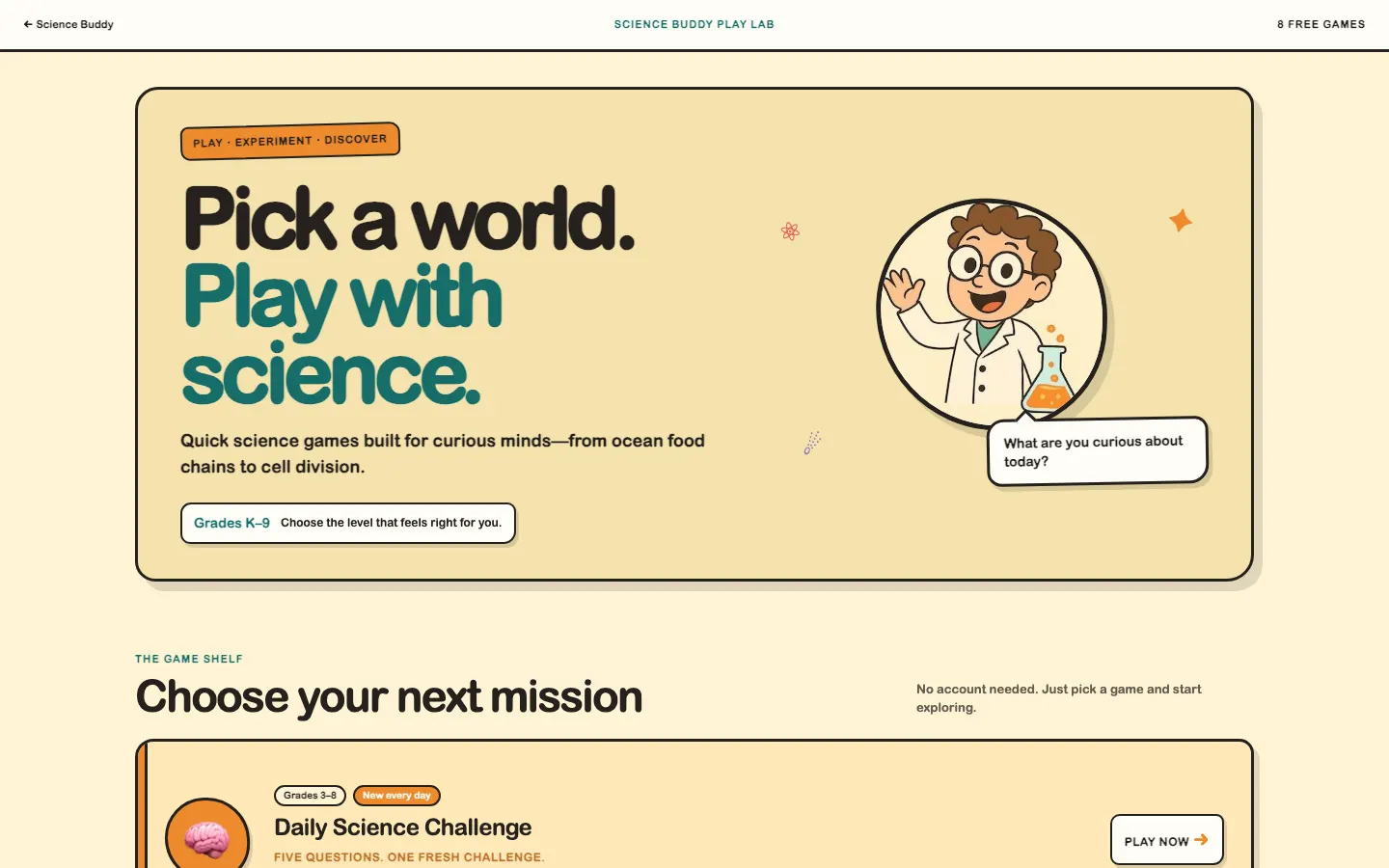
Science Buddy Play Lab
A free Science Buddy collection of short science games for grades K–9, covering topics such as food chains, cells, and other science ideas through playful browser activities. It is listed under Science and Games & interactives for ages 5–14; grades K–9.
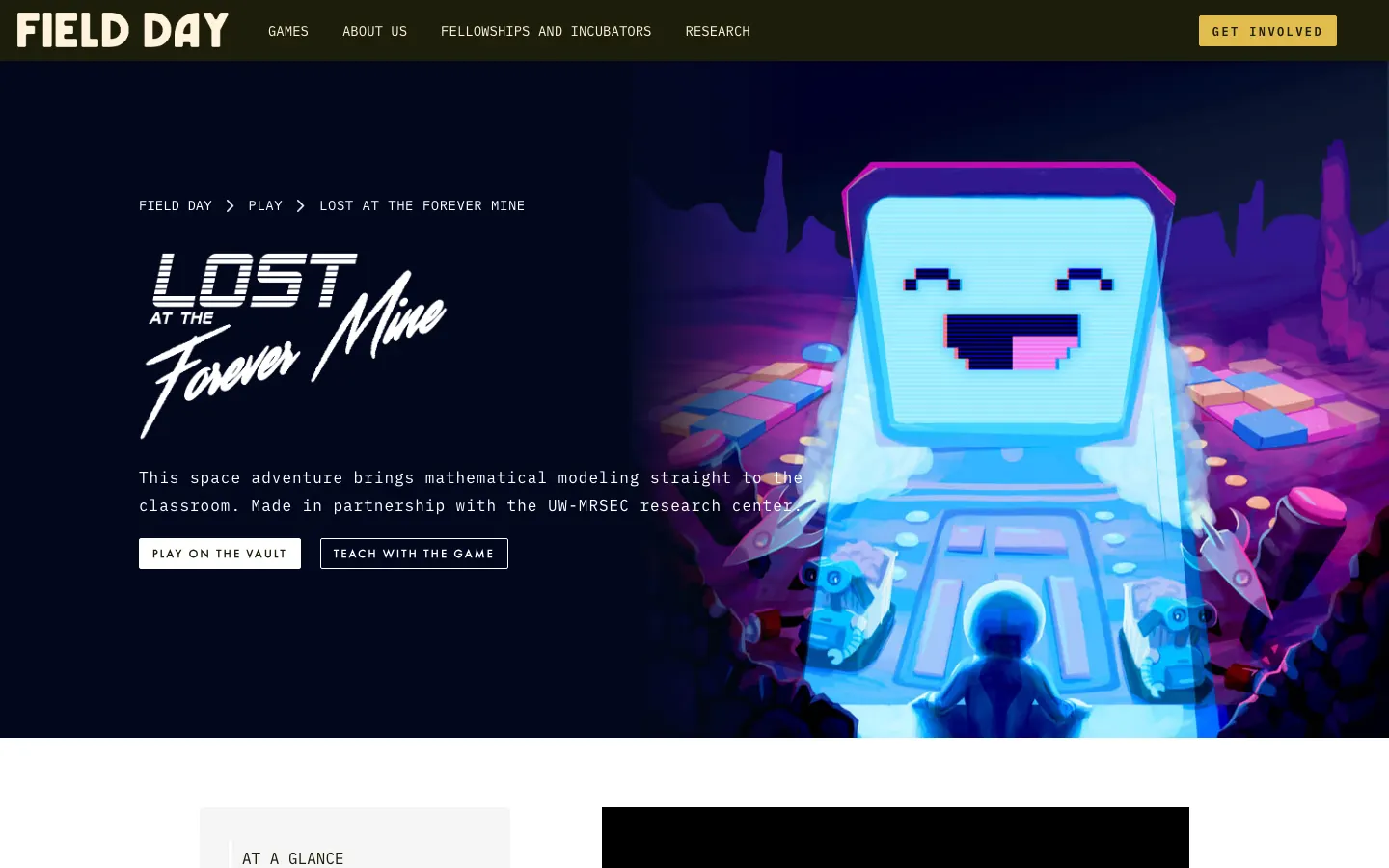
Lost at the Forever Mine
A Field Day Lab science adventure where learners act as materials scientists, use equations and graphs, and build mathematical models to escape an abandoned mining planet. It is listed under Science and Math for ages Grades 5–9.
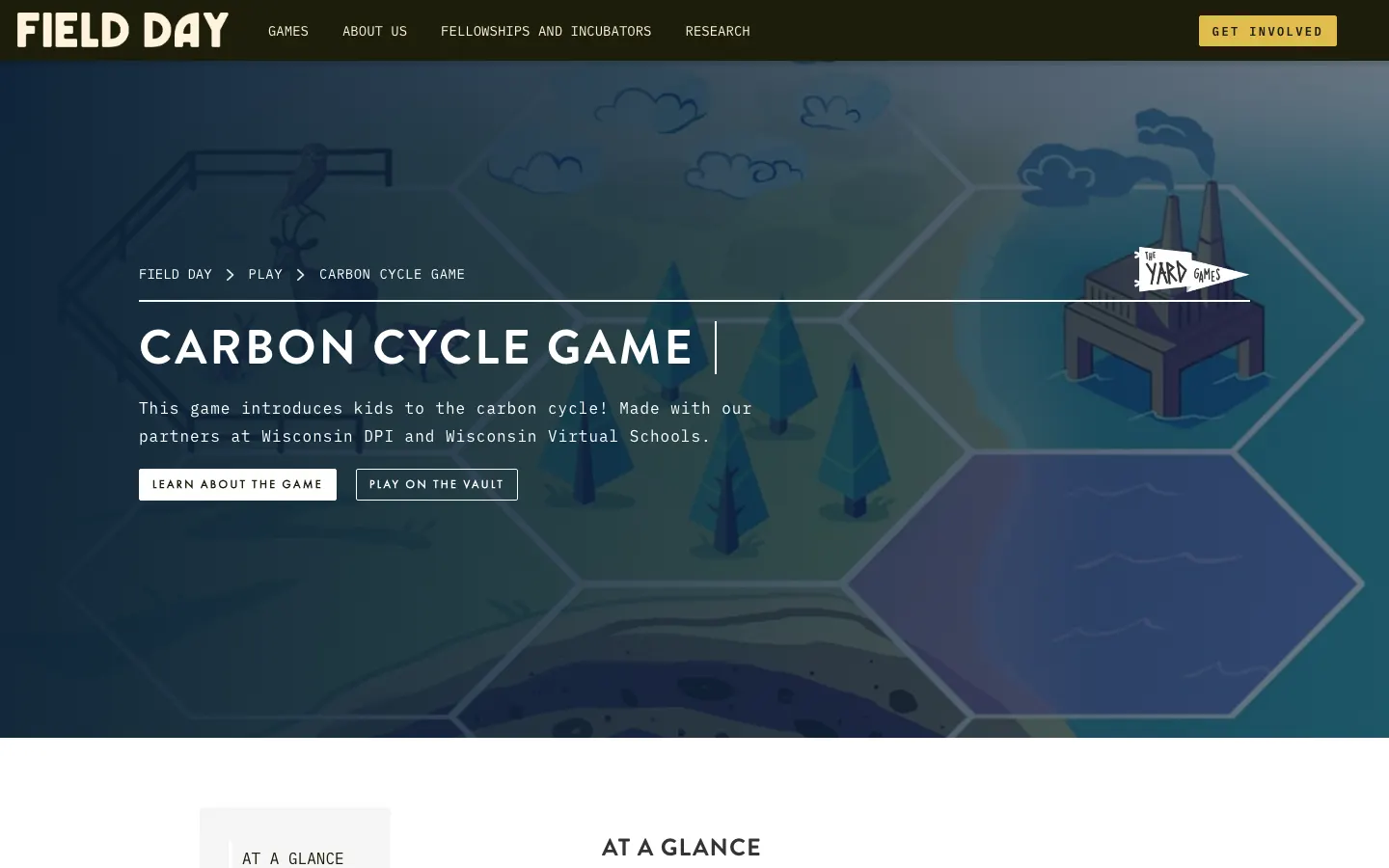
Carbon Cycle Game
A Field Day Lab board-game-style science activity where learners use action cards to follow carbon through photosynthesis, soil respiration, and other parts of the carbon cycle. It is listed under Science and Nature for ages Grades 5–8.
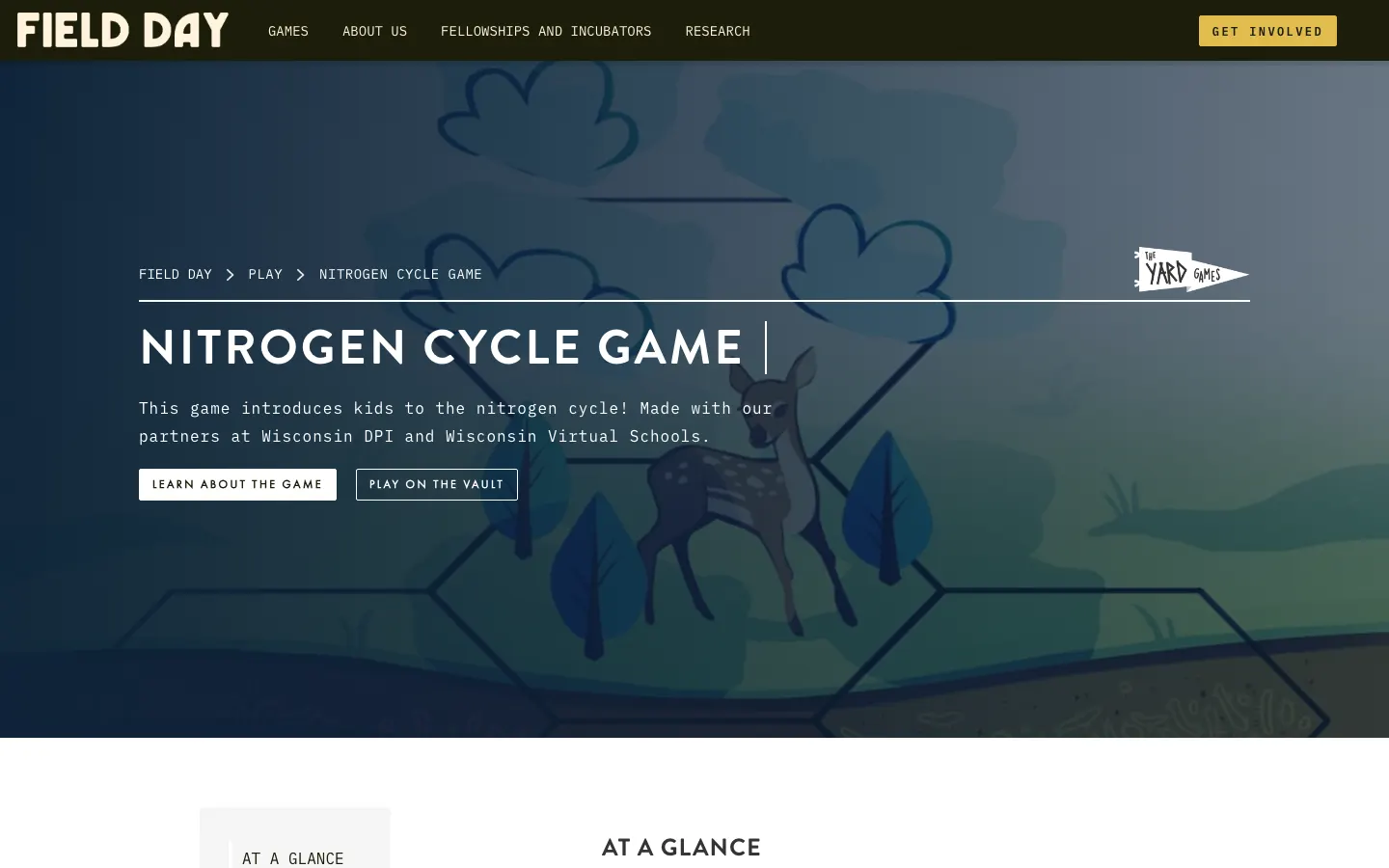
Nitrogen Cycle Game
A Field Day Lab board-game-style activity that follows nitrogen through plant assimilation, bacteria, animal death, and other ecological processes. It is listed under Science and Nature for ages Grades 5–8. Children and families can use it through a website.
Compare with context
Use this collection to find a direction, then open each resource page before sharing it with a child. The individual review shows languages, access formats, tags, age guidance, source links, and notes for grown-ups.
Search the full directory →