U.S. Botanic Garden On-Site Activity Resources
The U.S. Botanic Garden’s plant passports and field journals turn a family or school visit into a guided investigation of plant parts, food plants, native plants, sustainability, and plant collections.
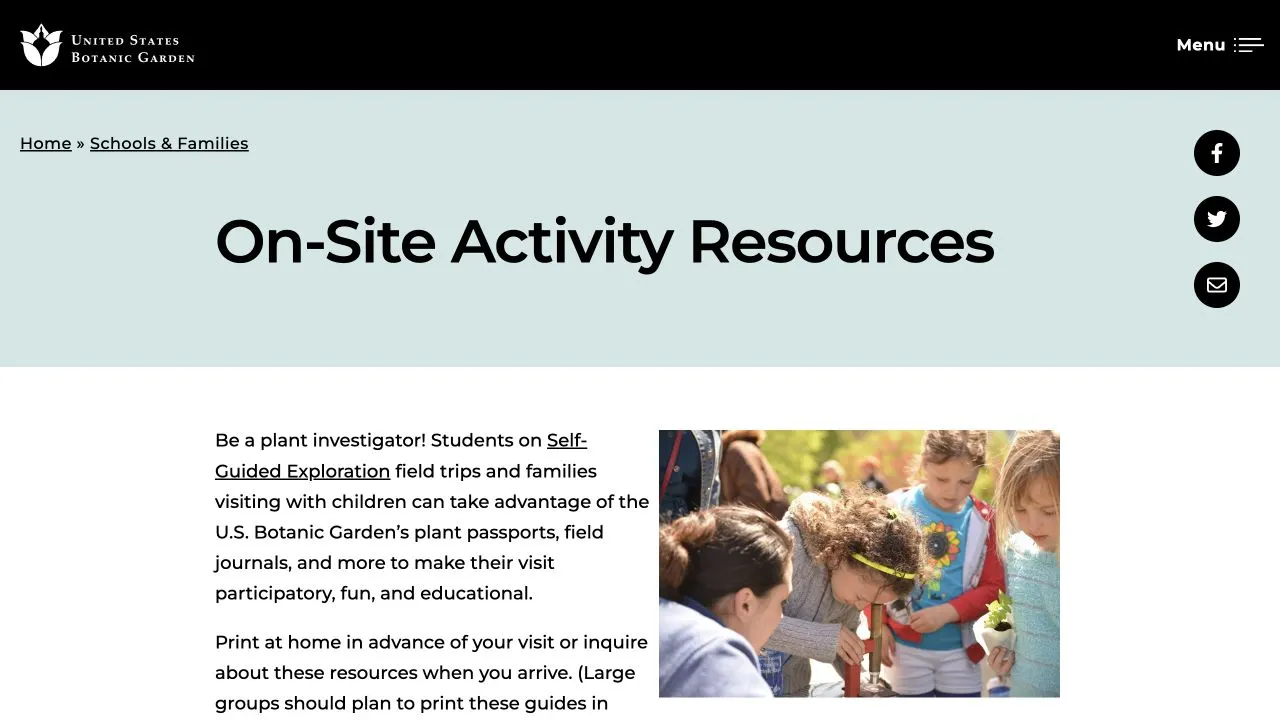 Website preview
About U.S. Botanic Garden On-Site Activity Resources
The U.S. Botanic Garden’s plant passports and field journals turn a family or school visit into a guided investigation of plant parts, food plants, native plants, sustainability, and plant collections.
Age and access
This resource is listed for ages 6–12. It is available as Website and is listed as free printable resources; garden visit is separate. The listed language coverage is English.
Visit and pricing
United States Botanic Garden, 100 Maryland Avenue SW, Washington, DC, 20001, United States
Get directions ↗Free plant passports and field journals; some printed copies are seasonal and the physical visit has its own terms
Check current prices ↗What stands out
- Official-provider resource with a clear child-learning purpose
- Fresh browser review confirmed a useful loaded landing page
- Audience and access claims were checked against the official source
Editorial review
The U.S. Botanic Garden’s plant passports and field journals turn a family or school visit into a guided investigation of plant parts, food plants, native plants, sustainability, and plant collections. In the directory, it is best approached as a educational resource for 6–12, with nature & environment and science as the main learning context and creativity, family learning, nature as useful starting signals.
A child, family, or class exploring nature & environment and science through website, with an adult choosing a suitable first activity.
- Review current provider terms and content before use.
- The listing covers nature & environment and science and includes creativity, family learning, nature; choose the specific activity or section that matches the child's age and goal.
Review basis: Catalog context based on the provider URL, recorded description, age, format, language, access, tags, and available source links. · The thekidspick catalog team
Check the details at the source
This page separates our editorial context from provider evidence. Access, pricing, language, privacy, and content can change.
Evidence last checked 2026-10-28.
How the score is built
Parent notes
- Review current provider terms and content before use.
- The stored preview was captured after live loading without a CAPTCHA or broken rendering.

Recognized by
TheKidsPick
This resource has been independently reviewed by our team for its learning value, age fit, access, and trust signals, so parents can discover high-quality, kid-friendly resources with confidence.
Manage this resource?
Add this recognition to your website or share your TheKidsPick profile. It helps parents find your resource and shows your commitment to quality.
Find U.S. Botanic Garden On-Site Activity Resources in related listings
A few useful subject and format shortlists for this resource.
Questions parents ask
See something wrong?
Report an outdated link, image, language, platform, tag, or other detail.
Other nature & environment resources to consider
Use these nearby options to compare age fit, format, access, and the kind of adult support each resource asks for. The scores are editorial signals, not a substitute for checking the provider page.
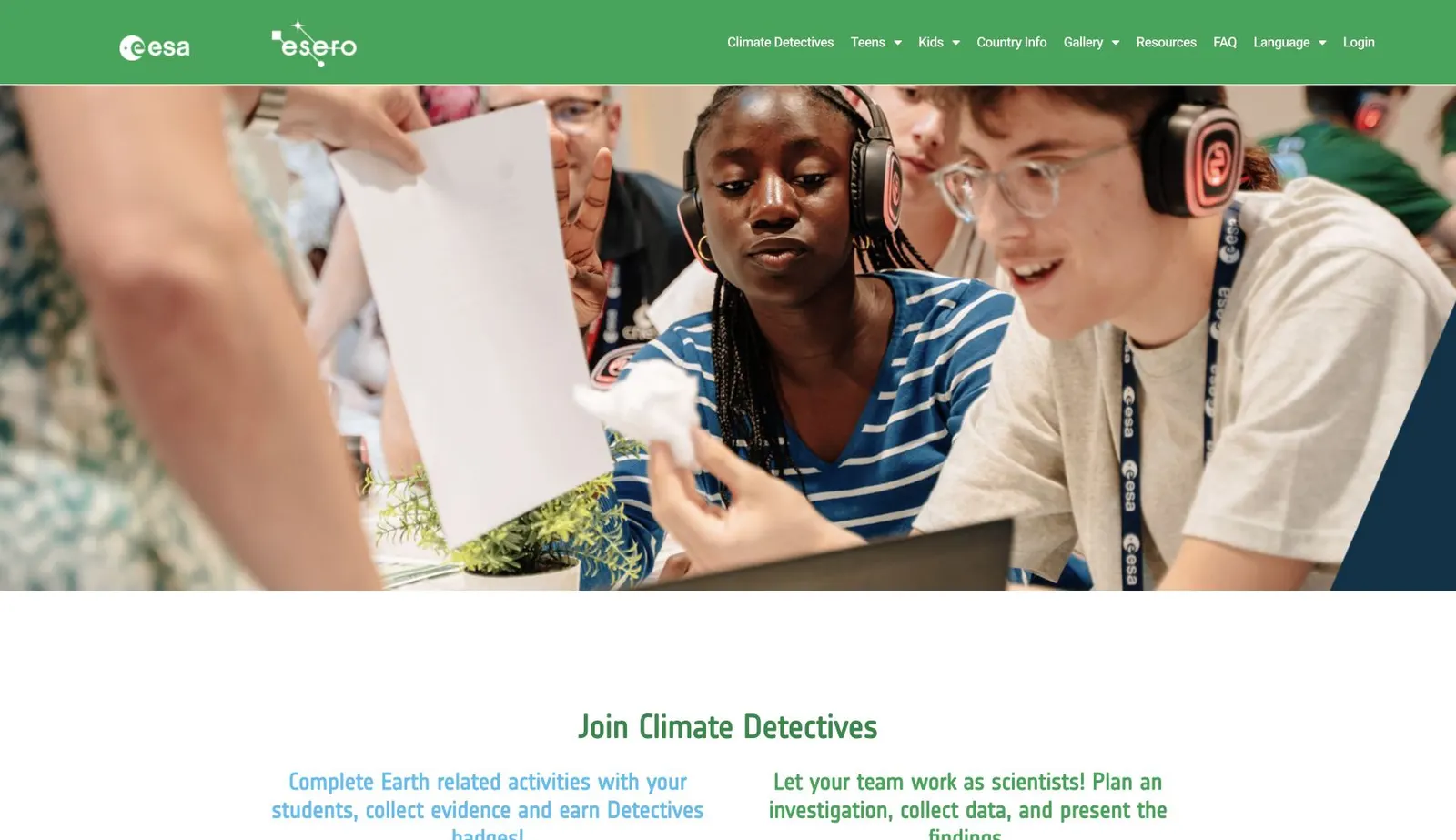
ESA Climate Detectives
ESA and ESERO’s Climate Detectives programme guides children ages 5–13 through Earth-related activities, evidence collection, investigations, galleries, and badges. It is listed under Nature & environment and Science for ages Ages 5–13 for Kids; a separate 14–19 track is also offered.
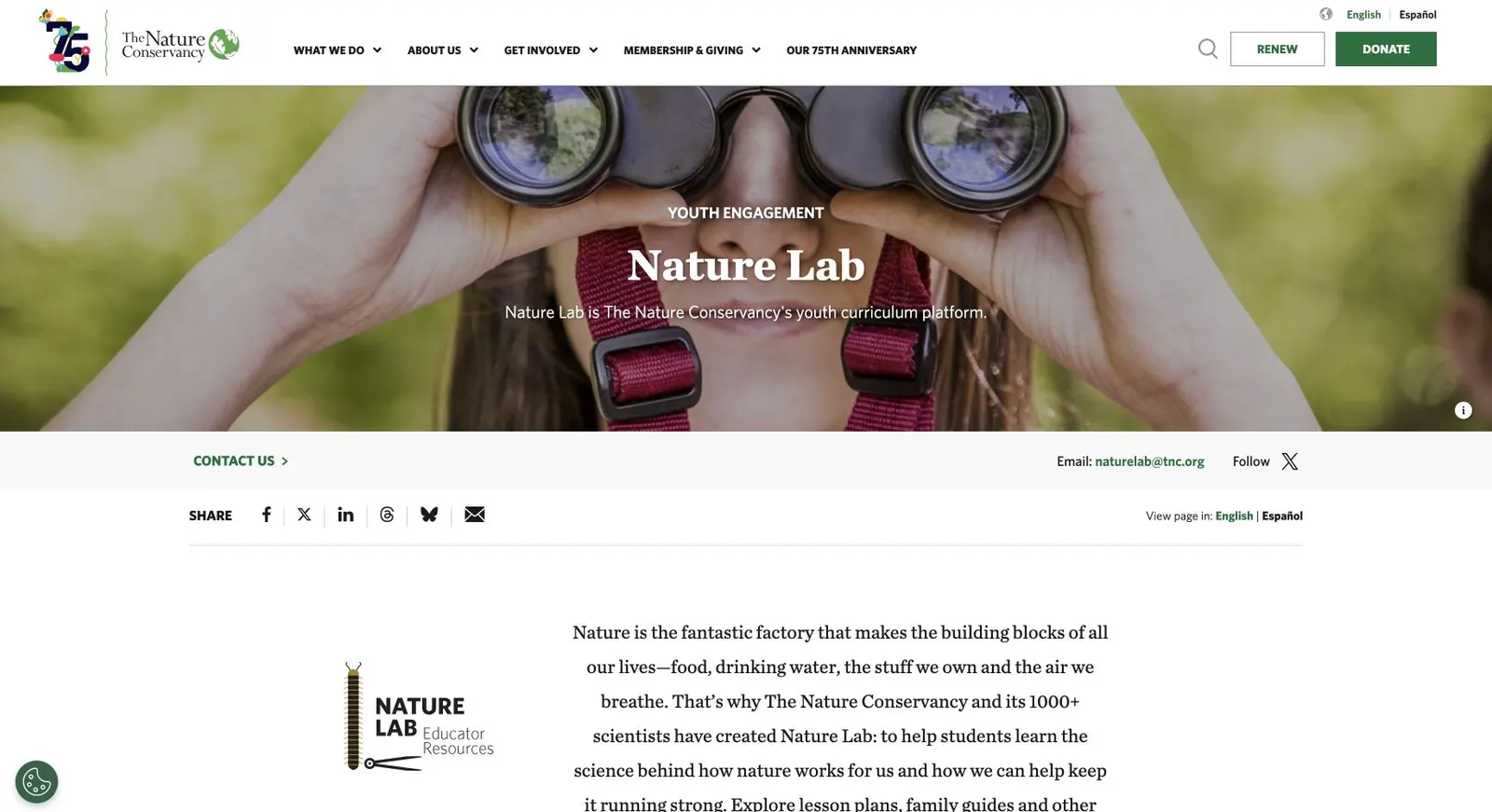
Nature Lab
The Nature Conservancy’s youth curriculum platform with virtual field trips, family guides, lesson plans, and hands-on nature activities. It is listed under Nature & environment, Science, and Geography for ages 5–18. Children and families can use it through a website.
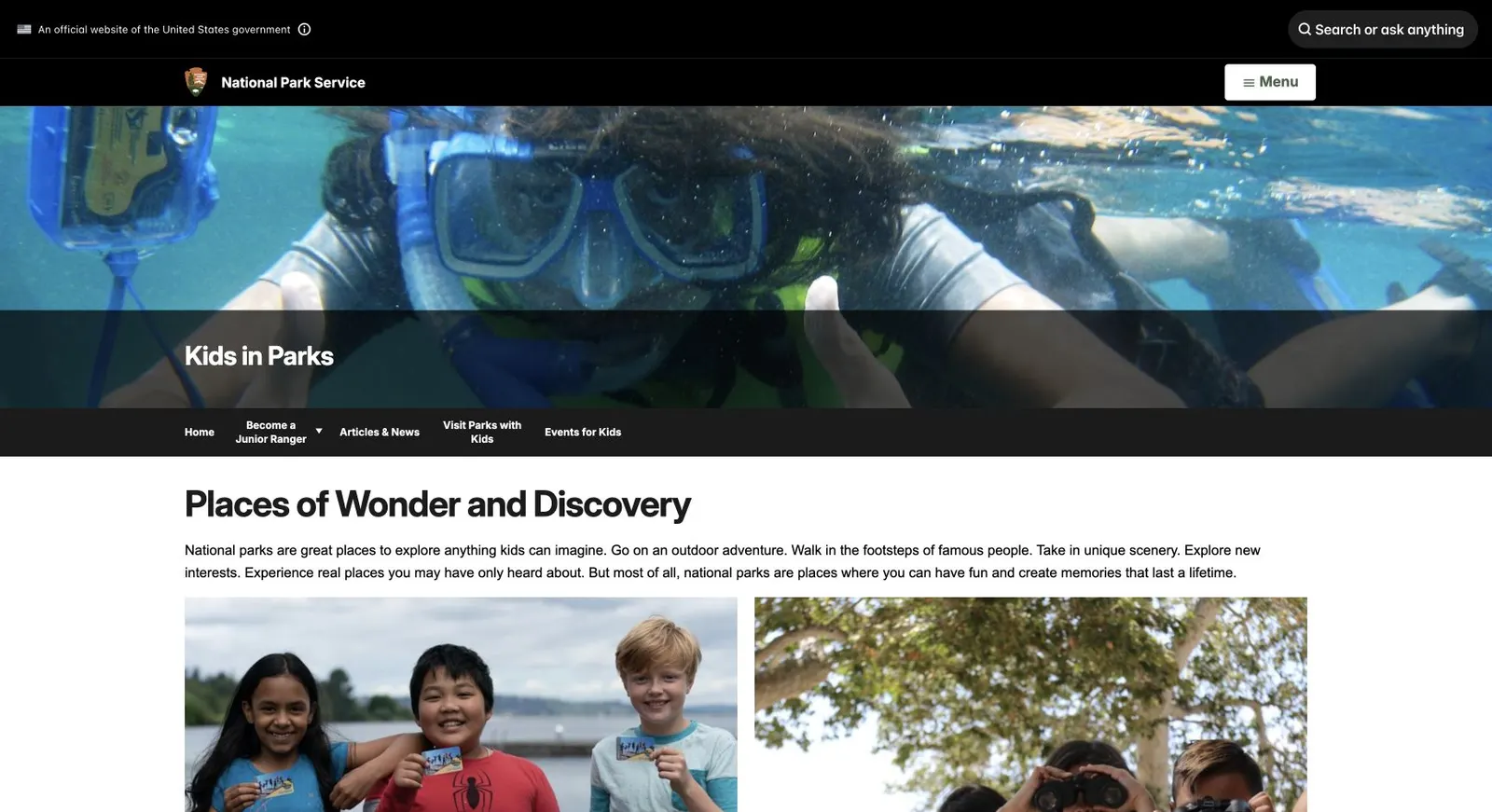
National Park Service Kids
Junior Ranger programs, outdoor adventures, articles, events, and family learning from the National Park Service. It is listed under Nature & environment, History & culture, and Science for ages 5-13. Children and families can use it through a website, downloadable resources, an Android app, and an iOS app.
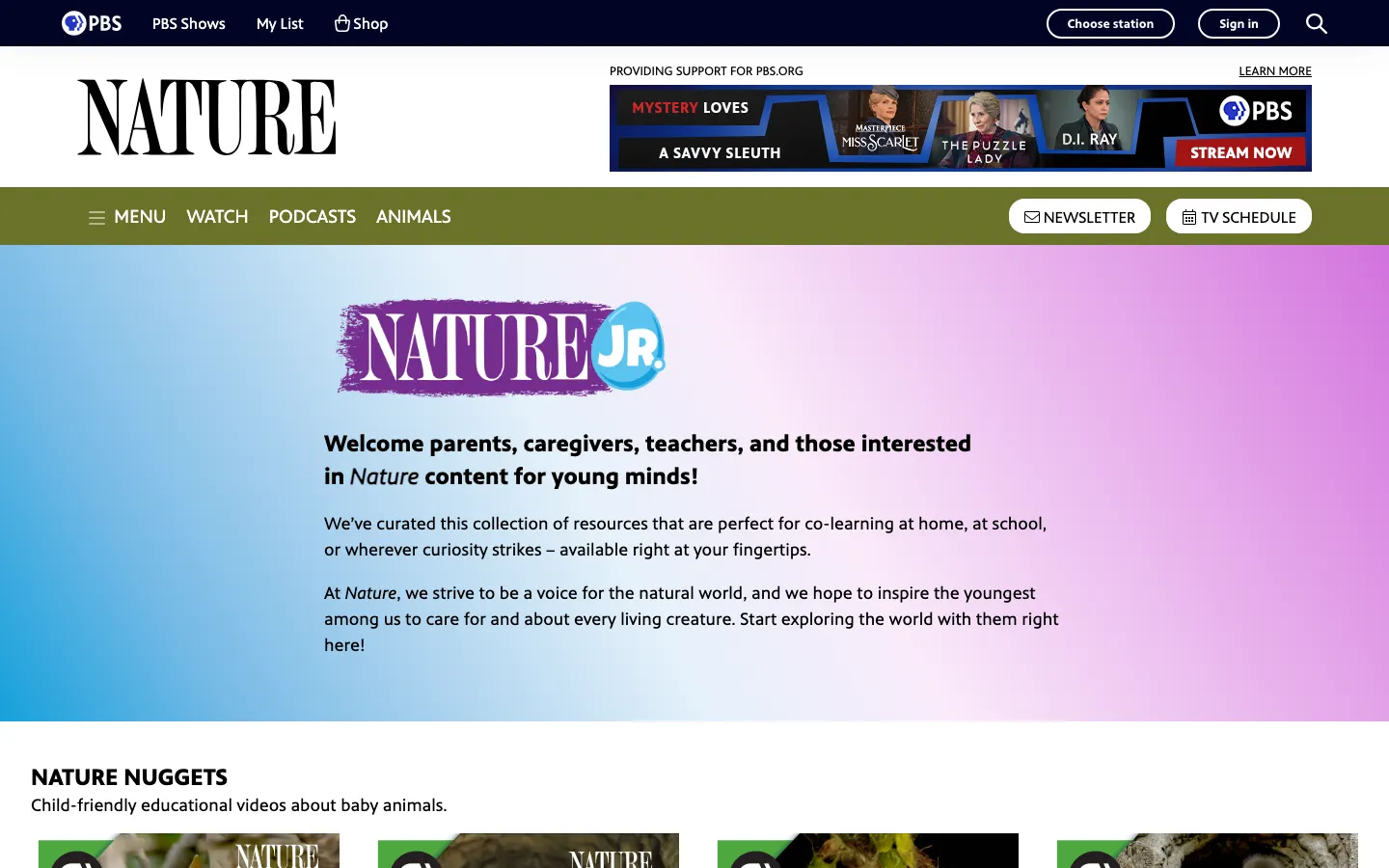
PBS Nature Jr.
PBS Nature Jr. is a curated collection of child-friendly nature videos, family podcast content, lesson plans, fact sheets, interactives, and co-learning resources for parents, teachers, and young minds. It is listed under Nature & environment and Science for ages Young children; Wild Critters USA is for ages 3–11.