Science Museum Group Bottle Top Shapes
Bottle Top Shapes uses bottle tops or jar lids to help children investigate geometry, position, direction, symmetry and patterns through creative problem-solving. It is listed under Math and Science for ages Key Stage 1; approximately ages 5–7.
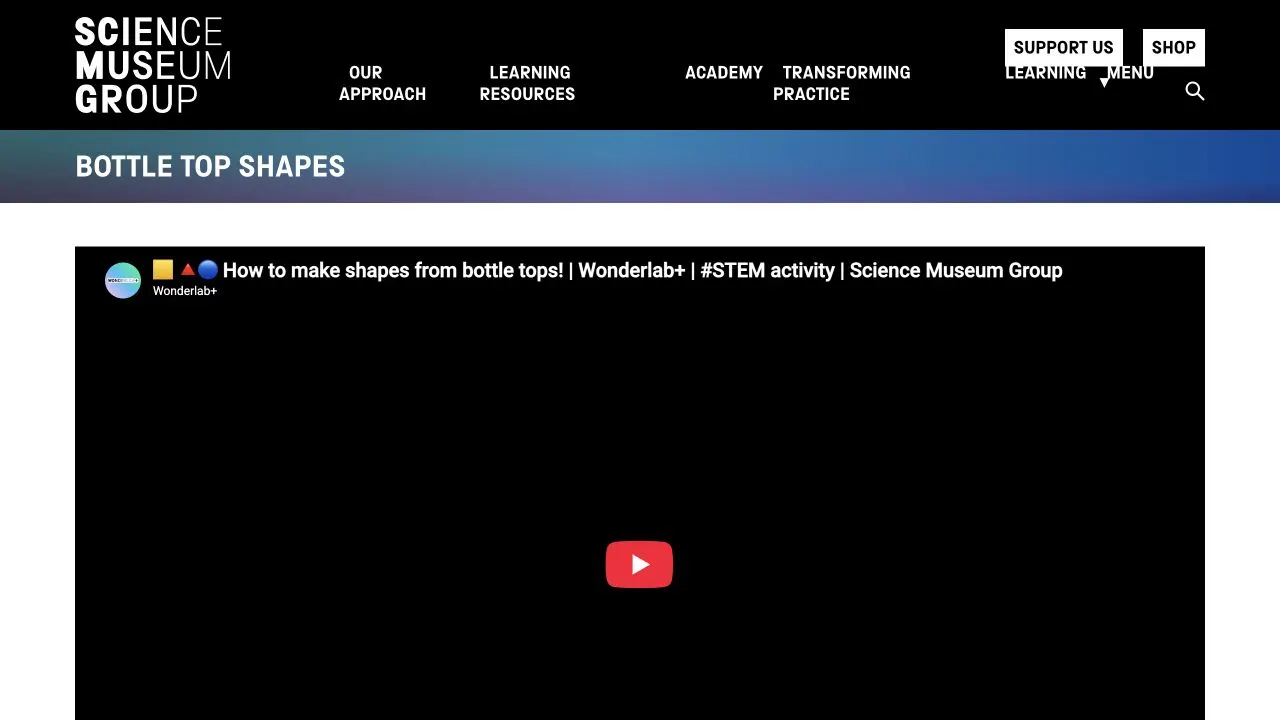 Website preview
About Science Museum Group Bottle Top Shapes
Bottle Top Shapes uses bottle tops or jar lids to help children investigate geometry, position, direction, symmetry and patterns through creative problem-solving. It is listed under Math and Science for ages Key Stage 1; approximately ages 5–7.
Age and access
This resource is listed for ages Key Stage 1; approximately ages 5–7. It is available as Website, Downloadable, YouTube and is listed as free pdf and video activity. The listed language coverage is English.
Visit and pricing
Free printable activity and embedded video; bottle tops, marker pens and household materials are required
Check current prices ↗What stands out
- Official-provider resource with a clear child, family, school, or educator use
- Fresh browser review confirmed a useful loaded landing page
- Audience, access, and language claims were checked against the official source
Editorial review
Bottle Top Shapes uses bottle tops or jar lids to help children investigate geometry, position, direction, symmetry and patterns through creative problem-solving. It is listed under Math and Science for ages Key Stage 1; approximately ages 5–7. In the directory, it is best approached as a hands-on geometry and patterns activity for Key Stage 1; approximately ages 5–7, with math and science as the main learning context and creativity, maths, science as useful starting signals.
Families and educators who want audience, access, and language claims were checked against the official source, especially for ages Key Stage 1; approximately ages 5–7.
- Review current dates, capacity, eligibility, and provider terms before use.
- The listing covers math and science and includes creativity, maths, science; choose the specific activity or section that matches the child's age and goal.
Review basis: Catalog context based on the provider URL, recorded description, age, format, language, access, tags, and available source links. · The thekidspick catalog team
Check the details at the source
This page separates our editorial context from provider evidence. Access, pricing, language, privacy, and content can change.
Evidence last checked 2026-10-28.
How the score is built
Parent notes
- Review current dates, capacity, eligibility, and provider terms before use.
- The stored preview was captured after live loading without a CAPTCHA challenge or broken rendering.

Recognized by
TheKidsPick
This resource has been independently reviewed by our team for its learning value, age fit, access, and trust signals, so parents can discover high-quality, kid-friendly resources with confidence.
Manage this resource?
Add this recognition to your website or share your TheKidsPick profile. It helps parents find your resource and shows your commitment to quality.
Find Science Museum Group Bottle Top Shapes in related listings
A few useful subject and format shortlists for this resource.
Questions parents ask
See something wrong?
Report an outdated link, image, language, platform, tag, or other detail.
Other math resources to consider
Use these nearby options to compare age fit, format, access, and the kind of adult support each resource asks for. The scores are editorial signals, not a substitute for checking the provider page.
Millennium Mathematics Project
The University of Cambridge mathematics outreach initiative connects ages 3–19 and the public with NRICH problem-solving resources, Plus maths magazine, events, and STEP support. It is listed under Math and Science for ages Ages 3–19 and general public; programme-specific.
NRICH Mathematics Resources
NRICH, part of the University of Cambridge’s Millennium Mathematics Project, provides free curriculum-linked mathematics resources for ages 3–18, with separate pathways for teachers, students, parents, and problem-solving schools. It is listed under Math and Education for ages 3–18.
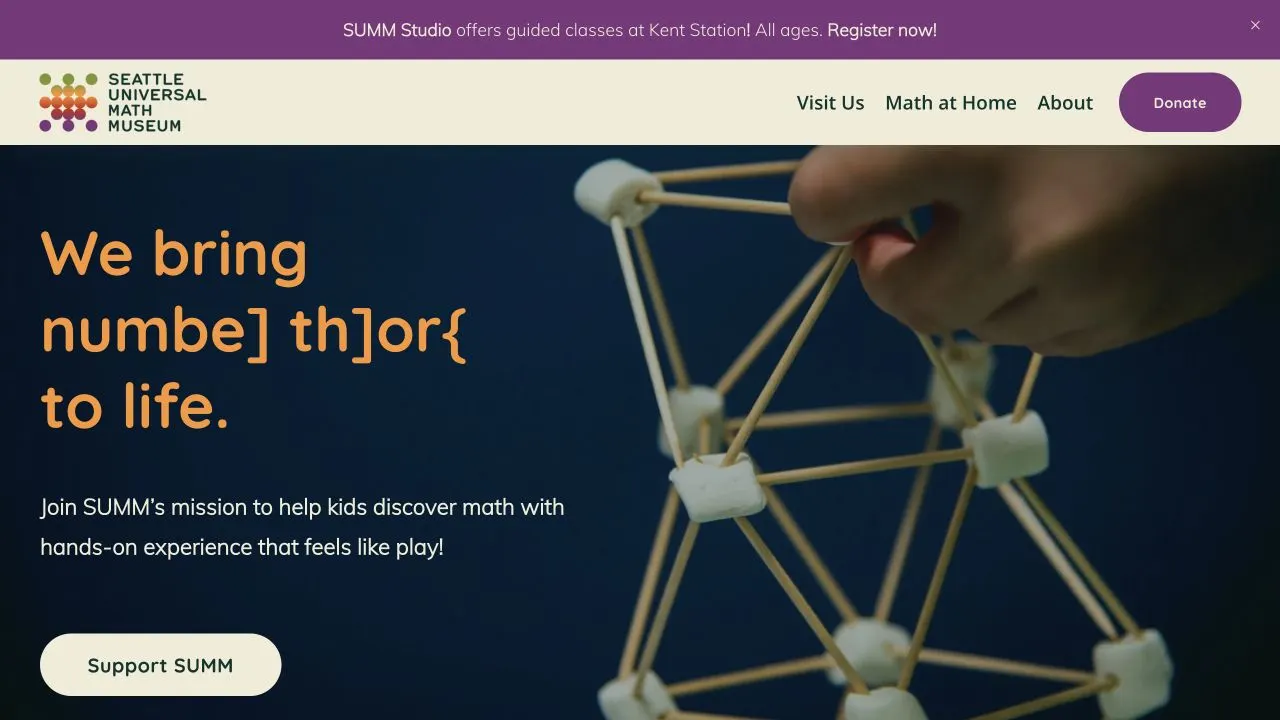
Seattle Universal Math Museum
A hands-on math museum and event program where children explore mathematics through exhibits, family sessions, camps, and playful problem solving. It is listed under Math and Museums for ages 3–14. Children and families can use it through a website and a physical place.
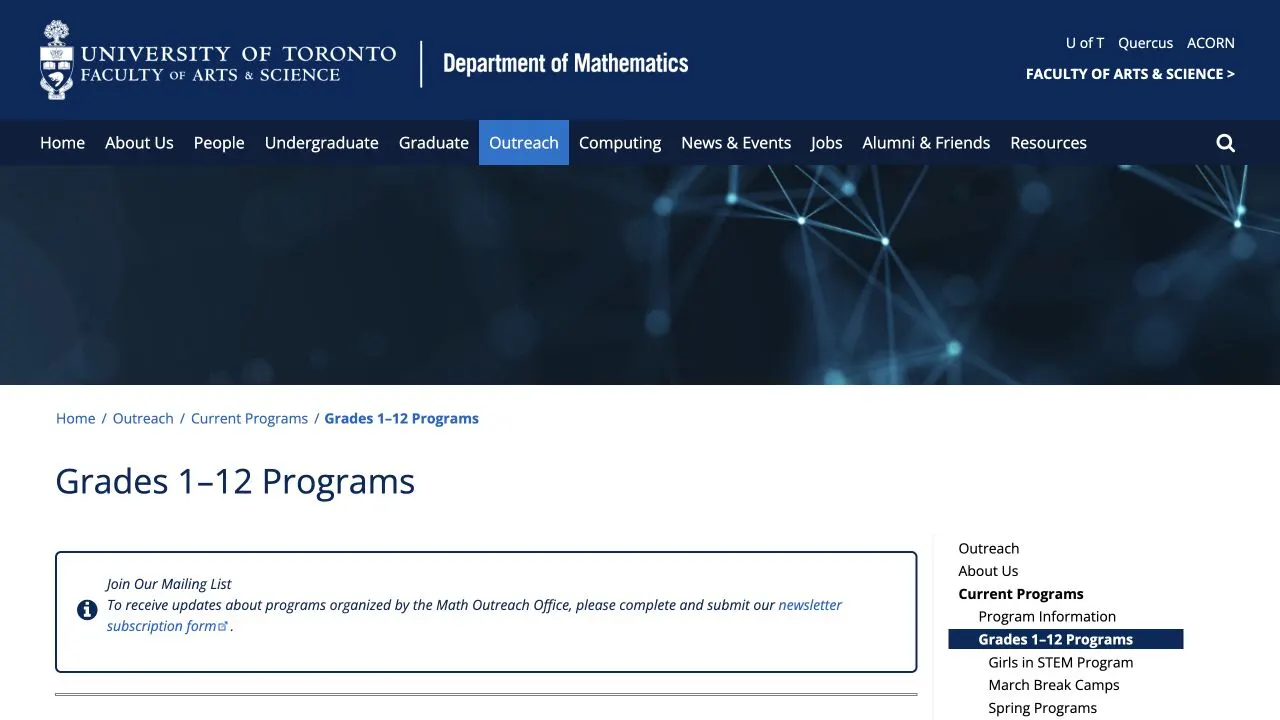
University of Toronto Grades 1–12 Math Programs
The University of Toronto Math Outreach Office offers seasonal math enrichment and online Python coding programmes for students in grades 1–12. It is listed under Math and Coding for ages Grades 1–12; programme-specific. Children and families can use it through a website.