Museums Play
for kids
Explore 12 trusted museums play resources selected for curious kids, with clear ages, access details, and parent context.
Two useful ways to narrow the directory
This page brings together museums resources that also match play. Each listing keeps its own age range, platform details, languages, links, and parent notes, so you can compare options without losing context.
Explore all museums resources →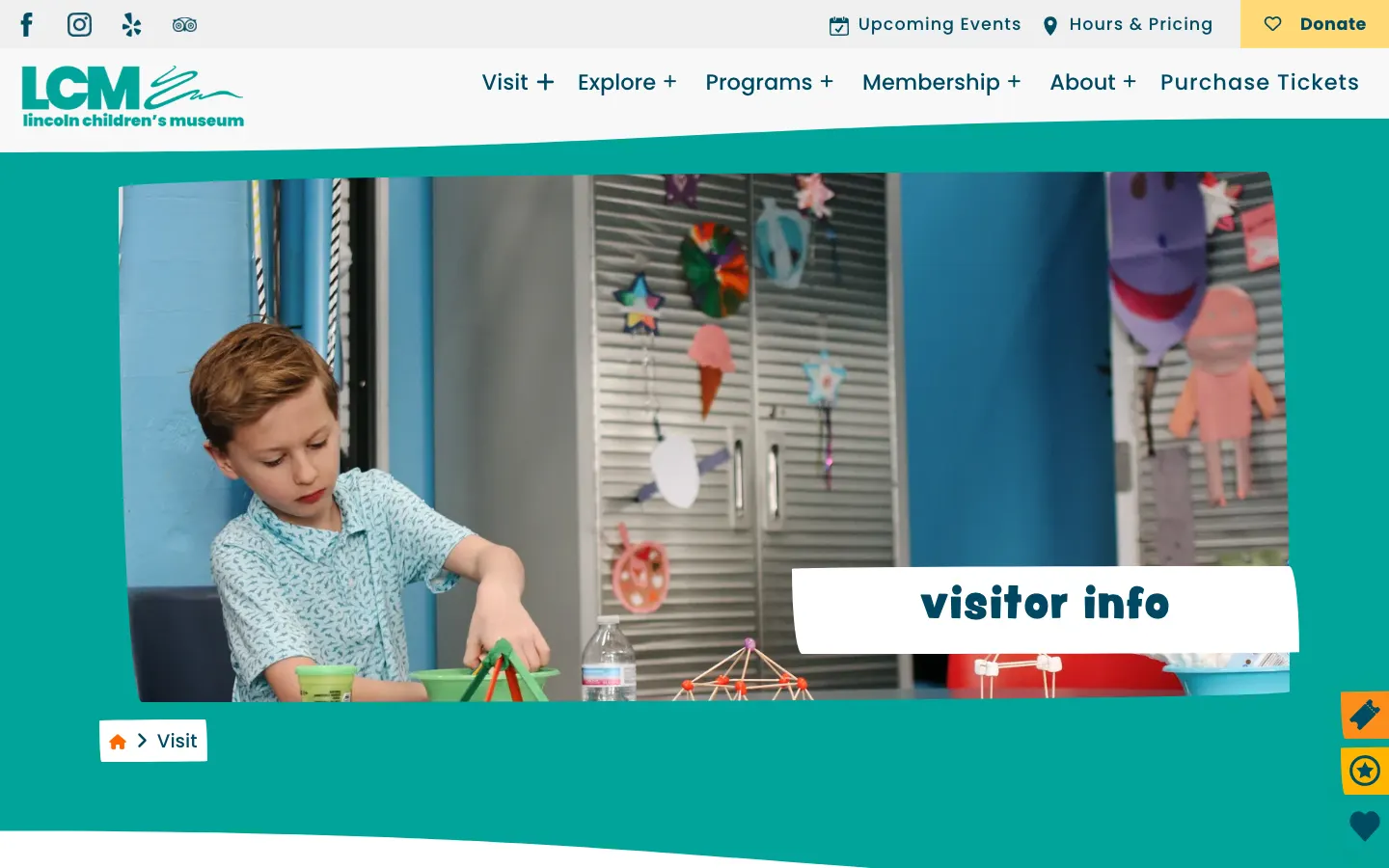
Lincoln Children’s Museum
Lincoln Children’s Museum is a hands-on play and learning venue where children and grown-ups explore interactive exhibits, field trips, and curriculum-linked experiences. It is listed under Museums and Science for ages 0–12 with adult.
Read the full resource review →More museums picks
Kids in Museums Resource Archive
Kids in Museums provides a free, searchable archive of practical museum and heritage resources about welcoming children and families, accessibility, play, family events, Takeover Day and young people’s participation. It is listed under Arts & creativity and Museums for ages 4–18.
Museo Scienza Playlab
A museum learning space for children ages 3–6 where art, science, technology, storytelling, tinkering, light, sound, nature, and imaginative play meet in five interactive rooms. It is listed under Science and Technology for ages 3–6.
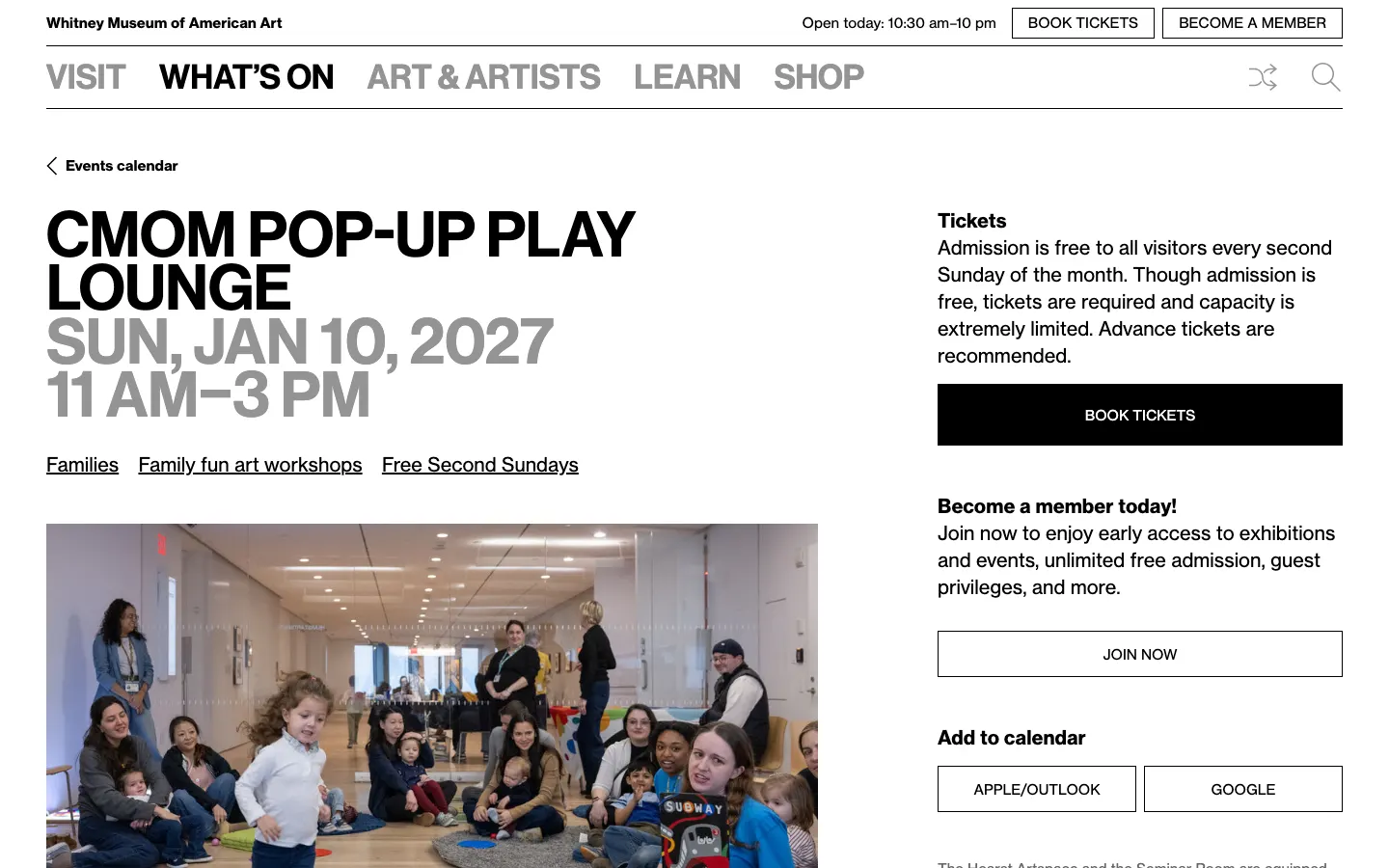
Children’s Museum of Manhattan CMOM Pop-up Play Lounge
A free family play lounge at the Whitney with sensory materials, sand, colors and shadows, lightboards, collaborative structures, music, movement, and bubbles. It is listed under Early learning and Art & creativity for ages Under 5 with families.
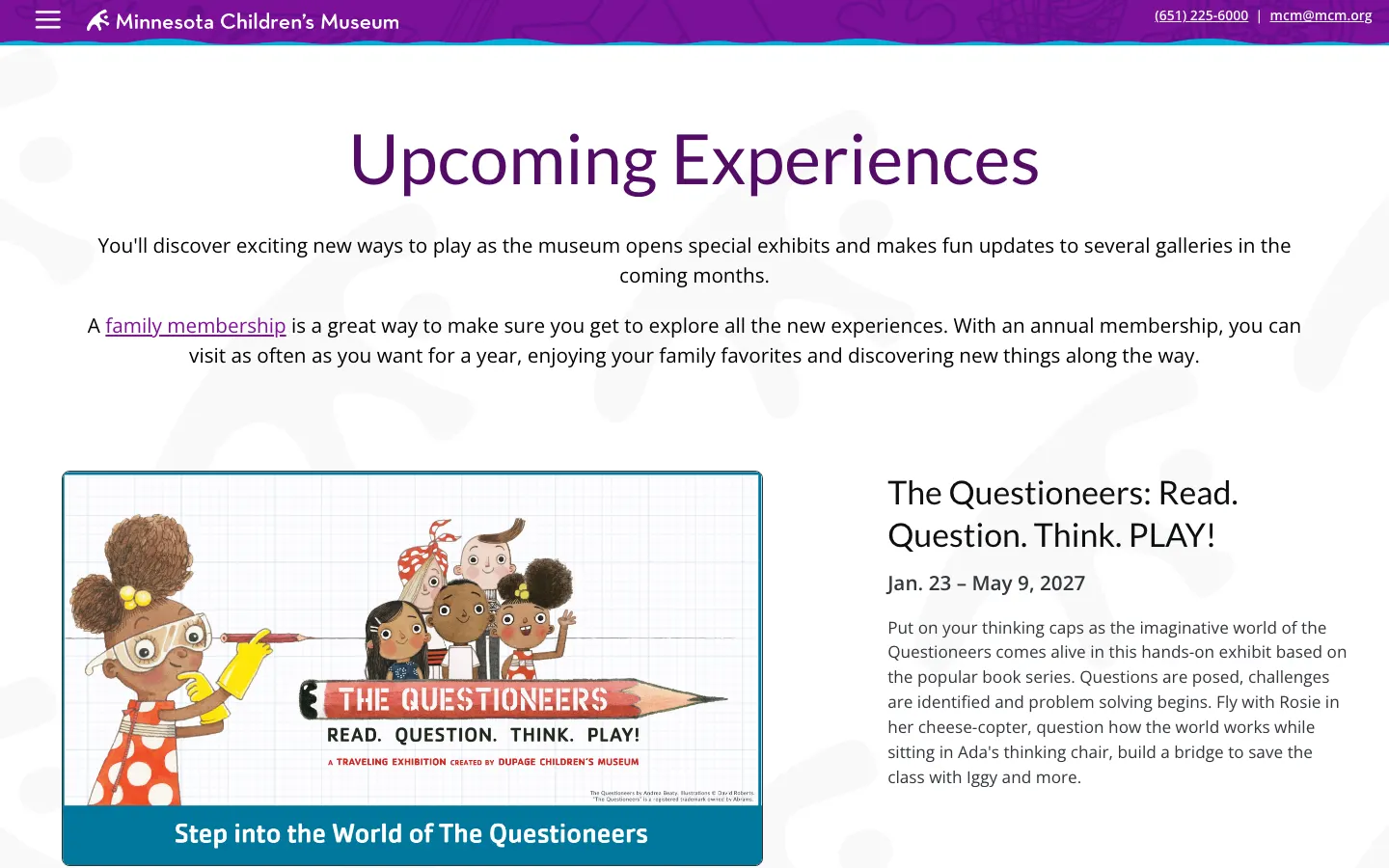
Minnesota Children’s Museum: The Questioneers
A hands-on exhibit based on the popular book series where children identify problems, test ideas, build a bridge, fly with Rosie, and explore how questions lead to discovery. It is listed under Early learning and Science for ages Young children and families.
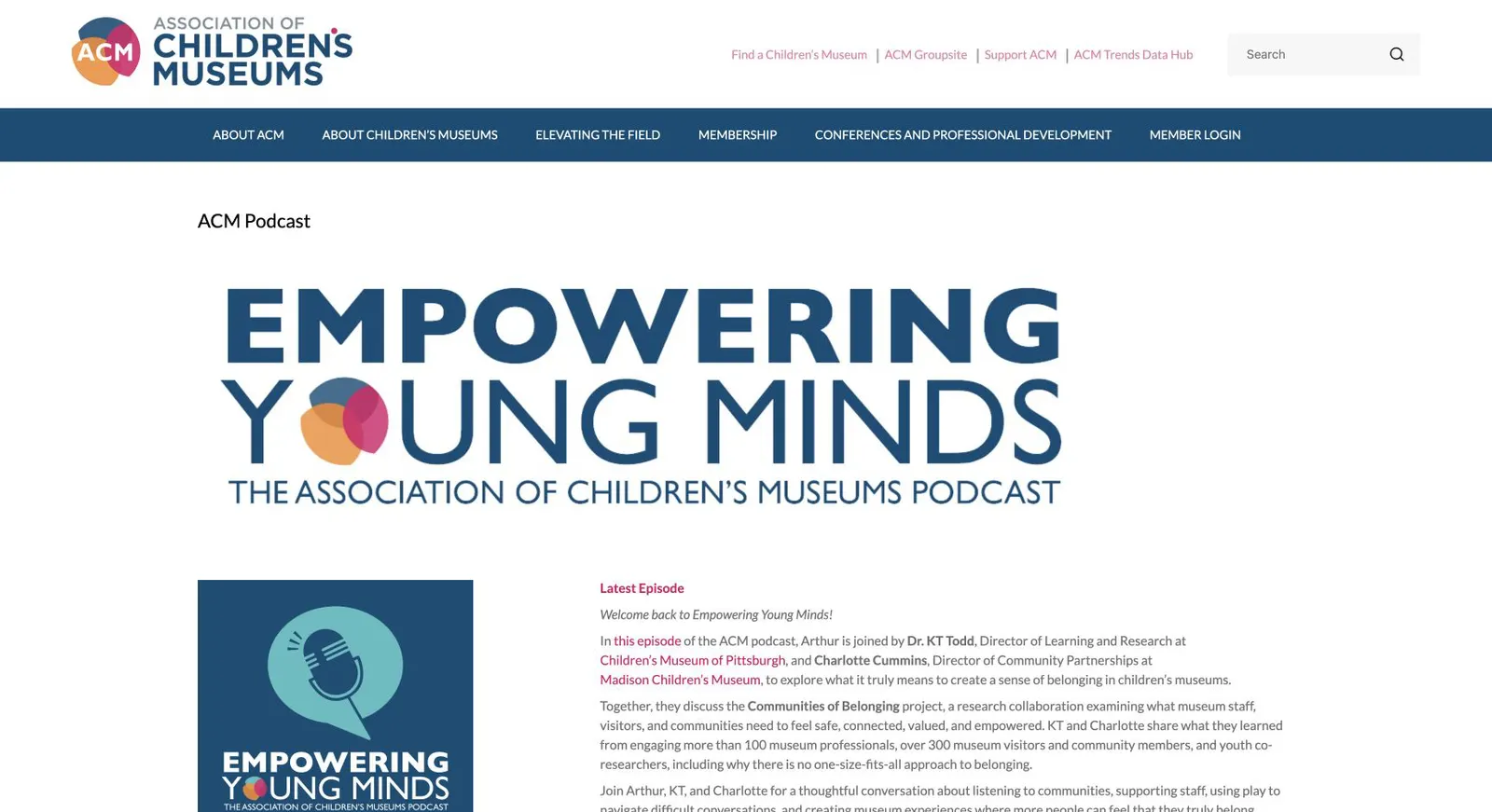
Association of Children’s Museums Empowering Young Minds
The Association of Children’s Museums Empowering Young Minds podcast explores playful learning, children’s museums, childhood education, belonging, access, and ways families and educators can support children’s curiosity. It is listed under Parent & educator and Science for ages 3–12.
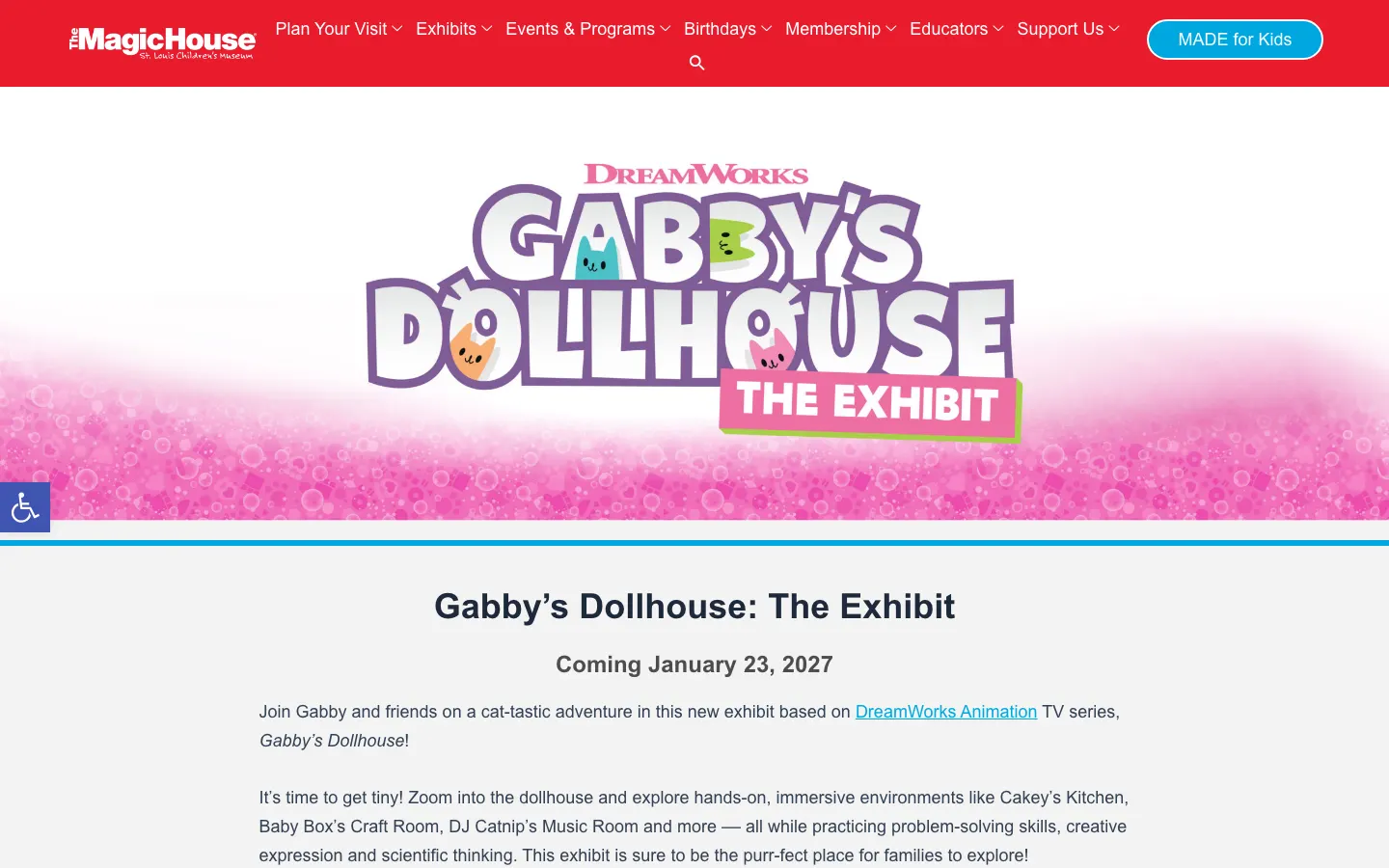
The Magic House: Gabby’s Dollhouse: The Exhibit
An interactive preschool-to-early-elementary exhibit where children explore imaginative rooms, pretend play, problem solving, and hands-on activities inspired by Gabby’s Dollhouse. It is listed under Early learning and Art & creativity for ages Preschool–Grade 2.
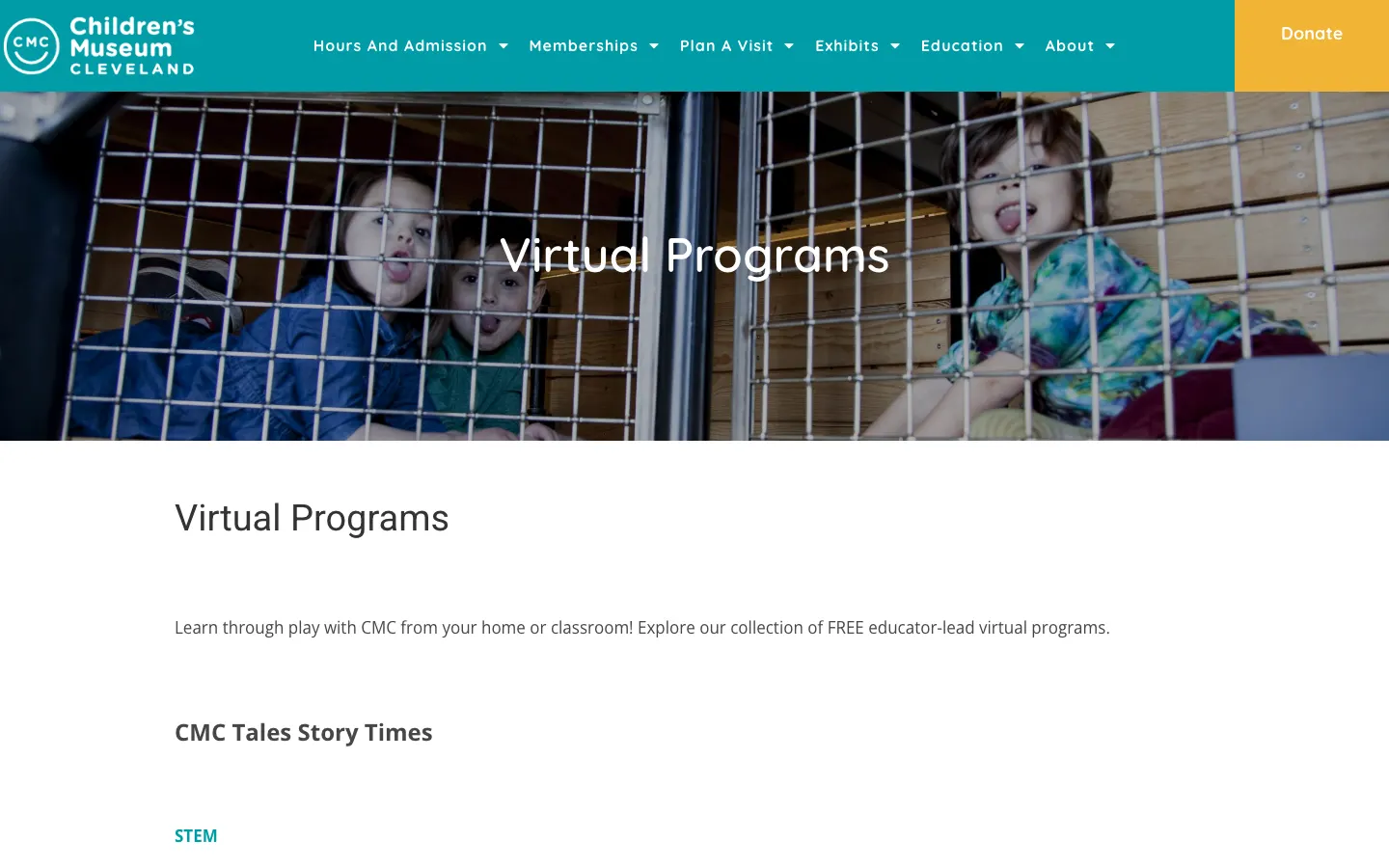
Children’s Museum Cleveland Programs
Children’s Museum Cleveland’s official programs hub helps families find child-centered museum learning, play, and educational events. It is listed under Museums and Science for ages 0–10. Children and families can use it through a website.
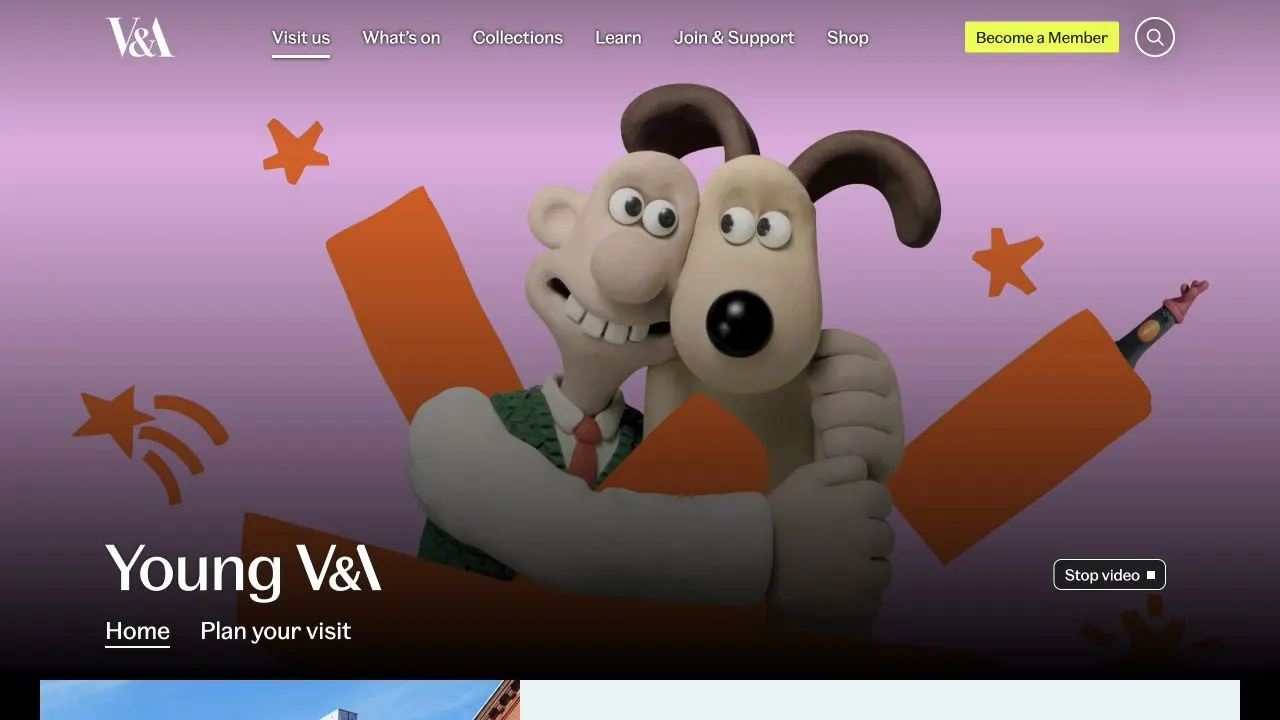
Young V&A
A dedicated children’s museum from the V&A with interactive galleries, design-led play, creative making, and family learning for babies, children, and young people. It is listed under Arts & creativity and Museums for ages 0–14.
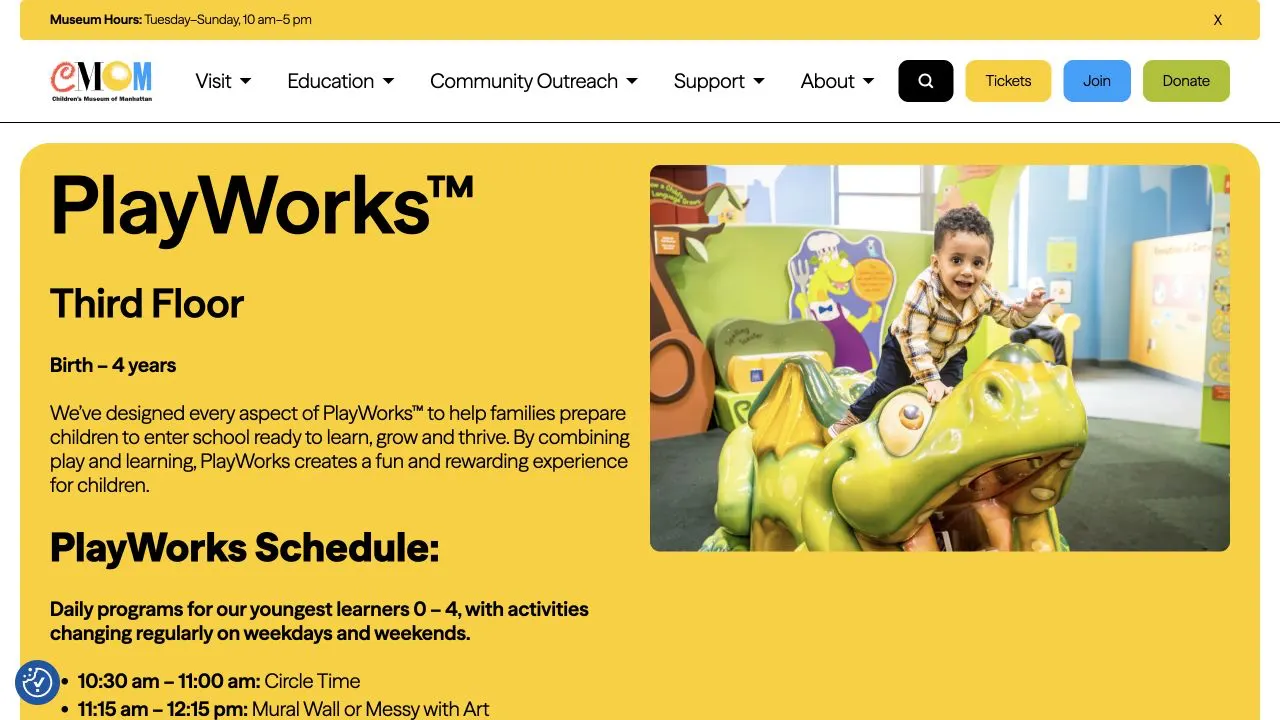
PlayWorks™ — Children’s Museum of Manhattan
A birth-to-four learning space combining music, movement, stories, sensory art, puzzles, engineering, and pretend play through daily programs. It is listed under Social-emotional and Art & creativity for ages 0–4. Children and families can use it through a website and a physical place.
Children’s Museum of Manhattan Mobile Guide
The Children’s Museum of Manhattan’s Bloomberg Connects mobile guide offers a PlayWorks audio tour, at-home art projects, parenting resources, and activities that extend museum learning beyond the building. It is listed under Art & creativity and Science for ages 2–10.
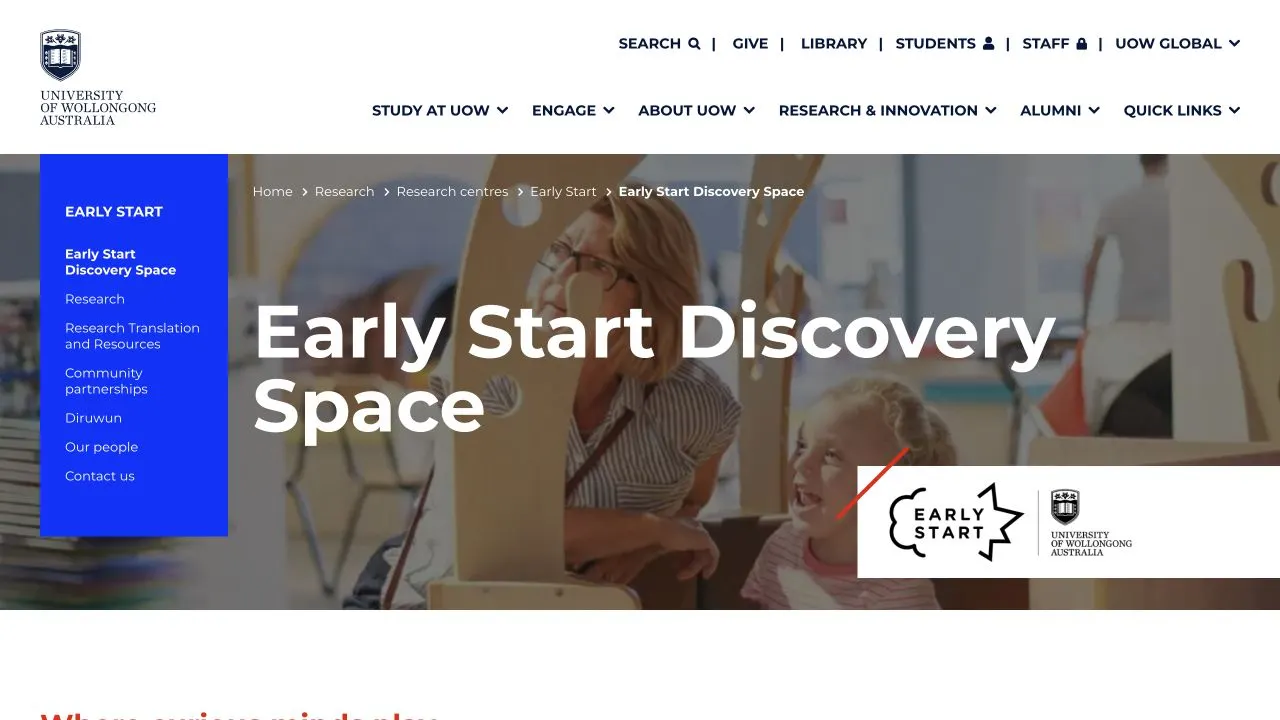
Early Start Discovery Space
The University of Wollongong’s Early Start Discovery Space is a research-backed children’s museum with interactive play experiences, public programmes, and learn-through-play opportunities for young children and their adults. It is listed under Early learning and Maker & DIY for ages 0–10.
Compare with context
Use this collection to find a direction, then open each resource page before sharing it with a child. The individual review shows languages, access formats, tags, age guidance, source links, and notes for grown-ups.
Search the full directory →