Math STEM
for kids
Explore 14 trusted math stem resources selected for curious kids, with clear ages, access details, and parent context.
Two useful ways to narrow the directory
This page brings together math resources that also match stem. Each listing keeps its own age range, platform details, languages, links, and parent notes, so you can compare options without losing context.
Explore all math resources →
Iowa STEM Teachable Moment
A Department of Education collection of grade-banded STEM activities, lessons, virtual field trips, and videos for learners, caregivers, and educators. It is listed under Science and Math for ages 4–18. Children and families can use it through a website.
Read the full resource review →More math picks
Science Museum Group Early Years Foundation Stage Resources
The Science Museum Group provides playful science, technology, engineering and maths activities for children aged 4–7, with ideas for museum visits, online exploration and learning at home. It is listed under Science and Engineering for ages Ages 4–7.
SciSim
A free science simulation library for grades 6–12 covering biology, Earth and space, physics, chemistry, math, statistics, computer science, and neuroscience. It is listed under Science and Math for ages Grades 6–12. Children and families can use it through a website.
Stemoto
A free directory of curated STEM, coding, cognitive-skill, and hands-on activities for children, organized into three progressive stages. It is listed under Science and Coding for ages 5–13. Children and families can use it through a website and a YouTube channel.
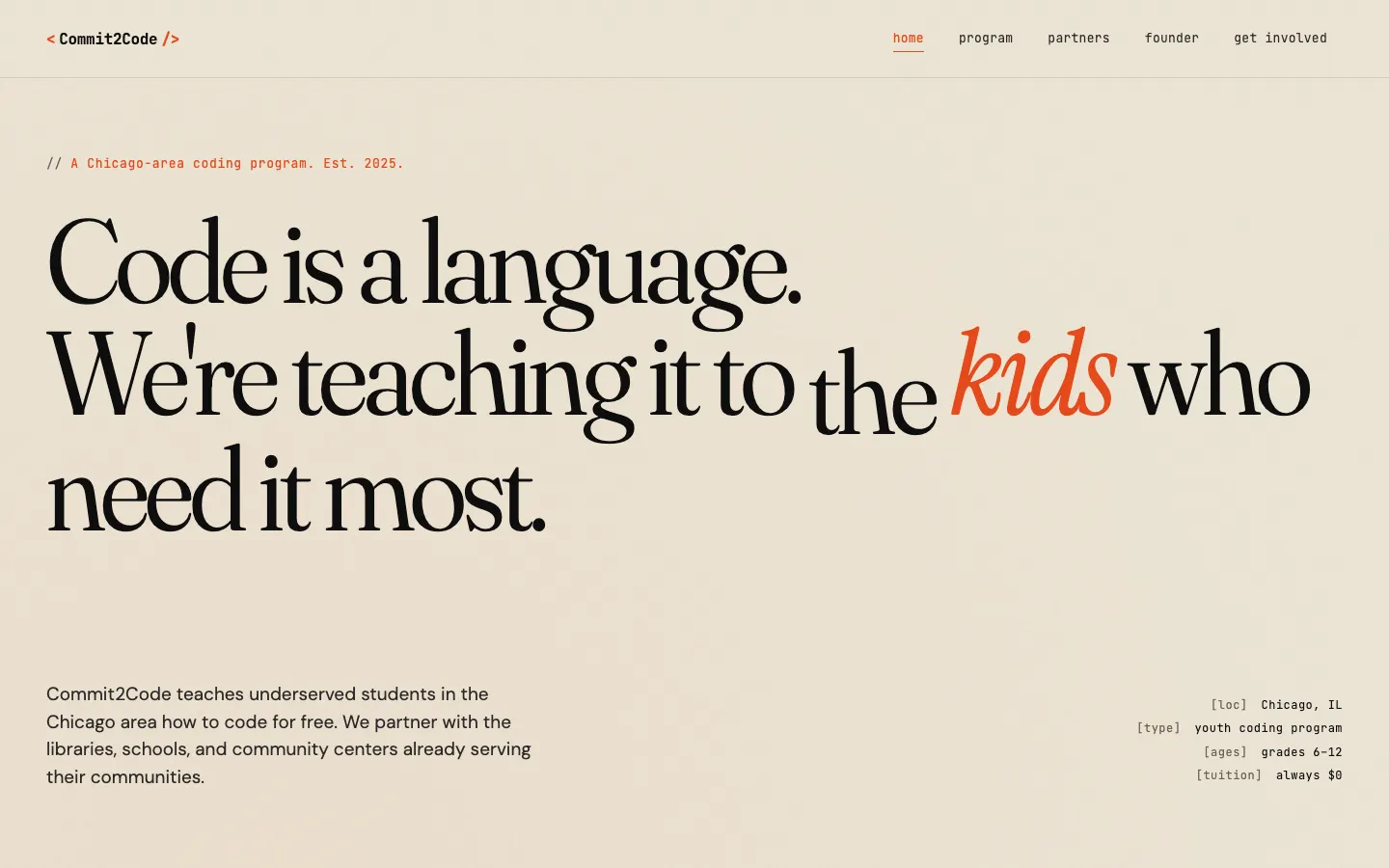
Commit2Code
A Chicago-area nonprofit teaching underserved students in grades 6–12 to code for free through library, school, and community partnerships. It is listed under Coding and Math for ages 11–18. Children and families can use it through a website.
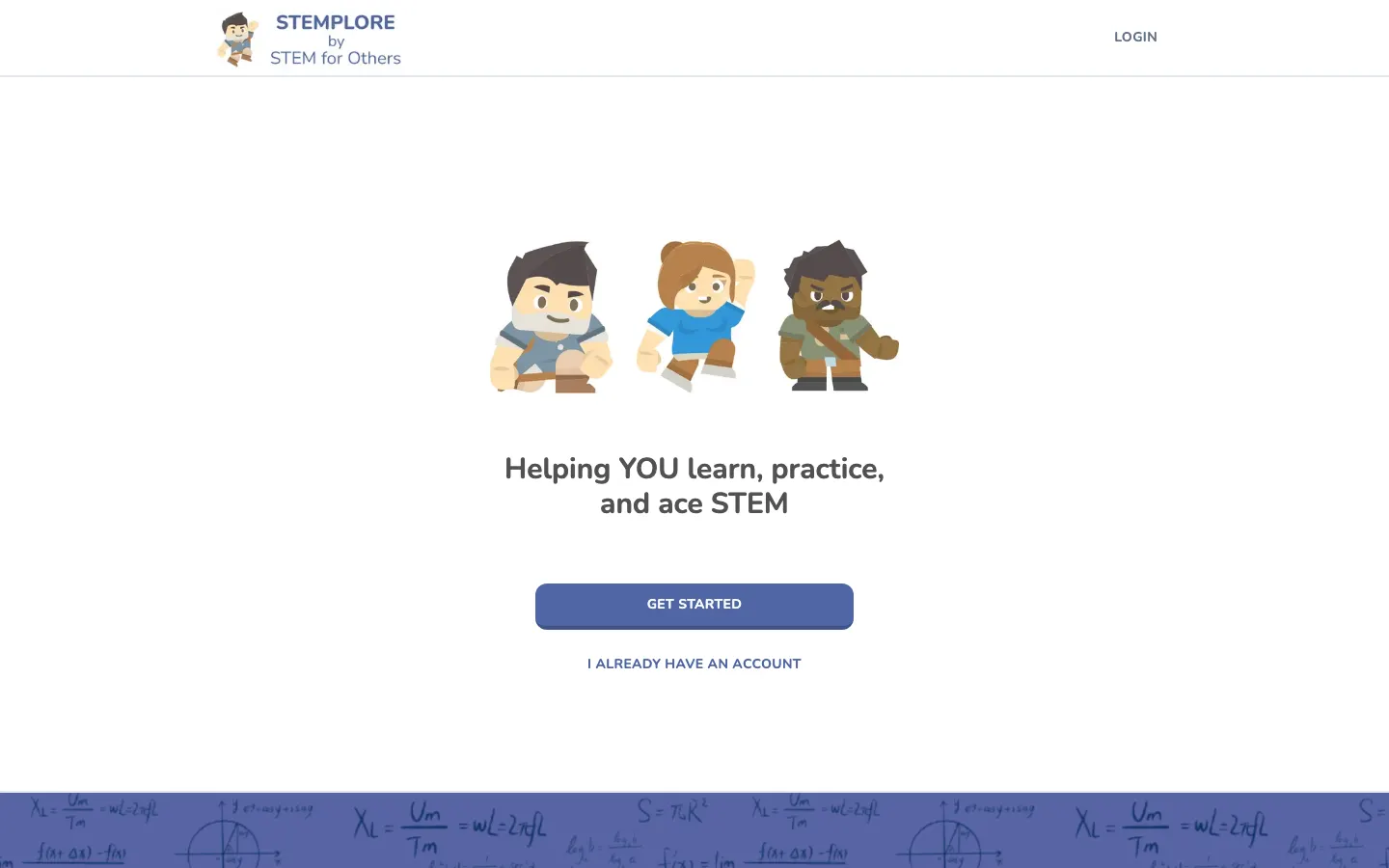
STEMplore
STEMplore is a free online STEM learning platform from STEM for Others with interactive games and quests across science, technology, engineering, and math for K–12 learners. It is listed under Science and Engineering for ages K–12.
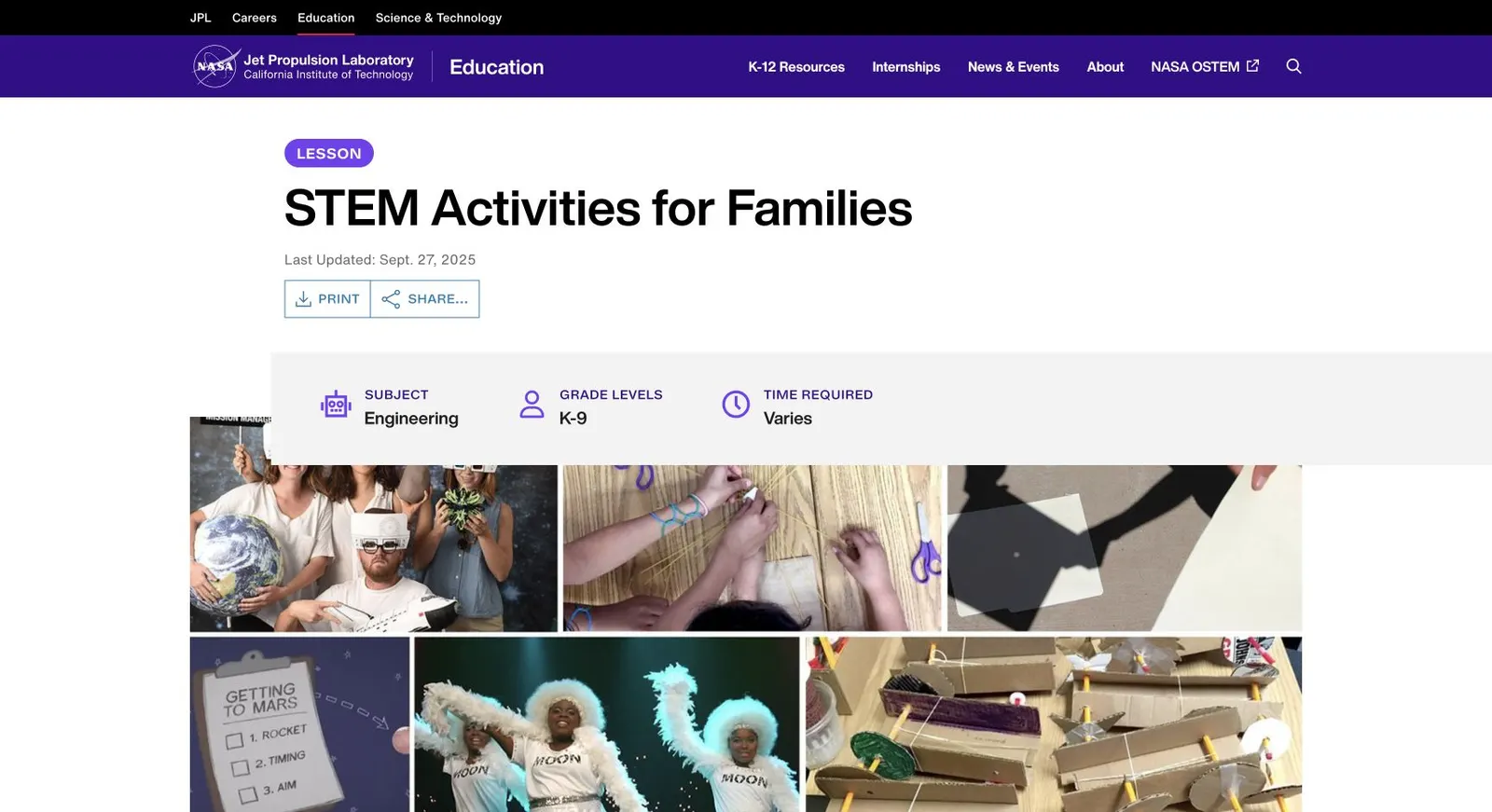
NASA JPL STEM Activities for Families
A NASA JPL collection of family STEM activities spanning engineering, science, technology, computer science, mathematics, rockets, space missions, and design challenges. It is listed under Engineering, Science, and Coding for ages 5–18. Children and families can use it through a website.
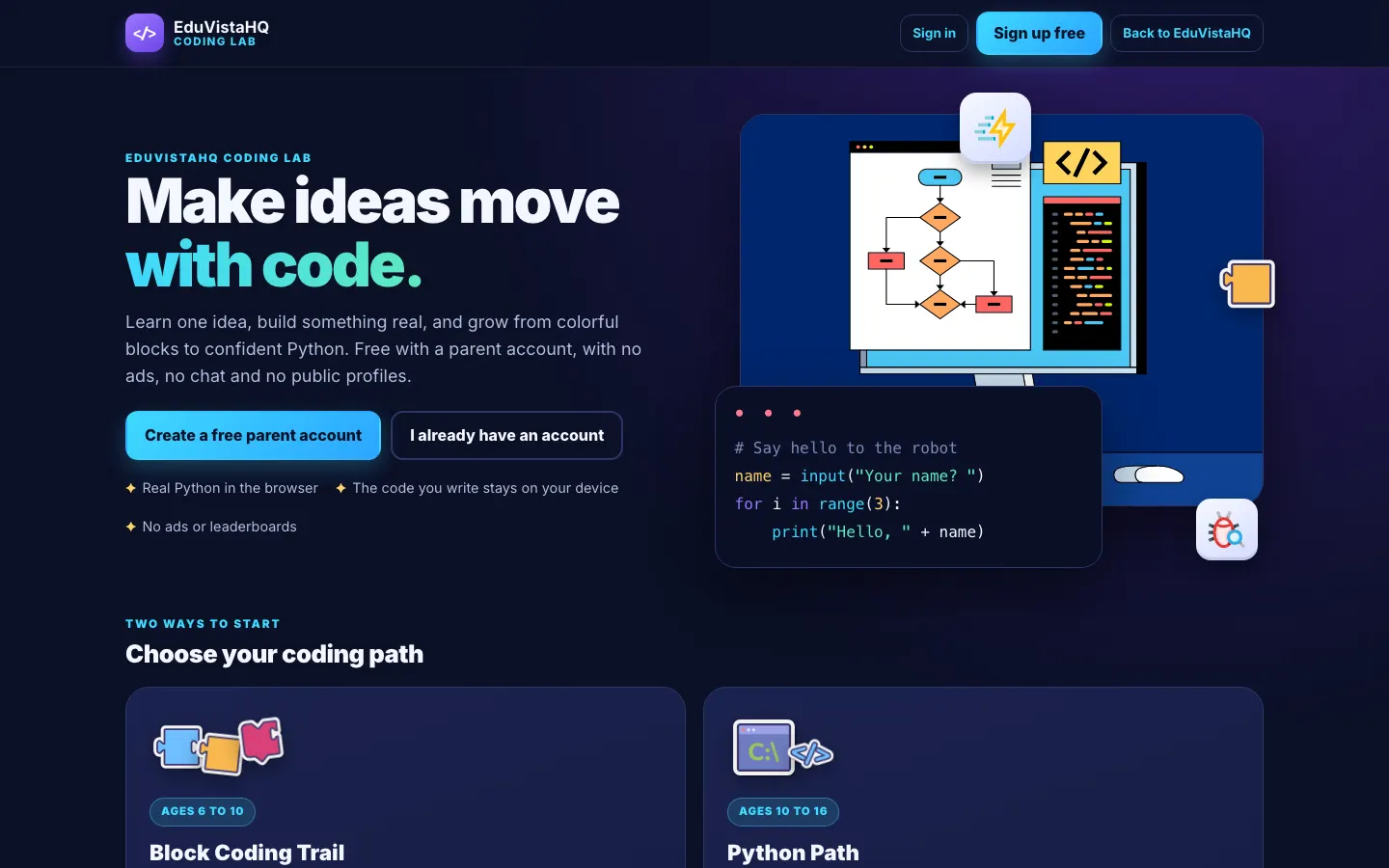
EduVista Coding Lab
EduVista Coding Lab is a browser learning environment with visual coding paths, Python practice, and project-oriented exercises designed to make programming approachable for young learners. It is listed under Coding and Science for ages 7–14.
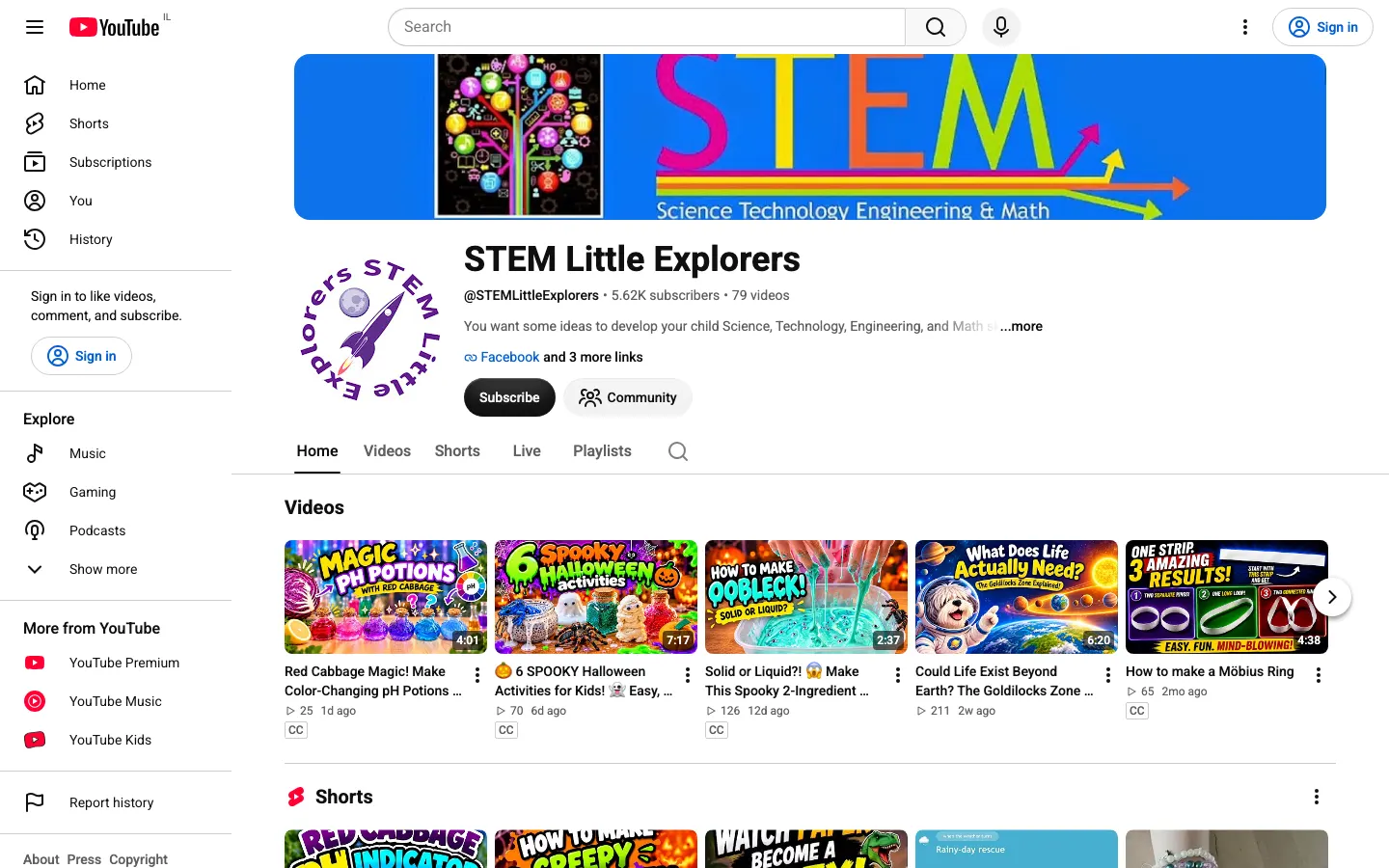
STEM Little Explorers
A STEM video channel with accessible science, technology, engineering, and math explainers and activity-oriented videos for curious learners. It is listed under Science, Math, and Coding for ages 6–12. Children and families can use it through a YouTube channel.
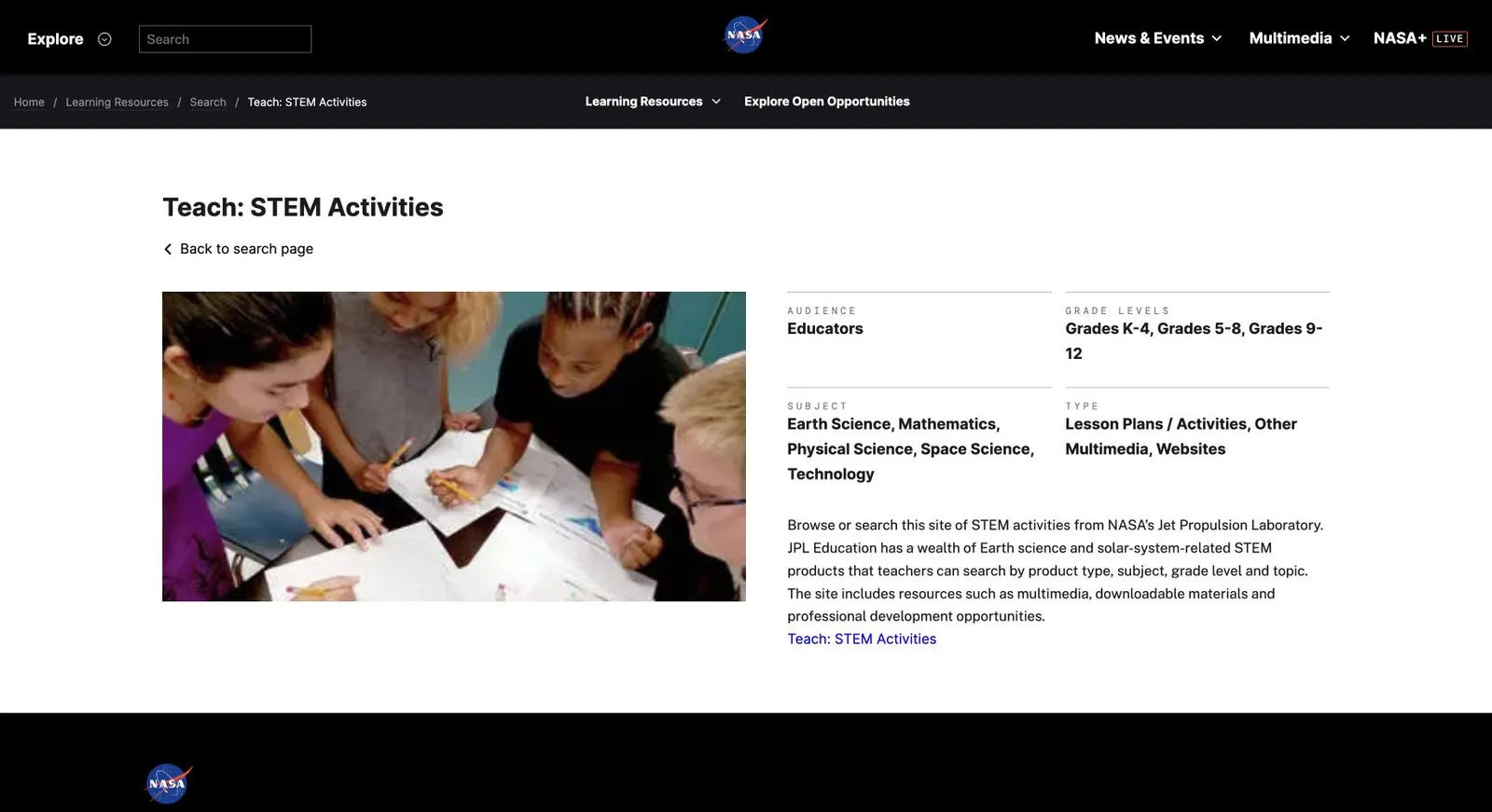
NASA Teach: STEM Activities
NASA’s educator-facing STEM activity catalog from JPL, searchable by product type, subject, grade level, and topic across Earth, space, physical science, math, and technology. It is listed under Space, Science, and Math for ages 5–18.
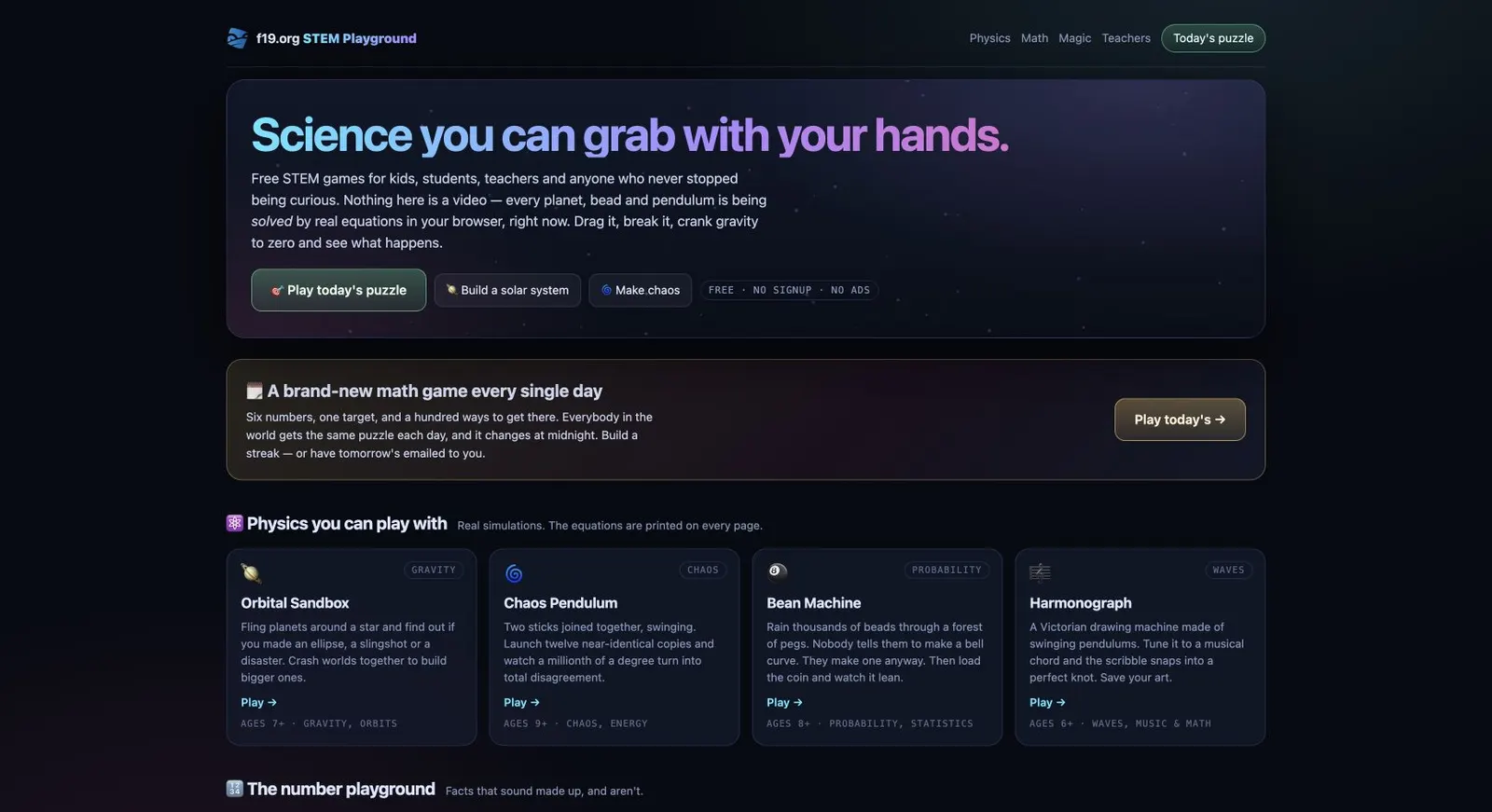
f19.org STEM Playground
Browser simulations and daily puzzles that make physics, probability, math, waves, and algorithms playful. It is listed under Science and Math for ages 6-18. Children and families can use it through a website. The directory records access as free and language coverage as English.
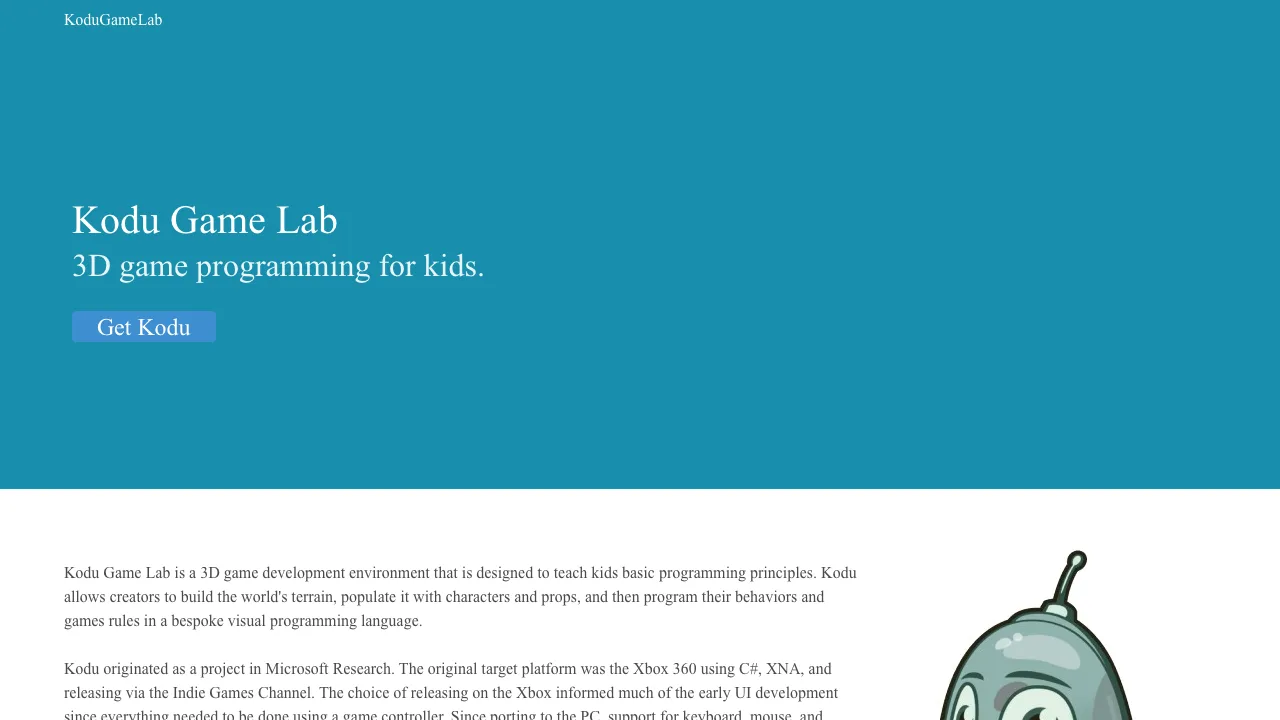
Kodu Game Lab
A visual game-making environment for children to build 3D worlds, stories, and games with simple programming tiles. It is listed under Coding, Games, and Math for ages 8–16. Children and families can use it through a website and a desktop app.
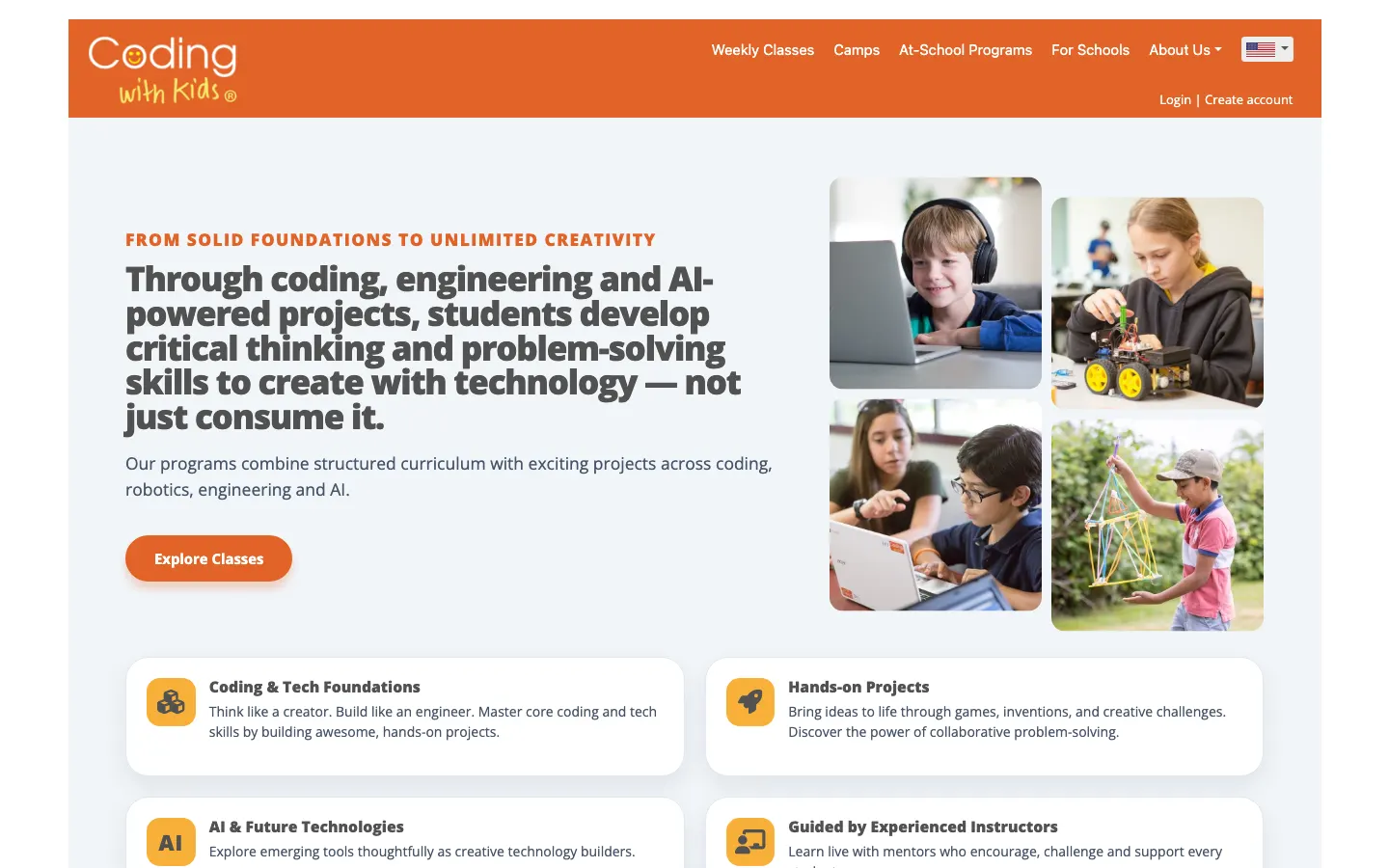
Coding with Kids
Coding with Kids provides live online and in-person classes, camps, school programmes, robotics, engineering, game design, Python, Minecraft modding, and age-progressive coding and AI projects for children and teens. It is listed under Technology and Coding for ages 5–18; K–12 school programmes.
Compare with context
Use this collection to find a direction, then open each resource page before sharing it with a child. The individual review shows languages, access formats, tags, age guidance, source links, and notes for grown-ups.
Search the full directory →