Games Physics
for kids
Explore 14 trusted games physics resources selected for curious kids, with clear ages, access details, and parent context.
Two useful ways to narrow the directory
This page brings together games resources that also match physics. Each listing keeps its own age range, platform details, languages, links, and parent notes, so you can compare options without losing context.
Explore all games resources →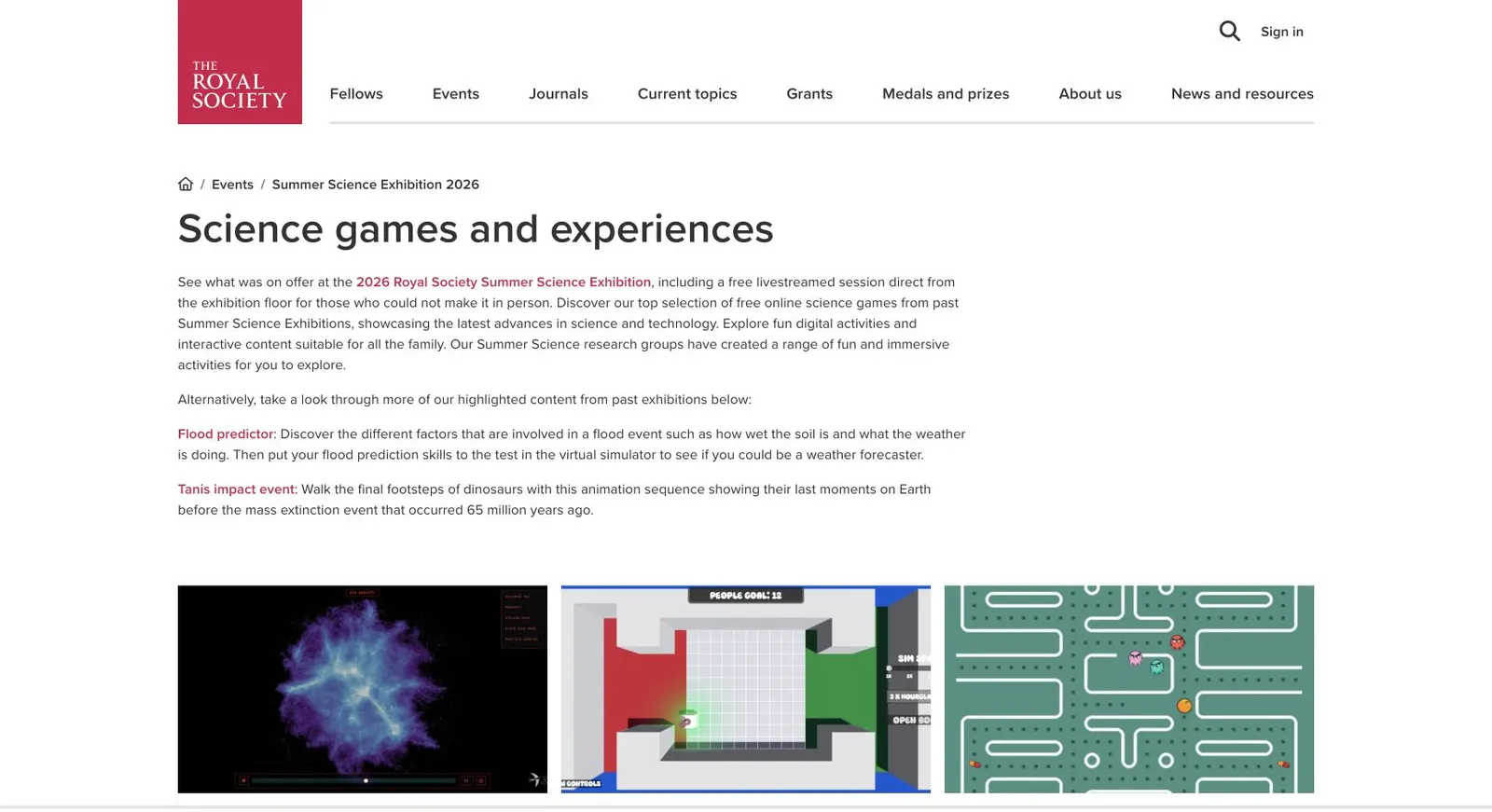
Royal Society Science Games
The Royal Society’s free collection links children and families to interactive science games and experiences from its Summer Science Exhibition. It is listed under Science and Games for ages 8–16. Children and families can use it through a website.
Read the full resource review →More games picks
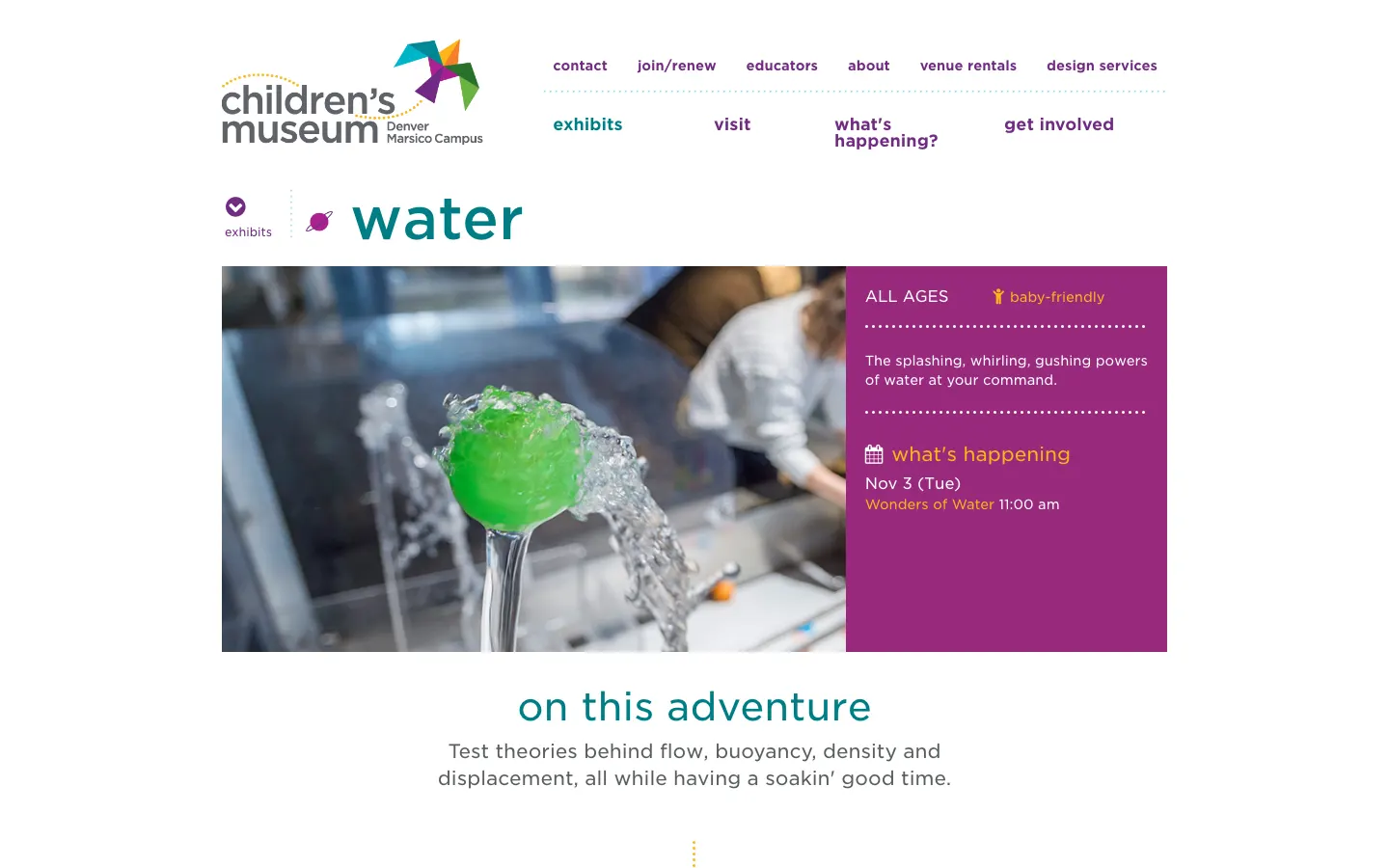
Water
Water is the Children’s Museum of Denver’s all-ages exhibit for exploring flow, buoyancy, density, displacement, water wheels, boats, dams, and water-powered play. It is listed under Science and Nature & environment for ages All ages; baby-friendly.
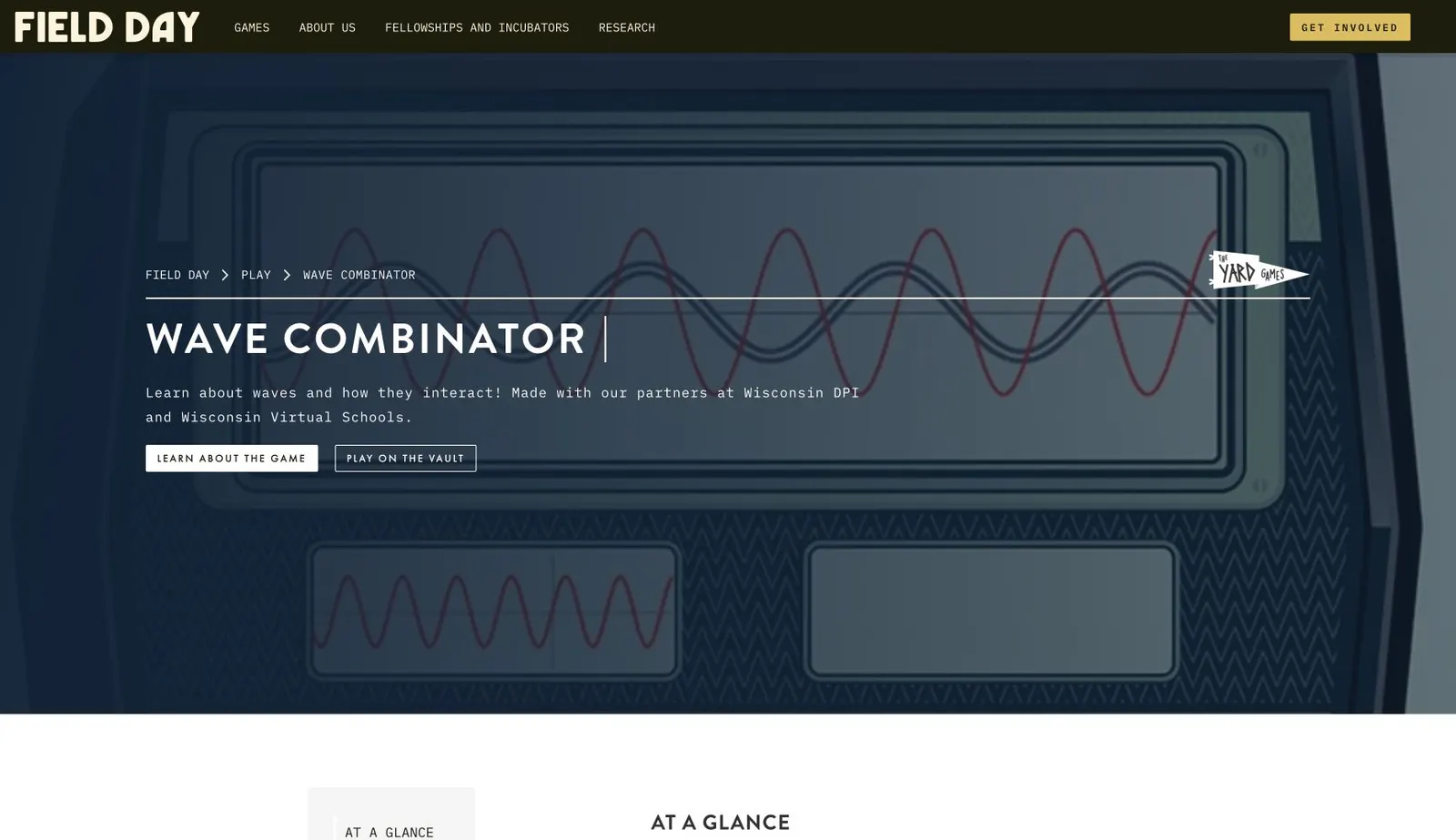
Wave Combinator
A free Field Day Lab science game where learners adjust wavelength, amplitude, and offset to investigate how sound waves interact. It is listed under Science and Physics for ages 10–14. Children and families can use it through a website.
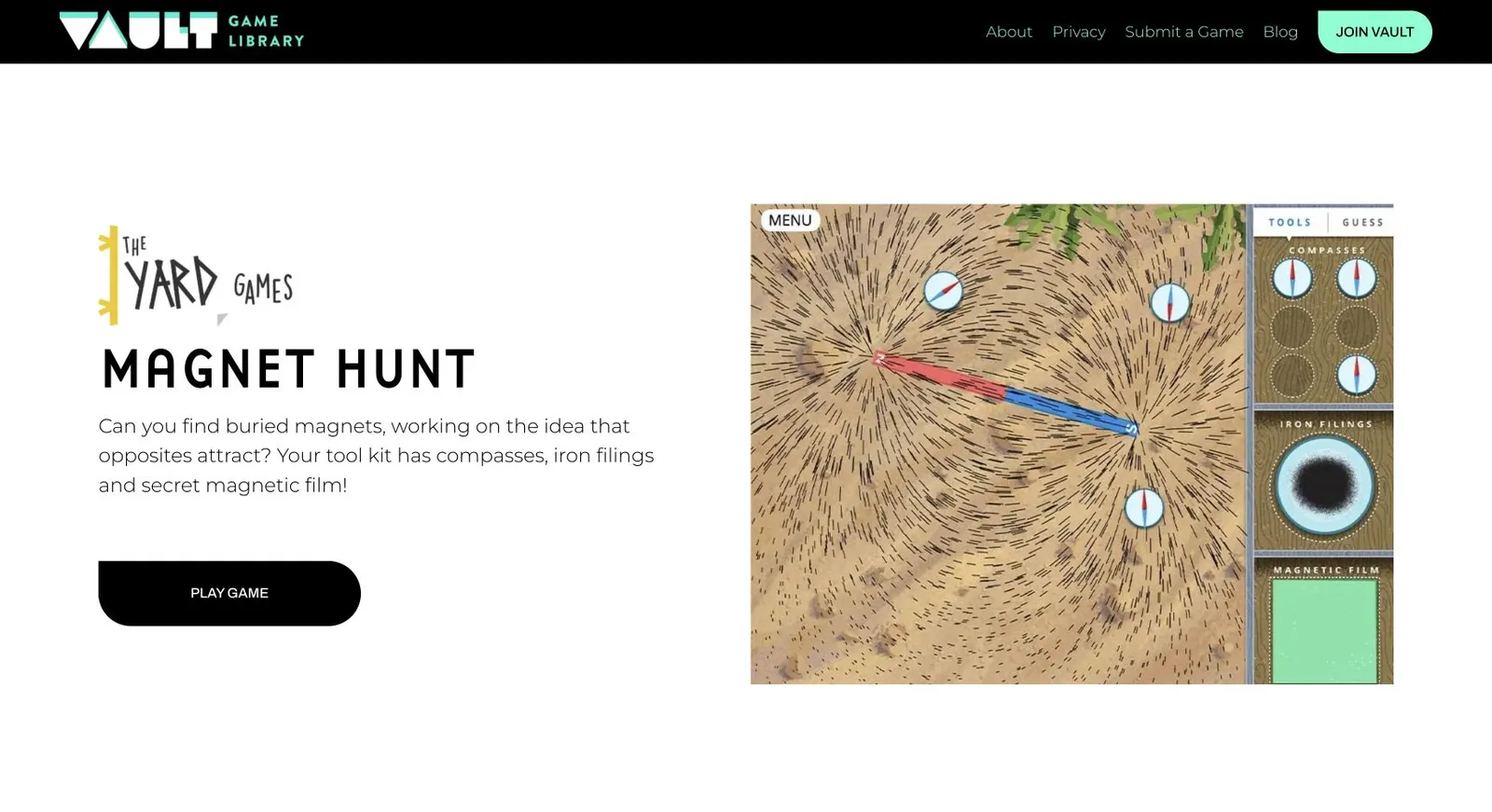
Magnet Hunt
Magnet Hunt is a free middle-school science game from Vault and Field Day Lab where players use magnetic fields, compasses, iron filings, and magnetic film to find hidden magnets. It is listed under Science and Games for ages 11–14.
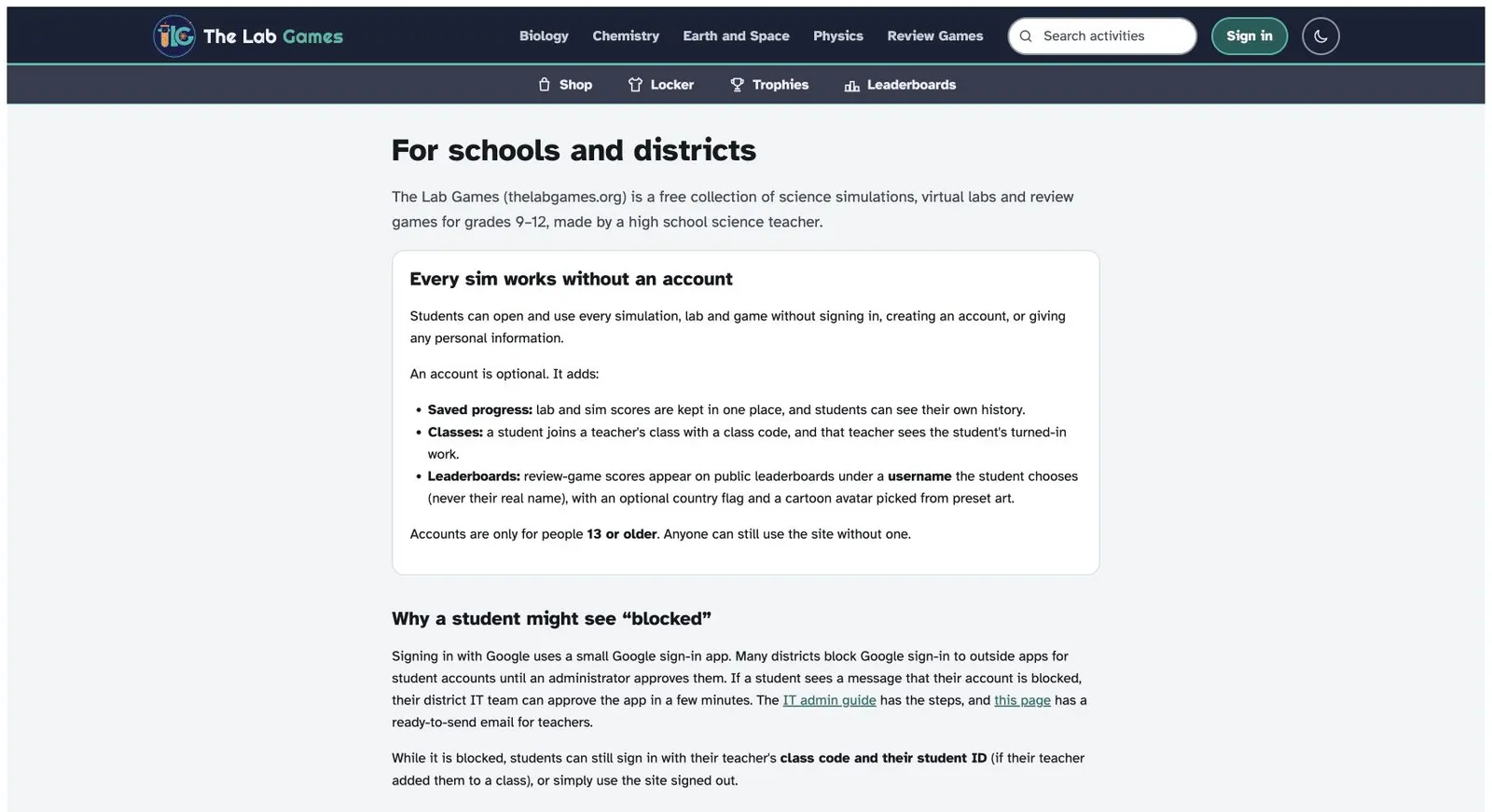
The Lab Games
Free science simulations, virtual labs, and review games for grades 9–12, covering biology, chemistry, Earth and space science, physics, and review practice. It is listed under Science and Games for ages 14–18. Children and families can use it through a website.
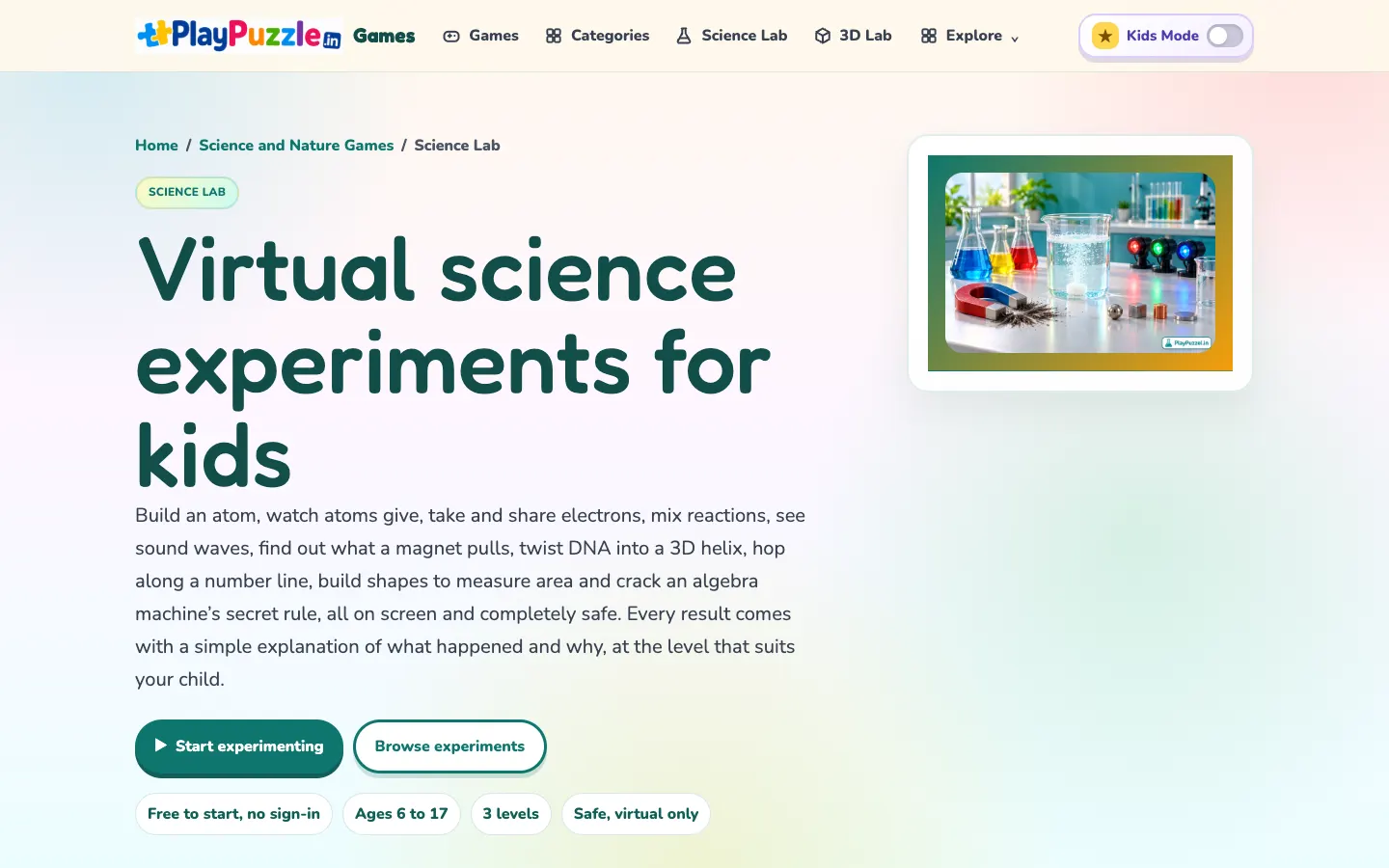
PlayPuzzle Science Lab
PlayPuzzle Science Lab is a virtual experiment collection where children build atoms, explore reactions, test magnets, investigate DNA, and work through maths and science missions. It is listed under Science and Mathematics for ages 6–17.
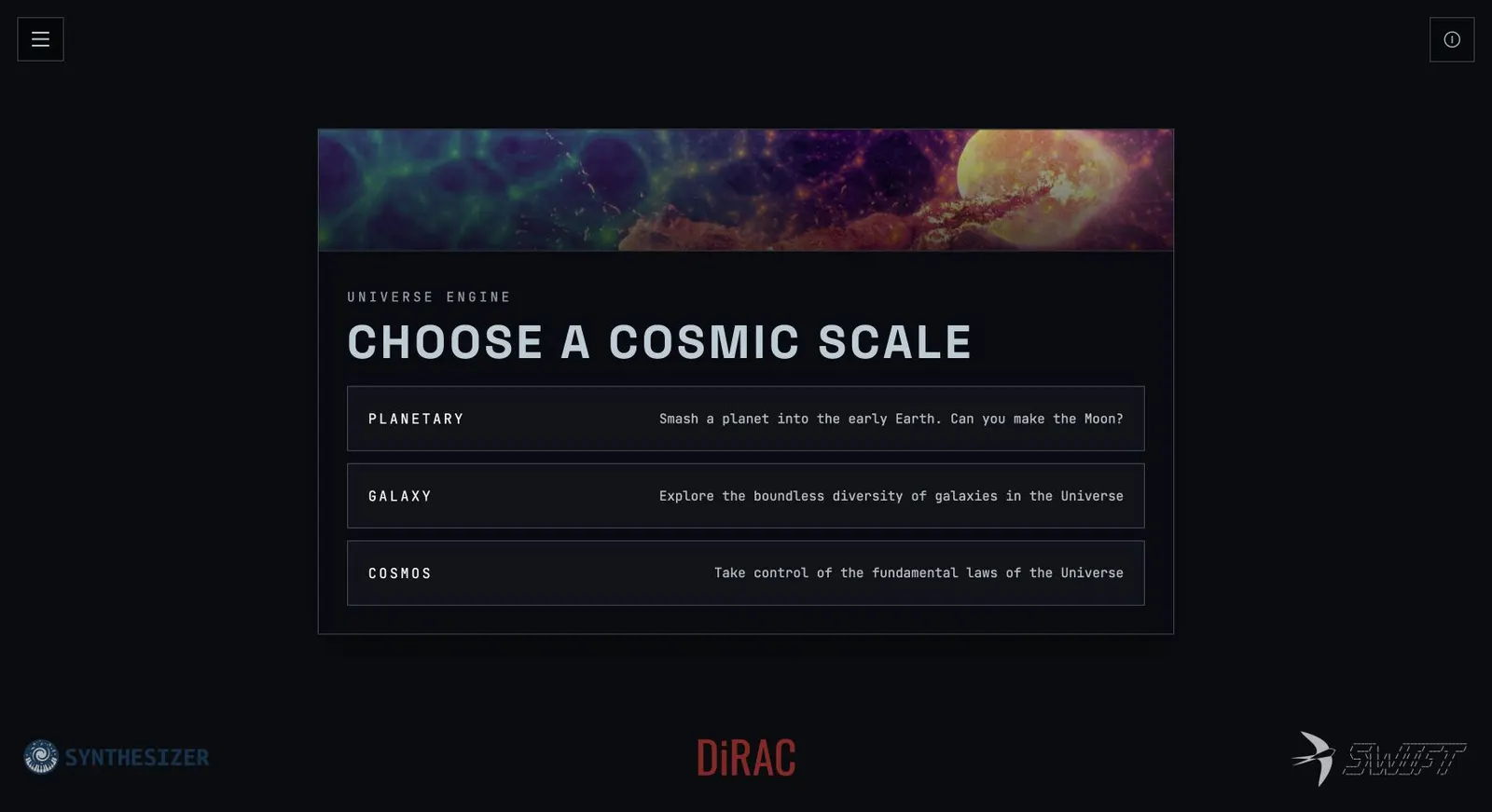
UniverseEngine
UniverseEngine is an interactive astronomy simulation that lets learners explore planetary impacts, galaxy formation, and cosmic evolution at planetary, galaxy, and cosmos scales. It is listed under Space and Science for ages 10–16. Children and families can use it through a website.
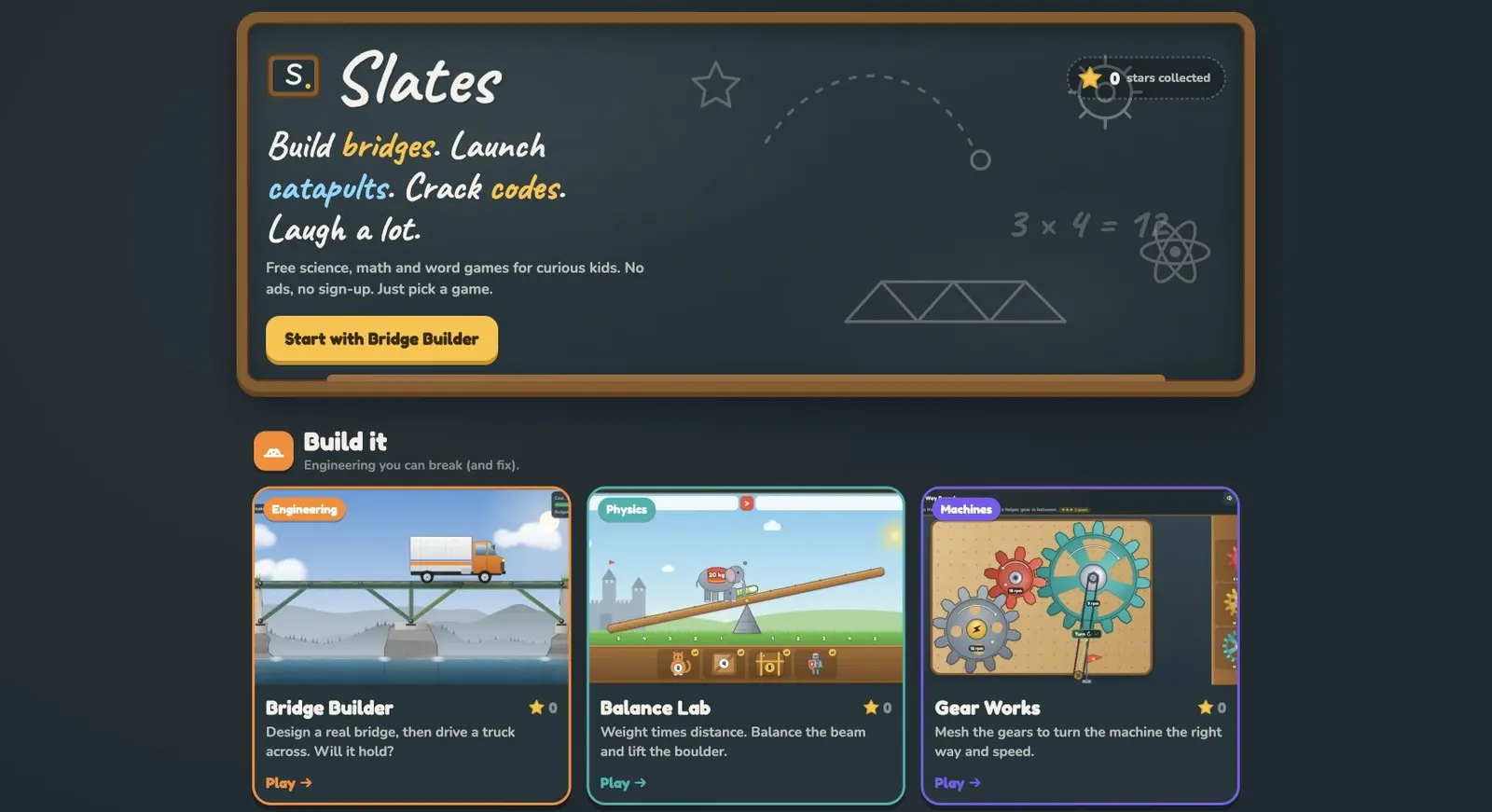
Slates
Free browser games for kids spanning engineering, physics, coding, math, words, and science. It is listed under Games and Science for ages 6-10. Children and families can use it through a website. The directory records access as free and language coverage as English.
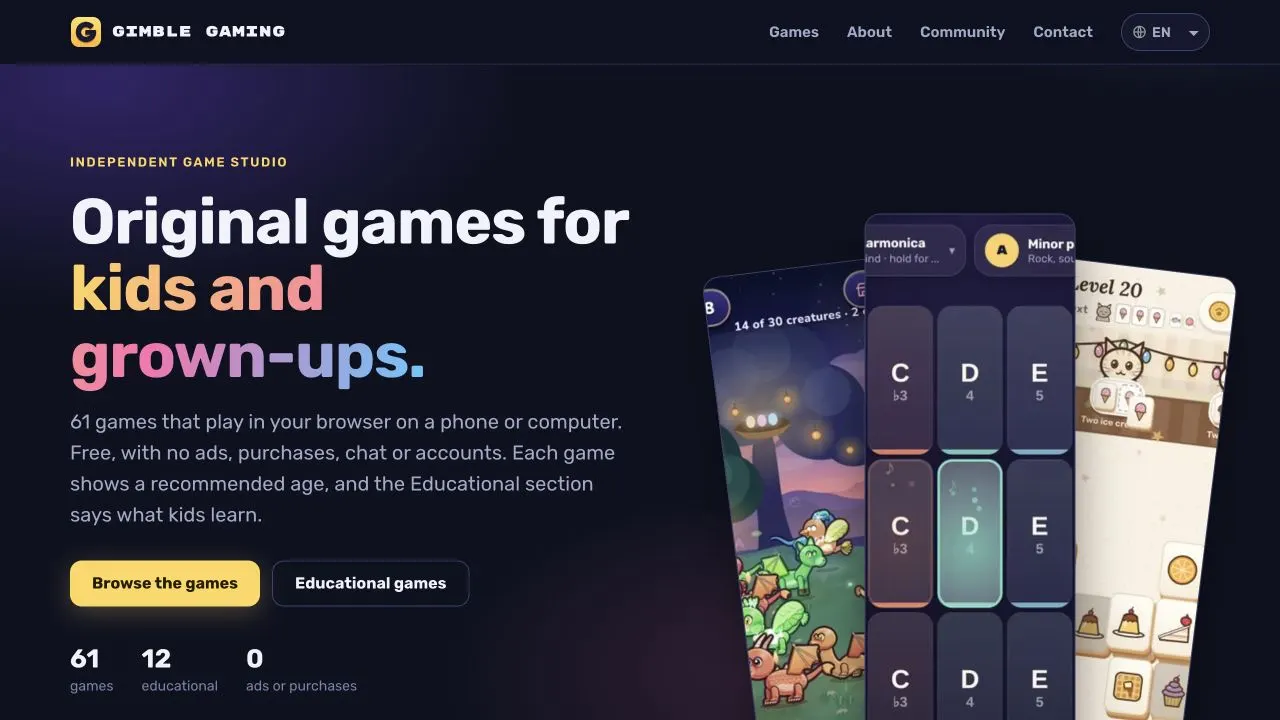
Gimble Gaming
A browser game library with educational music, physics, chemistry, spelling, science, and puzzle games, each labeled with a recommended age. It is listed under Games and Science for ages 4–10. Children and families can use it through a website.

mysimulator.uk
mysimulator.uk is a free browser library of interactive simulations in physics, space, biology, chemistry, mathematics, and computer science, released with open classroom-friendly licensing. It is listed under Science and Mathematics for ages Older children and teens; topic-specific.
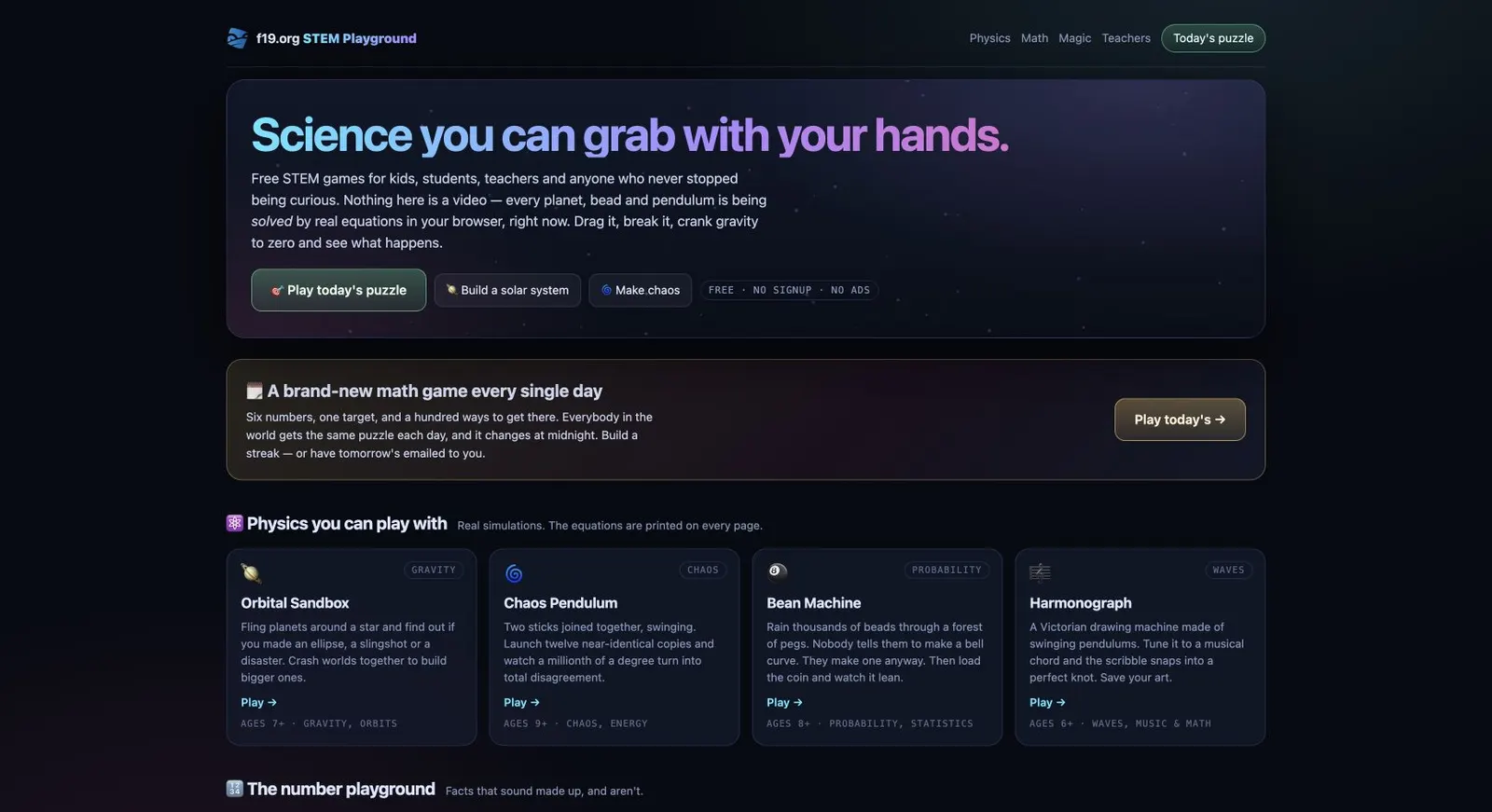
f19.org STEM Playground
Browser simulations and daily puzzles that make physics, probability, math, waves, and algorithms playful. It is listed under Science and Math for ages 6-18. Children and families can use it through a website. The directory records access as free and language coverage as English.
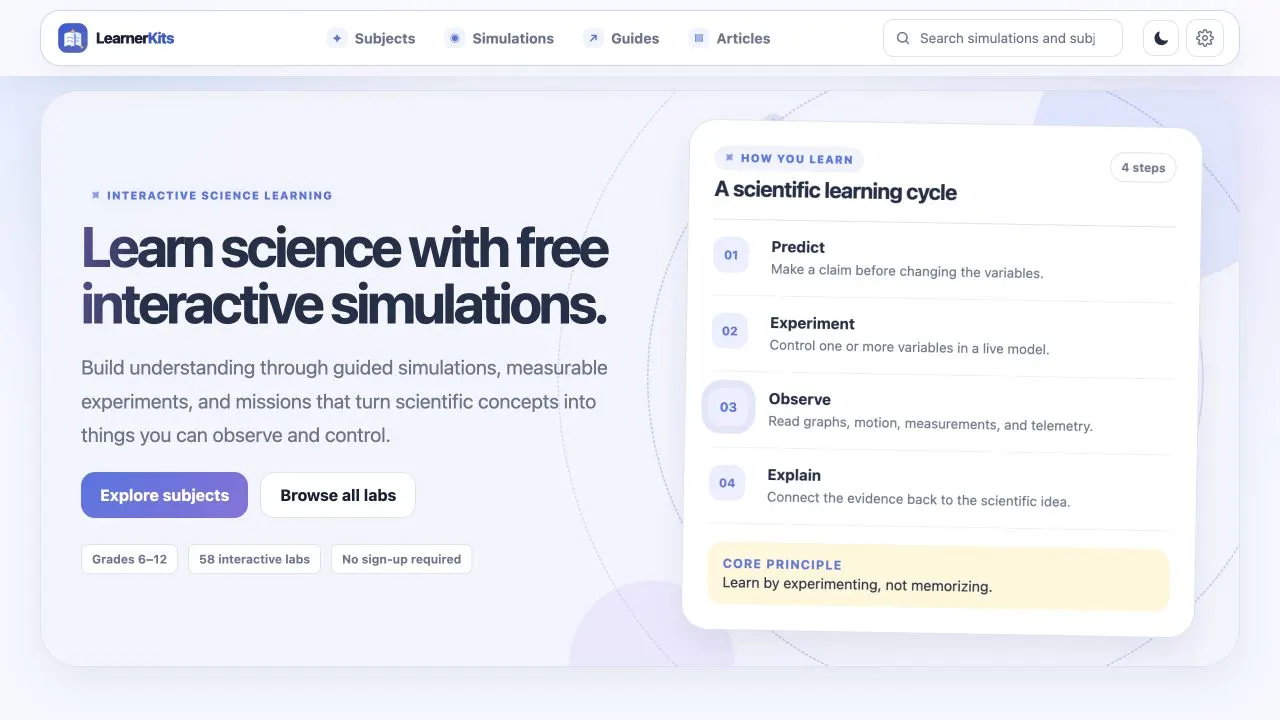
LearnerKits
Free browser-based science simulations and virtual experiments for students in grades 6-12. It is listed under Science, Mathematics, and Engineering for ages 11-18. Children and families can use it through a website. The directory records access as free and language coverage as English.
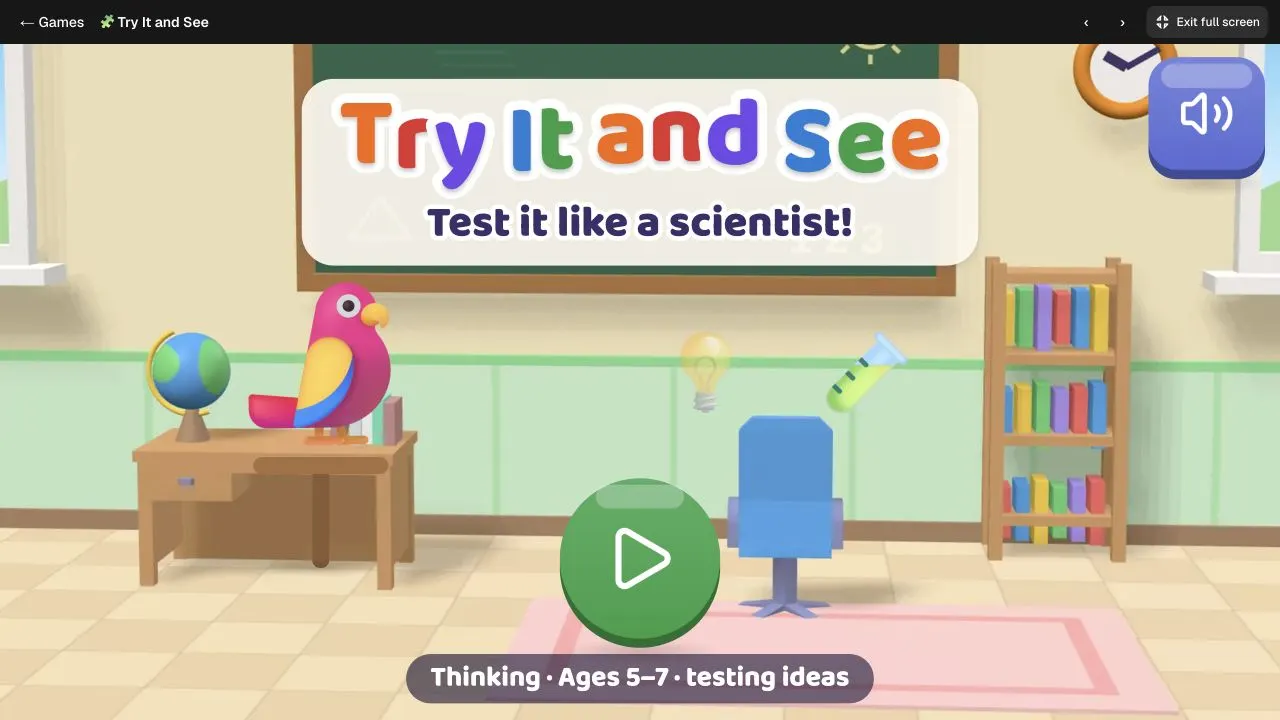
Try It and See
A free Apar Academy science mini-game for ages 5–7 that teaches fair testing, one-variable experiments, float-or-sink predictions, and systematic troubleshooting. It is listed under Science and Maths & logic for ages 5–7. Children and families can use it through a website and a YouTube channel.
Compare with context
Use this collection to find a direction, then open each resource page before sharing it with a child. The individual review shows languages, access formats, tags, age guidance, source links, and notes for grown-ups.
Search the full directory →